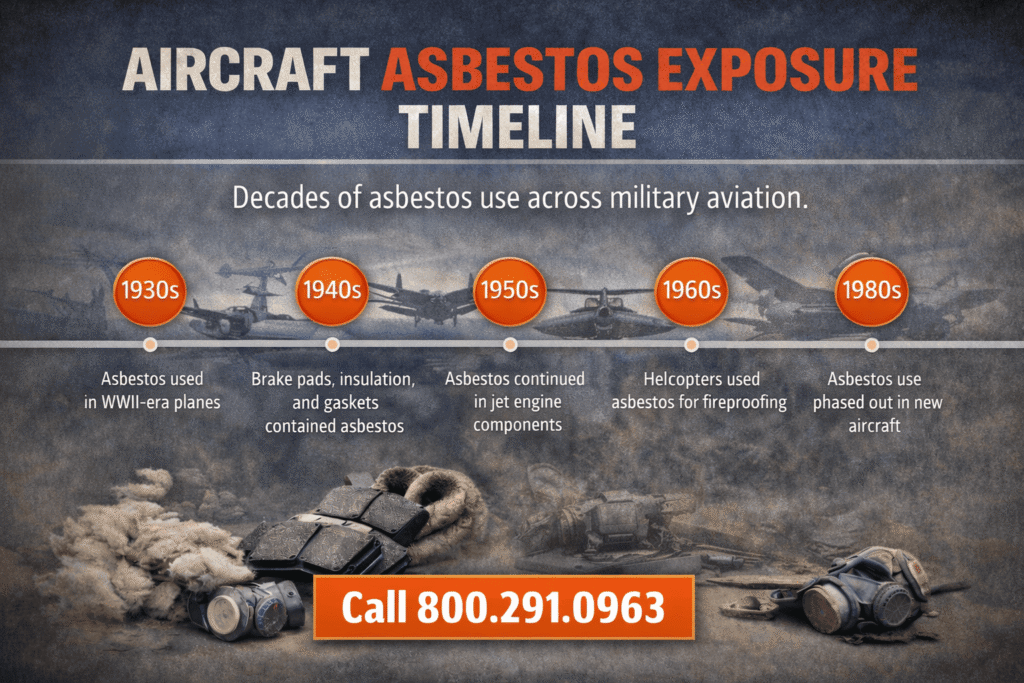
🕰️✈️ Aircraft Asbestos Exposure Timeline
Asbestos was used across military aircraft, aviation facilities, and support equipment for decades—exposing generations of pilots, mechanics, ground crews, and contractors long before the dangers were publicly acknowledged.
Understanding the timeline of asbestos use in military aviation is critical for veterans and families seeking answers today. Many individuals were exposed in the 1940s–1980s, yet only diagnosed with mesothelioma or other asbestos-related diseases decades later. This timeline explains when, where, and why asbestos was used in aircraft systems, and how those decisions continue to impact health outcomes for those who served the United States military.
🧱 Why Asbestos Was Chosen for Aircraft
From the earliest days of powered flight, aviation faced extreme hazards.
Asbestos was widely adopted because it:
-
🔥 Resisted high heat from engines and exhaust
-
🛑 Handled friction in brakes and landing gear
-
⚡ Insulated electrical wiring and avionics
-
🧯 Provided fireproofing for cockpits and cabins
-
🌡️ Withstood temperature extremes at altitude
-
💲 Was inexpensive and widely available
These qualities made asbestos appear ideal—until the health consequences emerged.
⏳ 1930s–1940s: Early Aircraft & World War II Expansion
🚀 Rapid military aviation growth
-
Aircraft production surged during WWII
-
Asbestos used in engines, brakes, wiring, and fireproofing
-
Hangars and air bases built rapidly with asbestos materials
👷 Who was exposed
-
Pilots and aircrew
-
Aircraft mechanics
-
Sheet-metal and engine workers
-
Base construction crews
Exposure was heavy and unprotected, as asbestos risks were not disclosed.
⏳ 1950s: Jet Age & Cold War Aviation
✈️ Introduction of jet aircraft
-
Higher engine temperatures increased asbestos use
-
Brake systems generated more asbestos dust
-
Electrical systems expanded significantly
🏢 Facility exposure
-
New hangars and maintenance depots
-
Spray-on asbestos fireproofing became common
-
HVAC systems distributed fibers building-wide
Asbestos exposure became routine in daily aviation operations.
⏳ 1960s: Vietnam Era & Peak Asbestos Use
🚁 Helicopters and combat aviation
-
Rotorcraft used asbestos in transmissions and brakes
-
Field repairs disturbed friable asbestos
-
Forward bases lacked ventilation and safety controls
⚠️ Growing internal knowledge
-
Medical studies began linking asbestos to cancer
-
Manufacturers continued use without warnings
This era produced some of the highest lifetime exposures.
⏳ 1970s: Early Warnings but Continued Use
📄 Health concerns emerge
-
Government agencies began issuing limited warnings
-
Some products labeled—but not removed
-
Military aviation continued relying on asbestos stockpiles
🧰 Maintenance exposure increases
-
Aging aircraft required more repairs
-
Insulation and fireproofing degraded
-
Retrofit programs disturbed old materials
Exposure often increased as aircraft aged.
⏳ 1980s: Regulations Begin, Exposure Continues
🚫 Partial bans and phase-outs
-
OSHA and EPA regulations introduced
-
Asbestos still permitted in many aircraft uses
-
Existing aircraft and buildings remained contaminated
🏢 Secondary exposure
-
Renovations disturbed asbestos in hangars
-
Ground support equipment still used asbestos brakes
-
Families exposed through contaminated clothing
Many assumed asbestos was “gone”—but legacy exposure continued.
⏳ 1990s–2000s: Legacy Aircraft & Maintenance Risks
✈️ Older aircraft remain in service
-
National Guard and Reserve units operated aging fleets
-
Maintenance crews continued exposure
-
Demolition and base closures disturbed asbestos
👨👩👧 Secondhand exposure
-
Families exposed via uniforms and tools
-
Household contamination recognized
Health consequences were still years away for many.
⏳ 2000s–Present: Diagnosis & Accountability
🫁 Latency period ends
-
Veterans diagnosed 20–50 years after exposure
-
Mesothelioma cases peak among WWII–Vietnam-era service members
⚖️ Legal action
-
Lawsuits and trust fund claims filed
-
VA recognizes asbestos-related conditions
-
Billions set aside for compensation
The timeline comes full circle—long after service ended.
🫁 Diseases Linked to Aircraft Asbestos Exposure
The extended timeline explains why diseases appear late:
-
Mesothelioma
-
Asbestos-related lung cancer
-
Asbestosis
-
Pleural plaques and thickening
Most diagnoses occur decades after final exposure.
🧑⚖️ How a Lawyer Uses the Exposure Timeline
An experienced asbestos lawyer uses this history to:
-
🔍 Match service years to asbestos-heavy periods
-
📂 Identify aircraft models and facilities used
-
🏭 Connect exposure to specific manufacturers
-
🏦 Determine trust fund eligibility
-
⚖️ File claims in the correct jurisdictions
Victims don’t need perfect records—the timeline fills the gaps.
❓ Frequently Asked Questions (FAQs)
❓ I served in the 1960s—does that matter?
Yes. The 1960s were peak asbestos-use years in aviation.
❓ What if I served after asbestos was “banned”?
Legacy aircraft and facilities continued exposing workers.
❓ Can exposure from decades ago still cause disease?
Yes. Mesothelioma has one of the longest latency periods of any cancer.
❓ Does the VA recognize historical exposure?
Yes. The VA considers service era and job duties.
❓ Can families file claims now?
Yes. Wrongful death and trust fund claims remain available.
📞 Get Help Based on Your Aircraft Exposure Timeline
If you or a loved one were exposed to asbestos through military aircraft at any point from WWII through the 1990s, your diagnosis today is not a coincidence—and compensation may still be available.
📌 You May Qualify For:
-
Aircraft asbestos lawsuits
-
Asbestos trust fund compensation
-
VA disability or survivor benefits
-
Wrongful death claims
📞 Call 800-291-0963 for a free aircraft asbestos exposure timeline review
⏱️ No upfront costs • Veteran-focused cases • Nationwide representation
Time may have passed—but your rights haven’t.