Guide to Asbestos Trust Fund Claims - (800) 291-0963

Mesothelioma Diagnosis

Mesothelioma Diagnosis - Mesothelioma Help Center

🩺 Mesothelioma Diagnosis

What You’ll Learn From This Page:

🧪 Diagnosis begins with symptom awareness, especially in people with a history of asbestos exposure. Common warning signs include persistent cough, chest pain, shortness of breath, fatigue, and unexplained weight loss. Because these symptoms often mimic other conditions, diagnosis is frequently delayed.

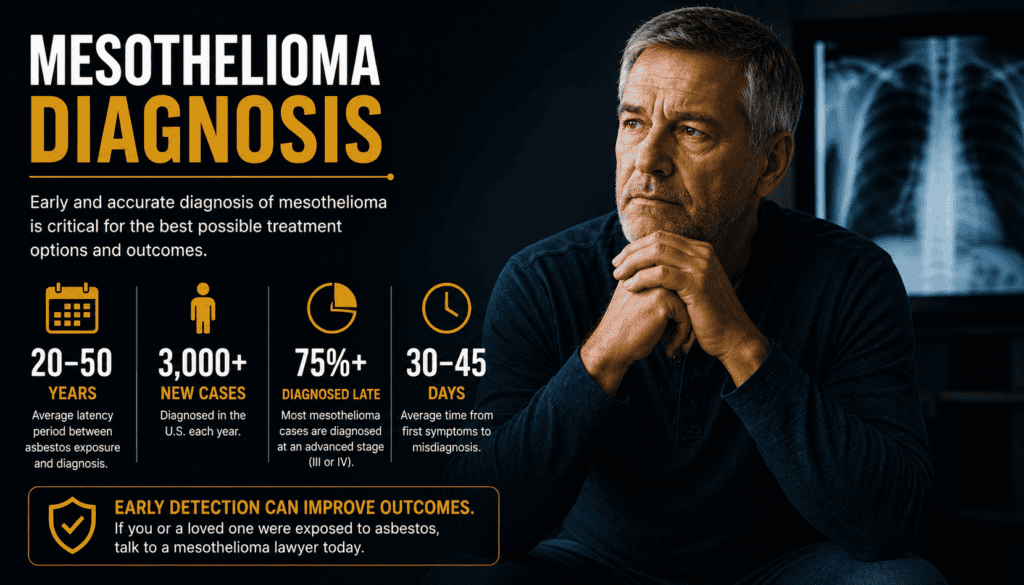
🗓️ Latency period is significant, typically 20–60 years after exposure, and most cases are detected late—around 70–80% beyond stage 1. Prompt detection increases treatment options and improves survival.

🖼️ Imaging tools like X-rays, CT, and MRI scans are used initially to identify abnormalities such as fluid buildup or tissue thickening. \

🔬 Biopsy is essential—collecting tissue or fluid samples confirms mesothelioma and aids in staging.

🩸 Biomarker blood tests (e.g., MESOMARK for mesothelin) can support early detection but still require biopsy confirmation.

In summary, early recognition of symptoms, followed by imaging and biopsy, is critical. Timeliness can enhance eligibility for more effective treatments.


How Mesothelioma is Diagnosed

Mesothelioma is a rare and aggressive cancer primarily caused by exposure to asbestos, a dangerous mineral once commonly used in industries like construction, shipbuilding, and manufacturing. The exposure to asbestos fibers can lead to severe health conditions, including mesothelioma, which typically affects the lungs (pleura) or abdominal lining (peritoneum). Understanding how asbestos exposure leads to mesothelioma and recognizing its symptoms is crucial for early detection and effective treatment.

Asbestos fibers are microscopic, and when disturbed, they can become airborne and inhaled. Once inhaled, these fibers can become trapped in the lining of the lungs, known as the pleura. Over time, the body’s immune system struggles to eliminate these fibers, leading to chronic inflammation, irritation, and the eventual development of mesothelioma. Common symptoms of mesothelioma caused by lung exposure include shortness of breath, persistent chest pain, and ongoing coughing.

In some cases, asbestos fibers are ingested rather than inhaled, often through food or beverages contaminated with the fibers. These fibers can travel through the digestive system and reach the abdominal lining, causing irritation and the development of peritoneal mesothelioma. Symptoms related to peritoneal mesothelioma often include abdominal pain, unexplained weight loss, and changes in bowel habits such as constipation or diarrhea.

Recognizing these symptoms early is crucial for an accurate diagnosis and to begin treatment as soon as possible. If you or someone you love has been exposed to asbestos and experiences symptoms like persistent cough, chest pain, or unexplained weight loss, it is important to seek medical attention promptly.

In addition to seeking medical care, if you have been diagnosed with mesothelioma, you may be entitled to compensation. Consulting with an experienced mesothelioma lawyer can help you navigate legal avenues, including asbestos trust funds, to obtain compensation for medical bills, lost wages, and other damages associated with your illness.

We are here to help mesothelioma patients get the compensation they deserve!


Mesothelioma Progression

Exploring – Stages of Each Type of Mesothelioma

Mesothelioma is an aggressive cancer caused by asbestos exposure, and its progression varies depending on the type and location of the cancer. The stages of mesothelioma define how far the cancer has spread and help guide treatment decisions. Below, we explore the progression of each type of mesothelioma cancer to understand the disease’s impact and potential outcomes.

Pleural Mesothelioma Progression

  • Pleural mesothelioma is the most common type of mesothelioma, affecting the lining of the lungs. It often progresses rapidly, with symptoms becoming apparent only in the later stages.
  • Stage I: Cancer is localized to one side of the chest and may be treated with surgery or radiation.
  • Stage II: Cancer has spread to nearby lymph nodes and structures like the diaphragm.
  • Stage III: Cancer has spread further to the chest wall, organs, or lymph nodes further away.
  • Stage IV: The cancer is widespread throughout the body, making treatment more difficult, with a focus on palliative care.

Peritoneal Mesothelioma Progression

  • Peritoneal mesothelioma affects the lining of the abdomen and is less common than pleural mesothelioma. It is typically diagnosed in later stages, as symptoms can be subtle.
  • Stage I: Cancer is confined to the peritoneum, and surgical intervention with heated chemotherapy (HIPEC) may improve survival.
  • Stage II: Cancer spreads to nearby abdominal organs and lymph nodes, requiring more aggressive treatment like surgery and chemotherapy.
  • Stage III: Cancer spreads to distant organs, making treatment more challenging, often with a focus on symptom management.
  • Stage IV: The cancer is widely spread, and treatment is usually palliative, aimed at improving quality of life.

Pericardial Mesothelioma Progression

  • Pericardial mesothelioma is an extremely rare form of the disease that affects the lining around the heart. Due to its location, it is difficult to diagnose early, and its progression is often rapid.
  • Stage I: Cancer is confined to the pericardium, but treatment options are limited due to the tumor’s location.
  • Stage II: Cancer spreads to surrounding tissues or the heart, and surgery may be considered, though risks are high.
  • Stage III: Cancer has spread to other organs and lymph nodes, requiring more aggressive treatments such as chemotherapy and radiation.
  • Stage IV: The cancer has spread extensively, and treatment options are primarily focused on palliative care to manage symptoms.

Testicular Mesothelioma Progression

  • Testicular mesothelioma is the rarest form of mesothelioma, and it often has a better prognosis than other types. The progression is slower, and the disease is usually diagnosed at an earlier stage.
  • Stage I: The tumor is confined to the testes and can often be treated effectively with surgical removal.
  • Stage II: Cancer spreads to nearby lymph nodes, requiring further treatment such as chemotherapy.
  • Stage III: Cancer spreads beyond the testes to distant organs, requiring more aggressive treatment approaches.
  • Stage IV: The cancer has spread throughout the body, making treatment more challenging, but survival rates can still be relatively good with early intervention.

Each type of mesothelioma has its own progression pattern, and early detection is key to improving treatment outcomes. Treatment plans are based on the stage of the disease, the location of the tumor, and the patient’s overall health.


How Mesothelioma is Diagnosed?

Typically, mesothelioma is diagnosed when a person visits their doctor to discuss symptoms they are experiencing. Early diagnosis of mesothelioma is crucial, as it enables patients to begin treatment sooner and improve outcomes significantly.

Since mesothelioma is a rare and aggressive cancer, it’s essential for patients to consult with a doctor who specializes in mesothelioma diagnosis and treatment. Specialized care ensures accurate diagnosis and personalized treatment options for better prognosis.

Mesothelioma Diagnostic Methods:

Blood Tests (Tumor Markers): Specific tumor markers in the blood can indicate the presence of mesothelioma, allowing doctors to detect potential cancer early. These tests help in the initial screening and diagnosis of mesothelioma.

Chest X-Ray: Chest X-rays are commonly used to detect abnormalities, such as tumors or fluid buildup in the lungs, which may be signs of mesothelioma. This simple test can provide an initial clue to the diagnosis.

CT Scan (Computed Tomography): A CT scan provides detailed cross-sectional images of the body, enabling doctors to detect mesothelioma and assess its size, location, and extent, which helps in staging and treatment planning.

Echocardiogram: An echocardiogram is an ultrasound test that evaluates the heart’s structure and function. It can detect any tumor invasion into the heart or surrounding tissues, which can occur in advanced mesothelioma cases.

Endoscopic Biopsies: In endoscopic biopsies, a flexible tube with a camera is inserted to collect tissue samples from affected areas. This procedure is essential for confirming the diagnosis and identifying the type of cancer cells present.

Imaging Tests: Imaging techniques like CT scans, MRIs, and X-rays offer detailed views of affected areas, helping doctors visualize tumors and fluid buildup, crucial for diagnosis and treatment planning in mesothelioma cases.

Immunohistochemistry (IHC): IHC analyzes tissue samples to identify specific markers associated with mesothelioma. This test helps distinguish mesothelioma from other types of cancer by detecting proteins unique to mesothelioma cells.

Laparoscopy: Laparoscopy is a minimally invasive procedure used to visualize the abdomen directly. It allows doctors to examine the peritoneal area and take tissue samples to confirm a mesothelioma diagnosis in abdominal cases.

Mediastinoscopy: This procedure involves taking tissue samples from the mediastinum, the space between the lungs. It’s used to check for mesothelioma that may have spread to nearby lymph nodes or other areas.

Medical History and Physical Exam: A thorough physical examination, along with an evaluation of medical history, helps doctors assess symptoms and determine if they are consistent with mesothelioma or other conditions.

MRI Scan (Magnetic Resonance Imaging): An MRI scan uses magnetic fields to create detailed images of the body’s soft tissues. This imaging method helps doctors visualize mesothelioma tumors and assess how they affect surrounding structures.

Needle Biopsies: Needle biopsies involve inserting a needle into the affected area to collect small tissue samples for analysis. This procedure helps doctors diagnose mesothelioma by examining the collected samples for cancerous cells.

Open Surgical Biopsy: In an open surgical biopsy, a surgeon removes tissue from the affected area for examination. This invasive procedure is typically performed when less invasive biopsy methods are inconclusive or unavailable.

PET Scan (Positron Emission Tomography): PET scans help detect abnormal cell activity in the body. By injecting a radioactive substance, this test highlights areas of high metabolic activity, which is often associated with mesothelioma tumors.

Pleuroscopy: A pleuroscopy involves inserting a thin tube with a camera into the chest cavity. It allows doctors to visualize the pleura and collect tissue samples to confirm a mesothelioma diagnosis and assess disease progression.

Pulmonary Function Tests: These tests measure the capacity and function of the lungs to assess the impact of mesothelioma on respiratory health. The results can help determine the severity of the disease and guide treatment decisions.

Removing Fluid for Testing: When fluid accumulates in the chest or abdomen, it may be drained and analyzed for the presence of mesothelioma. Testing the fluid can provide clues about cancer cells and guide further treatment.

Test of Tissue Samples: A microscopic examination of collected tissue samples is crucial for confirming mesothelioma. Pathologists analyze the samples to identify cancerous cells and determine if they match the characteristics of mesothelioma.

Tests of Fluid Samples: Fluid samples, especially from the chest or abdomen, are analyzed for abnormal cells or markers related to mesothelioma. This helps doctors assess the extent of the disease and confirm a diagnosis.

Thoracoscopy: Thoracoscopy is a camera-guided procedure that allows doctors to examine the pleura and collect tissue samples from the chest cavity. It’s an essential method for diagnosing pleural mesothelioma and assessing tumor growth.


What are Mesothelioma Symptoms

Middle-aged worker holding chest, showing signs of mesothelioma symptoms like chest pain and breathing difficulty

Recognizing the Symptoms of Mesothelioma: What You Need to Know

Mesothelioma symptoms can vary depending on the type of mesothelioma (pleural, peritoneal, or pericardial) and the stage of the disease. Many of these symptoms are common to other conditions, making early detection challenging. Here’s a closer look at common mesothelioma symptoms:

Shortness of Breath: Often caused by fluid buildup around the lungs, shortness of breath is a common symptom in pleural mesothelioma, making it difficult to breathe or take deep breaths, leading to discomfort and fatigue.

Chest Pain: Chest pain, which may be sharp or dull, is a frequent symptom of pleural mesothelioma. This pain is typically caused by tumor growth, irritation of the pleura, or pressure from fluid buildup in the chest cavity.

Persistent Cough: A chronic cough, often worsening over time, can be a sign of mesothelioma, particularly when accompanied by other symptoms like chest pain or blood in the sputum. It can indicate irritation in the lungs due to tumor growth.

Fatigue: One of the most common symptoms, fatigue in mesothelioma patients is often overwhelming and persistent. It can occur even with adequate rest, causing a general feeling of weakness and exhaustion that interferes with daily activities.

Unexplained Weight Loss: Sudden and unexplained weight loss is a typical sign of mesothelioma, particularly in the advanced stages. It can be a result of the body’s response to the cancer, leading to a loss of appetite and difficulty maintaining weight.

Night Sweats: Night sweats in mesothelioma patients are often associated with fever or systemic inflammation caused by the cancer. They can interfere with sleep and are usually accompanied by other symptoms, such as fever and chills.

Fever: Fever, often mild or low-grade, is a symptom in mesothelioma cases. It’s typically linked to inflammation in the body caused by the presence of cancer cells, contributing to the overall feeling of discomfort.

Coughing Up Blood: Hemoptysis, or coughing up blood, is a serious symptom of mesothelioma, especially in pleural cases. It occurs when the cancer has progressed to affect the respiratory tract or cause bleeding within the lungs.

Difficulty Swallowing: Known as dysphagia, difficulty swallowing can occur in mesothelioma, especially in cases involving peritoneal or esophageal mesothelioma. This happens due to tumors affecting the esophagus or surrounding areas, making swallowing painful or difficult.

Abdominal Pain: Abdominal discomfort is common in peritoneal mesothelioma. It may be dull, aching pain, or more severe and associated with swelling or bloating due to fluid accumulation or tumor growth in the abdominal cavity.

Nausea and Vomiting: These symptoms are often present in patients with peritoneal mesothelioma due to the tumor’s impact on the digestive system, leading to nausea, loss of appetite, and frequent vomiting as the disease progresses.

Swelling in Abdomen: Abdominal swelling or bloating is another symptom of peritoneal mesothelioma. This is typically caused by the accumulation of fluid in the abdomen (ascites) and is associated with discomfort and digestive issues.

Bowel Changes: Mesothelioma, especially peritoneal mesothelioma, can cause bowel issues such as constipation or diarrhea. This is due to the tumor’s effects on the digestive system or blockage caused by fluid buildup in the abdomen.

Anemia: Anemia, or a low red blood cell count, is common in mesothelioma patients. It can cause fatigue, weakness, and paleness, as the body struggles to deliver enough oxygen to tissues due to insufficient red blood cells.

Hoarseness: Changes in voice quality, particularly persistent hoarseness, can occur in pleural mesothelioma when tumors affect the vocal cords or the structures in the neck and chest area.

Difficulty Breathing When Lying Down: Known as orthopnea, difficulty breathing while lying down can occur when fluid builds up in the chest or lungs, making it harder to breathe in a horizontal position.

Muscle Weakness: Muscle weakness, or loss of strength, is common in mesothelioma patients due to fatigue, loss of appetite, and the body’s overall response to cancer, making it difficult to perform routine physical tasks.

Clubbing of Fingers: Finger clubbing, or the enlargement and rounding of fingertips with curved nails, is a sign of respiratory issues, including those caused by mesothelioma. It can result from prolonged oxygen deprivation due to lung involvement.

Joint Pain: Pain and discomfort in the joints can occur in mesothelioma patients, particularly if the cancer has spread or if paraneoplastic syndrome, a condition triggered by cancer, affects the joints.

Pericardial Effusion: Fluid buildup around the heart, or pericardial effusion, is a serious symptom of mesothelioma affecting the pericardium. This can lead to chest pain, discomfort, and breathing difficulties as the heart is compressed by the fluid.

Chest Wall Mass: A mass or lump on the chest wall can be a sign of pleural mesothelioma. These masses are typically caused by tumor growth in the chest cavity and can be detected through physical examination or imaging tests.

These symptoms can vary depending on the type and stage of mesothelioma. If you or someone you know is experiencing any of these signs and has a history of asbestos exposure, it is essential to consult with a healthcare professional for proper evaluation and diagnosis.


Metastasis and Mesothelioma

Metastasis occurs when cancer cells spread from their original site to other areas of the body. For mesothelioma patients, metastasis significantly impacts prognosis and treatment options. As mesothelioma is an aggressive cancer, understanding how it spreads is essential for managing the disease and planning the appropriate treatment.

Metastasis in Pleural Mesothelioma

  • Pleural mesothelioma metastasis occurs when cancer cells spread from the pleura to nearby organs. Commonly affected areas include the chest wall, diaphragm, and other organs in the thoracic cavity.
  • Tumor cells can spread to the lymph nodes, liver, and even distant organs through the bloodstream.
  • Metastasis in pleural mesothelioma typically indicates advanced disease, with treatment focusing on symptom management and palliative care.
  • The prognosis worsens once metastasis is detected, though chemotherapy and clinical trials may help control the spread of the disease.

Metastasis in Peritoneal Mesothelioma

  • Peritoneal mesothelioma metastasis often involves the spread to nearby abdominal organs. These include the liver, intestines, and spleen, affecting their function and leading to additional complications.
  • Metastasis occurs via the peritoneal cavity, where cancer cells break away and spread throughout the abdomen.
  • When metastasis occurs, surgery and HIPEC may no longer be effective, and chemotherapy becomes the primary treatment to control further spread.
  • Early detection is crucial in peritoneal mesothelioma, as metastasis significantly reduces the potential for curative surgery.

Metastasis in Pericardial Mesothelioma

  • Pericardial mesothelioma metastasis can lead to the spread of cancer cells from the pericardium to nearby heart tissues and lungs. Due to the small and sensitive nature of the area, metastasis often leads to rapid progression.
  • Cancer cells may spread through the bloodstream to distant organs, including the lungs, liver, and bones.
  • Metastasis in pericardial mesothelioma typically worsens prognosis, as the cancer is often diagnosed at an advanced stage, making aggressive treatment options more limited.
  • Symptom management is often the focus when metastasis occurs, as treatment options are limited for this rare and aggressive form of mesothelioma.

Metastasis in Testicular Mesothelioma

  • Testicular mesothelioma metastasis is extremely rare but can involve the spread of cancer cells to the lymph nodes and abdominal organs.
  • Metastasis often occurs via the lymphatic system or blood circulation, spreading to nearby structures or distant organs.
  • The prognosis is generally more favorable in testicular mesothelioma, and early detection can significantly improve outcomes, even in the presence of metastasis.
  • Surgical removal of the tumor may be effective, and additional therapies like chemotherapy may be used to manage metastasis.

Metastasis significantly impacts the progression and treatment of mesothelioma. Understanding how the cancer spreads and its effects on the body is essential for tailoring treatment plans to control the disease and improve quality of life. Early diagnosis and intervention are crucial in managing metastatic mesothelioma.


Remission and Recurrence of Mesothelioma

Mesothelioma is an aggressive cancer, and understanding its potential for remission or recurrence is crucial for managing treatment and setting expectations. Remission refers to a decrease or disappearance of cancer symptoms, while recurrence means the return of cancer after treatment. Below is an overview of what remission and recurrence mean for mesothelioma patients.

Remission in Pleural Mesothelioma

  • Remission in pleural mesothelioma occurs when the tumor shrinks significantly or disappears after treatment. This can be achieved through surgery, chemotherapy, and radiation.
  • Partial remission: The tumor size is reduced, but some cancer cells remain.
  • Complete remission: The cancer cannot be detected in imaging tests, though microscopic cells may still exist.
  • Survival rates improve with early detection and aggressive treatment, although pleural mesothelioma is typically difficult to treat in advanced stages.

Remission in Peritoneal Mesothelioma

  • Remission in peritoneal mesothelioma is possible with aggressive treatments like surgery combined with heated intraperitoneal chemotherapy (HIPEC).
  • Partial remission: The cancer is still present, but it has shrunk or stopped growing.
  • Complete remission: No detectable cancer remains, although close monitoring is needed as peritoneal mesothelioma can often recur.
  • Overall prognosis is better with early detection and a successful surgical outcome, though it remains challenging to treat.

Recurrence in Pleural Mesothelioma

  • Recurrence in pleural mesothelioma happens when cancer cells return after initial treatment. It can occur months or years later.
  • Treatment options for recurrence often include chemotherapy, immunotherapy, or clinical trials.
  • Recurrence is common in advanced stages of mesothelioma, as the cancer is typically aggressive and difficult to fully eradicate.
  • Survival rates may decrease with recurrence, but treatment advancements continue to improve options for these patients.

Recurrence in Peritoneal Mesothelioma

  • Recurrence in peritoneal mesothelioma occurs when the cancer reappears after treatment, often months or years after surgery and HIPEC.
  • Surgical resection may be an option for recurrent cases, but it depends on the extent of the recurrence.
  • Chemotherapy and immunotherapy may also be used to control recurrent disease.
  • Prolonged remission is possible in some cases, but recurrence is common due to the challenging nature of the disease.

Mesothelioma remission and recurrence are important considerations in treatment planning and ongoing care. While remission is a hopeful sign, recurrence remains a challenge due to the aggressive nature of the disease. Early intervention and personalized care are essential for improving outcomes.


🚬 Smoking and Mesothelioma

While smoking does not cause mesothelioma, it can significantly worsen the health of individuals exposed to asbestos. Smoking damages lung tissue and increases the risk of lung cancer, especially when combined with prior asbestos exposure. Together, these risks can be multiplicative—not just additive—making outcomes more severe.

⚠️ Key Facts About Smoking and Mesothelioma:

  • Smoking does NOT directly cause mesothelioma
    Mesothelioma is caused by asbestos exposure, not tobacco.
  • Smoking + asbestos exposure = higher lung cancer risk
    People who smoke and were exposed to asbestos are up to 50 times more likely to develop lung cancer.
  • Smoking weakens lung function
    This makes it harder to recover from mesothelioma treatments like surgery or chemotherapy.
  • Smoking may delay diagnosis
    Shared symptoms—like cough and chest pain—can be mistaken for smoking-related conditions, causing diagnostic delays.
  • Quitting smoking improves outcomes
    Even after diagnosis, quitting smoking helps patients breathe better, tolerate treatment, and improve quality of life.

✅ Why It’s Important to Stop Smoking:

  • Supports longer survival in mesothelioma patients
  • Reduces complication risks during surgery or treatment
  • Improves overall lung capacity and immune response

Mesothelioma Cell Types

Recognizing the Symptoms of Mesothelioma: What You Need to Know

Epithelial Mesothelioma Cells

Epithelial mesothelioma cells are the most common and most treatable type of mesothelioma cells. They are characterized by a more structured and orderly growth pattern, which is why epithelial mesothelioma is often considered to be less aggressive than other forms of mesothelioma.

  • Types of Mesothelioma Associated:
    • Pleural Mesothelioma (most common)
    • Peritoneal Mesothelioma
    • Pericardial Mesothelioma
  • Key Facts:
    • Shape: Epithelial cells are often cuboidal or columnar in shape, forming distinct layers.
    • Malignant: While malignant, they tend to respond better to treatments like surgery and chemotherapy.
    • Prognosis: Epithelial mesothelioma is generally considered more treatable compared to sarcomatoid or biphasic forms.
    • Outcome: Better prognosis with early detection and proper treatment.

Sarcomatoid Mesothelioma Cells

Sarcomatoid mesothelioma cells are less common and have a more aggressive and invasive nature. These cells appear spindle-shaped and do not grow in organized layers, making them more difficult to treat and often leading to a worse prognosis.

  • Types of Mesothelioma Associated:
    • Pleural Mesothelioma
    • Peritoneal Mesothelioma
    • Rarely associated with Pericardial Mesothelioma
  • Key Facts:
    • Shape: The cells are spindle-shaped, long, and thin, often lacking the structure seen in epithelial cells.
    • Malignant: Sarcomatoid cells are highly malignant and more resistant to treatment.
    • Prognosis: They are associated with a poor prognosis due to their aggressive nature.
    • Outcome: Sarcomatoid mesothelioma tends to be more resistant to chemotherapy and radiation.

Biphasic Mesothelioma Cells

Biphasic mesothelioma contains both epithelial and sarcomatoid cells, which gives it characteristics of both forms. This type of mesothelioma can be difficult to diagnose and treat due to the presence of both cell types, which require different treatment approaches.

  • Types of Mesothelioma Associated:
    • Pleural Mesothelioma (most common)
    • Peritoneal Mesothelioma
  • Key Facts:
    • Shape: Contains both epithelial and sarcomatoid cells, so it may appear disorganized and mixed in its structure.
    • Malignant: Malignant and can be more challenging to treat due to its mixed cell types.
    • Prognosis: The prognosis varies depending on the balance of epithelial and sarcomatoid cells—higher epithelial content often leads to better outcomes.
    • Outcome: More difficult to treat than purely epithelial mesothelioma but may still be responsive to certain treatments.

❓ Common Questions About Mesothelioma Diagnosis

🩺 What is mesothelioma?
Mesothelioma is a rare and aggressive cancer caused by asbestos exposure, most commonly affecting the lining of the lungs (pleura), abdomen, or heart.

🔬 How is mesothelioma diagnosed?
Doctors use imaging tests (X-rays, CT scans), fluid analysis, and biopsies to confirm a mesothelioma diagnosis.

⚠️ What are the early symptoms of mesothelioma?
Symptoms may include chest pain, shortness of breath, persistent cough, fatigue, and fluid buildup around the lungs or abdomen.

🧪 Is a biopsy required for diagnosis?
Yes — a biopsy is typically needed to confirm mesothelioma and distinguish it from other conditions.

⏱️ How long after asbestos exposure does mesothelioma develop?
Mesothelioma can take 20–50 years to develop after initial exposure to asbestos.

👨‍⚕️ Should I see a specialist for diagnosis?
Yes — mesothelioma specialists have the expertise to accurately diagnose and recommend appropriate treatment options.

📅 Can mesothelioma be diagnosed early?
Early diagnosis is difficult because symptoms often appear in later stages, but early detection improves treatment outcomes.

⚖️ Can I file a claim after being diagnosed?
Yes — a confirmed diagnosis may qualify you for compensation through lawsuits, settlements, or asbestos trust fund claims.

👨‍👩‍👧 Can family members file a claim after a death?
Yes — spouses, children, and eligible family members can file wrongful death claims.

Related Asbestos Exposure Environments

Individuals diagnosed with mesothelioma were often exposed to asbestos in environments such as construction sites and industrial facilities. After diagnosis, many individuals pursue compensation through a mesothelioma lawsuit or asbestos trust fund claim.


Related Pages:


Talk to a Live Person!

Contact a mesothelioma lawyer today for a free, no-obligation case evaluation. 

Call 800.291.0963 to find out if you have a valid claim.


Find Out If You Qualify Today!

25 Years Working With Diagnosed Mesothelioma Victims!

Our Mesothelioma lawyers work on a contingency fee basis.

This means NO MONEY OUT OF POCKET EXPENSES by the asbestos victims or their families. You will find the contingency fees to be among the lowest in the country.

Talk to a real live person!
Contact a mesothelioma lawyer today for a free, no-obligation case evaluation. 

Call (800) 291-0963 to find out if you have a valid claim.

Free Mesothelioma Case Evaluation

Get Answers From Expert Mesothelioma Attorneys