
Coast Guard Asbestos Exposure Mesothelioma Lawsuit
Asbestos exposure remains a serious and long-term health risk for many U.S. Coast Guard veterans who served between the 1940s and the late 1970s. During this time, asbestos was widely used aboard Coast Guard vessels and throughout base facilities because of its fire-resistant and heat-resistant properties. It was found in engine rooms, boiler systems, piping, brake linings, gaskets, insulation, deck tiles, electrical components, and even in base housing construction. Coast Guard personnel—especially those working in engineering, repair, maintenance, or shipyard roles—were regularly exposed to asbestos fibers during daily operations, often without proper warning or protective gear.
When disturbed, asbestos releases microscopic fibers into the air, which can be inhaled and become lodged in the lungs or abdomen. Over time, this exposure can cause life-threatening diseases such as mesothelioma, asbestos-related lung cancer, and asbestosis. These illnesses can take 20 to 50 years to develop, leaving many veterans unaware until decades after service.
Today, Coast Guard veterans are filing asbestos exposure lawsuits. Those diagnosed may be eligible for compensation through VA benefits, asbestos trust funds, or wrongful death claims for family members who have lost loved ones due to asbestos-related illness.
Read More Articles About U.S. Coast Guard Asbestos Exposure
Read More Articles About Coast Guard Ranks Asbestos Exposure
Coast Guard Mesothelioma and Lung Cancer Lawsuit
🚢 Here’s what you’ll learn when you read this page:
-
🛳️ Asbestos was used in Coast Guard ships and shore buildings—in insulation, engines, boilers, and living spaces.
-
👷 Crew, mechanics, and shipyard workers were exposed while maintaining machinery and ship interiors.
-
⚠️ Maintenance in tight quarters stirred up dust, filling the air.
-
🎖️ Coast Guard members now face health issues tied to long-ago exposure, often without warning.
🧱 History of Asbestos Exposure for Coast Guard Veterans
Asbestos use was widespread across U.S. Coast Guard operations from the 1930s through the 1980s.
It was commonly found in:
-
🛳️ Ship insulation, boiler lagging, engine gaskets, and pipe coverings
-
⚙️ Brake pads, clutch linings, and pump housings on ships and aircraft
-
🧰 Shipyards and repair docks, where maintenance stirred up airborne fibers
-
🏢 Barracks, mess halls, and Coast Guard base facilities with asbestos floor tiles, ceiling panels, and roofing materials
-
🔥 Boiler rooms and fireproof compartments that used asbestos for heat resistance
Most Coast Guard service members were never warned of the hidden dangers.
Asbestos-related diseases such as mesothelioma, lung cancer, and asbestosis may take 20 to 50 years to appear.
Many veterans are only now being diagnosed—decades after their exposure—often with limited knowledge of where or when it occurred.
Today, legal and medical resources are helping Coast Guard veterans seek justice and compensation for these preventable exposures.
⚓ Lawsuits Available to Coast Guard Veterans Diagnosed with Mesothelioma
🏛️ 1. Asbestos Trust Fund Claims
-
Coast Guard veterans exposed to asbestos products may file claims with bankruptcy trust funds.
-
Trusts were established by companies like Johns-Manville, Raybestos, and Owens Corning.
-
✅ No trial or court appearance required.
⚙️ 2. Product Liability Lawsuits
-
Suits against manufacturers of asbestos-containing parts (e.g., gaskets, brakes, valves).
-
Filed when defective products were used aboard Coast Guard ships, aircraft, or facilities.
-
Target companies: Bendix, Westinghouse, General Electric, and more.
🛠️ 3. Military Contractor Lawsuits
-
Filed against private contractors who installed or supplied asbestos materials during Coast Guard service.
-
Applies to shipyard work, aviation maintenance, base construction, and retrofitting operations.
🏚️ 4. Premises Liability Lawsuits
-
Based on exposure at contaminated Coast Guard bases, shipyards, and training centers.
-
Lawsuits target owners/operators who failed to warn or protect service members from asbestos hazards.
-
Common exposure sites: Curtis Bay, Base Boston, AIRSTA San Diego, etc.
⚰️ 5. Wrongful Death Lawsuits
-
Filed by family members of veterans who passed away from mesothelioma.
-
Compensation includes funeral costs, loss of support, and emotional distress.
🎖️ 6. VA Disability Benefits (Not a Lawsuit)
-
Veterans can file for VA compensation for service-related asbestos exposure.
-
Includes monthly disability payments, aid and attendance, and healthcare benefits.
-
Recognized conditions: Mesothelioma, lung cancer, asbestosis.
👩👧 7. Survivor Compensation Lawsuits
-
Filed by surviving spouses or dependents after a veteran’s asbestos-related death.
-
Can include loss of consortium, economic hardship, and loss of companionship.
🧱 Common Asbestos Exposure Areas in the Coast Guard
-
🔧 Engine rooms with asbestos insulation
-
🚁 Aircraft repair bays (e.g., HU-16E Albatross, HH-52A Seaguard)
-
🛏️ Barracks and living quarters with asbestos ceiling tiles, flooring, and pipe wrap
-
⚡ Electrical control rooms, brake systems, and pump houses
-
🛳️ Shipyards and cutter repair docks
Number of U.S. Service Members Exposed to Asbestos in the U.S. Coast Guard
The U.S. Coast Guard used asbestos extensively in ships, aircraft, and shore facilities for insulation and fireproofing. Coast Guard personnel were exposed during vessel operations, maintenance, and base duties.
| Coast Guard Asset Type | Estimated Number of Service Members Exposed |
|---|---|
| Coast Guard Vessels (e.g., cutters, icebreakers) | Approximately 30,000 personnel served aboard asbestos-containing Coast Guard ships. |
| Coast Guard Aircraft | Around 15,000 pilots and maintenance crews worked with asbestos-containing aircraft. |
| Shore Facilities and Bases | Nearly 15,000 personnel worked or lived in Coast Guard bases with asbestos insulation. |
Total Estimated Exposure: Over 60,000 U.S. Coast Guard personnel served in roles or locations with significant asbestos exposure risk.
⚓ Common Places of Asbestos Exposure for Coast Guard Veterans
| Exposure Site | Description | Icon |
|---|---|---|
| Shipyards & Repair Docks | Asbestos exposure during ship repairs and maintenance. | 🛠️ Hammer & Wrench |
| Engine Rooms & Boiler Rooms | High-heat areas insulated with asbestos materials. | 🔥 Flame |
| Deck and Hull Maintenance | Work involving asbestos-containing insulation and coatings. | ⚓ Anchor |
| Base Housing & Barracks | Older housing with asbestos in flooring, ceiling tiles. | 🏠 House |
| Communication & Navigation Rooms | Wiring and panel insulation contained asbestos. | 📡 Satellite |
🛡️ How Do You Prove Asbestos Exposure in the U.S. Coast Guard?
| Proof Type | Details | Icon |
|---|---|---|
| Service Records | Showing ship or maintenance assignments. | 📜 Scroll |
| MOS Documentation | Military occupational specialties in high-risk roles. | 🎖️ Medal |
| Medical Diagnosis | Certified diagnosis of mesothelioma or asbestos-related cancer. | 🩺 Stethoscope |
| Buddy Statements | Testimonies confirming asbestos presence on ships or bases. | 👥 People |
| Work Orders | Documentation involving asbestos-containing parts. | 🗂️ Folder |
✅ Who Is Eligible & Benefits for Coast Guard Veterans and Families?
| Eligibility | Benefits | Icon |
|---|---|---|
| Served Before 1990 | Ongoing monthly VA support payments. | 📅 Calendar |
| Worked Near Asbestos Materials | VA Dependency and Indemnity Compensation (DIC). | 💼 Briefcase |
| Diagnosed with Mesothelioma or Lung Cancer | Wrongful death lawsuit settlements. | ⚖️ Scales of Justice |
| Family Member Passed from Asbestos Illness | Funeral cost reimbursement through VA benefits. | ⚰️ Coffin |
| Secondhand exposure claims from uniform laundering. | 🧺 Laundry Basket | |
| Free legal assistance with trust fund and lawsuit filings. | 🧑⚖️ Lawyer |
⚠️ High-Risk Coast Guard Jobs & Ranks with Asbestos Exposure
Coast Guard personnel of all ranks—from Seaman Recruits to Chief Petty Officers and Warrant Officers—were exposed to asbestos in a variety of high-risk duties aboard cutters, aircraft, and base facilities. Whether performing frontline duties or support roles, many service members worked in tight, poorly ventilated areas where asbestos insulation was common.
🛠️ High-risk Coast Guard jobs included ship engineers, machinery technicians, electricians, and damage controlmen—who regularly handled or disturbed asbestos-based materials on pipes, boilers, turbines, and power systems. Plumbers, welders, and HVAC teams were exposed during repairs to walls, gaskets, ductwork, and engine compartments.
🏗️ Even lower-ranking personnel and construction battalions encountered asbestos in floor tiles, ceiling panels, bulkhead insulation, and adhesives used during routine renovations on ships and at Coast Guard bases.
🛑 Without adequate respiratory protection or warnings, these men and women unknowingly inhaled hazardous asbestos fibers—raising their long-term risk of mesothelioma, asbestosis, and other lung diseases that often develop decades after exposure.
High-Risk Coast Guard Occupations for Asbestos Exposure
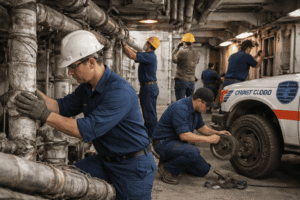 Coast Guard engineers, technicians, mechanics, electricians, construction crews, and environmental specialists faced repeated asbestos exposure while working in engine rooms, confined compartments, vehicles, and aging facilities. Routine maintenance, repairs, demolition, and emergency response disturbed asbestos insulation, gaskets, flooring, and fireproofing materials—placing these personnel at serious risk for mesothelioma and other asbestos-related diseases.
Coast Guard Ship Engineers & Technicians
Ship engineers and technicians frequently worked in engine rooms, machinery spaces, and below-deck compartments where asbestos was heavily used. These areas contained insulation on boilers, turbines, pumps, and exhaust systems—critical components that generated intense heat. Asbestos was applied to gaskets, valve packing, and bulkhead panels to prevent fire and protect nearby electrical systems. During maintenance, repairs, or system checks, engineers routinely disturbed these materials while replacing parts, tightening seals, or inspecting insulation. Poor ventilation and constant heat amplified fiber release. Daily exposure while performing routine tasks put these personnel at serious long-term risk of asbestos-related diseases, including mesothelioma and asbestosis.
Coast Guard Machinery Technicians
Machinery Technicians maintained and repaired ship systems that were often insulated with asbestos for heat resistance and durability. They worked on pumps, engines, valves, and propulsion systems wrapped in asbestos materials. Tasks like scraping gaskets, removing insulation, or overhauling equipment disturbed fibers embedded in aging components. Technicians frequently operated in confined, below-deck spaces with limited airflow, increasing the chances of inhaling airborne asbestos. Even routine maintenance jobs stirred dust from insulation blankets and seals. Because they handled critical mechanical systems daily, Machinery Technicians experienced repeated asbestos exposure—often without proper protective gear or knowledge of the long-term health risks involved.
Coast Guard Vehicle Maintenance Crews
Coast Guard Electricians
Electricians in the Coast Guard frequently worked around asbestos-containing wiring insulation, circuit panels, and electrical enclosures. Older vessels and facilities relied on asbestos for its fire-resistant properties, especially in high-voltage or heat-prone areas. Tasks like rewiring, replacing conduit, or opening fuse boxes often disturbed asbestos insulation, releasing microscopic fibers into the air. Electricians operated in confined spaces—such as behind control panels or within engine rooms—where disturbed dust had nowhere to escape. Routine maintenance, troubleshooting, or retrofitting exposed these workers repeatedly, often without protective masks or adequate ventilation. Over time, this made electricians one of the most at-risk groups for asbestos exposure.
Coast Guard Damage Controlmen & Firefighters
Damage Controlmen and Firefighters in the Coast Guard routinely handled asbestos-laden materials during shipboard emergencies and training. Firefighting suits, blankets, gloves, and heat shields were often manufactured with asbestos to withstand extreme temperatures. These personnel also cut through walls, sealed ruptures, and conducted damage repairs in areas lined with asbestos-containing insulation, gaskets, and wall panels. During fire suppression or structural damage response, fibers were released from disturbed materials—especially in confined or poorly ventilated compartments. Repeated drills and real-world responses caused ongoing exposure. The intensity and unpredictability of their roles placed these service members at high risk for long-term asbestos-related illnesses.
Coast Guard Plumbers & Pipefitters
Plumbers and Pipefitters in the Coast Guard were frequently exposed to asbestos while removing and installing insulated piping systems. Older vessels and facilities relied on asbestos wraps, cement, and gaskets to insulate steam, water, and hydraulic lines. Cutting into or replacing these pipes released dust from deteriorated insulation. Fitting new joints or sealing old ones stirred up hidden fibers, especially in engine rooms, boiler spaces, and mechanical compartments. These technicians often worked in tight, poorly ventilated conditions without adequate protective gear. Routine maintenance tasks led to prolonged asbestos exposure, increasing the risk of developing mesothelioma and other respiratory diseases.
Coast Guard Construction Workers
Coast Guard Construction Workers were regularly exposed to asbestos during demolition and renovation projects on bases, shipyards, and older structures. Many buildings constructed before the 1980s were lined with asbestos-containing materials in ceiling tiles, wallboard, flooring, insulation, and roofing products. Tearing down walls, removing old flooring, or replacing damaged ceilings released asbestos fibers into the air. These tasks were often performed indoors with limited ventilation and without proper respiratory protection. Even routine repairs stirred settled asbestos dust hidden in structural components. Over time, repeated exposure placed construction workers at high risk for asbestos-related illnesses, including mesothelioma and asbestosis.
Coast Guard Sheet Metal Workers
Coast Guard Sheet Metal Workers were exposed to asbestos while fabricating and installing ducts, panels, and enclosures aboard ships and on base facilities. Many of the metal components they worked on were coated with asbestos insulation or backed by asbestos-containing materials to resist heat and fire. Cutting, grinding, and shaping these materials released harmful asbestos fibers into the air, especially in enclosed compartments and workshops. Tasks like fastening insulated panels or modifying ventilation shafts frequently disturbed aging insulation. Without adequate protective equipment or dust controls, workers inhaled airborne fibers regularly. Long-term exposure led to serious respiratory risks and asbestos-related diseases.
Coast Guard Flooring Technicians
Coast Guard Flooring Technicians frequently handled asbestos-laden materials while removing or replacing old floor tiles and adhesives aboard ships and in base housing. Vinyl, asphalt, and linoleum tiles used before the 1980s often contained asbestos for durability and fire resistance. Adhesives and mastic beneath these tiles also included asbestos fibers. Scraping or chipping old flooring released dust into the air, especially during renovations in confined ship compartments. Without proper respirators or ventilation, technicians inhaled fibers during routine tasks. Repeated exposure over years of flooring projects placed these workers at significant risk of developing mesothelioma and other asbestos-related illnesses.
Coast Guard Demolition Crews
Coast Guard Demolition Crews faced high asbestos exposure while tearing down outdated structures and ship sections lined with asbestos-containing materials. During structural breakdowns, asbestos insulation, ceiling panels, pipe coverings, and flooring were often shattered, sending fibers airborne. Crews used saws, jackhammers, and crowbars to remove walls and systems coated in fireproofing or insulation. These tasks released heavy dust clouds in tight spaces with poor ventilation. Many workers were unaware of the danger or lacked protective gear. Repeated exposure during demolition operations on ships and base buildings significantly increased the risk of mesothelioma, lung cancer, and other asbestos-related diseases.
Coast Guard Environmental Control Technicians
Environmental Control Technicians in the Coast Guard maintained HVAC systems that often included asbestos insulation around ducts, valves, and heat exchangers. These technicians worked in confined mechanical rooms where asbestos-lined components deteriorated over time. Routine tasks—such as repairing air handlers, replacing gaskets, or cleaning ductwork—disturbed settled asbestos fibers, sending them into the air. Many technicians used tools to scrape or cut through insulation without realizing the materials were hazardous. Without consistent use of respirators or containment, daily exposure during system checks and repairs increased the likelihood of inhaling dangerous fibers, contributing to long-term respiratory illnesses and asbestos-related diseases.
🚢 High-Risk U.S. Coast Guard Jobs & Ranks with Asbestos Exposure
U.S. Coast Guard personnel—across all ranks from Seaman Recruit to Chief Petty Officer, Warrant Officers, and Commissioned Officers—were routinely exposed to asbestos aboard ships, aircraft, and base facilities built before asbestos regulations were implemented in the late 1970s.
🛠️ High-risk Coast Guard jobs included machinery technicians, electricians, damage controlmen, boiler technicians, and aviation mechanics. These roles involved direct contact with asbestos-containing insulation, gaskets, brake pads, pipe lagging, turbine components, and fireproof wall panels—especially in engine rooms, pump stations, and control areas.
🛥️ Coast Guard cutters, icebreakers, buoy tenders, and patrol boats were built with asbestos in multiple systems, including ventilation ducts, exhaust systems, floor tiles, and heat shields. Personnel performing routine maintenance or emergency repairs often disturbed these materials, releasing hazardous fibers into the air.
🛑 Most service members were never warned of the dangers or issued respiratory protection. As a result, many veterans are now facing mesothelioma, lung cancer, and other asbestos-related diseases tied to their service in the Coast Guard.
Coast Guard Aircraft and Asbestos Exposure
 Many U.S. Coast Guard aircraft built before the 1980s contained asbestos in critical components. Asbestos was used in cockpit panels, engine insulation, brake pads, and electrical systems to resist heat and prevent fires. Aircraft such as the HH-52A Seaguard, HU-16E Albatross, HC-130 Hercules, and HH-65 Dolphin exposed maintenance crews and aircrew to asbestos during inspections, repairs, and overhauls. Tasks like replacing brake linings or rewiring panels disturbed asbestos materials, releasing airborne fibers. Prolonged exposure in enclosed hangars or during field maintenance put many Coast Guard personnel at risk for long-term asbestos-related diseases without their knowledge.
Many U.S. Coast Guard aircraft built before the 1980s contained asbestos. High-risk models included:
Coast Guard HH-52A Seaguard Helicopter
The HH-52A Seaguard, a widely used Coast Guard rescue helicopter, contained asbestos in several key components including brake linings, engine insulation, and electrical panels. Asbestos was selected for its fire resistance and durability under high-heat conditions common in rotorcraft operations. Mechanics and aircrew performing maintenance often worked around or directly handled asbestos-insulated parts during brake changes, engine servicing, and avionics repairs. Enclosed compartments and limited airflow around the engine and panel areas allowed disturbed fibers to linger in maintenance bays. Repeated exposure during inspections or emergency repairs placed personnel at risk for inhaling asbestos dust, increasing the likelihood of long-term health complications.
Coast Guard HU-16E Albatross Aircraft
The HU-16E Albatross, an amphibious search and rescue aircraft, contained asbestos in critical high-temperature areas such as engine exhaust insulation, firewall linings, and internal heating systems. These components required fireproofing to withstand prolonged flight operations and emergency landings. Asbestos materials were used to insulate heat-prone areas and prevent fires from spreading into crew compartments. Maintenance personnel regularly worked near these asbestos-lined zones during routine engine checks, system upgrades, and heater repairs. Over time, cracked insulation and deteriorating panels released fibers into the air. Mechanics and crew were frequently exposed while working in confined hangars or tight fuselage areas, raising serious long-term health risks.
Coast Guard HC-130 Hercules Transport Aircraft
The HC-130 Hercules, a long-range surveillance and transport aircraft used by the Coast Guard, contained asbestos in multiple onboard systems. Asbestos was used in cockpit panels for fire protection, engine components to manage extreme heat, and brake pads to handle friction during takeoffs and landings. Maintenance crews frequently removed and replaced worn parts during inspections, unknowingly disturbing asbestos-containing materials. Tasks like brake servicing, engine repair, and avionics upgrades released airborne fibers, especially in enclosed maintenance bays. Because of repeated mechanical wear and the aircraft’s demanding operational tempo, workers faced ongoing exposure to asbestos dust—often without protective gear or full awareness of the hazard.
Coast Guard HH-65 Dolphin Helicopter
The HH-65 Dolphin, a twin-engine helicopter used by the U.S. Coast Guard for search and rescue operations, contained asbestos in various onboard systems. Asbestos was used in wiring insulation to prevent electrical fires, in engine gaskets to seal high-temperature components, and in heat shields to protect surrounding structures from exhaust heat. Maintenance personnel working on avionics, engines, or exhaust systems frequently encountered these asbestos-containing materials during repairs and part replacements. Disturbing insulation or replacing degraded gaskets released asbestos fibers into confined hangar environments. Over time, repeated exposure during scheduled servicing placed technicians and mechanics at significant risk of inhaling asbestos dust.
Coast Guard HH-60J Jayhawk Helicopter (early models)
Early models of the HH-60J Jayhawk, a medium-range recovery helicopter used by the U.S. Coast Guard, potentially contained asbestos in several key components. Rotor brake linings were often manufactured with asbestos to handle intense friction and heat during landing operations. Insulation panels within the engine compartments and avionics bays may have included asbestos-based materials to provide fire resistance and thermal protection. Maintenance crews inspecting or repairing engine systems, brake assemblies, or cabin insulation could unknowingly disturb aging asbestos, releasing harmful fibers. Confined maintenance spaces and routine part replacements heightened exposure risks for aviation technicians working on early Jayhawk models.
Coast Guard HC-123 Provider Aircraft (used before retirement)
The HC-123 Provider, used by the U.S. military and Coast Guard before retirement, contained asbestos in multiple components—especially around its engine nacelles and avionics bays. Asbestos insulation was installed to manage high temperatures and reduce fire hazards during transport and cargo missions. These materials were wrapped around wiring, panels, and structural zones vulnerable to heat. Maintenance crews servicing engine housings or replacing avionics equipment frequently disturbed this insulation, unknowingly releasing asbestos fibers into confined working environments. Because the aircraft predated modern safety regulations, routine inspections and part replacements often occurred without protective gear, placing personnel at long-term risk of exposure.
Coast Guard HC-131 Samaritan (limited use)
The HC-131 Samaritan, though used in limited Coast Guard operations, contained asbestos materials in several internal systems. Asbestos insulation was applied in the aircraft’s air ducts, brake systems, and cockpit heat panels to manage fire risk and thermal control. During maintenance or part replacements, crew members often handled components without realizing they were disturbing asbestos-laden materials. Brake repairs and duct servicing released fibers into surrounding air, particularly in hangars with inadequate ventilation. Since many of these aircraft were in service before asbestos safety guidelines were enforced, repeated maintenance tasks placed technicians and support staff at risk of inhaling hazardous asbestos particles.
Coast Guard C-27J Spartan Aircraft (modern, but earlier models from other branches may have been retrofitted)
The C-27J Spartan, while modern in its Coast Guard deployment, included earlier models transferred from other military branches that may have been retrofitted with asbestos materials. Some older units contained asbestos in thermal insulation blankets, floor panels, and vibration-dampening pads, especially in cargo areas and avionics compartments. Maintenance crews servicing these parts—such as during retrofits, panel removal, or structural updates—risked disturbing aged asbestos materials. Limited documentation on retrofit specifics made identifying asbestos components difficult. If handled without full protective gear or containment measures, routine inspection and upkeep of these aircraft posed an exposure risk to maintenance technicians and airframe specialists.
Types of U.S. Coast Guard Ships and Asbestos Exposure
 Many U.S. Coast Guard ships built before the 1980s were constructed with asbestos materials throughout vital systems. Asbestos was used in insulation, piping, bulkheads, engine rooms, and electrical compartments to resist heat and fire. Ship types like High Endurance Cutters, Medium Endurance Cutters, Icebreakers, Patrol Boats, and Buoy Tenders placed crew members in daily contact with asbestos. Repairs, maintenance, and general operations often disturbed asbestos-containing materials, releasing fibers into enclosed ship spaces. Without proper protective equipment or ventilation, sailors faced prolonged exposure. Over time, these conditions led to a significant risk of developing mesothelioma and other asbestos-related illnesses.
Coast Guard Cutters (WHEC)
Coast Guard Cutters, including High Endurance, Medium Endurance, and Patrol Cutters, were built with extensive asbestos-containing materials throughout engineering, propulsion, and support systems. Asbestos was widely used to insulate boilers, turbines, steam lines, piping, and electrical panels due to its fireproof and heat-resistant properties. Maintenance tasks—such as replacing gaskets, accessing engine compartments, or repairing valves—often disturbed asbestos insulation and packing. Over time, constant vibration and heat aboard these vessels caused insulation to crack and release hazardous fibers into poorly ventilated compartments. Crew members in engine or mechanical areas faced prolonged exposure, especially when protective gear and containment procedures were lacking.
Coast Guard Patrol Boats (WPB)
Patrol Boats (WPB), though smaller in size, still contained significant amounts of asbestos in key operational areas. Asbestos-lined engine compartments, exhaust systems, and electrical panels were standard in vessels built before modern regulations. These materials were used to resist fire and manage heat within tight mechanical spaces. Crew members conducting engine checks, electrical repairs, or exhaust maintenance frequently disturbed asbestos insulation. The compact layout of patrol boats meant that fibers released from worn components lingered in the air with minimal ventilation. Sailors working in or around these spaces—especially during rough seas or emergency repairs—faced repeated asbestos exposure over their service.
Coast Guard Icebreakers (WAGB)
Icebreakers like the USCGC Polar Star were equipped with asbestos insulation throughout hull compartments, bulkheads, and heating systems. These vessels faced extreme cold and mechanical strain, requiring durable, fire-resistant materials—making asbestos a standard choice. Insulation lined the ship’s inner walls and heat ducts, especially in crew areas and machinery spaces. When performing maintenance or repairs, Coast Guard personnel disturbed aging asbestos insulation that had become brittle over time. The ship’s constant vibration and extreme temperature shifts caused asbestos fibers to break loose and circulate in poorly ventilated compartments. Prolonged exposure aboard these rugged vessels put icebreaker crews at high risk for asbestos-related illness.
Coast Guard Tugboats
Coast Guard Tugboats, used for towing, harbor support, and icebreaking, were built with asbestos-containing materials in engine systems, exhaust lines, and insulation components. Asbestos was commonly used to wrap hot pipes, insulate boilers, and seal gaskets due to its heat resistance and fireproof qualities. Routine maintenance—like valve repairs, gasket replacements, or exhaust work—often disturbed aging insulation and packing. Over time, constant mechanical stress and vibration caused materials to break down and release hazardous fibers into tight, poorly ventilated engine compartments. Crew members working below deck or in engine spaces faced repeated asbestos exposure, especially without proper protection or containment procedures.
Coast Guard Utility Boats
Coast Guard Utility Boats, designed for search and rescue, coastal patrols, and transport, contained asbestos in engine compartments, insulation wraps, and fireproof panels. Asbestos was frequently used around exhaust systems, piping, and heat shields to prevent overheating and fire. Mechanical repairs—including pump replacements, engine overhauls, and gasket changes—often released asbestos fibers from deteriorating materials. These small boats had compact interiors with limited airflow, allowing airborne asbestos to linger during maintenance. Crew members operating or servicing utility boats were often exposed, especially when safety protocols and protective equipment were not in place during repairs.
Coast Guard Seagoing Buoy Tenders (WLB)
Seagoing Buoy Tenders, essential for maintaining maritime navigation aids, often contained asbestos in navigation control panels, communication rooms, and power distribution compartments. These vessels required fire-resistant materials to protect electronics and high-voltage systems. Asbestos insulation was used around switchboards, wiring conduits, and behind wall panels. Crew members performing electrical maintenance or system upgrades frequently disturbed asbestos while opening access panels or rewiring controls. Older tenders built before modern regulations rarely had proper air filtration, allowing disturbed fibers to linger. Over time, routine exposure during basic upkeep put electricians, technicians, and crew members at risk for asbestos-related diseases.
Coast Guard Construction Tenders (WLIC)
Construction Tenders (WLIC), tasked with building and repairing coastal structures, often contained asbestos in hot water systems, deck insulation, pump housings, and ventilation systems. These ships operated in rugged environments and required durable, heat-resistant materials—making asbestos a common choice. Insulation around pumps and heated pipes often broke down, releasing fibers into machinery spaces. Ventilation systems pushed air through asbestos-lined ducts, increasing airborne contamination in crew quarters and work areas. Routine maintenance, especially on plumbing or HVAC components, disturbed aging insulation. As a result, crew members were regularly exposed to asbestos, particularly during repairs in tight or enclosed compartments.
Coast Guard Training Ships
Training ships used in Coast Guard academies and maritime training programs often retained asbestos in dormitories, classrooms, and mechanical spaces. These vessels, many of which were built before asbestos regulations, relied on the material for fireproofing and insulation. Asbestos was commonly found in pipe wraps, engine exhaust linings, wall panels, and floor tiles throughout living quarters and instructional areas. Trainees and instructors performing maintenance drills, repairs, or inspections frequently disturbed these materials. Limited awareness and inadequate protective measures led to routine exposure during daily shipboard training. Over time, prolonged contact with aging asbestos components placed both cadets and staff at risk for long-term respiratory illnesses.
Coast Guard Rescue & Lifeboats
Rescue and lifeboats used by the Coast Guard frequently contained asbestos insulation within their fuel systems, heating units, and under-deck compartments. These smaller vessels were designed for rapid response in harsh conditions, requiring materials that could withstand heat and fire. Asbestos was used to insulate engine components, pipe joints, and electrical connections. During maintenance or emergency repairs, crew members unknowingly disturbed insulation layers, releasing hazardous fibers into tight, enclosed spaces. Because these boats were often used in high-stress, fast-paced operations, protective gear was rarely used. Over time, repeated exposure in confined quarters increased the risk of asbestos-related illness for rescue personnel and service technicians.
Coast Guard Experimental & Support Ships
Experimental and support ships used in testing and logistics operations often carried outdated asbestos materials within test compartments, mechanical spaces, and support gear housing. These vessels were equipped with systems designed for engineering trials, prototype evaluations, or cargo transport—many of which included legacy components insulated with asbestos for fire protection and heat resistance. Areas around turbines, electrical panels, and piping systems were common points of exposure. Technicians performing modifications or evaluations disturbed aged insulation, releasing fibers into poorly ventilated compartments. Since these ships operated with older or specialized equipment, the risk of asbestos exposure was especially high for engineering and maintenance personnel.
These Coast Guard ship types played essential roles in national security, maritime rescue, and coastal defense—but they also contributed to significant asbestos exposure among personnel stationed aboard them. Asbestos was commonly used in insulation, piping, engine rooms, and control panels throughout older vessels. Service members working in these environments unknowingly inhaled asbestos fibers during daily operations, repairs, and emergencies. Today, many retired Coast Guard veterans are suffering the long-term consequences of this exposure, including mesothelioma, lung cancer, and other serious respiratory illnesses tied to asbestos contact.
🚢 U.S. Coast Guard Bases With Asbestos Exposure
From the 1930s to the late 1970s, asbestos was used extensively in Coast Guard cutters, housing, and facilities. Machinery technicians, welders, electricians, and crew members were exposed to asbestos fibers during routine work. Disturbed asbestos released harmful fibers, leading many veterans to suffer from mesothelioma or related diseases. Veterans may qualify for VA benefits or Coast Guard asbestos lawsuits to cover medical costs, lost wages, or survivor compensation.
⚠️ Where Coast Guard Personnel Were Exposed
| Location | Description | Icon |
|---|---|---|
| Cutter Maintenance & Repairs | Exposure to asbestos in engine gaskets, boiler insulation, fireproof coatings, and exhaust systems during maintenance. | 🛠️ Wrench & Gear |
| Base Housing & Barracks | Asbestos in ceiling panels, floor tiles, roofing shingles, joint compound, and wall insulation in housing and dorms. | 🏠 House |
| Shipyard Facilities | Asbestos in piping insulation, welding blankets, engine compartments disturbed during ship repairs and construction. | ⚓ Anchor |
| HVAC & Plumbing Systems | Boilers, ductwork, and steam pipes insulated with asbestos, exposing mechanics and residents during servicing. | 🌬️ Airflow |
| Renovation & Construction | Airborne fibers released from flooring, roofing, and walls during base updates and renovations. | 🏗️ Crane |
| Firefighting & Emergency Response | Training with asbestos fire blankets, gloves, and protective gear releasing fibers during drills or emergencies. | 🔥 Firefighter Helmet |
| Training Centers & Classrooms | Asbestos in floor tiles, acoustic ceilings, and ventilation systems in academies and training facilities. | 🎓 Graduation Cap |
🛠️ Coast Guard Vehicles and Equipment with Asbestos Components
| Equipment | Exposure Risk | Icon |
|---|---|---|
| Utility Trucks & Transport Vehicles | Asbestos in brakes, gaskets, and clutch linings at base and maintenance stations. | 🚚 Delivery Truck |
| Forklifts & Cranes | Brakes and engine insulation containing asbestos, used in loading/unloading operations. | 🚜 Tractor |
| Generators & Portable Power Units | Thermal insulation and wire protection using asbestos in generators on cutters and shore bases. | ⚡ Electric Bolt |
| Buoy Maintenance Equipment | Exposure from worn gaskets and insulation in trailering gear, hydraulic tools, deck cranes. | ⚓ Buoy |
| Fuel Handling Vehicles | Asbestos-insulated engines and exhaust systems in gasoline and diesel tankers; maintenance exposure risk. | ⛽ Gas Pump |
| Mobile Maintenance Units | Electrical wiring, engine heat shields, HVAC insulation containing asbestos. | 🛻 Pickup Truck |
| Construction Equipment | Bulldozers, trenchers, and backhoes with asbestos brake pads, seals, and exhaust linings. | 🚧 Construction Cone |
Many Coast Guard veterans unknowingly worked in these high-risk environments for years. Decades later, they face life-threatening illnesses tied directly to service-related asbestos exposure.
⚓ Common Asbestos Products Used by the U.S. Coast Guard
Before the 1980s, asbestos was widely used on U.S. Coast Guard vessels and facilities in insulation, gaskets, brake linings, and electrical components. Technicians and crew were exposed during repairs and inspections, releasing toxic fibers. Inhalation of these fibers can cause mesothelioma, lung cancer, or asbestosis—often diagnosed decades after exposure. Many veterans now file Coast Guard asbestos exposure lawsuits to recover medical costs, lost income, and long-term compensation.
| Asbestos Product | Description | Icon |
|---|---|---|
| Asbestos Insulation | Used in cutter engines and boiler systems; exposure risk during installation and maintenance. | 🛠️ Wrench & Gear |
| Brake Linings | Found in shipboard equipment and base vehicles; fibers released during brake servicing. | 🚗 Car |
| Gaskets | Used in piping, turbines, and engines; exposure during gasket removal and replacement. | 🔩 Bolt |
| Fireproofing Sprays & Coatings | Applied to machinery and bulkheads; disturbed during repairs. | 🔥 Fire |
| Lagging & Pipe Wrapping | Wrapped around high-pressure pipes and valves; degraded over time, releasing fibers. | 🔄 Recycling Arrows |
| Asbestos Paint | Used on hulls and engine spaces for fire resistance; sanding and stripping releases fibers. | 🎨 Paint Palette |
| Caulking & Sealants | Used in watertight seals and ventilation; breaks down with age causing exposure. | 🏗️ Construction Crane |
| Deck Tiles & Flooring Adhesives | Common in crew quarters and control areas; exposure risk during tile removal or repairs. | 🛋️ Couch |
| Exhaust System Components | Insulated with asbestos for heat control; disturbed during pipe and manifold work. | 💨 Wind Face |
| Pump Packing Materials | Used to prevent leaks in fluid systems; exposure during maintenance and replacement. | 💧 Droplet |
| Electrical Panel Boards | Contained asbestos insulation behind control systems; exposure during electrical work. | ⚡ Electric Bolt |
| Fuel Line Sealants | Used in high-pressure fuel delivery systems; damaged during engine servicing. | ⛽ Fuel Pump |
📞 Take Action Today
If you or a loved one served in the Coast Guard and developed mesothelioma or another asbestos-related illness, you may be entitled to financial compensation. A Coast Guard asbestos exposure lawsuit can help you recover damages for medical care, lost wages, and long-term suffering.
-
📞 Call 800.291.0963 for a free consultation.
-
💰 No upfront costs
-
⚖️ No fees unless you win
-
🛡️ 25+ years helping veterans with asbestos-related illnesses
👪 Family Members Were Also Exposed
Spouses and children of U.S. Coast Guard veterans were unknowingly exposed to asbestos through everyday contact and life on base. These exposures often occurred without any warning, leading to serious health risks years later.
Common Exposure Routes for Family Members:
-
🏠 Living near deteriorating asbestos materials in base housing
-
👕 Washing uniforms contaminated with asbestos dust
-
🧹 Performing daily tasks near vents, tiles, and insulation filled with asbestos fibers
📌 Key Takeaways
-
⚓ Asbestos was used across nearly all areas of Coast Guard operations—from cutter engines to housing ceilings.
-
❗ Most exposures happened without warning during routine duties or family life on base.
-
💼 Veterans and their families may be eligible for Coast Guard asbestos compensation, legal claims, or VA benefits if diagnosed with mesothelioma or related illnesses.
💼 Compensation Options for Coast Guard Veterans with Asbestos Illness
⚠️ Know Your Rights:
If you served in the Coast Guard before 1980 and worked in maintenance, construction, or lived in base housing, you may have been exposed to asbestos. Coast Guard veterans diagnosed with mesothelioma, lung cancer, or asbestos-related diseases may qualify for:
🔹 Asbestos Trust Funds
Over $30 billion available. Payouts range from $100K–$600K+ depending on the level of exposure and diagnosis.
🔹 Lawsuits Against Manufacturers
Not filed against the U.S. military. Most cases settle privately for $1M–$2.4M and do not go to trial.
🔹 VA Disability Compensation
Monthly tax-free payments and access to treatment at VA centers for asbestos-related conditions.
🔹 VA DIC Benefits
Ongoing compensation for surviving spouses or children if a veteran’s death was asbestos-related.
🔹 VA Health Care
Specialized care for mesothelioma and lung cancer available at major VA medical centers (e.g., Boston, Los Angeles).
🔹 Wrongful Death Claims
Covers funeral costs and replaces lost income; can result in high-value settlements.
🔹 Structured Settlements
Monthly or annual payouts with tax advantages compared to lump sums.
🔹 Workers’ Compensation
Applies to veterans with asbestos exposure during post-service civilian employment.
🔹 SSDI Benefits
Federal disability benefits for those unable to work due to asbestos illness; can be combined with other sources.
📌 Tip for Coast Guard Families:
Many veterans qualify for multiple sources of compensation. Working with a VA-accredited attorney or asbestos-focused legal team helps maximize results.
⚖️ U.S. Coast Guard Asbestos Exposure Settlements
From the 1940s to the 1980s, thousands of U.S. Coast Guard service members were exposed to asbestos aboard cutters, in shipyards, housing units, and base facilities. Today, many are receiving compensation through legal settlements and asbestos trust fund claims.
💰 $7.8M Settlement – Machinery Technician
Diagnosed with mesothelioma after 1960s–70s exposure to asbestos in gaskets, boiler insulation, and engine room components aboard ships.
💰 $4.1M Settlement – Electrician’s Mate
Worked on asbestos-laced wiring and electrical panels at Coast Guard bases; later developed asbestos-related lung cancer.
💰 $3.5M Settlement – Port Maintenance Worker
Exposed to asbestos in ductwork and flooring materials at a Coast Guard facility; diagnosed with pleural mesothelioma.
⚖️ $5.2M Verdict – Wrongful Death
Family of a Coast Guard veteran awarded after his death was linked to asbestos exposure in multiple cutter engine rooms.
💰 $6.3M Settlement – Fire Safety Technician
Regularly used asbestos-containing blankets and protective gear during shipboard training exercises; diagnosed in his 70s.
📞 If you or a loved one served in the U.S. Coast Guard and later developed mesothelioma or another asbestos-related disease, help is available.
There are no upfront costs—legal help is free unless you win.
❓ FAQs About Mesothelioma Lawsuits
Q: What is asbestos, and why is it dangerous?
🧱 Asbestos is a mineral used for insulation and fireproofing. When disturbed, it releases microscopic fibers that can cause deadly diseases like mesothelioma and lung cancer.
Q: What are the risks of asbestos exposure?
⚙️ Shipyard workers, mechanics, and construction crews were at high risk. Asbestos was used in piping, gaskets, electrical systems, and insulation.
Q: What is mesothelioma, and how does it develop?
🦠 It’s a rare and aggressive cancer caused by inhaling asbestos fibers. It usually appears 20–50 years after exposure.
Q: What are symptoms of asbestos exposure?
🚨 Watch for:
-
Persistent cough
-
Chest or abdominal pain
-
Shortness of breath
-
Fatigue or unexplained weight loss
-
Wheezing or coughing up blood
Seek immediate medical help if you have these symptoms and a history of asbestos exposure.
Q: What should I do if diagnosed with mesothelioma or lung cancer?
📞
-
Contact a legal team experienced in asbestos claims
-
Collect Coast Guard service records and duty history
-
Explore medical treatment options with specialists
-
Connect with mesothelioma support groups
Q: Can I get compensation for asbestos-related illness?
💰 Yes. Legal settlements, VA claims, and trust funds may provide coverage for medical costs, travel, lost wages, and long-term care.
Q: Are asbestos trust funds still available?
🏦 Yes. Many asbestos manufacturers created trust funds to compensate victims. A lawyer can help file your claim correctly and efficiently.
Q: How long does it take for mesothelioma to develop?
⏳ It can take 20 to 50 years after exposure for symptoms to appear—often delaying diagnosis until retirement age or later.
✅ Find Out if You Qualify Today!

25 Years Helping Coast Guard Veterans & Families Affected by Mesothelioma
Our experienced legal team works on a contingency fee basis, meaning there are NO OUT-OF-POCKET COSTS. You only pay if your case wins. We are proud to support Coast Guard veterans and families nationwide.
Call 800.291.0963 today for a free, no-obligation case evaluation.