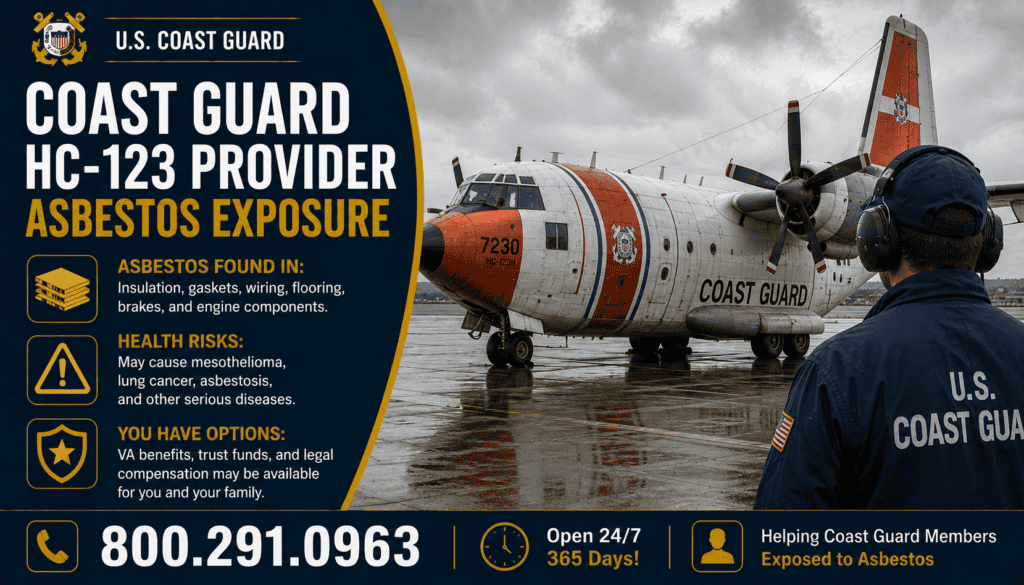
✈️ Coast Guard HC-123 Provider Asbestos Exposure
Used by Coast Guard Before Retirement
The HC-123 Provider was a twin-engine military transport aircraft used by the U.S. Air Force and Coast Guard from the 1950s through the early 1980s. Designed for cargo delivery, aerial resupply, and search and rescue missions, the HC-123 operated under intense mechanical and thermal stress. Asbestos was widely used in the aircraft’s structure to manage high heat and reduce fire risk.
Aircraft mechanics, avionics technicians, and flight crews who serviced or flew on the HC-123 were often exposed to asbestos fibers while working on engine nacelles, avionics bays, or thermal protection systems. Much of this work took place before safety regulations were in place. Replacing insulation or electrical components frequently disturbed asbestos-containing materials, exposing personnel to long-term health risks. Our legal team helps Provider veterans and families file asbestos lawsuits, trust claims, and VA benefits—with no upfront legal fees and no effect on VA compensation.
Why Asbestos Was Used in the HC-123 Provider
To meet fire safety and durability standards in older aircraft, asbestos was used in:
-
Engine nacelle insulation and heat shielding panels
-
Avionics bay liners and wiring bundle wraps
-
High-heat gaskets and mechanical seals in engine systems
-
Brake linings and wheel well pads
-
Cockpit panel adhesives and insulation materials
These parts broke down over time and released asbestos fibers during removal or repair.
HC-123 Provider Deployment by U.S. Military Branches
The HC-123 flew missions across varied terrains before its retirement from active service.
| Branch | Deployment Highlights | Primary Missions |
|---|---|---|
| U.S. Coast Guard | Arctic resupply, maritime patrols | Search and rescue, surveillance, transport |
| U.S. Air Force | Vietnam War, Cold War support | Cargo drops, troop movement, medevac operations |
Decades of deployment increased asbestos wear and exposure for service members on board.
Number of U.S. Service Members Exposed to Asbestos on HC-123 Provider Aircraft
Tens of thousands worked on or near HC-123s during their service life.
| Category | Estimated Number of Personnel Exposed |
|---|---|
| Aircraft Mechanics & Techs | Over 21,000 exposed during engine and insulation work |
| Avionics & Electrical Techs | Around 9,000 worked in fireproofed wiring areas |
| Flight Engineers & Crew | Nearly 10,500 operated in confined asbestos-lined compartments |
| Depot Maintenance Crews | About 7,500 handled asbestos during part retrofits and inspections |
Total Estimated Exposure: Over 48,000 military and Coast Guard personnel were likely exposed to asbestos on the HC-123 Provider.
Asbestos Exposure Areas on the HC-123 Provider
Engine Nacelles & Turbine Housings
-
Insulation wraps contained asbestos
-
Removed during frequent engine checks
Avionics Bays & Electrical Compartments
-
Fireproof liners and panel adhesives used asbestos
-
Techs inhaled dust during upgrades
Wiring Harnesses & Cockpit Panels
-
Wires wrapped with asbestos-based insulation
-
Released fibers during retrofits and strip-outs
Brake Assemblies & Wheel Wells
-
Brake linings built with asbestos for friction control
-
Fiber dust released during replacements
Maintenance Hangars & Cargo Bays
-
Limited ventilation in service areas
-
Asbestos disturbed during standard part changes
HC-123 Personnel at High Risk of Asbestos Exposure
| Occupation | Exposure Level | Exposure Description |
|---|---|---|
| Aircraft Mechanics | Extremely High | Serviced engine nacelles, brakes, and insulation zones |
| Avionics Technicians | High | Removed fireproof panel liners in electronics bays |
| Flight Engineers | High | Worked within enclosed asbestos-lined compartments |
| Electrical Technicians | Moderate | Stripped and replaced wiring insulation |
| Depot Maintenance Crew | Moderate | Handled degraded asbestos parts during aircraft overhauls |
Common Asbestos Products Used on the HC-123 Provider
Engine Wraps & Heat Shields
-
Insulated nacelles and housings
-
Released dust during removals
Avionics Bay Liners
-
Fireproofing behind electronics and controls
-
Disturbed during upgrades
Wiring Insulation & Clamps
-
Protected high-voltage bundles
-
Frayed and shed asbestos fibers
Brake Linings & Pads
-
Built to resist extreme landing friction
-
Wore down with use
Cockpit Panel Gaskets & Adhesives
-
Bonded instrument panels and seals
-
Degraded and flaked with age
Long-Term Health Risks from HC-123 Asbestos Exposure
-
Mesothelioma – Cancer of the lung lining caused solely by asbestos
-
Asbestosis – Chronic lung disease from fiber inhalation
-
Lung Cancer – Often diagnosed decades after exposure
-
Pleural Thickening – Lung lining scarring that restricts breathing
The Military’s Knowledge of Asbestos Dangers
-
Asbestos risks were identified by the 1930s
-
HC-123 components used asbestos into the 1980s
-
Crews were often uninformed and lacked protective equipment
Lawsuits Filed by HC-123 Provider Veterans
Many veterans have filed claims after asbestos-related diagnoses:
-
Mechanics exposed removing insulation and servicing engine areas
-
Avionics techs inhaled fibers from cracked panels and wiring zones
-
Aircrew worked in cabins surrounded by degrading insulation
-
Families have filed wrongful death claims for loved ones
HC-123 Provider Asbestos Settlements & Verdicts
| Settlement | Case Summary |
|---|---|
| $5.7 million | Mechanic exposed during nacelle insulation replacements |
| $5.2 million | Electrical tech disturbed wiring insulation during upgrades |
| $4.8 million | Flight engineer exposed while operating in confined cabins |
| $4.3 million | Avionics specialist exposed during diagnostics and rewiring |
| $4.0 million | Depot worker exposed during cargo bay rebuilds |
Asbestos Manufacturers & Contractors Involved
| Company | 12-Word Description |
|---|---|
| Fairchild (manufacturer) | Manufactured HC-123 aircraft using asbestos insulation in key system areas |
| Johns-Manville | Supplied thermal insulation, adhesives, and sealants used throughout airframes |
| Raybestos | Produced brake linings and friction pads with asbestos materials |
| Owens Corning | Provided engine insulation wraps and fireproof materials |
| Bendix | Manufactured gaskets, electrical parts, and mechanical seals with asbestos |
| Eagle-Picher | Supplied fireproofing for avionics and cargo bay insulation |
| Westinghouse | Built electrical control units and wiring systems with asbestos fireproofing |
| General Electric | Supplied engine and avionics parts with asbestos-laced insulation |
| Uniroyal | Created adhesives, coatings, and bonding agents containing asbestos |
These companies contributed asbestos materials to HC-123 production and were later named in lawsuits and trust claims.
Veterans & Asbestos Trust Funds
-
Over $30 billion available through asbestos trust funds
-
HC-123 veterans may qualify for multiple payouts
-
Claims avoid court and resolve more quickly than lawsuits
-
Trust compensation does not affect VA benefits
VA Benefits for HC-123 Provider Veterans with Mesothelioma
-
100% VA disability rating available
-
Monthly tax-free payments over $3,800
-
Access to VA mesothelioma specialists nationwide
-
DIC benefits for eligible spouses and children
-
Legal and VA claims can be filed together
HC-123 Provider Asbestos Lawsuit Process
-
Free Case Evaluation
Confirm your service history and diagnosis. -
Investigation
Collect aircraft records and parts documentation. -
File Claims
Submit legal and/or asbestos trust fund claims. -
Resolution
Most settle in 6–18 months. No legal fees unless we win.
Statute of Limitations
-
Lawsuits: 2–3 years from diagnosis (varies by state)
-
Wrongful death: 2–3 years after veteran’s passing
-
Trust fund claims: May offer longer deadlines—don’t delay
Frequently Asked Questions (HC-123 Asbestos Exposure)
Q. Did all HC-123 aircraft contain asbestos?
Yes. Asbestos was used in insulation, brakes, wiring, and panel systems.
Q. Can both Coast Guard and Air Force veterans file claims?
Yes. All branches’ veterans exposed on the HC-123 may qualify.
Q. Can surviving families file after a veteran’s death?
Yes. Spouses and dependents may qualify for legal and VA benefits.
Q. Do I have to go to court?
No. Most claims are resolved through settlements or trust fund compensation.
Why Work with Mesothelioma Help Center
-
25+ years of experience handling aviation asbestos exposure cases
-
Full access to HC-123 aircraft manuals and component logs
-
Millions recovered for retired Coast Guard and Air Force veterans
-
No legal fees unless we win your case
Free Case Evaluation for HC-123 Provider Veterans
If you or your loved one served aboard or maintained an HC-123 Provider and developed mesothelioma or an asbestos-related illness:
Call 800.291.0963 today for a free, no-obligation legal consultation.
Let us help you secure the justice and compensation you deserve.