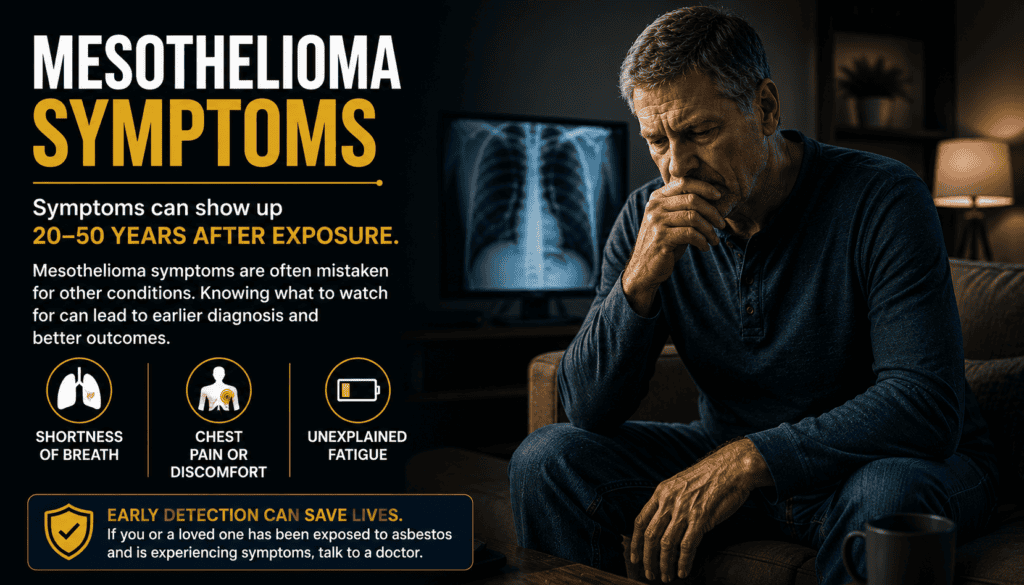
Mesothelioma Symptoms
Early Signs, Breathing Problems, Pain and When to Get Help
Mesothelioma symptoms vary with the location of the cancer, its stage and a person’s overall health. Pleural mesothelioma affects the lining around the lungs and may cause shortness of breath, persistent cough or chest discomfort. Peritoneal mesothelioma affects the abdominal lining and may cause abdominal swelling, pain or digestive changes. Many of these symptoms have common, noncancerous causes; symptoms alone cannot establish a mesothelioma diagnosis.
Because mesothelioma may develop decades after asbestos exposure, people with a relevant work or military history should tell their healthcare team about that history. This guide explains early and later symptoms, provides direct links to 26 detailed symptom and support articles, and outlines when medical evaluation is important.
🧭 On This Page
- Early Warning Signs and Symptom Progression
- Chest and Breathing Symptoms
- Abdominal and Digestive Symptoms
- Whole-Body and General Symptoms
- Other Symptoms and Complications
- Symptom Relief and Supportive Care
- When to Seek Medical Evaluation
- Tracking Symptoms and Preparing for Appointments
- Frequently Asked Questions
Early Warning Signs and Symptom Progression
Early symptoms can be mild and nonspecific, including fatigue, chest discomfort, cough or a sense of fullness in the abdomen. The pattern depends on where mesothelioma develops. Some people have no noticeable symptoms until fluid accumulates or the disease becomes more advanced. Persistent or worsening symptoms deserve evaluation rather than self-diagnosis.
A new symptom does not automatically mean cancer. The more useful question is whether it persists, worsens, or occurs alongside other changes. Tell your doctor how long it has been present and whether it affects work, walking, sleep, or meals.
Early and late symptoms overlap. A person with an early-stage illness can still have significant discomfort, while someone with advanced disease may describe relatively few symptoms. Symptoms alone cannot determine stage.
Chest and Breathing Symptoms
Pleural mesothelioma can cause breathlessness, chest pain, cough and pleural effusion (fluid around the lung). These symptoms can also result from infections, heart or lung conditions, and other diseases. A clinician may use examination, imaging and additional tests to determine the cause.
| Symptom | Possible explanation to discuss with a clinician |
|---|---|
| Shortness of breath | Pleural fluid, restricted lung expansion or another cardiopulmonary condition |
| Chest or shoulder pain | Irritation of chest structures, muscle problems or another cause |
| Persistent cough | Airway or pleural irritation, infection or another respiratory condition |
- Shortness of Breath in Mesothelioma
- Chronic Cough in Mesothelioma
- Chest Pain Caused by Mesothelioma
- Pleural Effusion in Mesothelioma?
- Shoulder & Arm Pain in Mesothelioma
Fluid between the lung and chest wall may make breathing more difficult. A care team may recommend imaging and, in selected cases, removing some fluid to ease discomfort and investigate the cause. Fluid can return, so ask about a plan if breathlessness continues.
Pain may feel sharp, dull, or like pressure along the chest or ribs. Keep track of whether it changes with movement or breathing. Sudden severe chest pain, major breathing difficulty, or fainting requires emergency assessment rather than waiting for a routine appointment.
Abdominal and Digestive Symptoms
Peritoneal mesothelioma can be associated with abdominal pain, swelling, fluid buildup (ascites), appetite changes, nausea and altered bowel habits. Severe abdominal pain, repeated vomiting, inability to pass stool or gas, or significant distention may require urgent medical evaluation.
- Abdominal Pain from Mesothelioma
- Bloating & Abdominal Distention in Mesothelioma
- Constipation & Bowel Obstruction in Mesothelioma
- Nausea & Vomiting Relief in Mesothelioma
- Loss of Appetite in Mesothelioma
Abdominal swelling can develop gradually and may make clothing feel tight or meals uncomfortable. Tell your clinician if you feel full after a few bites, have ongoing constipation, or notice increasing abdominal size.
Because digestive symptoms are common in many other conditions, imaging and medical evaluation are needed to identify the cause. Do not assume that abdominal discomfort is related to asbestos exposure without an assessment.
Bloating and Abdominal Distention in Mesothelioma
Abdominal bloating and swelling can occur in people with peritoneal mesothelioma, a form of cancer affecting the lining of the abdominal cavity. Fluid accumulation, known as ascites, may cause abdominal distention, pressure, discomfort, and an increase in waist size. Some patients also experience abdominal pain, reduced appetite, nausea, or changes in bowel habits.
Although bloating is common and can have many causes unrelated to cancer, persistent or worsening abdominal swelling should be evaluated by a healthcare professional, particularly in individuals with a history of asbestos exposure. Understanding the possible symptoms of peritoneal mesothelioma can help patients recognize when further medical evaluation may be appropriate.
Learn more about Bloating and Abdominal Distention in Mesothelioma, including possible causes, related symptoms, and diagnostic evaluation.
Whole-Body and General Symptoms
Fatigue, unintentional weight loss, weakness, fever or night sweats may occur with mesothelioma but are not specific to it. These changes may reflect many illnesses, medications, nutritional problems or treatment effects. Record when they started and whether they are progressing.
- Severe Fatigue in Mesothelioma
- Unexplained Weight Loss in Mesothelioma
- Night Sweats & Fever in Mesothelioma
- Muscle Weakness in Mesothelioma
- Finger Clubbing in Mesothelioma
Fatigue from cancer is not always relieved by a full night of sleep. Ask the care team to check for treatable contributors such as anemia, poor nutrition, medication effects, pain, or sleep problems.
Unplanned weight loss deserves attention even when appetite seems normal. A dietitian familiar with cancer care can help with practical food choices, smaller meals, and ways to maintain strength during treatment.
Other Symptoms and Complications
Some patients report swallowing difficulties, voice changes, swelling, disrupted sleep or difficulty concentrating. These symptoms have many potential causes, including effects of treatment or unrelated conditions. New facial or arm swelling, especially with breathing difficulty, requires prompt assessment.
- Difficulty Swallowing (Dysphagia) in Mesothelioma
- Hoarseness & Voice Changes in Mesothelioma
- Swelling of the Face & Arms in Mesothelioma
- Cognitive Fog & Confusion in Mesothelioma
- Difficulty Sleeping with Mesothelioma
New swelling in the face or arms, worsening swallowing trouble, or changes in alertness should be reported promptly. The urgency depends on severity and accompanying symptoms; your clinical team can advise on immediate evaluation.
Write down symptoms that may feel unrelated, including hoarseness, shoulder pain, sleep changes, or trouble concentrating. A complete picture can help clinicians assess both the illness and possible treatment side effects.
Symptom Relief and Supportive Care
Supportive and palliative care can help manage pain, breathlessness, fluid-related discomfort, fatigue, emotional distress and day-to-day needs at any stage of illness. Palliative care is not the same as hospice and can be provided alongside cancer-directed treatment. Discuss medications, drainage procedures, rehabilitation and nutrition with the treating team rather than starting therapies without medical guidance.
- Managing Pain and Symptoms of Mesothelioma
- Mesothelioma Symptom & Fluid Management
- Managing Fatigue Naturally
- Managing Financial Stress for Emotional Well-Being
Relief may involve medications, breathing support, procedures to manage fluid, physical therapy, nutrition counseling, and emotional support. The best approach depends on what is causing each symptom and what matters most to the patient.
Family members can help by noticing changes, keeping a medication list, and asking what signs should trigger an urgent call. Patients should also tell the team when a treatment is not providing enough relief; adjustments are often possible.
When to Seek Medical Evaluation
Seek medical evaluation for persistent or unexplained cough, chest or abdominal pain, shortness of breath, swelling or unintentional weight loss, especially if there is a history of asbestos exposure. Clinicians may use imaging and, when indicated, tissue sampling and pathology to establish a diagnosis. Imaging alone may not confirm mesothelioma.
Seek emergency care for severe or sudden breathing difficulty, intense chest pain, fainting or other rapidly worsening symptoms. For an overview of testing, read Mesothelioma Diagnosis. For care options after diagnosis, see Mesothelioma Treatments.
An evaluation may include a physical examination, chest or abdominal imaging, and referral to a specialist. When mesothelioma is suspected, tissue sampling and expert pathology review are generally important for confirming the diagnosis.
If you worked around insulation, boilers, shipyards, construction materials, or older industrial equipment, describe the specific tasks and approximate years. A history of exposure is useful context, but it does not establish a diagnosis on its own.
Tracking Symptoms and Preparing for Appointments
Keep a brief symptom diary noting dates, severity, triggers, weight changes, sleep disruption and medications. Bring prior imaging reports, pathology results and a timeline of occupational, military or household asbestos exposure to appointments. Ask which symptoms should prompt an earlier call and which tests or referrals may be appropriate.
For medical evaluation, the most useful information is an accurate symptom timeline, not a conclusion that asbestos caused the symptoms. A medical professional must assess alternative explanations and determine appropriate testing.
Bring a written list of questions to each appointment. Useful questions include: What could explain these symptoms? Which tests are needed? When will results be available? What should prompt an urgent call?
A trusted relative or friend can attend visits, take notes, and help track next steps. Ask for copies of imaging and pathology reports, and keep them together with your medication list and contact information for the care team.
Frequently Asked Questions
What are the first symptoms of mesothelioma?
Early signs can include breathlessness, persistent cough, chest discomfort, fatigue or abdominal swelling, depending on where the disease occurs. These symptoms are not specific to mesothelioma.
Can mesothelioma cause shortness of breath?
Yes. Pleural disease or fluid around the lungs can contribute to breathlessness, but heart and lung conditions can cause similar symptoms.
What are symptoms of peritoneal mesothelioma?
Abdominal pain, swelling, appetite changes, nausea and changes in bowel function may occur. A clinician should evaluate persistent or worsening symptoms.
Does asbestos exposure always cause symptoms?
No. Many exposed people never develop an asbestos-related disease, and mesothelioma can have a long latency period.
How long after asbestos exposure can symptoms appear?
Mesothelioma often develops decades after exposure, but timing varies. Exposure history alone cannot establish the cause of current symptoms.
Can symptoms confirm mesothelioma?
No. Diagnosis generally requires specialist assessment, imaging and appropriate pathology testing.
When should I seek urgent medical attention?
Sudden or severe shortness of breath, intense chest pain, fainting or rapidly worsening symptoms warrant emergency evaluation.
Can palliative care help with mesothelioma symptoms?
Yes. Supportive and palliative care can help with pain, breathing symptoms, fatigue and quality of life, often alongside cancer treatment.
📚 Authoritative Medical Sources
- National Cancer Institute — Malignant Mesothelioma
- American Cancer Society — Malignant Mesothelioma
- National Cancer Institute — Asbestos Exposure and Cancer Risk
Get Help After a Mesothelioma Diagnosis
Call 800.291.0963 to discuss available assistance. Live chat is available 24/7, 365 days a year. Submit Your Case using the form below. Contacting us does not guarantee compensation, eligibility or any particular legal outcome.
⚕️ Legal & Medical Information Disclaimer
This page provides general information, not medical or legal advice. A qualified clinician should evaluate symptoms and diagnostic results; consult an attorney about legal questions and deadlines.