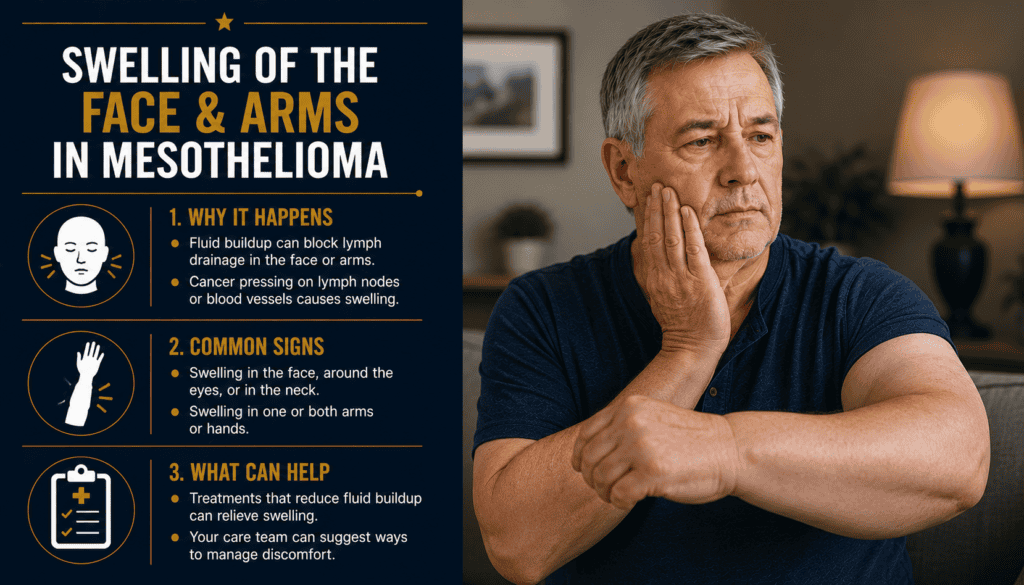
Swelling of the Face & Arms in Mesothelioma
💧 Why It Happens, What It Means & Treatments That Reduce Pressure and Discomfort
Swelling of the face, neck, and arms is a serious symptom that some mesothelioma patients experience—especially those with pleural mesothelioma affecting the upper chest. This swelling is often caused by pressure on the superior vena cava (SVC) — the major vein that carries blood from the head, neck, and arms back to the heart. When tumors block or compress this vein, blood flow slows or stops, leading to swelling and discoloration.
This symptom can be frightening for patients and families. It may appear slowly or suddenly and often worsens when lying down. The good news: fast, effective medical treatments can relieve pressure, restore circulation, and improve comfort.
This guide explains why mesothelioma causes swelling of the face and arms, how doctors identify the cause, and which treatments reduce pressure, protect breathing, and improve quality of life.
📘 What Is Facial & Arm Swelling in Mesothelioma?
Facial and upper-body swelling—also called upper extremity edema—is the abnormal buildup of fluid in the:
-
Face
-
Eyelids
-
Neck
-
Shoulders
-
Upper chest
-
Upper arms
-
Hands
Patients often report:
-
Puffiness around the eyes
-
Tightness in the neck
-
Swollen hands or fingers
-
Facial fullness or heaviness
-
Skin that feels warm, tight, or stretched
Swelling usually occurs on both sides of the body when caused by SVC pressure. If swelling appears only on one arm, it may signal a blood clot, which is also common in cancer patients and needs urgent attention.
💧 Why Mesothelioma Causes Swelling of the Face & Arms
Several mechanisms can lead to this symptom, but the most important—and most urgent—is Superior Vena Cava Syndrome (SVC Syndrome).
1️⃣ Superior Vena Cava (SVC) Syndrome — The Most Common Cause
🩵 The superior vena cava is a large vein that returns blood from the upper body to the heart.
If a tumor presses on or invades this vein, blood flow becomes obstructed. The result is swelling in the:
-
Face
-
Neck
-
Arms
-
Hands
SVC syndrome is a medical urgency, especially if it begins to affect breathing or causes visible neck vein swelling and facial redness or bluish discoloration.
2️⃣ Tumor Pressure on Lymph Nodes
🧠 Mesothelioma often spreads to lymph nodes near the chest and collarbone.
When these nodes enlarge, they can block normal lymphatic drainage, leading to:
-
Facial swelling
-
Neck swelling
-
Arm and hand swelling
3️⃣ Obstructed Blood Flow from Chest Wall Tumors
🫁 Tumors in the upper chest may compress smaller veins that drain into the SVC, further slowing blood return and contributing to upper-body swelling.
4️⃣ Blood Clots (Common in Cancer Patients)
🩸 Deep vein thrombosis (DVT) in the arms is more common in patients with cancer and central lines or ports.
Signs include:
-
Swelling in one arm only
-
Arm pain or heaviness
-
Warmth or redness
-
Skin tenderness
Blood clots require immediate medical treatment to prevent serious complications like pulmonary embolism.
5️⃣ Radiation Scarring or Post-Surgery Changes
Scar tissue from:
-
Prior thoracic surgery
-
Chest radiation
can narrow major veins and restrict circulation, causing chronic swelling.
6️⃣ Severe Fluid Retention (Advanced Disease)
As cancer progresses, the body may retain fluid due to:
-
Low blood protein levels
-
Heart strain
-
Medication side effects
-
Overall metabolic decline
This can cause generalized edema, including swelling of the face, hands, legs, and abdomen.
📍 Symptoms That Accompany Facial & Arm Swelling
The specific pattern of symptoms helps doctors identify the cause and urgency.
🧊 Swelling-Related Symptoms
-
Tightness or fullness around the eyes or cheeks
-
Puffy or swollen hands and fingers
-
Neck swelling or tight collars
-
Facial fullness or “puffy” appearance
-
Rings, watches, or sleeves feeling tighter than normal
-
Skin that looks shiny, stretched, or reddened
🩵 SVC Syndrome Warning Signs
These symptoms suggest significant pressure on the superior vena cava:
-
Shortness of breath
-
Hoarseness or voice changes
-
Chest pressure or heaviness
-
Prominent, bulging veins in the chest or neck
-
Coughing
-
Difficulty lying flat
-
Facial redness or bluish discoloration
🧠 Blood Clot Symptoms (Usually One Arm)
-
Swelling of one arm only
-
Aching or pain in the arm
-
Warmth or redness over a vein
-
Tenderness when touching or moving the limb
🫁 Respiratory & Circulation Symptoms
-
Wheezing or noisy breathing
-
Voice changes
-
Feeling of choking or throat tightness
-
Head fullness or pressure
-
Dizziness or lightheadedness
These combined symptoms help doctors determine how urgent the situation is and whether breathing or circulation is at risk.
🔍 How Doctors Diagnose Swelling in Mesothelioma Patients
Because facial and arm swelling may signal a dangerous circulation problem, doctors move quickly to identify the cause.
1️⃣ Physical Examination
🩺 Doctors check for:
-
The pattern and extent of swelling
-
Enlarged or bulging neck or chest veins
-
Breathing difficulty or stridor (noisy breathing)
-
Heart rate and blood pressure
-
Skin temperature and color changes
2️⃣ Imaging Tests
📸 Imaging is essential for confirming the cause.
CT Scan (Most Common Tool)
Reveals:
-
Tumor pressure on the SVC
-
Blocked or narrowed veins
-
Enlarged lymph nodes
-
Chest wall or mediastinal masses
Ultrasound (Especially for Suspected Clots)
Used to check blood flow in the arms and identify DVT.
MRI
Provides detailed images of soft tissues and blood vessels if more information is needed.
Chest X-ray
May show:
-
Widened mediastinum
-
Large tumors
-
Fluid buildup
3️⃣ Venography
🩸 A special dye study that maps blood flow through the SVC and connected veins, showing the exact location of any blockage.
4️⃣ Blood Tests
Used to evaluate:
-
Clotting abnormalities
-
Protein levels (which affect fluid balance)
-
Inflammation or infection
-
Kidney and liver function
5️⃣ Symptom Pattern Review
Doctors consider:
-
Whether swelling worsens when lying down
-
Whether both arms or only one arm are swollen
-
If breathing is impaired
-
Whether the face looks red, purple, or bluish
All of this guides how urgently treatment is needed.
💉 Medical Treatments That Reduce Swelling
Treatment aims to relieve pressure, restore blood flow, and protect breathing. The exact approach depends on the cause.
1️⃣ Steroids (Rapid Swelling Relief)
💊 Steroids help reduce inflammation and pressure around the SVC and nearby structures.
-
Can improve swelling and breathing within 24–48 hours
-
Often used as an early, fast-acting measure
2️⃣ Tumor-Reducing Treatments
📉 Shrinking the tumor helps relieve compression of veins and lymph nodes.
Options include:
-
Chemotherapy
-
Immunotherapy
-
Radiation therapy
Radiation is especially effective when SVC syndrome is caused by tumor pressure in the upper chest.
3️⃣ Stent Placement in the Superior Vena Cava
🧵 A small metal stent is placed inside the SVC to keep it open.
Benefits:
-
Rapid improvement in blood flow
-
Swelling often improves within hours
-
Helps even if tumors regrow later
This is a key treatment for severe SVC syndrome.
4️⃣ Blood Thinners (If a Clot Is Present)
🩸 For deep vein thrombosis (DVT) in the arms:
-
Anticoagulant medications are used to stop the clot from growing
-
Help prevent the clot from traveling to the lungs (pulmonary embolism)
5️⃣ Diuretics (Fluid-Reduction Medications)
💧 These medications help the body remove excess fluid through urination.
Useful when swelling is related to:
-
Low protein levels
-
Heart strain
-
Systemic fluid retention
6️⃣ Oxygen Therapy
🫁 If breathing is affected, supplemental oxygen helps reduce strain and improve comfort while other treatments take effect.
7️⃣ Palliative Care Support
🏥 Palliative care teams specialize in:
-
Relieving tightness and pressure sensations
-
Managing breathlessness and anxiety
-
Coordinating symptom control with oncology and pulmonary specialists
🏠 At-Home Strategies to Reduce Discomfort
While medical treatment is essential, simple home strategies can ease discomfort and improve circulation.
✔️ Elevate the head and upper body when resting or sleeping
✔️ Avoid lying completely flat, which can worsen facial congestion
✔️ Keep arms elevated on pillows when possible
✔️ Use cool compresses on the face or neck to relieve tightness
✔️ Wear loose clothing around the neck, chest, and shoulders
✔️ Limit salty foods, which increase fluid retention
✔️ Encourage gentle arm movements to support lymphatic drainage (unless a clot is suspected)
🚨 When Facial or Arm Swelling Is an Emergency
Seek immediate medical attention if swelling is accompanied by:
-
Severe shortness of breath
-
Noisy or high-pitched breathing (stridor)
-
Difficulty swallowing or speaking
-
Blue or purple discoloration of the face, lips, or neck
-
Sudden chest pain
-
One-sided arm swelling with pain and warmth
-
Rapidly increasing facial or neck swelling
-
Fainting, dizziness, or confusion
These signs may indicate:
-
Progressing SVC syndrome
-
A major vein obstruction
-
A blood clot
-
Dangerous airway pressure
This is considered a medical urgency and must be evaluated immediately.
⚖️ Legal Importance of Facial & Arm Swelling in Mesothelioma Cases
Swelling of the face and arms is a powerful indicator of advanced, high-impact disease — and it can significantly strengthen a legal claim.
💰 Increases Pain & Suffering Compensation
This symptom affects:
-
Breathing and comfort
-
Ability to sleep lying down
-
Physical appearance and self-confidence
-
Independence and daily functioning
-
Emotional well-being for both patient and family
These factors often lead to higher pain and suffering compensation.
📑 Confirms Disease Progression in Medical Records
Imaging and clinical notes documenting:
-
SVC compression
-
Enlarged lymph nodes
-
Major vein obstruction
-
Need for stents, radiation, or steroids
…all provide strong, objective evidence of mesothelioma severity and impact.
🏭 Helps Link Harm to Occupational Asbestos Exposure
This symptom commonly appears in patients with a history of heavy asbestos exposure, including:
-
Navy veterans and shipyard workers
-
Pipefitters and boilermakers
-
Insulators
-
Construction and industrial workers
-
Power plant workers
-
Refinery and manufacturing workers
These exposure histories strengthen the connection between asbestos exposure and advanced mesothelioma in legal claims.
🚨 Urgent: Get Legal Help for Mesothelioma or Asbestos Lung Cancer
If you or a loved one is experiencing swelling of the face, neck, or arms due to mesothelioma or asbestos-related lung disease, do not wait.
You may qualify for significant financial compensation—but strict deadlines apply, and advanced symptoms like SVC syndrome often support fast-track legal action.
⚖️ What Our Legal Team Can Do Right Now
-
🏭 Identify where asbestos exposure occurred
-
🧾 File asbestos trust fund claims that may be worth millions in total
-
💼 Pursue lawsuits against the companies that caused the exposure
-
🚀 Fast-track your case when severe symptoms like SVC syndrome are present
-
💰 Seek compensation for medical care, home assistance, breathing support, and pain & suffering
⏳ Time is critical — advanced symptoms make quick action even more important.
📞 Call Now for Immediate Legal Help: 800.291.0963
Your consultation is free, confidential, and available 24/7.
⚠️ Disclaimer
This content is for informational purposes only and does not constitute medical advice, diagnosis, treatment, or legal guidance.
Always consult:
-
A licensed physician for questions about symptoms, diagnosis, and treatment, and
-
A qualified attorney for advice about legal rights and compensation.