⚖️ Lawsuit for Asbestos Exposure
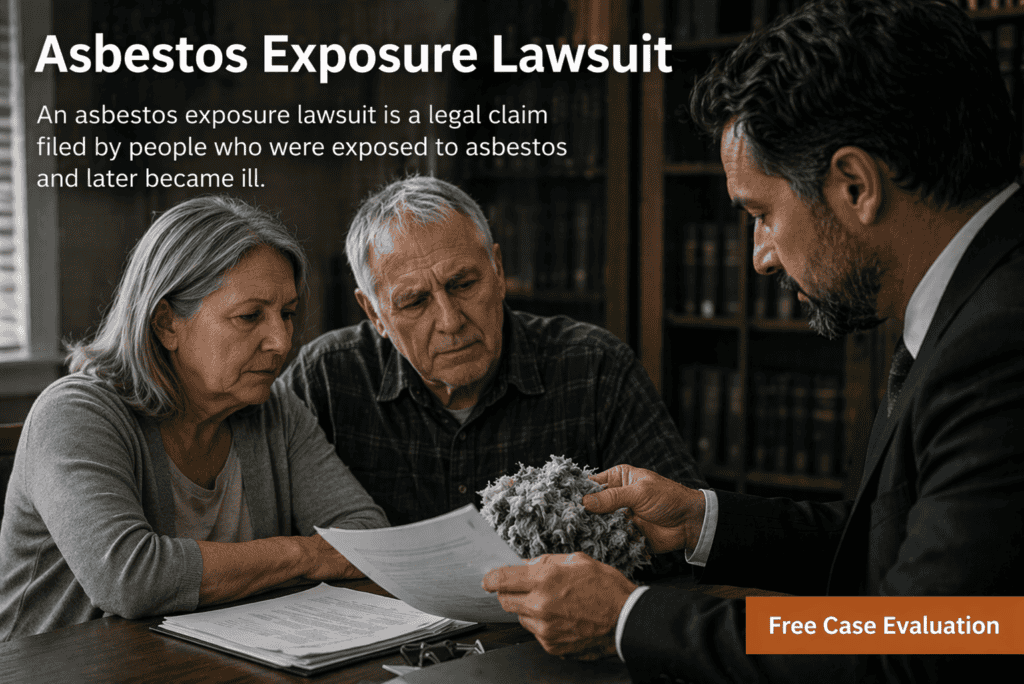
An asbestos exposure lawsuit is a legal claim filed by people who were exposed to asbestos and later became ill—or by families who lost a loved one—to hold responsible companies financially accountable. These cases are not class actions. Each claim is evaluated based on your exposure history, medical evidence, and the laws of the state where the case is filed.
Asbestos was widely used for decades in construction materials, industrial products, ships, military equipment, power plants, factories, and older buildings. Because asbestos-related diseases often take 20–50 years to develop, many victims don’t connect their illness to past exposure until symptoms appear and a diagnosis is confirmed. Start with the basics here: Understanding Asbestos Exposure and Its Long-Term Health Impact
Filing a lawsuit can help cover medical bills, lost income, caregiving needs, and long-term financial security. If you want the clearest next step on eligibility and timing, read: Who Can File an Asbestos Lawsuit & When
⚖️ What Is an Asbestos Exposure Lawsuit?
An asbestos exposure lawsuit is a civil claim against manufacturers, suppliers, contractors, employers, or property owners responsible for asbestos exposure. The core goal is to show (1) exposure occurred, (2) specific companies were responsible, and (3) that exposure caused disease or measurable harm.
Because asbestos diseases have long latency periods, claims can still be valid decades after exposure. For a broader hub of related legal topics, visit: Articles for People with Asbestos Exposure
🧪 Who Qualifies for an Asbestos Exposure Lawsuit?
You may qualify if one or more of the following apply:
-
🩺 You have an asbestos-related diagnosis
-
🏗️ You were exposed at work or through jobsite materials
-
🎖️ You served in the U.S. military
-
🏠 You had secondhand exposure through a family member
-
🕊️ You lost a loved one and may qualify as a surviving family member or estate representative
If your job history is a major part of proof, this page helps: Which Occupations Qualify for the Most Trust Funds
👨👩👧 Who Can File an Asbestos Lawsuit & When?
This is the most common question families ask—especially when symptoms and diagnosis move quickly. Use this guide as your primary eligibility and deadline reference: Who Can File an Asbestos Lawsuit & When
⚖️ Difference Between an Asbestos Lawsuit vs. a Mesothelioma Lawsuit
🧬 Asbestos Lawsuit (Exposure-Driven)
An asbestos lawsuit can involve several diseases linked to asbestos exposure (not only mesothelioma). It focuses on proving exposure sources and company responsibility.
🧫 Mesothelioma Lawsuit (Diagnosis-Specific)
A mesothelioma lawsuit is filed after a confirmed mesothelioma diagnosis and is often treated as a distinct legal pathway because the disease is strongly associated with asbestos exposure. For the full mesothelioma-specific hub, see: Mesothelioma Lawsuit
⏳ Deadlines: Statutes of Limitation and Legal Time Limits
Every state has strict filing deadlines. In most cases, the clock starts at diagnosis (personal injury) or the date of death (wrongful death), not the date of exposure. Start here: Time Limits and Statutes of Limitation for Filing Claims and for asbestos-focused deadline clarity: Legal Deadlines for Asbestos Claims
🧾 Lawsuits vs. Trust Fund Claims
Many asbestos companies went bankrupt and were required to fund trusts that pay victims. Trust claims are separate from lawsuits, and many people qualify for both. Learn how this works here: Understanding Asbestos Trust Funds
⚖️ Settlement Value: What Impacts Compensation
Compensation depends on diagnosis, exposure strength, number of defendants, and jurisdiction. For realistic expectations and how outcomes are evaluated, see: Settlements and Verdicts: What to Expect Financially
📞 Free Case Evaluation — Talk to Someone Today
If you or a loved one was exposed to asbestos, time matters. Legal deadlines can affect your eligibility—even decades after exposure.
📲 Call 800-291-0963 for a free, confidential case evaluation.