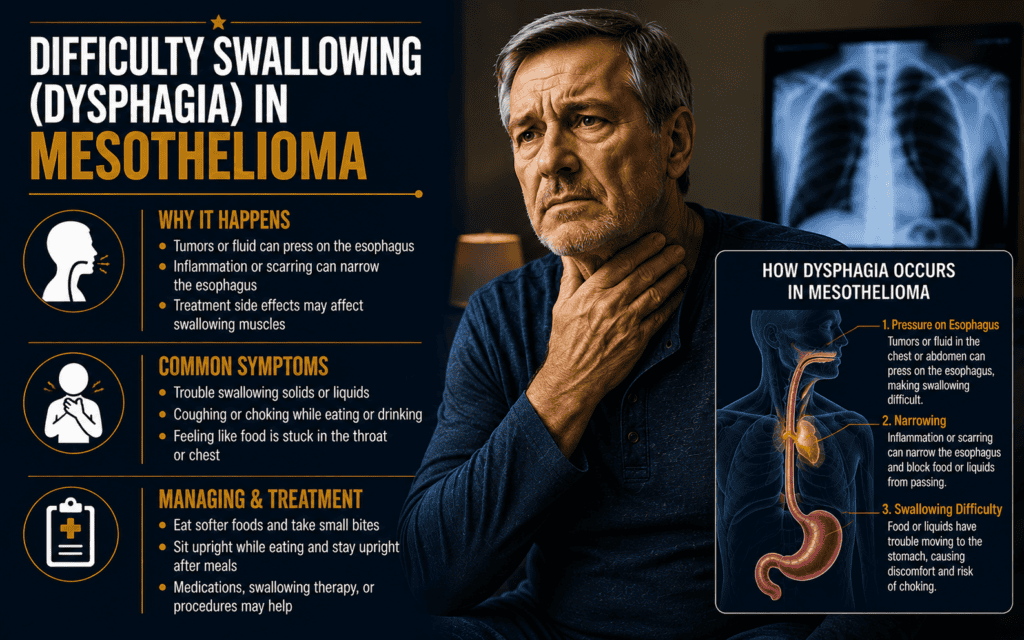
Difficulty Swallowing (Dysphagia) in Mesothelioma
Causes, warning signs, swallowing evaluations, nutrition and practical care for patients and caregivers.
Difficulty swallowing, medically called dysphagia, can make food, liquids or pills hard to move from the mouth to the stomach. Some people feel that food sticks behind the breastbone; others cough as they drink. Trouble swallowing is a possible symptom of pleural mesothelioma, but it is not specific to this cancer. Reflux, medication effects, infections and other conditions may also be responsible. A new symptom deserves an individual medical assessment rather than an assumption about its cause.
Safety first: If a person cannot breathe, is choking and cannot clear the airway, or has a food blockage with breathing difficulty, call emergency services. If swallowing suddenly becomes impossible, even saliva cannot be swallowed, or dehydration is developing, seek immediate medical assessment. Do not force food, water or tablets past a suspected blockage.
Understanding dysphagia
Swallowing has several stages: chewing and moving a bite through the mouth, directing it safely through the throat, and carrying it down the esophagus. A problem at any stage can reduce intake or allow food and fluid to enter the airway. Clinicians distinguish oropharyngeal dysphagia (trouble starting a swallow or coughing during it) from esophageal dysphagia (food seeming to stick after the swallow). These patterns guide testing; they do not establish a diagnosis on their own.
| Term | Plain-language meaning |
|---|---|
| Dysphagia | Difficulty moving food, liquid or pills safely from mouth to stomach. |
| Odynophagia | Pain when swallowing; it can occur with or without dysphagia. |
| Aspiration | Food, liquid or saliva enters the airway rather than the esophagus. |
| Regurgitation | Swallowed material comes back up without ordinary vomiting. |
The National Cancer Institute lists mesothelioma symptoms such as breathing difficulty, chest pain and weight loss; the American Cancer Society also identifies trouble swallowing among possible symptoms of pleural disease. Neither list means that every patient will develop it. See the broader mesothelioma symptoms guide for context.
| Swallowing phase | What a patient may notice |
|---|---|
| Mouth | Trouble chewing, moving food or controlling saliva. |
| Throat | Coughing, wet-sounding voice or choking while eating. |
| Esophagus | Food feels stuck lower in the neck or chest after swallowing. |
Possible causes
Several explanations are possible. Disease in the chest can sometimes affect nearby structures or be associated with pressure and discomfort. However, swallowing difficulty may have an entirely separate cause. An examination is needed before attributing it to tumor growth or stage.
| Possible contributor | What the team may investigate |
|---|---|
| Chest disease or pressure | Imaging and symptom pattern if an esophageal or nearby structural effect is suspected. |
| Reflux or esophageal inflammation | Burning, regurgitation, medications and possible gastroenterology assessment. |
| Treatment-related mouth or throat problems | Dry mouth, sores, infection or inflammation depending on treatment received. |
| Neurologic or muscular disorder | Difficulty initiating a swallow, coughing or changes in voice. |
Chemotherapy and other cancer treatments may produce oral problems, although the exact risks depend on the treatment and site. A person who has not received head-and-neck radiation should not assume that radiation-related swallowing damage explains the symptom. Report new symptoms to the oncology team and ask which causes are plausible in the individual case.
| Question | Why it matters |
|---|---|
| Did difficulty start before or after treatment? | Helps establish timing without proving causation. |
| Is it worse with solids, liquids or both? | Can help clinicians select tests. |
| Are there mouth sores or dry mouth? | May point toward a treatable oral contributor. |
| Is chest pain or breathlessness present? | May change the urgency of evaluation. |
Symptoms and patterns
Write down exactly what happens, including the type of food, time of day and whether coughing occurs. Symptoms can fluctuate; an occasional normal meal does not rule out a problem. Related symptoms may include persistent cough, voice changes, chest pain and unexplained weight loss.
| Observation | What to tell the clinician |
|---|---|
| Food sticks after swallowing | Where it seems to stick and whether solids or liquids trigger it. |
| Coughing during drinks | Frequency, voice changes and any fever. |
| Pain on swallowing | Location, severity and whether mouth sores are visible. |
| Eating takes much longer | Meal duration, fatigue and amount actually consumed. |
A wet or gurgly voice after drinking, recurrent coughing or repeated chest infections can suggest impaired airway protection, although aspiration may sometimes occur without obvious coughing. Do not use a home water-swallow challenge to test someone with suspected aspiration; ask the care team for a safe assessment.
| Pattern | Possible impact |
|---|---|
| Avoiding solid foods | Lower protein or calorie intake. |
| Avoiding liquids | Dehydration risk. |
| Trouble swallowing pills | Missed medication or unsafe pill modification. |
| Fear of choking | Reduced food intake and social withdrawal. |
When to seek urgent help
Emergency: Call 911 for severe breathing difficulty or choking that cannot be cleared. An inability to swallow saliva, a suspected complete food blockage, or rapidly worsening swallowing also needs immediate evaluation. Do not attempt to push stuck food down with more food or drink.
| Situation | Action |
|---|---|
| Cannot breathe or clear choking | Call emergency services immediately. |
| Cannot swallow saliva or suspected complete blockage | Seek emergency medical care. |
| New fever, breathlessness or chest congestion after swallowing trouble | Urgent medical evaluation for possible aspiration-related illness. |
| Progressive difficulty or weight loss | Contact the cancer team promptly. |
Also call the oncology team promptly if eating or drinking is insufficient, medicines cannot be swallowed, or the symptom is getting worse. The American Cancer Society advises emergency evaluation for breathing trouble and other serious changes. Patients with shortness of breath may require assessment of both breathing and swallowing rather than treating either symptom in isolation.
| Do | Avoid |
|---|---|
| Stop eating when coughing or choking starts and seek advice. | Forcing more bites or drinks to clear a blockage. |
| Explain new symptoms and treatment history to the team. | Assuming the symptom is necessarily cancer progression. |
| Ask about a safe interim eating plan. | Starting thickened liquids or swallowing exercises without individualized guidance. |
How clinicians evaluate swallowing
A clinician typically reviews when symptoms began, which textures cause difficulty, medicines, treatment history, hydration and weight. Examination may include the mouth, throat, voice, lungs and neurologic function. A speech-language pathologist can evaluate swallowing safety; a gastroenterologist or other specialist may assess suspected esophageal problems.
| Assessment | What it may help determine |
|---|---|
| Clinical swallowing assessment | Symptoms, oral function and whether further testing is needed. |
| Modified barium swallow / videofluoroscopy | How swallowing works and whether material enters the airway. |
| FEES (endoscopic swallowing evaluation) | View of throat structures and airway protection during selected swallowing tasks. |
| Upper endoscopy or esophageal imaging | Potential narrowing, inflammation or another esophageal cause. |
Testing depends on the pattern; not everyone needs every test. Chest imaging may be relevant when the team suspects disease-related pressure or needs to assess the underlying cancer. The mesothelioma diagnosis overview and imaging tests guide explain cancer evaluation, but a dysphagia workup may require different specialists and procedures.
| Prepare for the appointment | Useful detail |
|---|---|
| Symptom diary | First day, frequency, food texture and coughing. |
| Medication list | Pills that are hard to swallow and recent changes. |
| Weight and intake | Recent trend and approximate fluids/meals tolerated. |
| Prior test results | Relevant scans, procedures and swallowing reports. |
Treatment and supportive care
Treatment depends on the identified cause and goals of care. Options might include addressing reflux, oral infections or dry mouth, treating an esophageal narrowing when appropriate, or adjusting the cancer treatment plan. A swallowing specialist may recommend posture, techniques or texture changes after assessment. A dietitian can help protect hydration and nutrition.
| Care approach | When it may be considered |
|---|---|
| Treat an identified reversible cause | For reflux, infection, inflammation or medication-related symptoms. |
| Speech-language pathology | For swallowing assessment and individualized strategies. |
| Gastroenterology or procedural care | For a confirmed structural esophageal problem. |
| Dietitian consultation | For weight loss, inadequate intake or texture-modified meals. |
For some people, a procedure or nutrition support may be discussed if swallowing is unsafe or intake remains inadequate. Decisions about feeding tubes require individualized discussion of benefits, burdens, prognosis and patient preferences; they are not an automatic consequence of dysphagia. The mesothelioma treatment guide covers broader cancer care, while palliative care may help with symptom relief alongside disease-directed treatment.
| Goal | Practical measure |
|---|---|
| Safer swallowing | Follow the individualized plan from the swallowing team. |
| Adequate fluids | Use the recommended consistency and monitor intake. |
| Maintain weight | Work with a dietitian on energy- and protein-dense choices. |
| Reduce distress | Discuss discomfort, anxiety and mealtime support with the care team. |
Eating and medication safety
Until evaluated, follow the clinician’s instructions about what is safe to eat and drink. If swallowing has become unsafe, do not assume soft foods or thin liquids are automatically safe. A professional may recommend specific textures, positioning or temporary restrictions based on testing.
| Everyday issue | Safer discussion with the care team |
|---|---|
| Meals take too long | Ask about smaller, more frequent meals if swallowing is safe. |
| Dry mouth | Ask about oral care, saliva support and medication review. |
| Weight is falling | Request dietitian assessment and nutrition planning. |
| Tablets stick | Ask a pharmacist for an approved liquid or alternative formulation. |
Never crush extended-release, enteric-coated or other tablets without pharmacist approval; some medicines become unsafe or ineffective when altered. Likewise, do not thicken liquids without direction: the appropriate thickness varies and can affect hydration. See mesothelioma diet and nutrition and patient and caregiver support for related care topics.
| Track at home | Why record it |
|---|---|
| Foods and liquids tolerated | Shows changing swallowing patterns. |
| Coughing or wet voice | May indicate a need for urgent reassessment. |
| Daily intake and weight trend | Helps identify nutrition concerns. |
| Medication difficulties | Allows safer alternatives to be arranged. |
Questions to bring: Is this more likely a throat or esophageal problem? Is aspiration suspected? Which test is appropriate? What may I eat and drink safely while waiting? Should a speech-language pathologist or dietitian be involved? What symptoms mean I should go to the emergency department?
Frequently asked questions
| Common question | First step |
|---|---|
| New swallowing trouble | Contact your oncology team for assessment. |
| Coughing during meals | Ask about a swallowing safety evaluation. |
| Unable to swallow saliva | Seek emergency medical assessment. |
Is difficulty swallowing a symptom of pleural mesothelioma?
Yes, it is a possible symptom, but it is not specific to mesothelioma and many patients never experience it. A clinician must evaluate the cause.
Does dysphagia mean my mesothelioma has spread?
No. Swallowing difficulty alone cannot establish spread or stage. Reflux, inflammation, treatment effects and other conditions are also possible.
Why do I cough when drinking water?
Coughing may mean a swallow is not protecting the airway adequately, although other explanations exist. Tell the cancer team and ask about a swallowing assessment.
What if food feels stuck in my chest?
Stop trying to force it down. If you cannot swallow saliva or have breathing difficulty, seek emergency care. Otherwise contact your clinician promptly for evaluation.
Can I switch to soft foods on my own?
Not if choking or aspiration is suspected. Food and liquid textures should be matched to an individual swallowing assessment.
Should I crush pills that are difficult to swallow?
Do not crush pills unless a pharmacist confirms it is safe. Ask for a liquid, smaller tablet or another approved formulation.
Who treats swallowing problems in cancer patients?
Depending on the cause, the team may include oncology, speech-language pathology, gastroenterology, nutrition and palliative care specialists.
When should I call my doctor?
Report new or worsening dysphagia promptly, especially with weight loss, dehydration, fever, coughing during meals or inability to take medication. Call emergency services for severe breathing trouble.
Confirmed medical references
Get help and explore your options
Call 800.291.0963 to discuss mesothelioma-related legal information. Live chat is available 24/7, 365 days a year. Submit Your Case to request a case review. Eligibility and compensation depend on individual facts; no result is guaranteed.
⚕️ Legal & Medical Information Disclaimer
This article provides general education, not a diagnosis, treatment plan or legal advice. A licensed medical professional should assess swallowing problems; seek emergency care for choking or breathing difficulty. Consult a qualified attorney about legal deadlines and individual options.