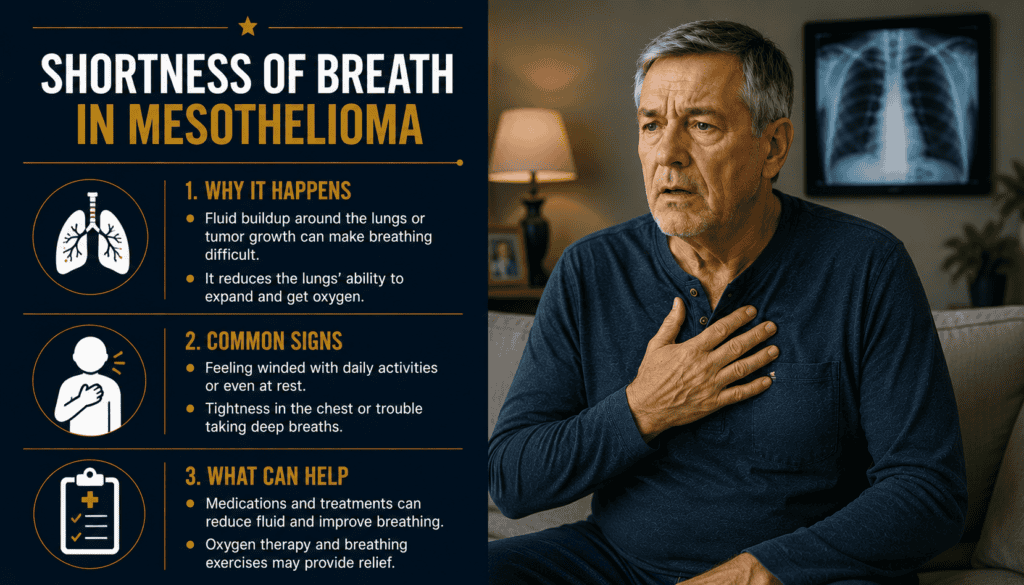
Shortness of Breath in Mesothelioma
🫁 Why Breathing Becomes Difficult & How to Improve Airflow and Comfort
Shortness of breath — also called dyspnea — is one of the most common and frightening symptoms experienced by mesothelioma patients. It often appears early in pleural mesothelioma and may develop later in peritoneal and pericardial types as the cancer progresses.
Patients frequently describe the sensation as:
-
“Air hunger”
-
“Chest tightness”
-
“My breath won’t go in all the way”
-
“Feeling winded even at rest”
Breathlessness can make daily tasks overwhelming and may interfere with walking, talking, sleeping, eating, or simply sitting comfortably. Although this symptom is distressing, many treatments can significantly improve airflow and reduce fear and discomfort.
This guide explains why mesothelioma causes shortness of breath, how doctors diagnose the cause, and the treatments and at-home strategies that help patients breathe easier.
📘 What Is Shortness of Breath in Mesothelioma?
Shortness of breath is the feeling of being unable to get enough air. It may include:
-
Difficulty inhaling fully
-
Rapid, shallow breathing
-
Chest tightness or pressure
-
Air hunger
-
Needing to sit upright to breathe
-
Fatigue from breathing effort
-
Anxiety triggered by breathlessness
It may:
-
Come on suddenly
-
Develop over weeks or months
-
Improve temporarily after fluid drainage
-
Be constant or intermittent
🫁 Why Mesothelioma Causes Shortness of Breath
Mesothelioma affects the lining of the lungs (pleura), abdomen, or heart. Pleural mesothelioma most commonly restricts airflow.
1️⃣ Pleural Effusion (Fluid Around the Lungs)
💧 One of the leading causes of breathlessness.
Tumors cause inflammation that leads to fluid buildup between lung linings. This fluid:
-
Compresses the lungs
-
Limits lung expansion
-
Triggers chest pressure and tightness
Draining the fluid often provides rapid relief.
2️⃣ Tumor Growth on the Pleura
🫁 Tumors stiffen or thicken the pleural lining, making it harder for the lungs to expand.
Patients may feel:
-
Restricted breathing
-
Pain when inhaling
-
Inability to take a deep breath
3️⃣ Lung Entrapment or Collapse
🔥 Tumor spread or fluid buildup may prevent full lung inflation.
This causes:
-
Persistent breathlessness
-
Air hunger
-
Difficulty lying flat
4️⃣ Chest Wall Invasion
💢 Tumors infiltrating the chest wall cause:
-
Painful breathing
-
Shallow breathing
-
Reduced lung capacity
5️⃣ Pressure on the Diaphragm
⬇️ Tumors or abdominal fluid can push against the diaphragm, making breathing difficult.
Symptoms include:
-
Breathlessness when bending
-
Difficulty breathing after eating
-
Trouble lying flat
6️⃣ Pericardial Mesothelioma
❤️ Mesothelioma affecting the heart lining causes:
-
Fluid around the heart
-
Reduced pumping efficiency
-
Breathlessness with minimal activity
7️⃣ Anemia
🩸 Low red blood cell counts reduce oxygen delivery and worsen breathlessness.
8️⃣ Deconditioning From Fatigue
😮💨 Weakened breathing muscles make even simple tasks exhausting.
📍 Symptoms That Accompany Shortness of Breath
🫁 Respiratory Symptoms
-
Rapid breathing
-
Wheezing
-
Coughing
-
Chest tightness
-
Difficulty taking a deep breath
🔥 Pain-Related Symptoms
-
Chest pain
-
Shoulder or arm pain
-
Pain with deep breathing
⚠️ Other Symptoms
-
Fatigue
-
Anxiety
-
Dizziness
-
Blue lips or fingers
-
Feeling faint or weak
🔍 How Doctors Diagnose the Cause of Shortness of Breath
1️⃣ Physical Examination
🩺 Doctors evaluate:
-
Breathing rate
-
Chest motion
-
Oxygen levels
-
Fluid buildup
-
Signs of infection
2️⃣ Imaging Tests
📸 Essential for identifying the underlying cause.
Chest X-ray reveals:
-
Fluid buildup
-
Lung collapse
-
Tumor shadows
CT Scan shows:
-
Tumor spread
-
Pleural thickening
-
Chest wall involvement
Ultrasound helps guide fluid drainage.
3️⃣ Pulmonary Function Tests
🫁 Measure airflow and lung expansion.
4️⃣ Blood Tests
🩸 Check:
-
Red blood cell count
-
Oxygen levels
-
Infection markers
5️⃣ Fluid Tests
Fluid removed during drainage may show:
-
Mesothelioma cells
-
Infection
-
Inflammation
💉 Medical Treatments That Relieve Shortness of Breath
1️⃣ Pleural Fluid Drainage
💧 Provides some of the fastest relief.
-
Thoracentesis — needle drainage
-
PleurX® Catheter — at-home drainage
-
Pleurodesis — seals the lung to prevent fluid return
2️⃣ Oxygen Therapy
🫁 Stabilizes oxygen levels and reduces air hunger.
Options include:
-
Nasal cannula
-
Home oxygen tanks
-
Portable oxygen concentrators
3️⃣ Medications
💊 Used to improve breathing comfort.
-
Steroids (reduce inflammation)
-
Bronchodilators (open airways)
-
Low-dose opioids (reduce breathlessness sensation)
-
Anxiety medications (manage panic triggered by dyspnea)
4️⃣ Tumor-Reducing Treatments
📉 May help breathing by shrinking tumors:
-
Chemotherapy
-
Immunotherapy
-
Radiation
-
Targeted therapy
5️⃣ Treating Anemia
🩸 Blood transfusions or medications improve oxygen delivery.
6️⃣ Antibiotics
🔥 Used for pneumonia or infections that worsen breathing.
💨 Breathing Therapies to Improve Airflow
Taught by respiratory therapists:
1️⃣ Pursed-Lip Breathing
😮💨 Slows breathing and improves oxygen exchange.
2️⃣ Diaphragmatic Breathing
🫁 Strengthens breathing muscles.
3️⃣ Controlled Coughing
Clears mucus safely.
4️⃣ Positioning Techniques
Help expand lungs:
-
Sitting upright
-
Leaning forward over a pillow
-
Side-lying positions
5️⃣ Incentive Spirometer
Prevents lung collapse and increases airflow.
🏠 At-Home Strategies to Ease Shortness of Breath
✔️ Use a fan for airflow across the face
✔️ Keep the room cool and well-ventilated
✔️ Sit upright during meals
✔️ Avoid large or heavy meals
✔️ Break tasks into smaller steps
✔️ Prop up with extra pillows at night
✔️ Avoid smoke, perfume, and strong odors
🚨 When Shortness of Breath Is an Emergency
Seek immediate help if breathing difficulty includes:
-
Blue lips or fingernails
-
Chest pain
-
Rapid heartbeat
-
Confusion
-
Severe dizziness
-
Fever or chills
-
Coughing blood
-
Sudden worsening pain
-
Inability to speak in full sentences
These may indicate:
-
Lung infection
-
Collapsed lung
-
Blood clot
-
Severe fluid buildup
-
Heart complications
⚖️ Legal Importance of Shortness of Breath in Mesothelioma Claims
Shortness of breath is one of the strongest indicators of mesothelioma severity.
💰 Higher Pain & Suffering Compensation
It affects:
-
Mobility
-
Independence
-
Ability to eat and sleep
-
Emotional health
-
Need for daily assistance
📑 Strong Medical Evidence
Breathing problems often indicate:
-
Pleural effusion
-
Lung collapse
-
Tumor invasion
-
Chest wall involvement
🏭 Helps Prove Asbestos Exposure Harm
Breathlessness is extremely common in:
-
Navy veterans
-
Shipyard workers
-
Pipefitters
-
Insulators
-
Mechanics
-
Construction workers
-
Power plant workers
📞 🚨 Urgent: Get Legal Help for Mesothelioma or Asbestos Lung Cancer
If you or a loved one is losing sleep, struggling to breathe, or suffering because of mesothelioma or asbestos-related lung cancer, do not wait.
You may qualify for significant financial compensation — but deadlines apply.
⚖️ What Our Legal Team Can Do Right Now
- 🏭 Pinpoint where asbestos exposure occurred
- 🧾 File asbestos trust fund claims worth millions
- 💼 Pursue lawsuits against responsible companies
- 🚀 Fast-track your case due to severe symptoms
- 💰 Recover compensation for treatment, bills & pain
⏳ Time matters. Your rights may depend on acting quickly.
📞 Call Now for Immediate Legal Help: 800.291.0963
Your case review is free, confidential, and available 24/7.
🛑 Disclaimer:
This 50-page guide provides general information only. It should not be used as medical or legal advice. If you suspect mesothelioma or have related symptoms, seek medical evaluation right away. For legal concerns, including asbestos exposure and compensation, consult a licensed attorney.