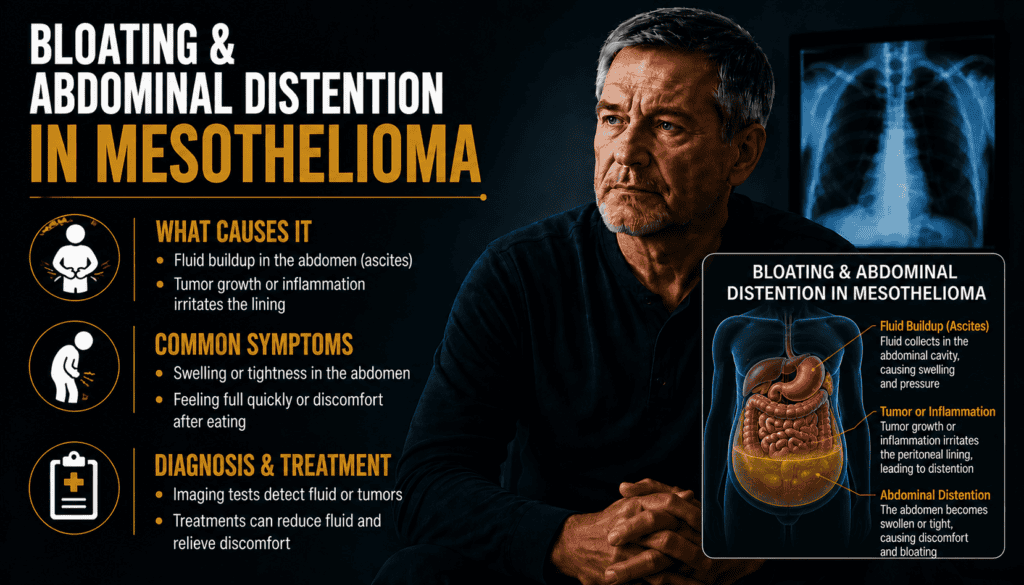
Bloating and Abdominal Distention in Mesothelioma
Causes, Ascites, Symptom Relief & When to Seek Medical Care
A swollen abdomen can make eating, moving, sleeping and breathing uncomfortable. In people with mesothelioma, abdominal bloating may reflect fluid buildup (ascites), tumor-related changes, constipation, medication effects or another medical condition. The symptom alone cannot establish the cause. New or worsening swelling deserves a conversation with the cancer care team, especially when it is accompanied by pain, vomiting or breathlessness.
Peritoneal mesothelioma affects the lining of the abdomen; pleural mesothelioma affects the lining around the lungs. Learn about peritoneal mesothelioma and the broader mesothelioma symptom guide.
🩺 Understanding Abdominal Bloating
Bloating describes a feeling of fullness or pressure. Distention means the abdomen has visibly enlarged. They often occur together, but a person may feel bloated without measurable enlargement. In cancer care, doctors consider the pattern, physical examination, imaging and other symptoms before deciding whether the problem is ascites or something else.
| Term | What it means | Why it matters |
|---|---|---|
| Bloating | Feeling tight or full | Can occur with gas, constipation or fluid |
| Distention | Visible increase in abdominal size | May indicate fluid or another cause |
| Ascites | Excess fluid in the abdominal cavity | May need imaging or sampling |
| Peritoneum | Lining of the abdominal cavity | Site affected by peritoneal mesothelioma |
The National Cancer Institute explains that ascites can produce an enlarged, painful abdomen, appetite changes and sometimes shortness of breath. It also emphasizes that noncancer conditions can cause ascites; do not assume every episode of swelling means cancer progression.
| Observation | Possible interpretation | Next step |
|---|---|---|
| Tight clothing over days | Increasing abdominal girth | Record the change and call the team |
| Fullness after a few bites | Pressure or other digestive symptoms | Discuss nutrition and evaluation |
| New swelling with fever | Possible infection or other urgent problem | Seek prompt medical assessment |
🔎 Why the Abdomen May Swell
Several processes can contribute to abdominal swelling. Cancer may irritate the peritoneum and affect normal fluid balance; abdominal tumors may also contribute to pressure or changes in bowel function. Treatment-related constipation and unrelated liver, kidney or heart conditions must remain on the differential diagnosis.
| Potential cause | Typical clue | How clinicians assess it |
|---|---|---|
| Ascites | Progressively enlarged abdomen | Exam, ultrasound or CT; sometimes fluid sampling |
| Constipation | Infrequent stools or straining | Medication review and bowel history |
| Bowel obstruction | Severe cramping, vomiting, inability to pass gas | Urgent examination and imaging |
| Medication effects | Symptoms after treatment change | Review prescriptions and supplements |
| Other medical disease | Leg swelling or other systemic findings | Tailored laboratory tests and imaging |
See related information on constipation and bowel obstruction and peritoneal effusion in mesothelioma.
| Question | Why the answer helps |
|---|---|
| When did swelling begin? | Distinguishes sudden from gradual change |
| Are stools and gas passing? | Screens for possible bowel problems |
| Is there fever or severe pain? | Identifies warning signs |
| Have medicines changed? | May reveal a treatable contributor |
📋 Symptoms and Patterns to Track
Symptoms are more useful when recorded together rather than considered in isolation. A person may have a larger waistline while losing muscle or body weight. A simple diary can help the care team understand the trend.
| Symptom | What to record | Related resource |
|---|---|---|
| Abdominal pain | Location, severity and timing | Abdominal pain |
| Early fullness | How much food is tolerated | Loss of appetite |
| Nausea | Frequency and triggers | Nausea and vomiting |
| Weight change | Trend, not a single measurement | Unexplained weight loss |
| Fatigue | Effect on daily activity | Severe fatigue |
Practical symptom diary
Use the same time of day for measurements when possible. Do not force yourself to weigh or measure if doing so is painful or unsafe. Bring notes to appointments rather than trying to interpret them alone.
| Daily entry | Example of useful detail |
|---|---|
| Abdominal size | Waist measurement at a consistent location |
| Pain | 0–10 rating and whether it changed |
| Food and fluids | What was tolerated and any vomiting |
| Bowel movement | Date, consistency and passage of gas |
| Breathing | New difficulty at rest or with walking |
Need help now? Call 800.291.0963
Live chat is available 24/7, 365 days a year.
Submit Your Case
🧪 How Doctors Investigate Swelling
Evaluation begins with the medical history and physical examination. Ultrasound or CT can help identify fluid and examine abdominal structures. When appropriate, paracentesis removes a sample of fluid for testing. Fluid results help investigate the cause, but mesothelioma diagnosis may still require tissue biopsy and specialist pathology review.
| Test or step | What it can show | Limitation |
|---|---|---|
| Physical examination | Tenderness, abdominal enlargement and other findings | Cannot identify every cause |
| Ultrasound | Presence and location of fluid | Does not by itself diagnose mesothelioma |
| CT imaging | Fluid, masses and bowel changes | Interpretation depends on clinical context |
| Paracentesis | Fluid for laboratory analysis and possible relief | Fluid may recur; sampling may not settle diagnosis |
| Tissue biopsy | Pathology needed for a definitive cancer diagnosis | Requires an appropriate procedure |
Read about imaging tests for mesothelioma and the mesothelioma diagnosis process.
| Fluid test | Reason it may be ordered |
|---|---|
| Cell count and culture | Evaluate possible infection |
| Protein and albumin | Help assess fluid characteristics and cause |
| Cytology | Look for malignant cells; a negative result does not exclude cancer |
💧 Fluid Drainage and Cancer Treatment
Management depends on why the abdomen is swollen, how severe the symptoms are and the patient’s treatment goals. Paracentesis can remove fluid and may ease pressure, but it does not cure mesothelioma and fluid can return. The care team may discuss a longer-term drainage catheter in selected cases. Cancer-directed treatment is individualized and may include systemic treatment or, for selected people with peritoneal mesothelioma, surgery with heated intraperitoneal chemotherapy at an experienced center.
| Option | Possible goal | Important consideration |
|---|---|---|
| Paracentesis | Relieve pressure and collect fluid | Bleeding, infection and recurrence are considerations |
| Drainage catheter | Manage recurrent fluid in selected patients | Requires training and infection precautions |
| Cancer-directed therapy | Treat underlying disease | Choice depends on diagnosis and overall health |
| Palliative care | Improve comfort and function | Can accompany active cancer treatment |
| Diuretics | Help selected causes of fluid retention | Not uniformly effective for malignant ascites |
Explore paracentesis for mesothelioma and mesothelioma treatment options.
| Before a procedure, ask | Purpose |
|---|---|
| What is causing the swelling? | Clarify working diagnosis |
| What benefit should I expect? | Set realistic symptom goals |
| What complications should I watch for? | Plan safe recovery |
| Who do I call if fluid returns? | Avoid delays in care |
🏠 Daily Comfort and Nutrition
Small, frequent meals may be more comfortable than large portions when the abdomen feels tight. A registered dietitian can help protect nutrition when appetite is poor. Avoid starting water pills, restricting fluids, or adopting a very low-salt diet without medical advice: recommendations depend on the cause of fluid buildup, kidney function and current treatment.
| Comfort measure | How to use it safely |
|---|---|
| Smaller meals | Choose manageable portions more often |
| Loose clothing | Reduce pressure over the abdomen |
| Supported resting position | Find a posture that makes breathing easier |
| Gentle activity | Follow clinician guidance and stop if symptoms worsen |
| Medication review | Ask about constipation and nausea side effects |
Find additional guidance on diet and nutrition and caregiver support and family resources.
| Caregiver task | What helps |
|---|---|
| Keep a symptom log | Share accurate changes with clinicians |
| Prepare appointment questions | Prioritize the most disruptive symptoms |
| Organize prescriptions | Avoid duplicate or conflicting medicines |
| Coordinate transportation | Plan ahead for procedures or urgent evaluation |
🚨 When to Seek Urgent Care
Seek emergency care for severe or rapidly worsening abdominal pain, a rigid abdomen, persistent vomiting with inability to pass stool or gas, fainting, or serious breathing difficulty. Contact the cancer team promptly for fever, new tenderness, quickly increasing swelling, reduced urination or inability to eat or drink. These symptoms may signal problems that cannot be managed safely with home remedies.
| Warning sign | Recommended response |
|---|---|
| Severe pain or rigid abdomen | Emergency evaluation |
| Vomiting and no stool or gas | Emergency evaluation for possible obstruction |
| Severe shortness of breath or fainting | Call emergency services |
| Fever with new abdominal pain | Urgent medical assessment |
| Rapidly increasing swelling | Contact care team promptly |
Even when symptoms improve after drainage, keep follow-up appointments and report new changes. The safest plan is one tailored to the cause, the person’s goals and their medical history.
| Follow-up topic | What to clarify |
|---|---|
| Recurrence | What changes should trigger a call? |
| Testing | Are fluid or pathology results pending? |
| Treatment | Will the current cancer plan change? |
| Home care | Who manages a catheter if one is used? |
❓ Frequently Asked Questions
These answers provide general information. Your oncology team can interpret symptoms in the context of your diagnosis and treatment.
Does abdominal bloating always mean peritoneal mesothelioma?
No. Gas, constipation, medications, other cancers and noncancer illnesses can cause bloating. A clinician must investigate the cause.
What is ascites?
Ascites is an abnormal buildup of fluid inside the abdominal cavity. It can cause distention, discomfort, early fullness and sometimes breathing difficulty.
Can mesothelioma cause a swollen abdomen without pain?
Yes. Some people first notice fullness or increasing abdominal size. Absence of pain does not identify the cause or rule out a serious problem.
How do doctors confirm that fluid is present?
Examination and imaging such as ultrasound or CT may identify fluid. A clinician may recommend paracentesis to sample or drain it.
Does draining ascites cure mesothelioma?
No. Paracentesis can relieve symptoms and provide fluid for testing, but fluid may return and underlying disease needs separate evaluation.
Should I stop drinking water or take diuretics?
Not without individualized medical advice. Fluid and salt guidance and diuretic use depend on the cause of swelling and other health factors.
When is abdominal swelling an emergency?
Severe pain, persistent vomiting with inability to pass gas or stool, fainting, or severe breathing trouble warrant emergency care.
Can palliative care help while I receive cancer treatment?
Yes. Palliative care focuses on symptom relief and quality of life and can be provided alongside cancer-directed treatment.
🧾 Key Takeaways
| Key point | What to remember |
|---|---|
| Swelling has multiple causes | Do not assume it proves progression |
| Ascites is treatable as a symptom | Drainage can relieve pressure but fluid may recur |
| Diagnosis is individualized | Imaging, fluid tests and sometimes biopsy are used |
| Urgent symptoms need prompt attention | Severe pain, obstruction signs and breathing trouble are emergencies |
🔗 Related Mesothelioma Resources
- Mesothelioma symptoms
- Abdominal pain from mesothelioma
- Constipation and bowel obstruction
- Peritoneal effusion
- Paracentesis
- Peritoneal mesothelioma
- Mesothelioma support
📚 Confirmed Government and Medical Sources
- National Cancer Institute: Ascites and Cancer
- National Cancer Institute: What Is Mesothelioma?
- National Cancer Institute: Mesothelioma Treatment
- Memorial Sloan Kettering: Malignant Mesothelioma Patient Education
📨 Submit Your Case
Call 800.291.0963
Live chat is available 24/7, 365 days a year.
Submit Your Case
If you or a loved one has a mesothelioma diagnosis and a history of asbestos exposure, you may request information about potential legal options. Eligibility, deadlines and outcomes depend on individual circumstances; compensation is not guaranteed.
⚕️ Legal & Medical Information Disclaimer
This page provides general information, not medical or legal advice. Seek qualified medical care for symptoms and consult a licensed attorney about individual claims.