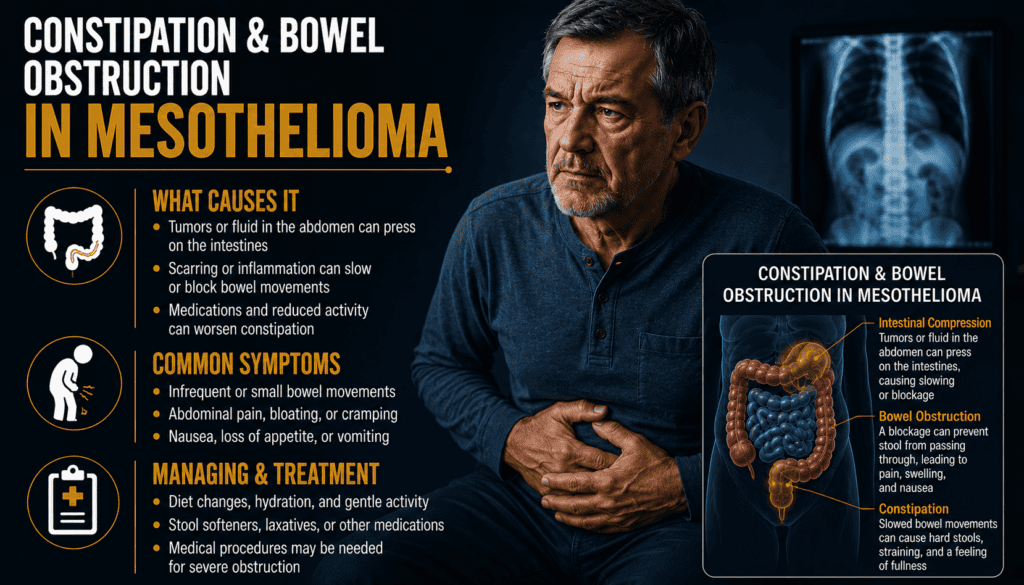
Constipation & Bowel Obstruction in Mesothelioma
🚫 Why It Happens, Warning Signs & Treatments That Provide Relief
Constipation and bowel obstruction are common and often painful complications of peritoneal mesothelioma, the type that forms in the abdominal lining. They can also affect pleural mesothelioma patients due to medications, inactivity, and treatment side effects. Digestive issues range from mild constipation to severe bowel blockages that require urgent medical care.
This guide explains why mesothelioma causes constipation and bowel obstruction, how to recognize early danger signs, which tests diagnose the issue, and which treatments bring meaningful relief.
Why Mesothelioma Causes Constipation & Bowel Obstruction
Several cancer-related factors contribute to digestive problems.
🏗️ 1. Tumor Growth in the Abdomen
Peritoneal tumors may:
-
Press on intestines
-
Narrow bowel passages
-
Restrict digestion
This can cause partial or complete obstruction.
💧 2. Ascites (Fluid Buildup)
Abdominal fluid increases pressure and leads to:
-
Constipation
-
Painful swelling
-
Reduced digestion
💊 3. Pain Medications
Opioid pain medications slow bowel movement, causing:
-
Hard stools
-
Infrequent bowel movements
-
Straining
-
Blockages
🔥 4. Inflammation in the Abdomen
Cancer inflammation thickens bowel tissue, leading to:
-
Slow digestion
-
Reduced intestinal mobility
🥱 5. Severe Fatigue & Inactivity
Low activity means slower bowel movement.
🧬 6. Treatment Side Effects
Chemotherapy may cause:
-
Nausea
-
Poor appetite
-
Dehydration
-
Irregular bowel function
🚫 7. Dehydration
Less fluid intake leads to:
-
Dry stools
-
Difficult bowel movements
🍽️ 8. Low Fiber Intake
Poor appetite results in reduced fiber intake, increasing constipation risk.
Symptoms of Constipation in Mesothelioma
Constipation includes more than infrequent stools.
Common symptoms:
-
🔸 Infrequent stools
-
🔸 Hard, dry stools
-
🔸 Straining
-
🔸 Cramping
-
🔸 Feeling of incomplete emptying
-
🔸 Gas and bloating
If untreated, constipation may progress to bowel obstruction.
🚨 Symptoms of Bowel Obstruction (Medical Emergency)
A bowel obstruction is a life-threatening blockage.
⚠️ Warning Signs
-
Inability to pass stool or gas
-
Severe abdominal pain
-
Vomiting (sometimes foul-smelling)
-
Hard, swollen abdomen
-
Loss of appetite
-
High-pitched or absent bowel sounds
-
Fever
-
Rapid heartbeat
Seek immediate medical help if these occur.
How Doctors Diagnose Constipation & Bowel Obstruction
1️⃣ Physical Examination
Doctors check for:
-
Tenderness
-
Distention
-
Bowel sounds
-
Fluid buildup
2️⃣ Abdominal X-Ray
Shows:
-
Blocked areas
-
Air-fluid levels
-
Bowel dilation
3️⃣ CT Scan
Best for locating:
-
Tumors
-
Fluid pockets
-
Obstructions
-
Bowel twists
4️⃣ Ultrasound
Identifies fluid buildup and compression.
5️⃣ Blood Tests
Detect:
-
Infections
-
Inflammation
-
Dehydration
6️⃣ Paracentesis
Removes abdominal fluid for relief and diagnosis.
Treatments for Constipation
1️⃣ Hydration & Electrolytes
Warm liquids, electrolytes, and IV hydration soften stools and restore movement.
2️⃣ Dietary Adjustments
May include:
-
High-fiber fruits
-
Soft vegetables
-
Whole grains
-
Beans & oatmeal
3️⃣ Stool Softeners
Ideal for opioid-related constipation:
-
Docusate
-
Polyethylene glycol (MiraLAX)
4️⃣ Laxatives
Types include:
-
Osmotic
-
Stimulant
-
Senna
-
Magnesium citrate
5️⃣ Medications for Opioid Constipation
Extremely effective:
-
Movantik
-
Relistor
-
Amitiza
6️⃣ Gentle Physical Movement
Walking or chair exercises improve bowel activity.
7️⃣ Warm Compresses
Relieve abdominal tension.
8️⃣ Treating Underlying Causes
Relief may require:
-
Paracentesis
-
Chemotherapy
-
Immunotherapy
Treatments for Bowel Obstruction (Urgent Care Required)
1️⃣ Nasogastric Tube
Removes trapped stomach contents.
2️⃣ IV Fluids
Prevent dehydration.
3️⃣ Pain Management
Adjusted to avoid worsening obstruction.
4️⃣ Paracentesis
Reduces pressure from ascites.
5️⃣ Surgery (In Select Cases)
May involve:
-
Removing tumor blockage
-
Bypassing obstruction
-
Removing damaged bowel sections
6️⃣ Radiation Therapy
May shrink tumors causing obstruction.
7️⃣ Palliative Care
Focuses on:
-
Comfort
-
Pain relief
-
Nausea control
Lifestyle Tips for Managing Constipation
-
💧 Drink warm liquids
-
🍽️ Eat small, frequent meals
-
🚶 Move gently throughout the day
-
🧘 Reduce stress
-
🛌 Improve sleep patterns
When to Seek Emergency Care
Call a doctor immediately for:
-
No bowel movement for several days
-
Vomiting
-
Hard, swollen abdomen
-
Inability to pass gas
-
Fever
-
Severe abdominal pain
These may indicate a dangerous bowel obstruction.
Legal Importance of Digestive Symptoms in Mesothelioma Claims
Constipation and bowel obstruction help document advanced mesothelioma, strengthening legal claims.
💰 Increases Settlement Value
Severe digestive symptoms impact:
-
Mobility
-
Comfort
-
Appetite
-
Quality of life
This boosts pain & suffering compensation.
📑 Strengthens Medical Causation
Supports:
-
Peritoneal mesothelioma diagnosis
-
Treatment history
-
Evidence of tumor growth
🚀 May Qualify for Fast-Track Claims
Severe symptoms often qualify patients for accelerated:
-
Lawsuits
-
Trust fund claims
-
VA benefits
🏗️ Supports Exposure History
Digestive complications align with asbestos exposure in:
-
Shipyards
-
Naval vessels
-
Power plants
-
Refineries
-
Construction
-
Insulation work
🚨 Urgent: Get Legal Help for Mesothelioma or Asbestos Lung Cancer
If you or a loved one is losing sleep, struggling with abdominal pain, or suffering from mesothelioma or asbestos-related lung cancer, do not wait.
You may qualify for significant financial compensation, but strict deadlines apply.
⚖️ What Our Legal Team Can Do Right Now
-
🏭 Pinpoint where asbestos exposure occurred
-
🧾 File asbestos trust fund claims worth millions
-
💼 Pursue lawsuits against responsible companies
-
🚀 Fast-track your case due to severe symptoms
-
💰 Recover compensation for treatment, bills & pain
⏳ Time matters — your rights may depend on acting quickly.
📞 Call Now for Immediate Legal Help: 800.291.0963
Your case review is free, confidential, and available 24/7.
⚠️ Disclaimer
This content is for informational purposes only and does not constitute medical or legal advice.
Always consult a licensed physician for medical concerns and a qualified attorney for legal guidance.
Nothing in this guide replaces professional evaluation.