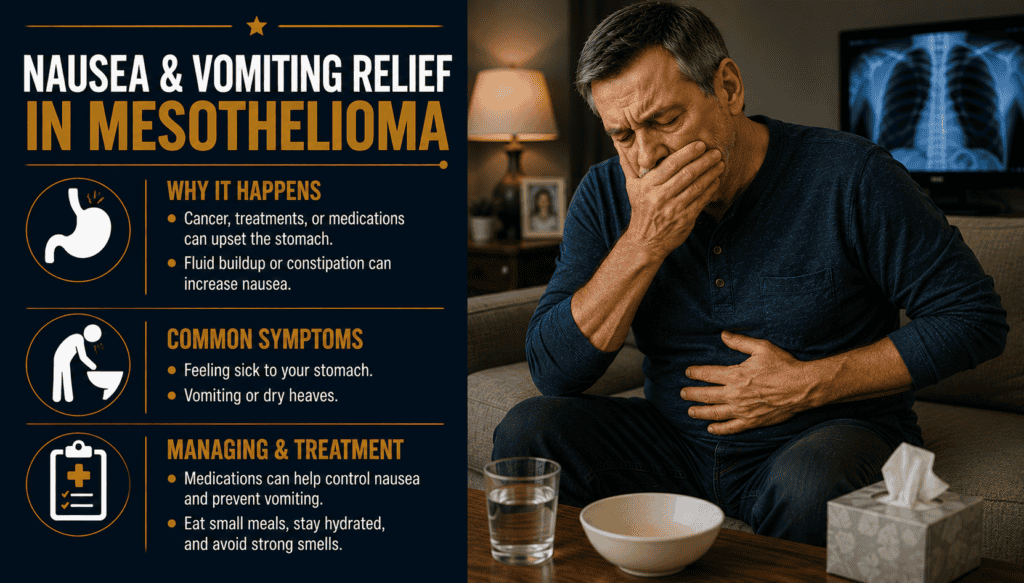
Nausea and Vomiting Relief in Mesothelioma
Causes, anti-nausea treatments, hydration strategies, warning signs, and questions to ask your cancer care team.
Nausea is the uncomfortable feeling that you may vomit; vomiting is the forceful emptying of stomach contents. People living with mesothelioma may experience either symptom because of cancer treatment, medications, constipation, abdominal disease, or an unrelated illness. The cause matters: the best approach is not simply to suppress vomiting but to identify and address what is producing it.
Many people can obtain relief through a personalized anti-nausea plan, appropriate fluids, and adjustments to meals. However, persistent vomiting can cause dehydration, electrolyte changes, and weight loss. Report new or worsening symptoms to your oncology team rather than assuming they are an unavoidable part of mesothelioma. See the broader guide to mesothelioma symptoms.
Understanding Nausea and Vomiting
Nausea can occur without vomiting, and a person may vomit without much warning. Symptoms can disrupt hydration, eating, sleep, medication schedules, and the ability to continue planned cancer treatment. The National Cancer Institute explains that nausea and vomiting can be prevented or reduced with medicines selected for the specific treatment and patient.
Neither symptom proves that mesothelioma is progressing. Conversely, a new symptom should not automatically be attributed to chemotherapy: infection, bowel problems, and other conditions also need consideration. A person with peritoneal mesothelioma may have abdominal symptoms, but only an examination can identify the cause.
| Term | What it describes | Why it matters |
|---|---|---|
| Nausea | Feeling sick to the stomach | May reduce food and fluid intake even without vomiting |
| Vomiting | Bringing up stomach contents | Can rapidly lead to fluid and electrolyte loss |
| Retching | Repeated attempts to vomit | Can be exhausting and painful |
| Early fullness | Feeling full after a few bites | May accompany bloating or poor appetite |
Relief is part of cancer care
Tell your team how often symptoms happen, whether you can keep down medications, and what you have already tried. Preventive treatment is often easier than trying to regain control after severe nausea begins.
| Effect | What to watch for |
|---|---|
| Hydration | Thirst, dark urine, dizziness, reduced urination |
| Nutrition | Smaller portions, skipped meals, unplanned weight loss |
| Medication | Vomiting soon after a dose or inability to swallow pills |
| Daily life | Avoiding travel, appointments, or activities because of nausea |
Possible Causes of Nausea in Mesothelioma
There is no single mesothelioma-specific cause of nausea. Chemotherapy and some other anticancer treatments may trigger it; anesthesia and pain medications may contribute after surgery. Opioid pain medicines can also cause constipation, which may worsen nausea. Review all medicines, supplements, and recent treatment changes with your clinician.
Abdominal pressure or fluid buildup may produce discomfort and early fullness in some patients. Related information appears in abdominal pain and bloating and abdominal distention. Do not assume abdominal swelling is harmless, particularly when vomiting accompanies an inability to pass stool or gas.
| Possible contributor | Clues to discuss | Clinical next step |
|---|---|---|
| Chemotherapy | Symptoms start after infusion or on subsequent days | Review prevention and rescue medicines |
| Pain medicines | Nausea after a new dose; constipation | Review regimen and bowel plan |
| Abdominal fluid or pressure | Increasing girth, fullness, discomfort | Examination and possible imaging |
| Constipation | Hard stools, infrequent bowel movements | Assess bowel function and medication effects |
| Infection or other illness | Fever, diarrhea, new abdominal pain | Prompt medical assessment |
Distinguishing constipation from obstruction
Constipation and bowel obstruction are not interchangeable. An obstruction may present with worsening pain, abdominal swelling, repeated vomiting, and inability to pass gas or stool. Seek urgent evaluation rather than taking laxatives on your own when obstruction is possible. Read more about {L(‘constipation and bowel obstruction’)}.
| Symptom combination | Why it needs attention |
|---|---|
| Mild nausea with normal bowel function | May respond to an individualized symptom plan |
| Nausea plus several days without a bowel movement | Requires assessment of constipation and medicines |
| Repeated vomiting, swollen abdomen, severe pain | Possible obstruction or another urgent abdominal problem |
| Nausea plus fever during cancer treatment | Possible infection; follow oncology fever instructions |
Patterns, Timing, and Triggers
Timing can help the care team select prevention. The NCI describes acute nausea within the first 24 hours of treatment, delayed symptoms over subsequent days, and anticipatory nausea triggered by reminders of a previous unpleasant treatment experience. Some people have persistent or breakthrough symptoms despite preventive medicines.
Record symptoms without delaying care. Include the date, treatment cycle, foods, medication doses, number of vomiting episodes, urine output, and associated symptoms. If vomiting starts after a medication change, report the timing rather than stopping a prescribed drug independently.
| Pattern | Example | Useful information |
|---|---|---|
| Acute | Nausea on infusion day | Time since treatment and preventive medicine taken |
| Delayed | Nausea a few days later | Duration and whether home medicines helped |
| Anticipatory | Nausea before arriving at clinic | Previous episodes and anxiety triggers |
| Breakthrough | Nausea despite prescribed prevention | Exact medicine, dose timing, and effect |
A simple symptom diary
A brief record is more useful than a long narrative when you feel unwell. Caregivers can help capture the details, especially if fatigue or {L(‘severe fatigue’)} makes recordkeeping difficult.
| Record | Example entry |
|---|---|
| When | Tuesday, 3 p.m.; two days after treatment |
| Severity | Mild / moderate / severe; ability to drink |
| Episodes | Number of vomiting episodes and appearance |
| Related symptoms | Pain, fever, constipation, dizziness |
| Response | Medicine taken and whether it helped |
When Nausea or Vomiting Needs Urgent Care
Do not wait for a scheduled appointment if symptoms suggest bleeding, severe dehydration, or a serious abdominal condition. The American Cancer Society advises emergency care for vomiting blood or coffee-ground-like material and for severe weakness, dizziness, or confusion. Your cancer team should also be contacted if you cannot keep liquids down or cannot take needed medicines.
Call your oncology team promptly for persistent vomiting, dark or markedly reduced urine, fever, or failure of prescribed anti-nausea medicines. A new combination of vomiting, increasing abdominal distention, severe pain, and inability to pass stool or gas warrants urgent assessment for possible bowel obstruction.
| Warning sign | Recommended response |
|---|---|
| Blood or coffee-ground-like vomit | Emergency department / emergency services |
| Severe weakness, confusion, fainting | Emergency evaluation |
| Severe abdominal pain with swelling and vomiting | Urgent emergency assessment |
| Unable to keep fluids down | Contact cancer team promptly; urgent evaluation may be needed |
| Very dark urine or much less urine | Call cancer team promptly |
Dehydration can develop quickly
Vomiting removes both fluid and electrolytes. Warning signs may include dizziness, weakness, reduced urination, and confusion. A clinician may recommend oral rehydration or intravenous fluids depending on severity and whether drinking is possible.
| Possible dehydration clue | What to report |
|---|---|
| Dry mouth or intense thirst | How much fluid you have been able to drink |
| Dark urine | Color and frequency of urination |
| Dizziness when standing | Whether you can walk safely |
| Confusion or severe weakness | Seek emergency evaluation rather than waiting |
How Your Cancer Team Finds the Cause
Your team may review the chemotherapy schedule, recent surgery, current prescriptions, bowel habits, oral intake, pain, and fever. An examination may assess hydration and abdominal tenderness or swelling. Depending on the situation, blood tests can evaluate electrolytes and kidney function; imaging may be needed when an abdominal complication is suspected.
Bring a medication list that includes over-the-counter products, supplements, and doses of prescribed anti-nausea drugs. Mention if you cannot swallow tablets or have difficulty swallowing; another formulation may be appropriate. Evaluation may also address loss of appetite and unintended weight loss.
| Question from the team | Why it helps |
|---|---|
| When did nausea start? | Links symptoms to treatment or new medicines |
| Can you keep down liquids and pills? | Assesses dehydration and treatment access |
| When did you last pass stool or gas? | Screens for bowel complications |
| Do you have fever or new pain? | Identifies conditions needing urgent investigation |
| Which anti-nausea drugs have you used? | Guides safe medication changes |
Testing is individualized
Not every patient needs imaging or laboratory work. The decision depends on symptom severity, examination findings, treatment history, and whether warning signs are present. For broader information about diagnostic testing, see {L(‘diagnosis’,’mesothelioma diagnosis’)}.
| Potential assessment | When it may be considered |
|---|---|
| Medication review | Nearly every new or worsening episode |
| Fluid status and vital signs | Vomiting, dizziness, poor intake |
| Blood tests | Concern for dehydration or electrolyte imbalance |
| Abdominal imaging | Concern for obstruction or other abdominal cause |
Anti-Nausea Medicines and Prevention
Antiemetics are medicines that prevent or reduce nausea and vomiting. Your oncology team may prescribe one or several drugs that work through different pathways. Common examples discussed by the NCI include serotonin-blocking agents such as ondansetron, NK-1 receptor blockers, dexamethasone, and other medicines chosen for individual circumstances. Drug selection depends on the treatment, medical history, interactions, and previous response.
Ask for a written plan identifying preventive doses, what to take if symptoms break through, and when to call. Do not double a dose or combine over-the-counter nausea remedies with prescriptions without checking with your clinician. Some drugs can cause sedation, constipation, or other side effects.
| Treatment approach | Purpose | Important discussion |
|---|---|---|
| Preventive antiemetic | Taken before a treatment likely to cause nausea | Exact schedule and duration |
| Rescue antiemetic | Used for breakthrough symptoms | When to use and when to call |
| Medication adjustment | Addresses a drug contributing to nausea | Do not stop cancer or pain medicine independently |
| IV fluids / medical treatment | Treats significant fluid loss or underlying problem | Needed if oral intake is inadequate |
If the first medicine does not work
Uncontrolled symptoms are a reason to reassess the regimen, not a reason to endure them silently. Your team can evaluate whether another drug class, route of administration, timing change, or treatment of constipation or pain is appropriate. For more context on cancer therapies, visit {L(‘treatment’,’mesothelioma treatments’)}.
| Problem | Question to ask |
|---|---|
| Nausea before infusion | Should I take a preventive medicine beforehand? |
| Vomiting despite medicine | What is my rescue plan and call threshold? |
| Unable to swallow pills | Is a dissolving, liquid, or other form appropriate? |
| Constipation after anti-nausea medicine | Should my bowel regimen be reviewed? |
Food, Fluids, and Practical Relief at Home
When your team says home management is appropriate, small frequent sips and smaller meals may be easier than large servings. The NCI suggests bland foods such as toast, rice, crackers, and plain pasta; cool foods may be more tolerable when odors trigger nausea. Try sitting upright after eating. These steps supplement, rather than replace, prescribed anti-nausea treatment.
Ask your clinician how much and what kind of fluid is appropriate, especially if you have a fluid restriction or other medical condition. If vomiting prevents drinking, home tips are not enough. A registered dietitian can help with calories, protein, and tolerable foods; see mesothelioma diet and nutrition.
| Practical adjustment | How it may help | Important limit |
|---|---|---|
| Small, frequent meals | Avoids a large amount of food at once | Seek help if intake remains poor |
| Cool or room-temperature foods | May reduce bothersome odors | Follow food-safety instructions |
| Slow sips of fluids | May improve tolerance | Cannot replace urgent care for dehydration |
| Bland foods | May be easier to tolerate | No need to restrict diet unnecessarily |
| Sit upright after meals | May reduce discomfort | Adapt to breathing and mobility needs |
Caregiver checklist
A caregiver can help with medicine timing, a symptom diary, shopping for tolerated foods, and arranging a call to the care team. Avoid pressuring someone to finish a large meal. Ask what sounds tolerable, offer small portions, and note whether fluid intake and urination are falling.
| Caregiver action | Why it matters |
|---|---|
| Keep the written medicine plan nearby | Prevents missed or duplicate doses |
| Offer small amounts of fluid regularly | Supports hydration when tolerated |
| Track vomiting and urine output | Helps identify worsening symptoms |
| Reduce strong cooking odors | May lessen food-related triggers |
| Call promptly for red flags | Prevents delays in needed medical assessment |
Confirmed medical sources
Frequently Asked Questions
These answers provide general information. Your oncology team should set individualized medication and emergency instructions.
Is nausea always caused by mesothelioma?
No. Cancer treatment, pain medicines, constipation, infection, and other conditions can cause nausea. Tell your care team about new symptoms so the cause can be assessed.
Can chemotherapy nausea begin days after treatment?
Yes. Delayed nausea and vomiting can develop after the treatment day. Ask for a prevention and rescue plan that covers the days after infusion.
What should I do if I vomit after taking medicine?
Call your care team or pharmacist for instructions. Do not automatically repeat the dose because absorption and overdose risks depend on the medication and timing.
Which foods are easier to eat when nauseated?
Some people tolerate small portions of bland foods or cool foods with less odor. A dietitian can help tailor choices to nutritional needs and other symptoms.
When is vomiting an emergency?
Seek emergency help for blood or coffee-ground-like vomit, severe weakness or confusion, or severe abdominal pain with swelling and vomiting. Follow your oncology team’s individualized instructions.
Can constipation make nausea worse?
Yes. Constipation can contribute to nausea, but repeated vomiting with severe pain or abdominal swelling may indicate a more serious bowel problem that needs urgent evaluation.
What if anti-nausea medication does not help?
Contact your oncology team. They may change the timing, drug, dose, or delivery method and investigate another underlying cause. Do not adjust prescription doses on your own.
Can I use ginger or acupressure instead of medicine?
Some supportive techniques may help certain people, but they do not replace prescribed prevention or treatment. Ask your oncology team before using supplements or complementary therapies.
| Ask your oncology team | Why ask |
|---|---|
| What is causing my nausea? | Targets the underlying problem |
| What is my prevention schedule? | Avoids missing doses |
| What if I cannot keep fluids down? | Clarifies urgent action |
| Should I meet a dietitian? | Supports hydration and nutrition |
Get Help and Next Steps
Call 800.291.0963 to discuss asbestos exposure and possible legal options. Live chat is available 24/7, 365 days a year. Submit Your Case using the form below. For nausea, vomiting, or any medical emergency, contact your medical team or emergency services instead.
Eligibility and compensation depend on individual facts and applicable law. No result or amount is guaranteed.
⚕️ Legal & Medical Information Disclaimer
This page provides general information, not individualized medical or legal advice. Seek guidance from your treating clinicians for symptoms and a qualified attorney for legal questions.