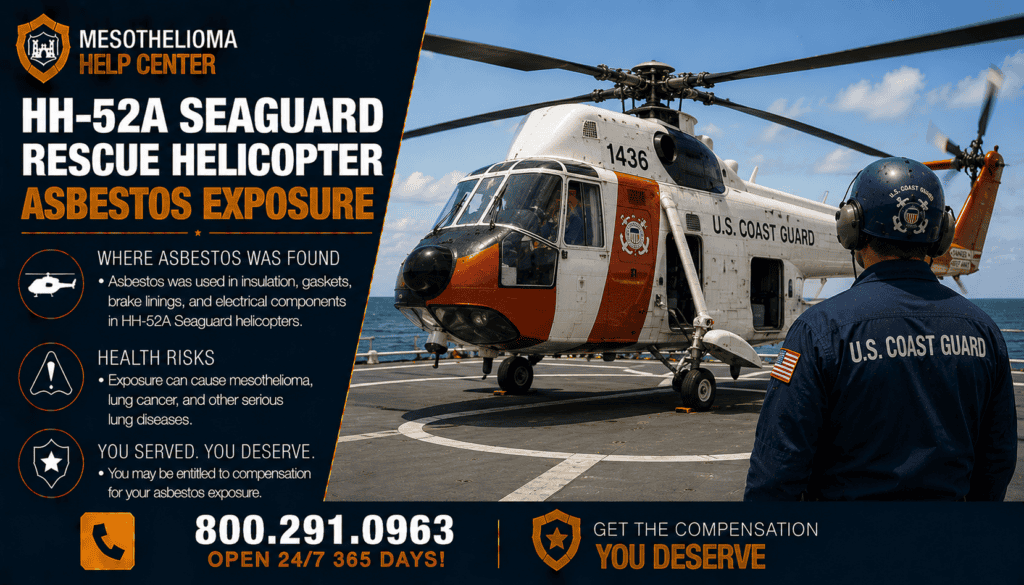
🚁 HH-52A Seaguard Rescue Helicopter Asbestos Exposure
The HH-52A Seaguard was a single-turboshaft, amphibious rescue helicopter deployed by the U.S. Coast Guard from the 1960s through the 1980s. It played a critical role in maritime rescue missions, airlifts, and disaster response. To ensure safety in emergency situations, many of the helicopter’s systems included asbestos-containing materials designed to handle high temperatures and fire hazards.
Coast Guard helicopter mechanics, avionics technicians, and flight crews who operated or maintained the HH-52A were frequently exposed to asbestos dust. Over the years, this exposure led to cases of mesothelioma, lung cancer, and other asbestos-related illnesses. Our legal team assists HH-52A veterans and families with filing asbestos lawsuits, trust fund claims, and VA benefits—with zero upfront legal costs and no impact on VA compensation.
Why Asbestos Was Used in the HH-52A Seaguard
The Seaguard’s design required fire-resistant parts to handle confined engine compartments and rescue conditions. Asbestos was used in:
-
Engine insulation and exhaust compartment wraps
-
Fireproofing around avionics and control panels
-
Gaskets and seals in high-heat mechanical points
-
Brake linings and landing float mechanisms
-
Electrical wiring insulation and housing panels
As these materials wore down, asbestos fibers became airborne during part removal or maintenance.
HH-52A Seaguard Deployment by U.S. Coast Guard
The HH-52A flew from air stations and cutters in all coastal regions throughout its decades of service.
| Branch | Deployment Highlights | Primary Missions |
|---|---|---|
| U.S. Coast Guard | Atlantic, Gulf, Pacific, Arctic operations | Search and rescue, medevac, disaster response |
Amphibious operations and confined maintenance zones increased asbestos exposure among personnel.
Number of U.S. Service Members Exposed to Asbestos on HH-52A Seaguard Aircraft
Thousands of servicemembers supported HH-52A missions over its long career.
| Category | Estimated Number of Personnel Exposed |
|---|---|
| Aircraft Mechanics & Techs | Over 20,000 serviced engine and brake systems |
| Avionics & Electrical Techs | Around 9,500 exposed near panel insulation |
| Rescue Swimmers & Crew | Nearly 10,000 exposed in cabins and engine zones |
| Depot Maintenance Crews | About 7,000 handled insulation during retrofits |
Total Estimated Exposure: Over 46,500 Coast Guard members likely encountered asbestos aboard the HH-52A Seaguard.
Asbestos Exposure Areas on the HH-52A Seaguard
Engine & Exhaust Compartments
-
Heat-resistant insulation used asbestos
-
Dust released during overhauls and inspections
Avionics & Panel Systems
-
Electrical panels had fireproof asbestos liners
-
Technicians disturbed fibers during upgrades
Cockpit & Wiring Insulation
-
Wrapped wiring and control areas
-
Aging insulation flaked during repairs
Brake Systems & Landing Skids
-
Brake pads and linings built with asbestos
-
Worn material shed dust when replaced
Air Station Maintenance Areas
-
Enclosed bays had poor ventilation
-
Fibers lingered after part removal or sanding
HH-52A Personnel at High Risk of Asbestos Exposure
| Occupation | Exposure Level | Exposure Description |
|---|---|---|
| Helicopter Mechanics | Extremely High | Serviced engines, brakes, and insulation areas |
| Avionics Technicians | High | Worked with asbestos-lined panel compartments |
| Rescue Aircrew | High | Occupied enclosed asbestos-lined cabins |
| Electrical Techs | Moderate | Replaced wiring and disturbed aged insulation |
| Depot Crew | Moderate | Stripped and repaired degraded engine linings |
Common Asbestos Products Used on the HH-52A Seaguard
Engine Bay Insulation Wraps
-
Lined engine housing and exhaust
-
Released dust when removed
Fireproof Control Panels
-
Protected electronics from overheating
-
Exposed during diagnostics
Brake Linings & Float Pads
-
Withstood rotorcraft landings
-
Replaced frequently in rescue units
Wiring Insulation & Clamps
-
Protected electrical systems
-
Released fibers when stripped
Panel Adhesives & Bonding Agents
-
Used in cockpit components
-
Cracked and shed dust in repairs
Long-Term Health Risks from HH-52A Asbestos Exposure
-
Mesothelioma – Cancer of the pleura caused by asbestos inhalation
-
Asbestosis – Chronic lung disease from prolonged fiber exposure
-
Lung Cancer – Linked to asbestos even in non-smokers
-
Pleural Thickening – Lung lining scarring that impairs breathing
The Military’s Knowledge of Asbestos Dangers
-
Warnings about asbestos date back to the 1930s
-
HH-52A components used asbestos into the 1980s
-
Safety warnings and respirators were rarely issued
Lawsuits Filed by HH-52A Seaguard Veterans
Veterans have filed successful claims for illnesses caused by Seaguard exposure:
-
Mechanics exposed while replacing brake linings and engine wraps
-
Electrical techs disturbed asbestos-lined panels
-
Aircrew operated in enclosed compartments with airborne fibers
-
Families have also filed claims for deceased loved ones
HH-52A Seaguard Asbestos Settlements & Verdicts
| Settlement | Case Summary |
|---|---|
| $5.5 million | Mechanic exposed removing asbestos engine insulation |
| $4.9 million | Avionics tech inhaled dust during panel repair |
| $4.5 million | Crew member exposed in cockpit heater compartment |
| $4.1 million | Depot tech handled degraded brake parts |
| $3.8 million | Electrician exposed while rewiring asbestos conduits |
Asbestos Manufacturers & Contractors Involved
-
Sikorsky (aircraft manufacturer)
-
Johns-Manville
-
Raybestos
-
Owens Corning
-
Bendix
-
Eagle-Picher
-
Westinghouse
-
General Electric
-
Uniroyal
These companies supplied asbestos-containing parts and were later sued in asbestos litigation.
Veterans & Asbestos Trust Funds
-
Over $30 billion remains in asbestos trust funds
-
HH-52A veterans may be eligible for multiple trust payouts
-
Trust claims are settled without needing to go to court
-
Filing does not affect VA benefits
VA Benefits for HH-52A Seaguard Veterans with Mesothelioma
-
100% VA disability rating available
-
Over $3,800 in monthly tax-free compensation
-
Priority access to VA mesothelioma treatment centers
-
DIC benefits for spouses and children
-
Legal claims and VA claims can be pursued together
HH-52A Seaguard Asbestos Lawsuit Process
-
Free Case Evaluation
Confirm your Coast Guard service history and diagnosis. -
Investigation
Gather unit logs, tech specs, and parts documentation. -
File Claims
Submit trust fund and/or legal claims. -
Resolution
Most cases settle in 6–18 months with no legal fees unless you win.
Statute of Limitations
-
Lawsuits: 2–3 years from the time of diagnosis (varies by state)
-
Wrongful death: 2–3 years after veteran’s passing
-
Trust fund claims: May allow additional time—act soon
Frequently Asked Questions (HH-52A Asbestos Exposure)
Q. Did all HH-52A helicopters contain asbestos?
Yes. Brakes, engine bays, and wiring used asbestos in all production models.
Q. Can Coast Guard veterans file claims?
Yes. All personnel exposed while maintaining or flying the Seaguard may qualify.
Q. Can family members file after a veteran’s death?
Yes. Survivors may be eligible for compensation and DIC benefits.
Q. Do I need to appear in court?
No. Most claims settle out of court or through asbestos trust payouts.
Why Work with Mesothelioma Help Center
-
25+ years of experience in military aviation asbestos litigation
-
Access to HH-52A tech manuals, service logs, and records
-
Millions recovered for Coast Guard aviation veterans
-
No upfront legal fees—we only get paid if you win
Free Case Evaluation for HH-52A Seaguard Veterans
If you or your loved one served aboard or maintained a HH-52A Seaguard and developed an asbestos-related illness:
Call 800.291.0963 today for a free, no-obligation legal review.
Let us help you secure the justice and compensation you deserve.