⚓ Dock & Shipyard Laborers
Handling Asbestos Parts & Supplies Exposure
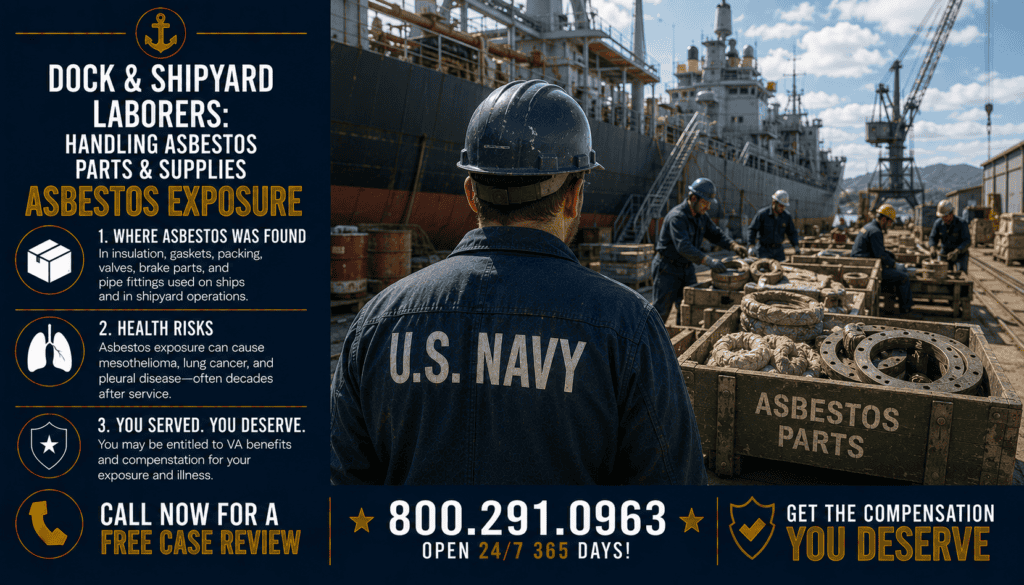
Throughout the 20th century, the U.S. Navy and its civilian contractors operated vast dockyards where ships were constructed, repaired, and overhauled. These facilities — including Norfolk, Puget Sound, Long Beach, Charleston, and Pearl Harbor Naval Shipyards — used massive amounts of asbestos materials in pipes, boilers, turbines, insulation, and gaskets. Dock and shipyard laborers who loaded, unpacked, or installed these asbestos components often worked without masks or ventilation, breathing in deadly fibers every day.
📞 If you or a loved one worked in a shipyard and were later diagnosed with an asbestos disease, call 800.291.0963 for free claim assistance.
🧭 Step 1 – Asbestos Use in Shipbuilding and Repair
Asbestos was considered a miracle material — strong, lightweight, and fire-resistant — making it standard across all naval ship construction and repair.
Common asbestos products handled by dock and shipyard laborers:
-
⚙️ Pipe insulation and steam lagging.
-
🧱 Boiler and turbine gaskets.
-
💨 Valve and pump packing materials.
-
🔩 Bulk insulation boards and refractory panels.
-
🪖 Protective gloves, blankets, and welding shields.
Goal: Understand that every ship built before the mid-1980s contained asbestos materials throughout its systems.
📁 Step 2 – Where Exposure Occurred
Exposure took place across all major U.S. Navy and private shipyards.
High-risk sites:
-
⚓ Norfolk Naval Shipyard (VA) – Steam and propulsion system repairs.
-
⚓ Puget Sound / Bremerton (WA) – Insulation, turbine, and boiler maintenance.
-
⚓ Charleston (SC) & Long Beach (CA) – Extensive ship retrofits with asbestos removal and reinstallation.
-
⚓ Pearl Harbor (HI) – Engine, piping, and hull work during Pacific Fleet operations.
-
⚓ Philadelphia & Mare Island – Boiler and pipe repair facilities.
Goal: Identify your shipyard or base where asbestos-containing materials were handled daily.
🏗️ Step 3 – Who Was Exposed
Both military and civilian personnel performed duties that directly disturbed asbestos dust.
Most-affected workers:
-
🧰 Dock and Shipyard Laborers unloading and transporting asbestos products.
-
⚙️ Pipefitters, Boilermakers, and Insulators installing or removing insulation.
-
💨 Machinists and Electricians cutting gaskets or handling asbestos cloth.
-
🪖 Welders and Sheet-Metal Workers using asbestos blankets for heat shielding.
-
🧾 Civilian warehouse handlers unpacking asbestos parts and supplies.
Goal: Link your shipyard role or MOS to asbestos-handling duties.
💼 Step 4 – How Exposure Happened
Daily work routines exposed laborers to large amounts of airborne asbestos fibers.
Common exposure activities:
-
🔧 Unpacking asbestos pipe insulation and gaskets from crates.
-
⚙️ Cutting or shaping insulation to fit valves and pipes.
-
💨 Sweeping or blowing debris from dock areas.
-
🧱 Installing or removing asbestos lagging from ship systems.
-
🧾 Working in confined holds or engine rooms with poor ventilation.
Goal: Document repeated or prolonged exposure to airborne asbestos.
🩺 Step 5 – Health Risks for Dock & Shipyard Workers
Asbestos fibers remain in the lungs and abdomen for decades after exposure.
Common asbestos-related diseases:
-
💀 Mesothelioma (pleural and peritoneal).
-
🫁 Asbestosis and pulmonary fibrosis.
-
💬 Pleural plaques and chronic effusions.
-
🩺 Lung, laryngeal, and gastrointestinal cancers.
Goal: Obtain diagnostic confirmation through imaging, biopsy, and pathology reports.
⚖️ Step 6 – VA Disability & Trust-Fund Benefits
Veterans and civilian shipyard employees diagnosed with asbestos-related diseases qualify for VA disability and trust-fund compensation.
Available benefits:
-
💰 100% tax-free VA monthly payments.
-
🏥 Treatment at VA-approved mesothelioma centers.
-
🕊️ Dependency and Indemnity Compensation (DIC) for survivors.
-
⚖️ Trust-fund eligibility for manufacturers of asbestos products.
Goal: File both VA and trust-fund claims for full recovery and benefits.
🧱 Step 7 – Civilian Contractor & Naval Employee Exposure
Shipyard employment continued exposure long after military service.
Eligible claimants include:
-
⚙️ Civilian employees at Navy shipyards.
-
💵 Private shipbuilding or repair contractors.
-
🧾 Longshoremen and materials handlers.
-
🕊️ Surviving family members of deceased workers.
Goal: Include employment dates, job duties, and medical records in all claims.
🧠 Step 8 – Evidence That Strengthens Shipyard Claims
Key documentation:
-
🧾 Service or employment records confirming shipyard work.
-
⚙️ OSHA or Navy technical reports identifying asbestos products used.
-
💬 Witness statements from coworkers or foremen.
-
🧱 Abatement and cleanup records from shipyard archives.
Goal: Correlate exposure details with verified asbestos-handling documentation.
🌈 Step 9 – Asbestos Abatement & Cleanup Programs
The U.S. Navy began large-scale asbestos abatement in the 1980s.
Cleanup milestones:
-
🏗️ Shipyard insulation removal projects under EPA oversight.
-
⚙️ Modern non-asbestos gasket and insulation replacements.
-
🧾 Records preserved by the Department of Defense and shipyard archives.
Goal: Use these historical cleanup reports to confirm exposure periods.
💬 Step 10 – Filing Your Claim
Next steps:
-
🧭 Identify your shipyard, work dates, and specific duties.
-
⚙️ Gather medical and service documentation.
-
🧾 Submit VA, trust-fund, and civil claims promptly.
-
📞 Call 800.291.0963 to connect with a Mesothelioma Help Center advocate.
Goal: File before deadlines and ensure your case includes all exposure documentation.
🤝 Where to Get Help
Our advocates assist dock laborers, shipyard mechanics, and Navy veterans exposed to asbestos at U.S. shipyards and repair docks.
📞 Call 800.291.0963 today for free, comprehensive claim guidance.
🧭 Summary
From unpacking asbestos pipe lagging to installing gaskets in ship engine rooms, dock and shipyard laborers were heavily exposed to asbestos fibers daily. These workers, both military and civilian, now face mesothelioma and related diseases years later. Filing VA disability, trust-fund, and civil claims ensures they receive long-overdue justice and compensation for their service and labor.
You kept the fleet running — now let justice work for you.
800.291.0963