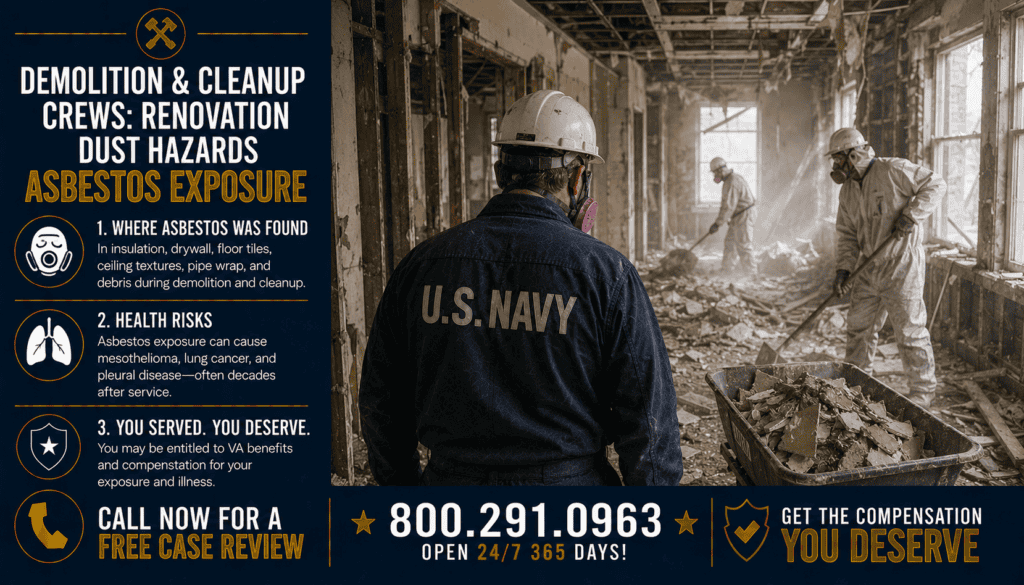
🏗️ Demolition & Cleanup Crews
Renovation Dust Hazards — Hidden Asbestos Dangers in Post-War Projects
After World War II, the U.S. military faced a massive task: renovating aging ships, bases, and housing built with asbestos products.
Demolition and cleanup crews were sent in to tear out pipe insulation, boiler rooms, and wall panels—often without protective gear.
Each hammer swing, saw cut, or sweep of debris sent asbestos dust swirling through confined compartments and base buildings.
Decades later, thousands of those veterans and civilian workers were diagnosed with mesothelioma, asbestosis, and lung cancer from exposure that occurred during so-called “routine” cleanup operations.
📞 If you served on demolition or cleanup crews before 1990, call 800.291.0963 for free asbestos-exposure and VA claim guidance.
🧭 Step 1 – Why Asbestos Was Used in Military Buildings and Equipment
Asbestos was everywhere the military needed durability and fire protection.
It insulated, sealed, and strengthened materials in ships, aircraft, vehicles, and housing—making post-war demolition extremely hazardous.
Reasons asbestos was so common:
-
🔥 Fireproof and heat-resistant up to 1,500 °F.
-
🧱 Used in walls, ceilings, and pipe insulation for safety.
-
⚙️ Mixed into cements, plasters, paints, and tile adhesives.
-
💨 Cheap and readily available through the 1970s.
Goal: Realize that nearly every structure torn down after WW II contained asbestos materials waiting to be disturbed.
⚙️ Step 2 – Asbestos-Containing Materials Found During Demolition
Cleanup and construction crews routinely handled and removed these hazardous materials.
Typical asbestos sources in military facilities:
-
🧾 Pipe and boiler insulation wrapped in asbestos cloth.
-
🧱 Ceiling and wall panels with asbestos fiberboard.
-
💨 Floor tiles and mastic adhesives.
-
⚙️ Roof felts and shingles.
-
🧰 Cement, joint compounds, and plasters.
-
🪖 Spray-on fireproof coatings in hangars and barracks.
Goal: Recognize that asbestos was hidden inside most post-war military infrastructure.
🪖 Step 3 – High-Risk Military and Civilian Roles
Demolition work occurred across every branch of service and civilian support program.
High-exposure occupations included:
-
⚓ Navy Ship Overhaul Crews: Removed asbestos lagging and gaskets from decommissioned vessels.
-
🪖 Army Combat Engineers and Construction Battalions (Seabees): Demolished old barracks and boiler plants.
-
💨 Air Force Civil Engineers: Renovated hangars with asbestos-sprayed ceilings.
-
🧱 Base Maintenance and Public Works Crews: Handled roofing, pipe, and floor removal projects.
-
🏭 Civilian Contractors and Shipyard Laborers: Performed post-war cleanup and refitting operations.
Goal: Identify your MOS or rating to document asbestos exposure linked to demolition or cleanup duties.
🧰 Step 4 – How Exposure Occurred During Demolition and Cleanup
Removing asbestos products turned solid materials into fine dust that lingered in the air for hours.
Typical exposure activities:
-
🔧 Cutting or sawing asbestos pipe insulation and board.
-
🧱 Breaking walls lined with asbestos cement panels.
-
💨 Sweeping or blowing dust with air hoses instead of wet cleaning.
-
⚙️ Sanding, grinding, or burning off asbestos paint and tile.
-
🧰 Handling debris without respirators or protective gear.
Goal: Realize that nearly every demolition or cleanup task created hazardous asbestos dust.
⚓ Step 5 – Where Exposure Happened
Demolition and renovation work took place on land and sea, often in tight confined areas.
Common exposure locations:
-
🚢 Ship overhaul yards in Norfolk, Long Beach, and Puget Sound.
-
🧱 Base housing and barracks renovations worldwide.
-
🏗️ Aircraft hangars and maintenance shops.
-
⚙️ Power plants and boiler rooms.
-
💨 Storage depots and warehouse teardowns.
Goal: Document each ship, base, or project where you performed demolition or cleanup work.
💬 Step 6 – Health Dangers of Demolition Dust
Asbestos fibers are microscopic and easily inhaled or swallowed. Once lodged in the body, they cause permanent damage over time.
Diseases caused by asbestos exposure:
-
🫁 Mesothelioma: Cancer of the lung or abdominal lining caused only by asbestos.
-
💨 Asbestosis: Chronic lung scarring that restricts breathing.
-
🩺 Lung Cancer: Risk multiplied for smokers exposed to asbestos dust.
-
🧠 Pleural Plaques: Thickened tissue marking prior asbestos injury.
Goal: Encourage regular medical checkups for veterans with demolition or cleanup service records.
🧾 Step 7 – VA Recognition of Demolition and Cleanup Exposure
The Department of Veterans Affairs (VA) lists demolition and renovation work as a high-probability asbestos exposure occupation in its official manuals.
VA documentation references:
-
⚖️ M21-1 Adjudication Manual, Part IV, Subpart ii, Chapter 2, Section C.
-
🧾 Job titles such as “Construction Engineer,” “Seabee,” and “Maintenance Worker” marked as exposure-related.
-
💬 Medical guidance linking asbestos dust from demolition to mesothelioma.
-
🏛️ Recognition of 10–45 year latency for asbestos diseases.
Goal: Reference VA sources to prove exposure and strengthen your disability or dependency claim.
💼 Step 8 – Evidence Needed for a VA Asbestos Claim
A successful VA claim requires medical diagnosis plus proof of service-related exposure.
Required documentation:
-
🪖 DD-214 and records listing demolition or construction duties.
-
⚙️ Assignment logs or shipyard orders showing cleanup projects.
-
🩺 Diagnosis of mesothelioma, asbestosis, or lung cancer.
-
💬 Statements from crew members confirming exposure.
-
🧾 Medical nexus letter linking disease to service duties.
Goal: Build a complete file connecting your illness to documented asbestos contact.
⚖️ Step 9 – Civil Legal Options for Demolition and Cleanup Workers
Veterans can seek civil compensation from companies that manufactured the asbestos products they removed.
Common product manufacturers:
-
🧱 Johns-Manville and Armstrong (insulation and panels).
-
💨 Owens-Corning and Eagle-Picher (pipe and boiler lagging).
-
⚙️ Unarco and Fibreboard (cement sheets and sprays).
-
🧰 Raybestos-Manhattan (floor tiles and adhesives).
-
🪖 Garlock Sealing Technologies (gaskets and packing materials).
Goal: Hold manufacturers accountable through trust-fund claims and lawsuits while keeping VA benefits safe.
🤝 Step 10 – How Attorneys and VSOs Assist Demolition Veterans
Coordinating VA benefits and civil cases requires support from Veterans Service Officers (VSOs) and experienced asbestos attorneys.
A qualified team can:
-
🧾 Access shipyard and base demolition records.
-
⚙️ Identify specific asbestos products removed during your service.
-
💬 Secure expert medical opinions linking disease to exposure.
-
🏛️ File VA and civil claims simultaneously without delaying benefits.
Goal: Let professionals handle the legal and administrative process while you focus on health and family.
🌈 Summary
Demolition and cleanup crews rebuilt the post-war military infrastructure — but their work left a deadly legacy.
Every hammer strike or tile removal sent asbestos fibers into the air, exposing workers who were simply doing their jobs.
Today, both the VA and civil courts recognize the danger these veterans faced and provide compensation for asbestos-related illnesses.
📞 Call 800.291.0963 today for free help verifying asbestos exposure, collecting records, and filing VA or private asbestos claims.