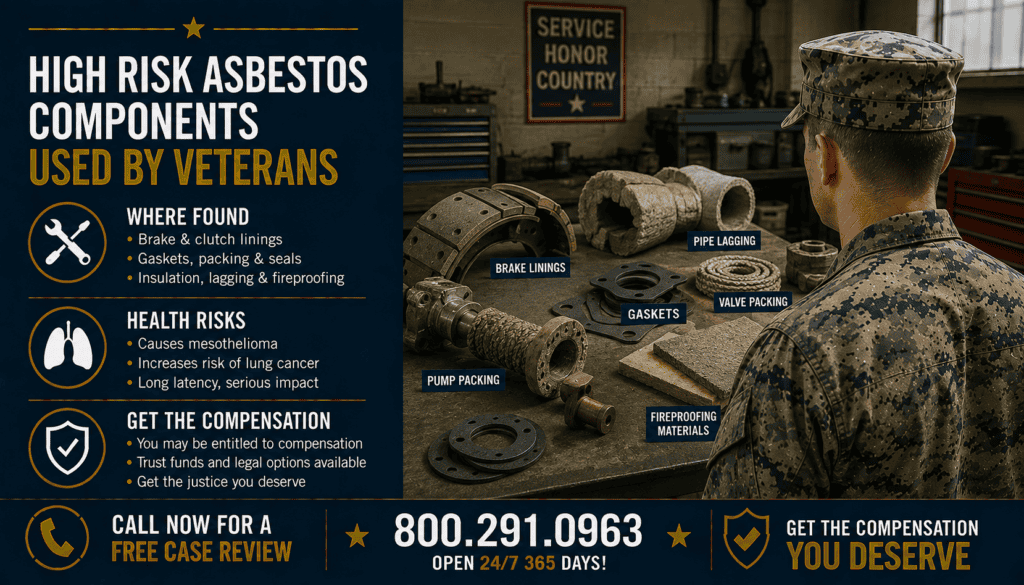
⚙️ High-Risk Asbestos Components
Gaskets, Packing, Millboard, Rope & Blanket Asbestos Exposure
For decades, the U.S. military relied on asbestos gaskets, packing, millboard, rope, and heat-resistant blankets in nearly every ship, vehicle, aircraft, and base facility. These components were essential for sealing high-temperature systems — but they exposed countless service members, mechanics, and maintenance crews to toxic asbestos fibers. Every time a gasket was replaced or a valve repacked, microscopic dust filled the air, leading to long-term health risks that often surfaced decades after discharge.
📞 Need help filing a gasket or insulation asbestos claim? Call 800.291.0963 for free case assistance today.
🧭 Step 1 – Common Asbestos-Containing Components
Asbestos was added to mechanical and thermal parts for its strength, heat resistance, and durability.
Typical asbestos components include:
-
⚙️ Gaskets: Used to seal pipe flanges, boilers, pumps, and engines.
-
🧱 Packing Materials: Rope-like seals for valves, turbines, and pumps.
-
💨 Millboard: Flat sheets used for heat insulation behind panels and walls.
-
🔩 Asbestos Rope: Wrapped around exhaust systems, joints, and turbines.
-
🪖 Blankets and Cloth: Used for fireproofing and welding protection.
Goal: Recognize that these parts were present in nearly every mechanical system across military branches.
📁 Step 2 – Where Exposure Occurred
Every major service branch used asbestos-based components in maintenance and repair work.
High-risk environments:
-
⚓ Navy Ships: Boiler rooms, engine rooms, and pump spaces.
-
🛠️ Army Vehicles: Engine gaskets and brake assemblies.
-
✈️ Air Force Hangars: Aircraft exhaust and turbine seals.
-
🧱 Base Facilities: Steam tunnels and heating systems.
-
🏭 Shipyards and Depots: Valve packing, pipe wrapping, and welding areas.
Goal: Identify which installations or vehicles you worked on that used asbestos components.
🏗️ Step 3 – Who Was Exposed
Both military and civilian personnel came into direct contact with asbestos materials during installation or repair.
Most-affected occupations:
-
🧰 Machinist’s Mates, Pipefitters, and Boiler Technicians.
-
⚙️ Engine Mechanics and Power-Plant Operators.
-
🧱 Insulators and Steamfitters.
-
💨 Shipyard Workers and Civilian Depot Mechanics.
-
🪖 Welders and Firemen using asbestos blankets for protection.
Goal: Match your MOS or job title to asbestos-related equipment or materials handled.
💼 Step 4 – How Exposure Happened
Routine repair and cleanup work often produced airborne asbestos dust.
Common exposure activities:
-
🔧 Scraping or replacing asbestos gaskets and packing.
-
⚙️ Cutting asbestos millboard or rope to fit valves and flanges.
-
💨 Shaking out heat blankets or cleaning insulation debris.
-
🧱 Grinding, sanding, or brushing gasket surfaces.
-
🧾 Cleaning boiler or turbine parts in unventilated rooms.
Goal: Record maintenance habits that generated visible or airborne dust.
🩺 Step 5 – Health Effects of Gasket and Packing Exposure
Asbestos fibers inhaled during maintenance remain trapped in lung tissue for life.
Common asbestos-related diseases:
-
💀 Pleural or peritoneal mesothelioma.
-
🫁 Asbestosis and chronic lung fibrosis.
-
💬 Pleural plaques and recurrent effusions.
-
🩺 Lung, throat, and gastrointestinal cancers.
Goal: Obtain diagnostic imaging, biopsy reports, and medical records confirming asbestos disease.
⚖️ Step 6 – VA Disability & Trust-Fund Benefits
Veterans and civilian contractors exposed to asbestos qualify for VA disability compensation and asbestos trust-fund settlements.
Available benefits:
-
💰 Tax-free monthly VA payments.
-
🏥 Access to VA-approved mesothelioma centers.
-
🕊️ Survivor benefits under DIC programs.
-
⚖️ Multiple trust-fund claims allowed for manufacturers of asbestos gaskets and packing.
Goal: File all available claims to secure full compensation from both government and private sources.
🧱 Step 7 – Civilian & Contractor Exposure
After military service, many veterans continued handling asbestos materials in civilian jobs.
Eligible claimants include:
-
⚙️ Shipyard and refinery mechanics.
-
💵 Civilian base maintenance contractors.
-
🧾 Power-plant and industrial facility workers.
-
🕊️ Surviving spouses or dependents of deceased workers.
Goal: Include all employment and site records in your case documentation.
🧠 Step 8 – Evidence That Strengthens Claims
Key documentation:
-
🧾 Service and work records identifying mechanical or insulation duties.
-
⚙️ Equipment or technical manuals listing asbestos gaskets and packing.
-
💬 Witness statements from coworkers or shipmates.
-
🧱 Navy or Army abatement reports confirming asbestos removal.
Goal: Prove direct contact with asbestos components during active duty or employment.
🌈 Step 9 – Asbestos Phase-Out & Modern Replacements
The military began replacing asbestos components in the 1980s and 1990s.
Cleanup milestones:
-
🏗️ Non-asbestos gasket and packing materials adopted across all branches.
-
⚙️ Abatement of mechanical insulation during ship and base retrofits.
-
🧾 Documentation under EPA and DoD cleanup programs.
Goal: Use phase-out records to establish historical exposure periods.
💬 Step 10 – Filing Your Claim
Next steps:
-
🧭 Verify your service, base, or ship assignments.
-
⚙️ Gather medical, work, and exposure records.
-
🧾 Submit VA, trust-fund, and civil claims promptly.
-
📞 Call 800.291.0963 to speak with a Mesothelioma Help Center advocate.
Goal: File early to ensure eligibility and preserve critical evidence.
🤝 Where to Get Help
Our advocates assist veterans, shipyard workers, and power-plant mechanics exposed through asbestos gaskets, packing, and insulation.
📞 Call 800.291.0963 today for personalized help filing your asbestos claim.
🧭 Summary
Asbestos gaskets, packing, millboard, rope, and blankets were essential yet dangerous components across the military. Service members and civilians exposed while maintaining machinery or engines now face mesothelioma and other diseases. Filing VA disability, trust-fund, and civil claims provides justice, financial relief, and recognition for their service and sacrifice.
You kept the systems sealed and secure — now secure your rightful compensation.
800.291.0963