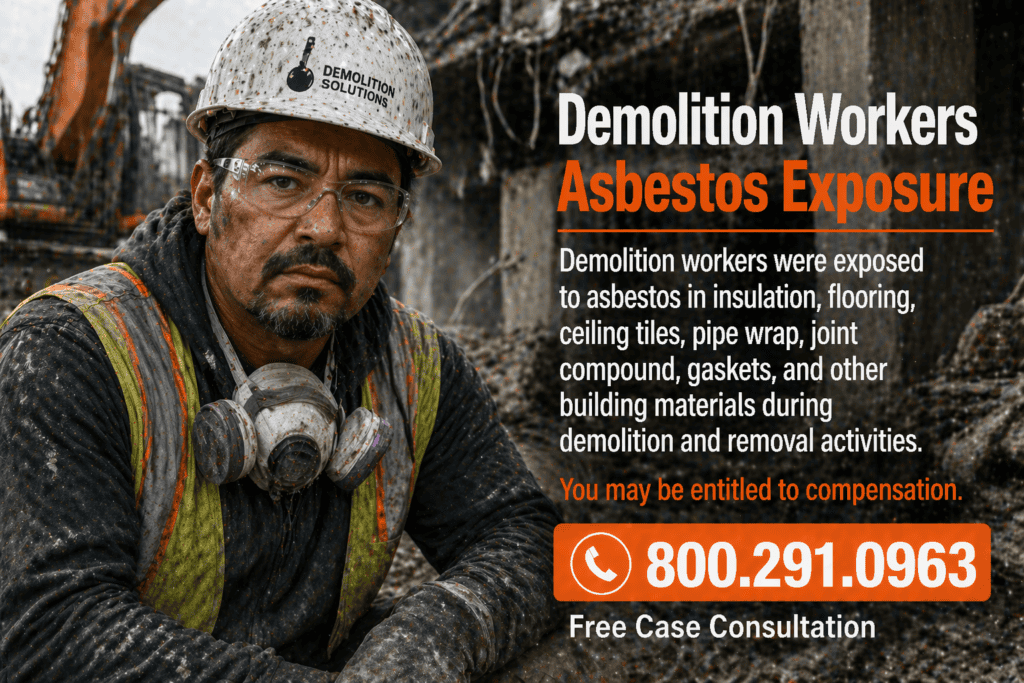
Demolition Workers Asbestos Exposure
Demolition workers can encounter asbestos when older structures contain asbestos-containing insulation, surfacing materials, flooring, wallboard, roofing, siding, mastics or other building products. OSHA specifically includes demolition or salvage of structures where asbestos is present within its asbestos-in-construction standard.
Demolition does not automatically mean asbestos exposure. Risk depends on whether asbestos-containing material was actually present, what was removed or broken, the work method, containment and ventilation, and whether required inspection, removal and exposure-control procedures were followed.
Demolition Work and Asbestos Exposure
OSHA defines demolition for purposes of its asbestos construction standard as wrecking or taking out load-supporting structural members together with related razing, removal or stripping of asbestos products. The standard expressly applies to demolition or salvage of structures where asbestos is present.
Demolition can involve interior stripping, removal of mechanical systems, wall and ceiling tear-out, flooring removal, roofing removal and eventual structural razing. In older buildings, these operations may involve different categories of asbestos-containing material.
NIOSH describes renovation and demolition of existing structures as construction activities that can expose workers to legacy hazards such as asbestos and lead. This makes building age, inspection information and material identification especially important.
Readers can also review high-risk jobs associated with asbestos exposure and asbestos exposure on construction sites.
Asbestos-Containing Materials in Older Structures
OSHA’s asbestos construction standard recognizes multiple categories of asbestos-containing material that can be encountered during removal and demolition. These include thermal-system insulation and surfacing materials as well as wallboard, floor tile and sheeting, roofing and siding shingles, and construction mastics.
- Thermal-system insulation on pipes, fittings, boilers, tanks and ducts
- Sprayed or troweled-on surfacing materials, including certain fireproofing and acoustical materials
- Asbestos-containing wallboard and associated building components
- Floor tile, resilient sheeting, backing and construction mastics where asbestos is present
- Roofing and siding shingles containing asbestos
- Other asbestos-containing building products exposed during structural removal
EPA emphasizes identifying asbestos-containing materials before demolition. A material’s age or appearance alone does not establish asbestos content; inspection records, product documentation and appropriate sampling or analysis can provide stronger evidence.
Readers researching legacy structures can also review asbestos exposure in buildings.
How Demolition Workers Could Be Exposed
Demolition can damage materials more aggressively than ordinary building use. OSHA defines an aggressive method as sanding, abrading, grinding or another method that breaks, crumbles or disintegrates intact asbestos-containing material.
- Interior stripping: removing ceilings, walls or mechanical systems can disturb asbestos-containing surfacing material or insulation.
- Floor removal: demolition can involve asbestos-containing floor tile, sheeting, backing or mastic.
- Pipe and boiler removal: mechanical demolition can disturb thermal-system insulation on older equipment and piping.
- Roof and siding removal: asbestos-containing shingles can be broken during removal if not handled using appropriate methods.
- Structural razing: uncontrolled demolition can damage asbestos-containing materials that remain in a structure.
- Debris handling: sorting, loading, transporting or cleaning asbestos-contaminated debris can create additional exposure opportunities.
OSHA generally requires wet methods, HEPA-filtered vacuuming and prompt cleanup and disposal for asbestos work covered by its construction standard, with specific provisions and exceptions for particular operations. Dry sweeping of asbestos-containing dust and debris is prohibited under the standard.
Related construction occupations include carpenters, roofers and welders.
Inspection, Removal and Exposure Controls
EPA’s Asbestos NESHAP establishes federal work-practice requirements for many demolition and renovation operations. EPA states that covered facilities must be thoroughly inspected for asbestos where demolition or renovation will occur, and the rules are intended to minimize asbestos-fiber releases.
EPA explains that regulated work practices can include removal of regulated asbestos-containing material, adequate wetting, leak-tight waste handling and proper disposal. Applicability and notification requirements depend on the type of facility, operation and amount of regulated material.
OSHA separately regulates worker exposure. Its construction standard establishes asbestos work classifications, regulated areas, engineering controls, respiratory protection, training, hygiene and other requirements based on the activity and exposure conditions.
OSHA also addresses multi-employer construction sites. Employers whose workers are exposed to asbestos hazards have protective obligations, and employers adjacent to regulated asbestos areas must take steps to determine whether containment remains effective.
Demolition Is Not the Same as Licensed Asbestos Abatement
A worker may perform general demolition without personally being assigned to asbestos removal. Conversely, some demolition activities can fall within OSHA’s asbestos-work classifications when asbestos-containing materials are removed or disturbed. A historical exposure investigation should identify the worker’s actual task rather than infer asbestos exposure from a job title alone.
Secondary or Household Exposure
Asbestos-contaminated clothing can be an exposure concern in occupational settings. OSHA’s asbestos construction standard includes decontamination and work-clothing requirements for covered operations. An individual household exposure history still requires evidence about asbestos disturbance, contamination, clothing practices, frequency and duration of contact.
Need help now? Call 800.291.0963
Live chat available 24/7, 365 days a year.
Submit Your Case
Mesothelioma and Other Asbestos-Related Diseases
Asbestos exposure is associated with malignant mesothelioma, lung cancer and asbestosis. These diseases may develop many years after occupational exposure, which can make historical demolition records and building information important for retired workers.
Demolition workers can also face other hazards, including silica, lead, noise, falls, heavy equipment and unstable structures. NIOSH identifies asbestos and lead among legacy hazards that can be encountered when construction work involves existing structures. These hazards should be evaluated separately rather than treating all demolition dust as asbestos.
A diagnosis does not by itself establish which demolition project, building material, manufacturer, contractor or company was responsible for an asbestos exposure. Exposure-source evidence must be investigated separately.
Medical questions about occupational exposure, symptoms, screening or diagnosis should be discussed with a qualified healthcare professional.
Documenting a Demolition Exposure History
Demolition workers may move rapidly between buildings and contractors, so reconstructing an old exposure history can require several kinds of evidence. The goal is to connect the worker to a specific structure, asbestos-containing material and disturbance activity when possible.
- Employment evidence: employer names, payroll records, W-2s, tax documents and Social Security earnings records.
- Union evidence: membership, dispatch, pension, apprenticeship and contractor records when available.
- Project evidence: addresses, demolition permits, owners, general contractors, subcontractors and project dates.
- Asbestos records: inspection reports, surveys, abatement plans, air-monitoring records, notifications and waste records when available.
- Material evidence: photographs, specifications, product labels, manufacturer information and laboratory reports.
- Task evidence: interior stripping, floor removal, pipe or boiler removal, roof removal, structural razing, debris loading and cleanup.
- Coworker evidence: laborers, foremen, equipment operators, abatement workers and nearby trades may remember materials and conditions.
When product names are unknown, record the building address, approximate construction and demolition dates, location within the structure, material appearance, tools used, whether asbestos abatement occurred before demolition and whether workers handled debris after removal.
Questions That Can Strengthen a Demolition Work History
Was an asbestos survey performed? Was asbestos removed before structural demolition? Did the worker strip insulated pipes, ceilings, flooring, siding or roofing? Was material kept wet? Were regulated areas established? Did the worker load or clean debris? Which contractor and building were involved? These details can materially improve an exposure investigation.
Asbestos Lawsuits, Trust Funds and Compensation for Demolition Workers
A demolition worker diagnosed with an asbestos-related disease may have potential legal or compensation options depending on the evidence and applicable law. Possible avenues can include claims involving legally responsible companies and asbestos bankruptcy trusts when their requirements are satisfied.
Occupation alone does not establish asbestos trust eligibility. Each trust has its own medical and exposure criteria, and evidence may be required connecting the worker to a covered asbestos-containing product, company, operation or recognized location during a qualifying period.
Demolition projects can generate useful historical records. Building asbestos surveys, abatement contracts, NESHAP notifications, demolition permits, contractor records, waste manifests and coworker testimony may help establish what materials were present and when work occurred. Availability varies by project and jurisdiction.
Related Demolition and Construction Resources
Construction environments: Construction Sites Asbestos Exposure · Industrial Construction Asbestos Exposure
Related occupations: Carpenters Asbestos Exposure · Roofers Asbestos Exposure · Welders Asbestos Exposure
Buildings and occupational exposure: Asbestos Exposure in Buildings · High-Risk Jobs for Asbestos Exposure
Authoritative Sources
This page was researched using federal occupational-safety, public-health and environmental sources with direct application to asbestos in demolition and renovation.
- OSHA — 29 CFR 1926.1101, Asbestos in Construction
- OSHA — Construction Asbestos Standard Applied to Building Demolition
- EPA — Asbestos National Emission Standards for Hazardous Air Pollutants
- EPA — Asbestos-Containing Materials and Demolition
- NIOSH — Construction Safety and Health Research: Renovation and Demolition Legacy Hazards
- NIOSH — Workplace Exposure to Asbestos
Demolition Worker Asbestos Exposure FAQ
Were all demolition workers exposed to asbestos?
No. Exposure depended on whether asbestos-containing materials were present, the work performed, controls used and whether those materials were disturbed.
Does OSHA specifically regulate asbestos during demolition?
Yes. OSHA’s asbestos construction standard expressly covers demolition or salvage of structures where asbestos is present.
What asbestos materials can be encountered during demolition?
Depending on the building, materials can include thermal-system insulation, surfacing materials, wallboard, flooring, roofing, siding and construction mastics containing asbestos.
Does EPA require asbestos inspection before demolition?
For facilities covered by the Asbestos NESHAP, EPA requires a thorough inspection of the affected area for asbestos before demolition or renovation. Applicability depends on the facility and operation.
Why are wet methods used in asbestos demolition work?
OSHA and EPA asbestos requirements use wetting as an important method for controlling fiber release during covered asbestos handling and removal activities.
Can demolition workers be exposed while handling debris?
Potentially. OSHA’s standard covers cleanup, disposal and handling of asbestos-contaminated waste and debris in covered construction operations.
Can demolition workers qualify for asbestos trust fund claims?
Some may qualify, but each trust has separate medical and exposure requirements. Occupation alone does not establish eligibility.
How can a retired demolition worker document an old exposure?
Employment records, Social Security records, union files, demolition permits, asbestos surveys, abatement records, project documents, photographs and coworker statements can help reconstruct older work.
Get Help Reviewing a Demolition Exposure History
Call 800.291.0963
Live chat is available 24/7, 365 days a year.
Prior work in demolition does not automatically prove asbestos exposure, disease causation, claim eligibility or compensation. Each situation depends on the worker’s jobsites, dates, materials, tasks, work practices, medical evidence and applicable legal requirements. Compensation is not guaranteed.
⚕️ Legal & Medical Information Disclaimer
This page provides general educational information and is not medical or legal advice. The information does not establish asbestos exposure, diagnosis, causation, liability, claim eligibility or compensation. Medical concerns should be discussed with a qualified healthcare professional, and legal questions should be reviewed with a qualified attorney.