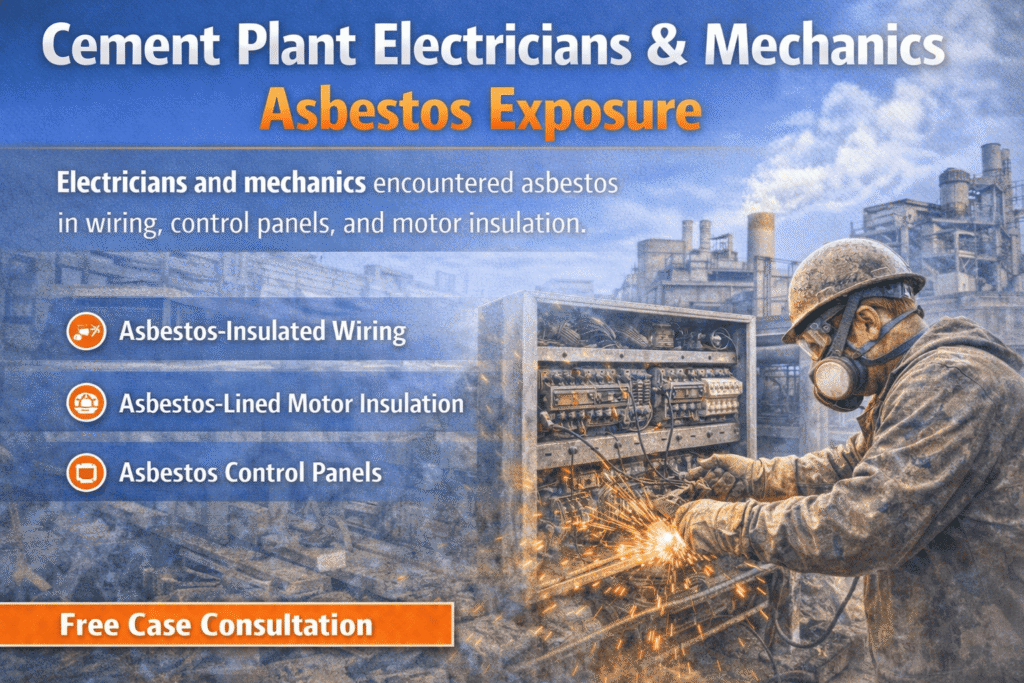
⚡ Cement Plant Electricians & Mechanics Asbestos Exposure
Electricians and mechanics encountered asbestos in wiring, control panels, and motor insulation.
Cement plant electricians and mechanics faced significant asbestos exposure while maintaining and repairing the electrical and mechanical systems that powered cement manufacturing operations. Electrical rooms, motor control centers, switchgear, and mechanical drive systems were frequently insulated and fireproofed with asbestos-containing materials to prevent overheating and fire hazards. Over time, these materials deteriorated and were disturbed during routine maintenance, upgrades, and emergency repairs.
Because cement plants operated continuously, electricians and mechanics worked under tight schedules, often servicing live systems or performing rapid repairs. These conditions increased the likelihood of asbestos disturbance and inhalation—often without proper warnings or protective equipment.
🧱 Why Asbestos Was Used in Electrical & Mechanical Systems
Asbestos was widely used in cement plant electrical and mechanical systems because it provided essential industrial protection:
-
⚡ Electrical insulation for wiring and control panels
-
🔥 Fire resistance in motor control centers and switchgear
-
🧱 Thermal insulation around motors, generators, and drives
-
⚙️ Durability under vibration and heat
-
💲 Cost efficiency for large-scale electrical installations
These properties made asbestos a standard material in electrical systems installed before modern safety regulations.
🧪 Common Asbestos-Containing Materials Encountered by Electricians & Mechanics
Workers frequently encountered asbestos in:
⚡ Electrical Systems
-
Control panel liners and backboards
-
Wiring insulation and conduit wrap
-
Switchgear insulation
⚙️ Motors & Mechanical Equipment
-
Motor insulation and heat shields
-
Brake linings and clutch components
-
Gaskets and seals
🧱 Structural & Fireproofing Materials
-
Sprayed-on fireproofing in electrical rooms
-
Insulated steel beams and columns
-
Cement boards and panels
As these materials aged or were disturbed, asbestos fibers were released into enclosed workspaces.
⚠️ How Asbestos Exposure Occurred During Electrical & Mechanical Work
Asbestos exposure commonly occurred during:
-
Opening electrical panels and switchgear
-
Replacing motors, drives, and control components
-
Cutting or drilling fireproofed surfaces
-
Servicing brakes, clutches, and mechanical drives
-
Emergency electrical repairs
-
Cleanup of dust and debris
Because electrical rooms were often confined and poorly ventilated, asbestos fibers could accumulate quickly.
🧑🏭 Electricians & Mechanics Most at Risk
⚡ Plant Electricians
Electricians servicing control panels and wiring inhaled asbestos released from insulation and fireproofing.
🔧 Mechanical Technicians
Mechanics repairing motors and drives disturbed asbestos gaskets and insulation.
⚙️ Millwrights
Workers aligning and repairing heavy equipment encountered asbestos in mechanical housings.
🧹 Cleanup & Support Staff
Workers assisting with electrical and mechanical repairs were exposed to asbestos-contaminated dust.
🧬 Health Risks Linked to Electrical & Mechanical Asbestos Exposure
Long-term asbestos exposure among cement plant electricians and mechanics has been linked to serious illnesses, including:
🫁 Asbestosis
A chronic lung disease caused by asbestos scarring, leading to breathing difficulty and reduced lung function.
🧠 Mesothelioma
A rare and aggressive cancer affecting the lining of the lungs or abdomen, almost exclusively caused by asbestos exposure.
🫁 Lung Cancer
Extended asbestos exposure significantly increases lung cancer risk in industrial environments.
Because asbestos-related diseases have latency periods of 20–50 years, many electricians and mechanics are diagnosed long after exposure occurred.
📜 Employer Responsibilities Toward Electricians & Mechanics
Cement plant owners and operators were required to:
-
Identify asbestos-containing electrical and mechanical materials
-
Provide asbestos hazard training
-
Control fiber release during maintenance
-
Supply protective equipment and respirators
Despite these responsibilities, many electricians and mechanics report never being informed that asbestos was present in electrical rooms and equipment.
❓ Frequently Asked Questions (FAQs)
1️⃣ Did electrical panels commonly contain asbestos?
Yes. Panel liners and insulation often contained asbestos.
2️⃣ Is working on motors hazardous?
Yes. Motor insulation and heat shields released asbestos fibers.
3️⃣ Can asbestos be present even if equipment looks intact?
Yes. Aging materials can release fibers without visible damage.
4️⃣ Were respirators commonly provided?
In many cases, no. Protection was often inadequate.
5️⃣ Can illness appear decades later?
Yes. Asbestos-related diseases often develop many years after exposure.
⚖️ How a Lawyer Can Help Get Compensation
Cement plant electricians and mechanics diagnosed with asbestos-related illnesses may have legal options. An experienced asbestos lawyer can help by:
-
Identifying cement plants and job roles linked to exposure
-
Tracing asbestos-containing electrical and mechanical components
-
Filing claims against asbestos manufacturers and suppliers
-
Pursuing compensation for medical expenses, lost income, and suffering
-
Assisting families with wrongful death claims
Because electrical and mechanical systems used multiple asbestos products, experienced legal representation is essential.
📞 Free Case Evaluation – Get Help Today
If you or a loved one worked as a cement plant electrician or mechanic and later developed an asbestos-related illness, help is available.
📞 Call Now for a FREE Case Evaluation: 800-291-0963
There is no obligation, and compensation may be available.
📌 Key Takeaways
-
Cement plant electricians and mechanics worked around asbestos-insulated systems
-
Electrical panels, motors, and fireproofing released fibers
-
Confined electrical rooms increased exposure risk
-
Health effects may appear decades later
-
Legal options may be available for exposed workers