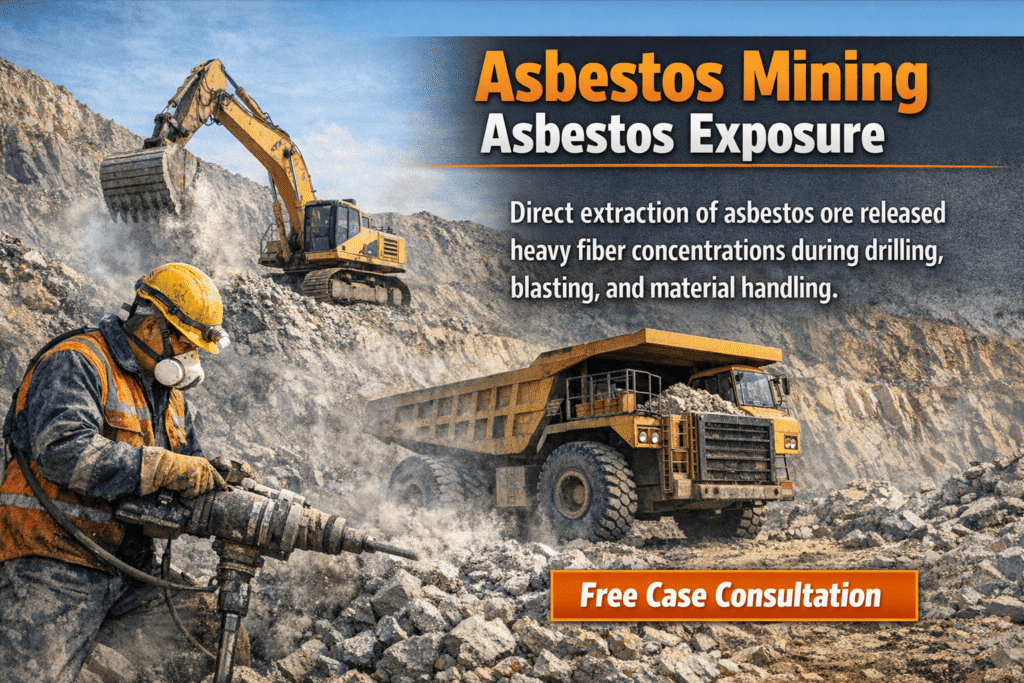
⛏️ Asbestos Mining Asbestos Exposure
Direct asbestos mining released extreme fiber concentrations during drilling, blasting, crushing, and material handling.
Asbestos mining exposed workers to the highest concentrations of asbestos fibers ever recorded in industrial history. Unlike secondary exposure industries, asbestos miners worked directly with asbestos-containing ore during extraction, processing, and transport. Mining operations released massive quantities of airborne fibers through drilling, blasting, crushing, hauling, and waste handling activities.
Workers inhaled asbestos fibers daily while operating underground and surface mines, processing raw ore, loading materials, and maintaining equipment. Poor ventilation, confined underground environments, and constant mechanical disturbance allowed asbestos dust to remain suspended in the air for extended periods.
Because asbestos mining involved direct contact with raw asbestos, exposure levels were often orders of magnitude higher than in manufacturing or construction. Many miners later developed mesothelioma, asbestos-related lung cancer, and severe asbestosis—often at younger ages than other exposed workers.
🧪 Why Asbestos Mining Was Extremely Dangerous
Asbestos mining differed from other exposure sources because the asbestos fibers were naturally present in the rock itself. Exposure occurred because:
-
Drilling fractured asbestos-bearing rock
-
Blasting released fiber clouds into confined mine spaces
-
Crushing and milling liberated microscopic fibers
-
Hauling and dumping disturbed loose asbestos dust
-
Waste tailings dried and became airborne
Unlike finished asbestos products, raw ore contained unbound fibers, making inhalation risk especially severe.
🏗️ Where Asbestos Exposure Occurred in Mining Operations
Asbestos fibers were released throughout the mining lifecycle.
🔧 Drilling & Blasting Areas
Rock drilling and explosives fractured asbestos ore, releasing dense fiber clouds.
🪨 Crushing & Processing Zones
Breaking raw ore into smaller pieces generated concentrated asbestos dust.
🚛 Hauling, Loading & Dumping
Transporting asbestos ore disturbed loose fibers during loading and unloading.
🏭 Surface Facilities & Processing Plants
Conveyors, hoppers, and chutes released fibers into enclosed workspaces.
🧱 Waste Piles & Tailings Areas
Dry tailings released asbestos fibers through wind, cleanup, and reclamation work.
🫁 How Asbestos Miners Were Exposed
Exposure occurred continuously during daily mining operations.
🛠️ Underground & Surface Mining
Poor ventilation trapped asbestos dust near breathing zones.
🧼 Ore Handling & Processing
Shoveling, sorting, and feeding ore into crushers released fibers.
🏗️ Equipment Operation & Maintenance
Heavy machinery disturbed asbestos-contaminated dust during operation.
🏠 Secondary (Take-Home) Exposure
Fibers clung to clothing, exposing miners’ families at home.
🧬 Diseases Linked to Asbestos Mining Exposure
Asbestos mining is linked to the highest rates of asbestos disease.
💀 Mesothelioma
Direct asbestos exposure dramatically increased mesothelioma risk among miners.
🫁 Lung Cancer
Long-term inhalation of raw asbestos fibers significantly raised lung cancer incidence.
📉 Asbestosis
Severe lung scarring developed rapidly due to intense fiber exposure.
Many miners developed multiple asbestos-related diseases simultaneously.
👷 Who Was Most at Risk in Asbestos Mining
High-risk mining roles included:
-
Underground miners
-
Surface miners
-
Drillers and blasters
-
Crusher and mill operators
-
Haul truck drivers
-
Equipment operators
-
Maintenance and cleanup crews
Because asbestos was the primary material being mined, nearly all workers were exposed.
⏱️ When Asbestos Mining Exposure Was Most Severe
Exposure peaked from the late 1800s through the 1970s, when asbestos demand surged worldwide.
Although asbestos mining declined, legacy exposure continues through abandoned mines, tailings piles, and reclamation projects.
⚖️ Asbestos Mining Lawsuits & Compensation
Asbestos mining exposure has resulted in thousands of lawsuits and trust fund claims nationwide. Claims typically target:
-
Asbestos mining companies
-
Processing facility operators
-
Equipment and material manufacturers
Depending on circumstances, claims may include:
-
Asbestos personal injury lawsuits
-
Asbestos trust fund claims
-
Wrongful death lawsuits
Workers and families may qualify for:
-
Medical expense compensation
-
Lost income recovery
-
Pain and suffering damages
-
Family financial support
🧑⚖️ Legal & Claims Options for Asbestos Miners
Asbestos Mining Mesothelioma Lawsuit
Miners diagnosed with mesothelioma may pursue claims against mining companies and asbestos product manufacturers.
Asbestos Mining Trust Fund Claims
Many asbestos mining companies created trust funds that still compensate miners today.
Asbestos Mining Wrongful Death Lawsuits
Families may seek compensation after fatal asbestos-related disease.
Asbestos Mining Statute of Limitations
Deadlines vary by state and diagnosis date. Early legal review is critical.
Asbestos Mining Settlement & Verdict History
Mining cases have produced significant settlements and verdicts, reflecting extreme exposure levels.
📞 Legal Help for Asbestos Mining Exposure
If you or a loved one worked in asbestos mining and were later diagnosed with mesothelioma, asbestos-related lung cancer, or asbestosis, legal help may be available.
📞 Call 800-291-0963 for a free case review
✔ No upfront costs
✔ Nationwide representation
✔ Full mining exposure investigation
✔ Assistance with lawsuits and asbestos trust fund claims