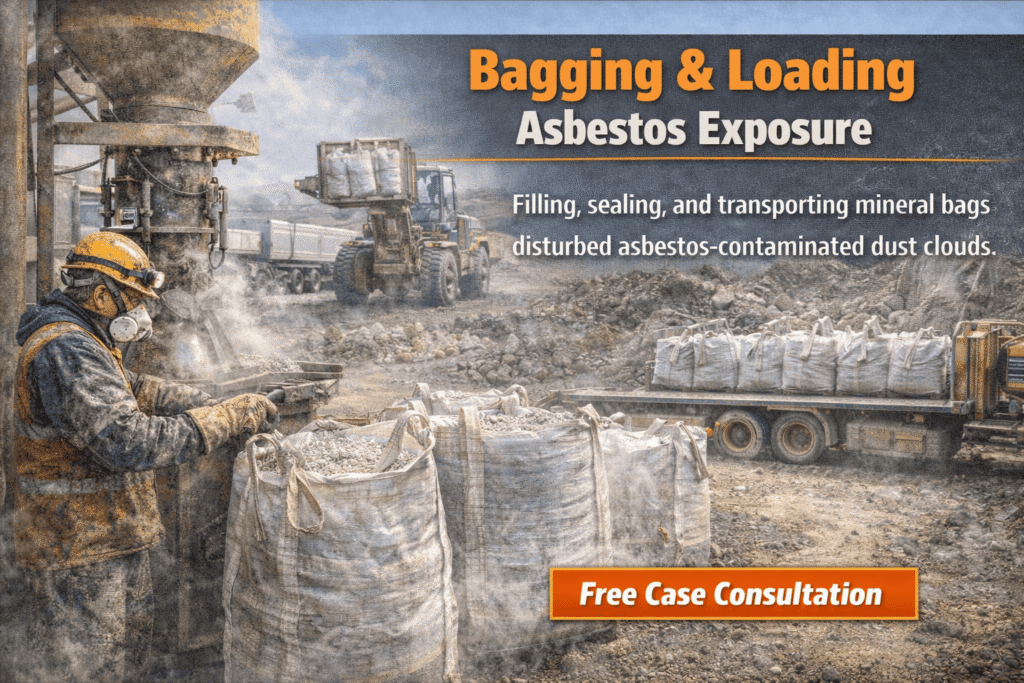
⛏️ Bagging & Loading Asbestos Exposure
Filling, sealing, and transporting mineral bags disturbed asbestos-contaminated dust clouds.
Bagging and loading operations exposed workers to intense airborne asbestos dust during the final stages of mineral processing. After ore was crushed, milled, or refined, contaminated material was transferred into bags, bulk containers, railcars, or trucks for distribution. These activities released large quantities of loose asbestos fibers into the air—often in enclosed or poorly ventilated facilities.
Workers were exposed while filling bags, sealing containers, stacking pallets, loading trucks or railcars, and cleaning spill areas. Fine asbestos-contaminated dust easily became airborne when bags were dropped, torn, overfilled, or handled repeatedly. Because bagging areas often operated continuously, asbestos dust accumulated throughout workspaces.
Many bagging and loading workers were never informed that asbestos contamination existed. Years later, workers developed mesothelioma, asbestos-related lung cancer, and asbestosis linked directly to repeated inhalation of contaminated dust.
🧪 Why Bagging & Loading Created Severe Asbestos Risk
Bagging and loading operations were dangerous because asbestos fibers were already fully liberated during prior processing. Exposure occurred because:
-
Fine asbestos dust was loose and easily airborne
-
Bags released fibers when filled, sealed, or dropped
-
Conveyors and chutes leaked contaminated material
-
Spills were dry-swept, resuspending fibers
-
Enclosed loading areas trapped dust clouds
Unlike earlier mining stages, bagging placed workers directly inside concentrated dust zones.
🏗️ Where Asbestos Exposure Occurred During Bagging & Loading
Asbestos fibers were released throughout packaging and transport operations.
🧱 Bagging & Packaging Stations
Manual and automated filling systems released fibers into breathing zones.
🚛 Truck & Railcar Loading Areas
Transferring bags and bulk material disturbed asbestos dust during transport.
🪨 Conveyor Belts & Transfer Chutes
Material movement released dust at drop points and junctions.
🧹 Cleanup & Spill Areas
Sweeping and cleanup resuspended settled asbestos fibers.
🏭 Enclosed Warehouses & Shipping Buildings
Limited ventilation allowed asbestos dust to accumulate indoors.
🫁 How Bagging & Loading Workers Were Exposed
Exposure occurred during routine shipping and packaging tasks.
🛠️ Filling & Sealing Operations
Loose dust escaped during bag filling and sealing processes.
🧼 Stacking & Palletizing
Dropping and moving bags released asbestos fibers into the air.
🏗️ Transport Preparation
Loading trucks and railcars disturbed contaminated material repeatedly.
🏠 Secondary (Take-Home) Exposure
Asbestos dust clung to clothing, exposing workers’ families at home.
🧬 Diseases Linked to Bagging & Loading Asbestos Exposure
Bagging and loading exposure is associated with serious asbestos-related disease.
💀 Mesothelioma
Repeated inhalation of loose asbestos fibers greatly increased mesothelioma risk.
🫁 Lung Cancer
Chronic exposure to contaminated dust raised lung cancer incidence.
📉 Asbestosis
Heavy fiber inhalation caused progressive lung scarring and disability.
Many workers developed disease without ever working underground.
👷 Workers Most at Risk in Bagging & Loading Operations
High-risk job roles included:
-
Bagging line workers
-
Packaging and palletizing workers
-
Warehouse laborers
-
Shipping and receiving crews
-
Truck and rail loading operators
-
Cleanup and spill response workers
Exposure often affected entire shipping facilities.
⏱️ When Bagging & Loading Exposure Was Most Severe
Exposure peaked from the early 1900s through the 1980s, when dust controls and warnings were minimal or nonexistent.
Legacy exposure continues during warehouse demolition, site cleanup, and contaminated material handling.
⚖️ Bagging & Loading Asbestos Lawsuits & Compensation
Bagging and loading asbestos exposure has resulted in numerous lawsuits and trust fund claims nationwide. Claims often involve:
-
Mining companies
-
Processing and packaging operators
-
Equipment and conveyor manufacturers
Available claims may include:
-
Asbestos personal injury lawsuits
-
Asbestos trust fund claims
-
Wrongful death lawsuits
🧑⚖️ Legal & Claims Options for Bagging & Loading Workers
Bagging & Loading Mesothelioma Lawsuit
Workers diagnosed with mesothelioma may pursue claims against responsible companies.
Bagging & Loading Asbestos Trust Fund Claims
Some manufacturers established trust funds that continue compensating victims.
Bagging & Loading Wrongful Death Lawsuits
Families may seek compensation after fatal asbestos-related disease.
Bagging & Loading Statute of Limitations
Deadlines vary by state and diagnosis date—early legal review is critical.
Bagging & Loading Settlement & Verdict History
Packaging-related asbestos cases have produced significant compensation awards.
📞 Legal Help for Bagging & Loading Asbestos Exposure
If you or a loved one worked in bagging, packaging, or loading operations and were later diagnosed with mesothelioma, asbestos-related lung cancer, or asbestosis, legal help may be available.
📞 Call 800-291-0963 for a free case review
✔ No upfront costs
✔ Nationwide representation
✔ Full mining exposure investigation
✔ Assistance with lawsuits and asbestos trust fund claims