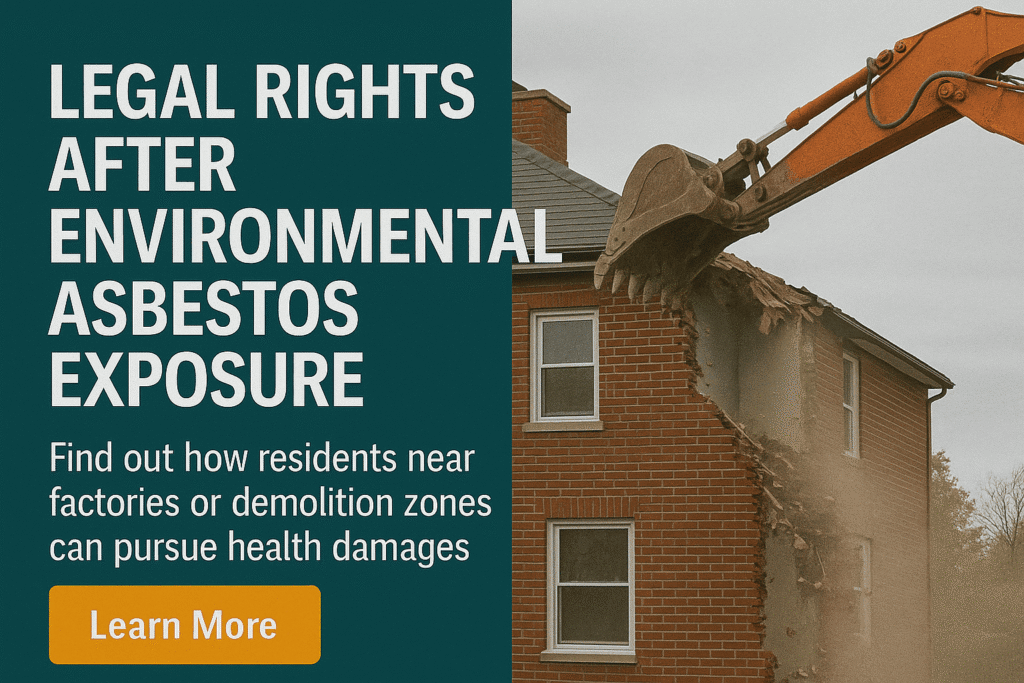
⚖️ Legal Rights After Environmental Asbestos Exposure
Find out how residents near factories or demolition zones can pursue justice for neighborhood contamination and health damage.
Environmental asbestos exposure affects thousands of people each year — not through workplace conditions, but through living near factories, shipyards, power plants, demolition zones, contaminated soil, or older buildings undergoing renovation. When asbestos fibers enter the air through industrial operations or improper removal, nearby residents can breathe them in without ever setting foot inside a job site.
If you or a loved one were exposed to asbestos in your neighborhood and later developed mesothelioma, lung cancer, or asbestosis, you may have powerful legal rights. This guide explains how environmental exposure happens, who is responsible, and how victims can pursue compensation.
For immediate help, call 800.291.0963.
🌫️ How Environmental Asbestos Exposure Occurs
Environmental exposure happens when airborne asbestos fibers escape from buildings, soil, or industrial operations into surrounding neighborhoods.
Common sources include:
-
Old factories processing asbestos materials
-
Shipyards and repair docks
-
Power plants and refinery insulation
-
Demolition of aging commercial buildings
-
Renovation projects disturbing asbestos-containing materials (ACM)
-
Contaminated soil near historical manufacturing sites
-
Landfills or illegal dumping grounds
-
Mining operations
-
Storm, fire, or earthquake destruction of older structures
These fibers can travel long distances, remain suspended in the air for hours, and settle on homes, playgrounds, streets, cars, and lawns.
Even low-level, long-term exposure can increase the risk of cancer decades later.
🏠 Your Legal Rights as a Resident Exposed to Asbestos
Environmental exposure victims have rights under state law, federal environmental statutes, and product-liability principles.
You may have legal claims against:
-
Property owners
-
Landlords
-
Construction or demolition companies
-
Manufacturers of asbestos-containing products
-
Waste-disposal companies
-
City or county agencies that failed to follow safety rules
-
Factories or industrial operations releasing asbestos dust
Victims do not need to work with asbestos to qualify for compensation.
Simply living near contamination can establish legal liability.
📘 What You Must Prove for an Environmental Asbestos Case
Environmental asbestos cases rely on a combination of medical and scientific evidence.
Attorneys must prove:
1. Exposure occurred
Evidence may include:
-
Air monitoring reports
-
Environmental agency findings
-
Historic contamination maps
-
Property inspection results
-
Dust samples
-
Asbestos abatement records
-
Local news documentation
-
Witness statements from neighbors
2. Exposure came from a specific source
Your legal team connects the contamination to:
-
A factory
-
Demolition project
-
Renovation work
-
Contaminated soil
-
Improper waste handling
3. The exposure caused your illness
Pathology reports, medical imaging, and latency timelines link environmental exposure to your mesothelioma.
4. The responsible party acted negligently
Negligence includes:
-
Failing to follow EPA or state asbestos rules
-
Allowing fibers to escape into the community
-
Not warning nearby residents
-
Conducting unsafe demolition or renovation
-
Ignoring complaints or test results
When these elements are proven, victims are entitled to compensation.
💰 What Compensation Can Environmental Exposure Victims Receive?
A mesothelioma diagnosis caused by neighborhood asbestos exposure can lead to significant financial recovery.
Victims may qualify for:
-
Medical expenses
-
Lost wages
-
Pain and suffering
-
Caregiving or home-support costs
-
Travel for treatment
-
Wrongful-death damages for families
-
Compensation for property contamination
-
Punitive damages in cases of extreme negligence
Legal compensation can come from:
-
Lawsuit settlements
-
Jury verdicts
-
Asbestos trust funds
-
Premises-liability claims
-
Third-party claims
-
Government claims (in limited situations)
Environmental cases often involve multiple responsible companies, increasing total recovery.
🏛️ Environmental Justice and Community Protection
Low-income neighborhoods and historically underserved communities often suffer the highest levels of environmental asbestos pollution.
Examples include:
-
Housing near industrial zones
-
Neighborhoods next to demolition-heavy redevelopment projects
-
Communities bordering old factories or refineries
-
Areas impacted by illegal dumping
Victims in these communities have the same legal rights as anyone else — and attorneys often partner with environmental-justice organizations to hold polluters accountable.
📂 How Attorneys Gather Evidence in Environmental Asbestos Claims
Law firms specializing in community contamination cases perform extensive investigations.
Key evidence often includes:
-
EPA violation reports
-
OSHA citations
-
State environmental agency records
-
Historic air-sampling data
-
Satellite imaging of demolition activities
-
City permit files
-
Engineering and abatement records
-
Scientific expert testimony
-
Medical documentation and pathology reports
Legal teams also interview:
-
Neighbors
-
Former employees of factories
-
City officials
-
Cleanup workers
-
Environmental consultants
This creates a strong timeline of how contamination occurred and who is responsible.
📅 Filing Deadlines: Don’t Wait
Environmental asbestos claims are subject to state statutes of limitations, usually:
-
1–3 years after diagnosis for personal injury
-
1–3 years after death for wrongful death
Because exposure may have occurred 40–60 years earlier, attorneys must act quickly to secure:
-
Historic building records
-
Property owner information
-
Environmental data
-
Witness statements
Waiting can eliminate your right to compensation.
🛡️ How to Protect Yourself and Your Family Right Now
If you believe you were exposed due to neighborhood contamination:
Take these steps immediately:
-
Seek medical evaluation
-
Request imaging or screening tests
-
Document past and present addresses
-
Photograph visible dust or demolition activity
-
Save city notices or environmental letters
-
Speak with neighbors who may also be affected
-
Contact an attorney experienced in environmental asbestos cases
Every piece of documentation strengthens your claim.
📞 Get Legal Help After Environmental Asbestos Exposure
Environmental asbestos exposure can be just as dangerous — and legally actionable — as workplace exposure. If you or a loved one developed mesothelioma after living near a contaminated site, you may qualify for significant compensation through lawsuits, trust funds, and community-exposure claims.
Our team investigates exposure sources, gathers environmental evidence, and fights to hold companies accountable.
Call 800.291.0963 for free legal help today.