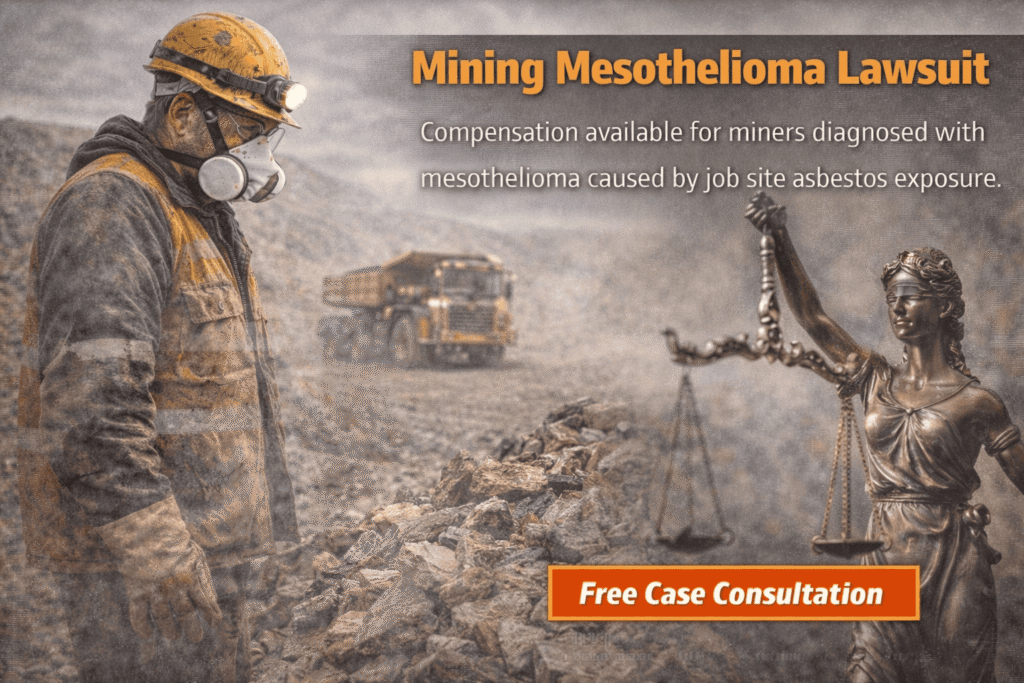
🏭 Mining Mesothelioma Lawsuits
Mining mesothelioma lawsuits allow former miners to pursue financial compensation after being diagnosed with mesothelioma caused by occupational asbestos exposure. For decades, asbestos exposure was a serious and often unavoidable hazard across many types of mining operations, including asbestos mining, talc mining, vermiculite mining, hard-rock mining, and mineral processing facilities.
Miners were exposed to asbestos fibers not only when asbestos itself was mined, but also when asbestos occurred naturally within other mineral deposits. Drilling, blasting, crushing, milling, and transporting ore released microscopic asbestos fibers into the air, which miners inhaled daily. In addition, asbestos was widely used in mining equipment, insulation, brakes, gaskets, boilers, and processing plants, compounding exposure risks.
A mining mesothelioma lawsuit typically targets manufacturers and suppliers of asbestos-containing products and companies responsible for exposing workers to asbestos hazards. These lawsuits do not usually target employers directly, but instead hold asbestos product companies accountable for knowingly placing miners at risk.
Because mesothelioma has a latency period of 20 to 50 years, many miners are diagnosed long after their exposure occurred—yet they may still be legally eligible to file claims.
🧪 How Asbestos Exposure Occurred in Mining Operations
Mining environments are among the most dangerous occupational settings for asbestos exposure due to the nature of excavation and material handling.
⛏️ Asbestos and Contaminated Mineral Mining
Some miners worked directly in asbestos mines, while others mined talc, vermiculite, or hard-rock deposits contaminated with naturally occurring asbestos. Drilling and blasting released asbestos fibers directly from surrounding rock.
🏗️ Crushing, Milling, and Processing Facilities
Once ore was extracted, it was crushed, milled, and processed—often inside enclosed facilities. These operations generated dense airborne dust containing asbestos fibers, exposing mill workers and equipment operators.
🚜 Mining Equipment and Machinery
Heavy mining equipment used asbestos-containing brakes, clutches, gaskets, insulation, and engine components. Repair and maintenance work disturbed these materials and released asbestos dust.
🔥 Boilers, Furnaces, and Power Systems
Mining sites relied on asbestos-insulated boilers, furnaces, and power generation systems. Maintenance and repairs released asbestos insulation into work areas.
🧯 Buildings, Insulation, and Infrastructure
Mining camps, processing buildings, and support facilities frequently used asbestos insulation, fireproofing, pipe lagging, and roofing materials that deteriorated over time.
🫁 Mesothelioma Caused by Mining Asbestos Exposure
Mesothelioma is a rare but aggressive cancer that develops almost exclusively from asbestos exposure. When asbestos fibers are inhaled, they lodge in the lining of the lungs (pleura), abdomen (peritoneum), or heart (pericardium). Over time, these fibers cause inflammation, scarring, and genetic damage that leads to cancer.
Common Mesothelioma Symptoms
-
Shortness of breath
-
Chest or abdominal pain
-
Persistent cough
-
Fatigue
-
Weight loss
-
Fluid buildup around the lungs
Because symptoms often appear decades after exposure, many miners were unaware of the cause until diagnosis.
👷 Miners Commonly Diagnosed With Mesothelioma
Mining mesothelioma lawsuits have been filed by workers in roles such as:
-
Underground miners
-
Surface miners
-
Drillers and blasters
-
Mill and processing workers
-
Equipment operators
-
Maintenance mechanics
-
Electricians and pipefitters
-
Supervisors and foremen
Contract workers and nearby facility staff were also exposed due to airborne fiber migration.
⚖️ Who Can File a Mining Mesothelioma Lawsuit
A mining mesothelioma lawsuit may be filed by:
-
A miner diagnosed with mesothelioma
-
A legal representative acting on the miner’s behalf
-
Family members in wrongful death cases
These lawsuits are usually filed against asbestos product manufacturers, mining equipment suppliers, insulation companies, and processing facility operators that exposed workers to asbestos.
📄 Evidence Used in Mining Mesothelioma Lawsuits
Successful lawsuits rely on evidence such as:
-
Medical records confirming mesothelioma diagnosis
-
Employment history in mining operations
-
Job descriptions and exposure narratives
-
Worksite records and processing facility data
-
Identification of asbestos-containing products
Experienced asbestos attorneys use industry databases and historical mining records to identify responsible parties—even when exposure occurred decades ago.
💰 Compensation Available in Mining Mesothelioma Lawsuits
Compensation in a mining mesothelioma lawsuit may include:
-
Medical expenses and ongoing treatment costs
-
Lost wages and diminished earning capacity
-
Pain and suffering
-
Travel and caregiving expenses
-
Loss of quality of life
Many mining mesothelioma cases result in substantial settlements or jury verdicts, particularly when exposure was long-term or involved multiple asbestos sources.
🏛️ Mining Mesothelioma Lawsuits vs. Asbestos Trust Fund Claims
Most miners pursue compensation through a combination of legal options, including:
-
Mesothelioma lawsuits against solvent manufacturers
-
Asbestos trust fund claims for bankrupt companies
These claims are often filed simultaneously to maximize total financial recovery.
⏱️ Statute of Limitations for Mining Mesothelioma Lawsuits
The statute of limitations varies by state but typically begins on:
-
The date of mesothelioma diagnosis, or
-
The date the disease was reasonably linked to asbestos exposure
Some states allow as little as one year to file a claim. Missing the deadline can permanently bar recovery, making early legal review essential.
⚖️ Why Mining Mesothelioma Lawsuits Are Successful
Mining mesothelioma lawsuits are often successful because:
-
Asbestos exposure in mining is well documented
-
Medical science conclusively links asbestos to mesothelioma
-
Exposure was repeated and long-term
-
Manufacturers knew asbestos risks but failed to warn workers
-
Courts recognize the extreme hazards of mining environments
🧑⚖️ Role of Experienced Asbestos Attorneys
Mining asbestos cases are complex and require attorneys who understand:
-
Mining-specific exposure pathways
-
Historical mineral contamination
-
Equipment-related asbestos use
-
Multi-defendant litigation strategies
Experienced asbestos attorneys investigate exposure, identify responsible companies, file claims on time, and coordinate lawsuits with trust fund claims.
📞 Legal Help for Mining Mesothelioma Lawsuits
If you or a loved one worked in asbestos mining, talc mining, vermiculite mining, hard-rock mining, or mineral processing operations and were later diagnosed with mesothelioma, legal help may be available.
📞 Call 800-291-0963 for a free case review
✔ No upfront costs
✔ Nationwide representation
✔ Complete mining exposure investigation
✔ Help with lawsuits and asbestos trust fund claims