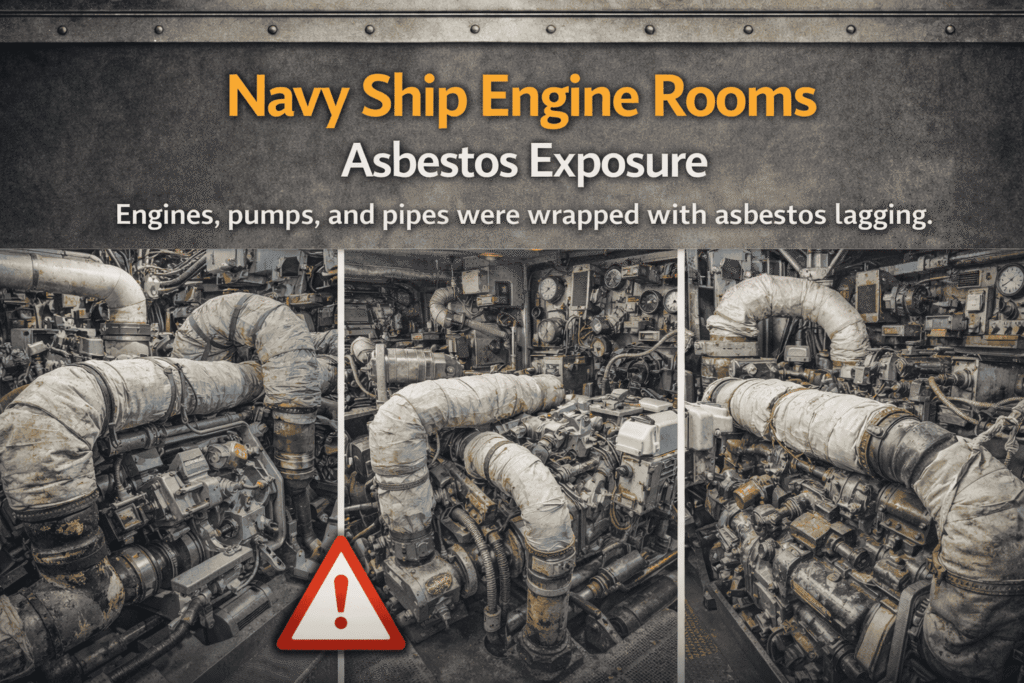
⚙️ Navy Ship Engine Rooms Asbestos Exposure Lawsuit
Engines, pumps, pipes, valves, and surrounding machinery were wrapped with asbestos lagging—exposing sailors to heavy airborne asbestos in the hottest, most confined spaces aboard Navy ships.
Engine rooms were the mechanical core of U.S. Navy vessels, housing propulsion engines, auxiliary machinery, pumps, compressors, and miles of steam and fluid piping. To control heat, prevent fires, and reduce vibration, these spaces relied extensively on asbestos insulation and fireproofing for much of the 20th century.
Because engine rooms operated continuously and required constant maintenance, asbestos exposure among engine-room personnel was frequent, intense, and long-term. Many veterans who worked in these spaces are now being diagnosed with mesothelioma, lung cancer, asbestosis, and pleural disease decades after leaving the United States Navy.
🧱 Why Navy Ship Engine Rooms Used So Much Asbestos
Engine rooms contained extreme heat, pressure, and mechanical stress.
Asbestos was used extensively because it:
-
🔥 Insulated engines, turbines, and exhaust systems
-
⚙️ Wrapped steam pipes, pumps, and valves
-
🧯 Reduced fire risk in machinery spaces
-
🧱 Dampened vibration and noise
-
🔧 Sealed flanges, joints, and access points
-
💲 Reduced heat loss and equipment wear
At the time, asbestos was considered essential for engine room safety and efficiency.
⚙️ High-Risk Areas Inside Navy Ship Engine Rooms
Asbestos exposure was constant and unavoidable.
High-risk areas included:
-
⚙️ Main propulsion engines and reduction gears
-
🔥 Steam and exhaust piping systems
-
🧱 Pipe lagging and insulation blankets
-
🔧 Pumps, compressors, and heat exchangers
-
🔩 Valves, flanges, and gasketed connections
-
🌬️ Ventilation trunks connected to engine rooms
-
🛏️ Adjacent berthing and passageways
Heat, vibration, and routine wear caused asbestos materials to dry out, crack, and shed fibers continuously.
👷 Sailors Most Exposed in Engine Rooms
Certain ratings experienced especially heavy exposure.
High-risk roles included:
-
⚙️ Machinist’s Mates
-
🔧 Enginemen and auxiliary machinery operators
-
🔥 Boiler Technicians working adjacent systems
-
🧯 Damage Controlmen
-
🛠️ Hull Maintenance Technicians
-
🔌 Electricians assigned to machinery spaces
Even sailors passing briefly through engine rooms were exposed to airborne asbestos dust.
🧰 Common Asbestos-Containing Materials in Engine Rooms
Engine rooms incorporated asbestos into thousands of components.
Common sources included:
-
🧱 Pipe lagging and block insulation
-
🧱 Insulation blankets and asbestos cloth
-
🪨 Gaskets, seals, and packing materials
-
🔥 Heat shields around engines and exhausts
-
🔩 Valve and flange gaskets
-
🌬️ Insulated ducting and ventilation liners
During maintenance, these materials were often cut, scraped, or removed by hand, releasing fibers directly into breathing zones.
🔧 How Engine Room Asbestos Exposure Occurred
Exposure was part of daily operations.
Common exposure scenarios included:
-
🔧 Routine engine maintenance and overhauls
-
🛠️ Removing and replacing pipe insulation
-
🔩 Scraping old gaskets from flanges
-
🚨 Emergency repairs and damage control
-
⚙️ Shipyard refits and modernizations
-
🧹 Sweeping and cleaning machinery dust
-
🌬️ Breathing contaminated air during long watches
Respirators were rarely provided, and asbestos hazards were not disclosed.
⚠️ Why Engine Room Asbestos Exposure Was Especially Dangerous
Engine room exposure was severe because:
-
❌ Extremely high temperatures degraded insulation rapidly
-
❌ Confined spaces trapped airborne fibers
-
❌ Constant vibration loosened asbestos materials
-
❌ Frequent maintenance repeatedly disturbed asbestos
-
❌ Long watches increased cumulative exposure
Many engine room sailors inhaled asbestos daily for years.
🫁 Diseases Linked to Navy Engine Room Asbestos Exposure
Veterans exposed in engine rooms face increased risk for:
-
Mesothelioma
-
Asbestos-related lung cancer
-
Asbestosis
-
Pleural plaques and pleural thickening
Symptoms often appear 30–50 years after exposure, long after naval service ended.
⏳ Latency Period and Delayed Diagnosis
Engine room asbestos disease typically involves:
-
⏱️ Exposure during active duty
-
⏱️ No early symptoms
-
⏱️ Diagnosis decades later
This long latency explains why many former engine room sailors are being diagnosed today.
⚖️ Legal Responsibility for Engine Room Asbestos Exposure
Asbestos lawsuits do not sue the Navy or the federal government.
Claims target:
-
🏭 Engine and pump manufacturers
-
🏭 Insulation and refractory suppliers
-
🏭 Gasket and valve manufacturers
-
🏭 Steam-system equipment manufacturers
-
🏭 Companies that failed to warn sailors
Many responsible companies later established asbestos trust funds.
🧑⚖️ How a Lawyer Can Help Engine Room–Exposed Veterans
An experienced asbestos lawyer can:
-
🔍 Identify engine room equipment used on specific ships
-
📂 Reconstruct duty stations and watch assignments
-
🏗️ Match ratings to known asbestos exposure sources
-
🏦 File asbestos trust fund claims
-
⚖️ Coordinate VA benefits with lawsuits
-
👨👩👧 Handle wrongful death claims
Veterans do not need engine manuals or product names—naval records and expert databases provide the proof.
❓ Frequently Asked Questions (FAQs)
❓ Were all Navy engine rooms insulated with asbestos?
Yes. Nearly all engine rooms built before the 1980s used asbestos extensively.
❓ I wasn’t assigned to engineering—was I still exposed?
Yes. Ventilation spread engine room fibers throughout ships.
❓ Can I receive VA benefits and file a lawsuit?
Yes. These are separate compensation paths.
❓ What if exposure happened decades ago?
That is expected. Claims usually begin at diagnosis.
❓ Can families file claims if the sailor passed away?
Yes. Wrongful death claims are common.
📞 Help for Navy Veterans Exposed in Engine Rooms
If you worked in or around Navy ship engine rooms and later developed mesothelioma or another asbestos-related disease, you may still have strong legal options today.
📌 You May Be Eligible For:
-
Asbestos trust fund compensation
-
Manufacturer product-liability lawsuits
-
VA disability benefits
-
Wrongful death claims for families
📞 Call 800-291-0963 for a free, confidential Navy engine room asbestos exposure review
⏱️ No upfront costs • Navy-focused cases • Nationwide representation
Engine rooms powered the fleet. You shouldn’t bear the cost now.