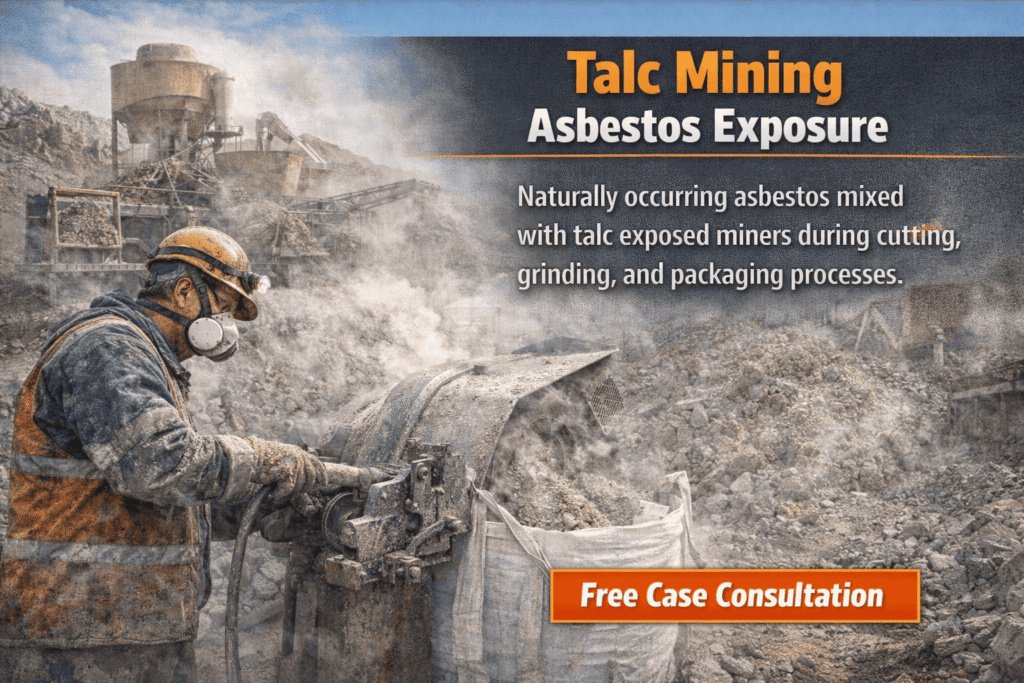
⛏️ Talc Mining Asbestos Exposure
Naturally occurring asbestos mixed with talc exposed miners during cutting, grinding, and packaging operations.
Talc mining exposed workers to dangerous asbestos contamination because talc deposits frequently occur alongside naturally occurring asbestos minerals, including tremolite, anthophyllite, and chrysotile. When talc ore was extracted, crushed, milled, and processed, asbestos fibers were released into the air and inhaled by miners, mill workers, and processing crews.
Exposure occurred during drilling, blasting, cutting, grinding, drying, and packaging operations. Fine talc dust mixed with asbestos fibers created dense airborne clouds, particularly in enclosed underground mines and milling facilities with limited ventilation. Workers often wore little or no respiratory protection and were rarely warned of asbestos contamination.
Because talc mining involved continuous handling of contaminated mineral dust, many workers experienced long-term cumulative exposure. Decades later, former talc miners and processors have been diagnosed with mesothelioma, asbestos-related lung cancer, and severe asbestosis.
🧪 Why Talc Mining Created Asbestos Risk
Talc mining was hazardous because asbestos contamination was geologically embedded in many talc deposits. Exposure occurred because:
-
Talc ore naturally contained asbestos fibers
-
Drilling and blasting fractured asbestos-bearing rock
-
Crushing and grinding liberated microscopic fibers
-
Dry milling and screening increased airborne dust
-
Packaging disturbed loose contaminated talc powder
Unlike manufactured asbestos products, contaminated talc released free, respirable fibers during nearly every stage of mining and processing.
🏗️ Where Asbestos Exposure Occurred in Talc Mining
Asbestos fibers were released throughout talc mining operations.
🔧 Underground & Surface Mining Areas
Drilling, cutting, and blasting released asbestos-contaminated dust into confined spaces.
🪨 Crushing, Grinding & Milling Facilities
Mechanical processing generated high concentrations of airborne fibers.
🏭 Drying & Refining Plants
Thermal drying and refinement disturbed asbestos embedded in talc ore.
🧱 Packaging, Bagging & Shipping Areas
Filling, sealing, and moving talc bags released dust into enclosed work areas.
🌬️ Tailings, Waste & Storage Areas
Dry waste material released fibers during handling and cleanup.
🫁 How Talc Miners Were Exposed
Exposure occurred during daily mining and processing tasks.
🛠️ Ore Extraction & Handling
Breaking, loading, and transporting talc released asbestos fibers.
🧼 Processing & Refinement
Grinding and milling created fine dust easily inhaled deep into the lungs.
🏗️ Equipment Operation & Maintenance
Machinery repairs disturbed contaminated dust inside processing facilities.
🏠 Secondary (Take-Home) Exposure
Fibers clung to clothing and skin, exposing family members at home.
🧬 Diseases Linked to Talc Mining Asbestos Exposure
Talc mining asbestos exposure is associated with serious, often fatal diseases.
💀 Mesothelioma
Exposure to asbestos-contaminated talc significantly increases mesothelioma risk.
🫁 Lung Cancer
Long-term inhalation of contaminated talc dust raises lung cancer incidence.
📉 Asbestosis
Chronic exposure caused progressive lung scarring and respiratory failure.
Many workers developed disease decades after exposure, often without knowing asbestos was present.
👷 Workers Most at Risk in Talc Mining
High-risk job roles included:
-
Talc miners
-
Crusher and mill operators
-
Processing plant workers
-
Bagging and packaging workers
-
Equipment operators
-
Maintenance and cleanup crews
-
Truck and transport workers
Entire mining and processing facilities were often contaminated.
⏱️ When Talc Mining Exposure Was Most Severe
Exposure peaked from the early 1900s through the 1980s, when talc demand increased for industrial, cosmetic, and pharmaceutical uses.
Although some mines closed, legacy exposure continues through contaminated sites and processing facilities.
⚖️ Talc Mining Asbestos Lawsuits & Compensation
Talc mining asbestos exposure has resulted in numerous lawsuits, settlements, and trust fund claims nationwide. Claims commonly involve:
-
Talc mining companies
-
Processing and milling operators
-
Corporate owners and distributors
Available legal options may include:
-
Asbestos personal injury lawsuits
-
Asbestos trust fund claims
-
Wrongful death lawsuits
🧑⚖️ Legal & Claims Options for Talc Miners
Talc Mining Mesothelioma Lawsuit
Workers diagnosed with mesothelioma may pursue claims against talc mining and processing companies.
Talc Asbestos Trust Fund Claims
Some responsible companies established trust funds that continue compensating victims.
Talc Mining Wrongful Death Lawsuits
Families may seek compensation after fatal asbestos-related illness.
Talc Mining Statute of Limitations
Deadlines vary by state and diagnosis date—early legal review is critical.
Talc Mining Settlement & Verdict History
Talc asbestos cases have produced significant settlements and jury verdicts nationwide.
📞 Legal Help for Talc Mining Asbestos Exposure
If you or a loved one worked in talc mining or processing and were later diagnosed with mesothelioma, asbestos-related lung cancer, or asbestosis, legal help may be available.
📞 Call 800-291-0963 for a free case review
✔ No upfront costs
✔ Nationwide representation
✔ Full talc exposure investigation
✔ Assistance with lawsuits and asbestos trust fund claims