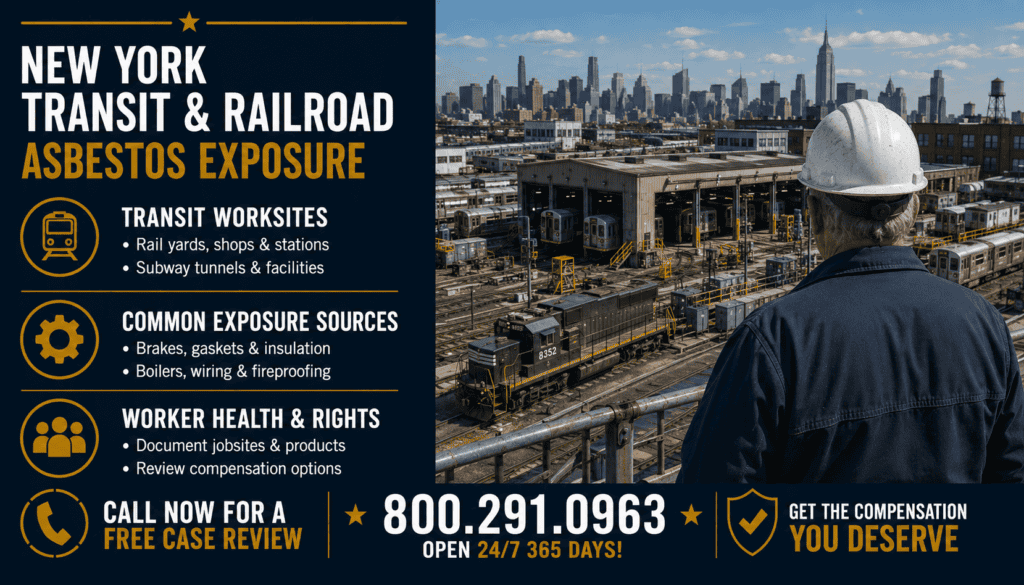
🚇 New York Transit & Railroad Asbestos Exposure
New York transit and railroad asbestos exposure occurred for decades across subway systems, rail yards, tunnels, stations, maintenance shops, and railcars where asbestos-containing materials were heavily used for fireproofing, insulation, vibration control, and heat resistance. From the New York City subway to regional and interstate rail systems, asbestos was embedded into locomotives, railcars, brake systems, tunnels, and electrical components. When these materials aged or were disturbed during repairs, upgrades, and daily operations, airborne asbestos fibers were released and inhaled by transit and railroad workers.
🚆 Why Asbestos Was Used in New York Transit & Rail Systems
Asbestos was widely adopted due to the extreme conditions of rail environments.
It was used because it:
-
🔥 Resisted intense heat and friction
-
🛑 Improved braking safety
-
🔇 Reduced vibration and noise
-
⚡ Insulated electrical systems
-
🧱 Protected tunnels and stations from fire
Rail systems relied on asbestos for decades.
🚇 Common Asbestos Materials in Transit & Railroad Systems
Asbestos was found throughout rail infrastructure.
🛑 Brake Pads & Linings
Grinding and replacement released fibers.
🚆 Locomotive & Railcar Insulation
Heat shielding deteriorated over time.
⚡ Electrical Wiring & Panels
Asbestos insulation released dust during servicing.
🧱 Tunnel & Station Fireproofing
Aging materials crumbled into the air.
🛢️ Gaskets, Valves & Seals
Maintenance disturbed asbestos components.
🛠️ How Transit & Railroad Asbestos Exposure Occurred
Exposure occurred during routine job duties.
High-risk activities included:
-
Brake repair and replacement
-
Locomotive and railcar overhauls
-
Tunnel renovations and repairs
-
Electrical system maintenance
-
Station upgrades and demolition
Confined spaces intensified fiber concentration.
👷 New York Transit & Railroad Jobs at High Risk
Many rail workers faced daily exposure.
🚆 Train Operators & Engineers
Worked near asbestos-insulated equipment.
🛠️ Mechanics & Maintenance Crews
Handled asbestos brake and engine parts.
⚡ Electricians
Serviced asbestos-insulated wiring systems.
🧱 Tunnel & Track Workers
Disturbed fireproofing and insulation materials.
🧹 Cleaners & Laborers
Swept and removed asbestos-contaminated dust.
🏙️ Transit & Railroad Facilities Linked to Exposure
Exposure occurred at:
-
Subway tunnels and stations
-
Rail yards and maintenance depots
-
Locomotive repair shops
-
Passenger terminals
-
Underground electrical rooms
Older infrastructure posed the greatest danger.
🏠 Secondary Exposure from Transit & Railroad Work
Workers unknowingly carried asbestos home.
Exposure occurred through:
-
Dust-covered uniforms
-
Work boots and gloves
-
Tools and vehicles
Family members inhaled fibers indirectly.
🩺 Health Risks from Transit & Railroad Asbestos Exposure
Long-term exposure causes serious disease.
-
🧬 Mesothelioma
-
🫁 Lung cancer
-
🫀 Asbestosis
-
📉 Pleural disease
Symptoms often appear 20–50 years later.
⚖️ Who Is Liable for Transit & Railroad Asbestos Exposure?
Responsible parties may include:
-
Asbestos product manufacturers
-
Railcar and locomotive builders
-
Transit authorities and contractors
-
Maintenance suppliers
Liability applies even decades later.
🏦 Asbestos Trust Funds for Transit & Railroad Workers
Many manufacturers created trust funds.
Trust funds:
-
Pay claims without trials
-
Allow multiple claims per worker
-
Preserve compensation for future victims
Rail workers often qualify for several trusts.
💰 Compensation Options for Transit & Railroad Workers
Eligible claims may include:
-
⚖️ Mesothelioma lawsuits
-
🏦 Asbestos trust fund claims
-
👨👩👧 Wrongful death lawsuits
Compensation may cover:
-
Medical treatment
-
Lost income and pensions
-
Pain and suffering
-
Family financial support
⏳ New York Statute of Limitations for Rail Claims
New York law limits filing deadlines.
-
Time typically begins at diagnosis, not exposure
Missing deadlines can bar claims.
⚖️ How a New York Asbestos Lawyer Can Help
An asbestos lawyer can:
-
Identify transit and rail exposure sites
-
Trace asbestos products and manufacturers
-
File trust fund and lawsuit claims
-
Manage deadlines and paperwork
-
Maximize total compensation
Most cases require no upfront fees.
❓ New York Transit & Railroad Asbestos Exposure FAQs
Did subway systems use asbestos?
Yes, extensively in tunnels, cars, and stations.
Are railroad retirees still eligible?
Yes, diagnosis timing determines eligibility.
Does working multiple rail jobs help claims?
Yes, it often increases compensation.
Can families file claims after death?
Yes, wrongful death claims are allowed.
Do cases always go to court?
Many resolve through trust funds.
📞 Free Case Evaluation – New York Transit & Railroad Asbestos Exposure
If you or a loved one were exposed to asbestos while working in New York transit or railroad systems and later developed mesothelioma or another asbestos-related disease, legal compensation options may still be available.
✔️ Free, confidential consultation
✔️ No upfront legal fees
✔️ Nationwide asbestos legal support
📲 Call 800-291-0963 today to discuss your options.