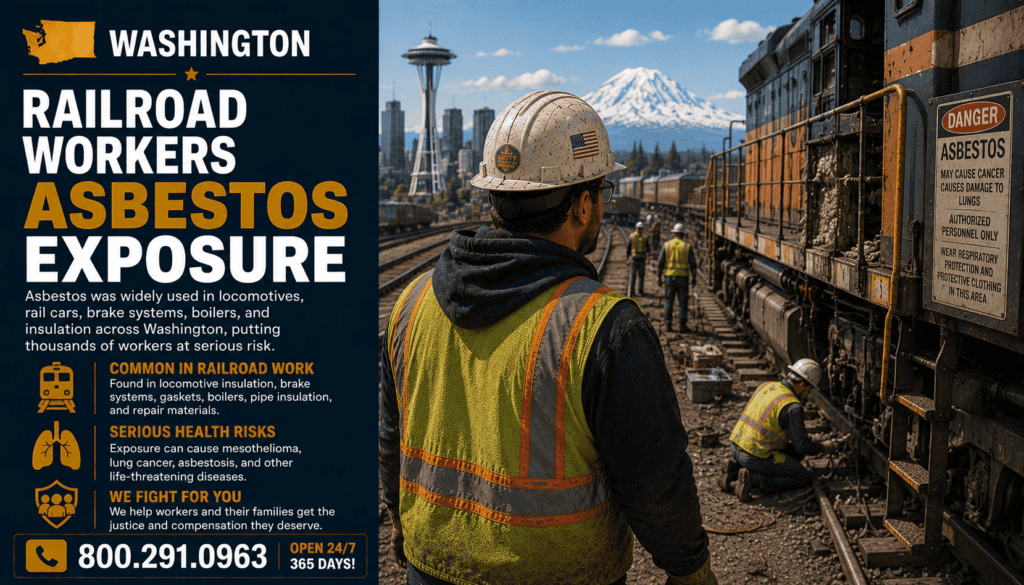
🚆 Washington Railroad Workers Asbestos Exposure
For much of the 20th century, asbestos was widely used throughout Washington railroad systems because of its heat resistance, durability, and fireproofing properties. Locomotives, passenger railcars, freight cars, brake systems, engines, electrical equipment, and rail facility buildings frequently incorporated asbestos-containing components.
Railroad workers were exposed during routine maintenance, inspections, equipment overhauls, brake servicing, and daily operations. Grinding brake shoes, replacing gaskets, repairing engines, removing insulation, and working inside roundhouses and rail shops released asbestos fibers into the air.
Many employees experienced repeated exposure over long careers in enclosed and poorly ventilated environments. Workers could also inhale asbestos dust released by mechanics, machinists, electricians, and maintenance crews working nearby.
Railroad employees often encountered materials described in our Washington industrial asbestos products, Washington industrial machinery asbestos exposure, and Washington asbestos insulation products guides.
Today, former Washington railroad workers are being diagnosed with mesothelioma, asbestos-related lung cancer, asbestosis, and other serious diseases linked to these exposure conditions.
📞 If you worked on a railroad in Washington and were diagnosed with an asbestos-related disease, call 800-291-0963 for a confidential case evaluation.
⚠️ How Railroad Workers Were Exposed to Asbestos
Railroad asbestos exposure commonly occurred during:
🚆 Locomotive and railcar maintenance that disturbed asbestos insulation, gaskets, packing, and engine components
🛞 Brake repair and replacement that released asbestos dust while brake shoes, pads, and linings were removed, ground, or installed
🔧 Engine and mechanical repairs involving asbestos-containing seals, valves, pumps, clutches, and heat-resistant parts
🔥 Boiler and steam-system servicing on older locomotives and rail facility equipment
🏗️ Rail yard, depot, and facility maintenance that disturbed asbestos in walls, ceilings, pipes, floors, and mechanical systems
🔌 Electrical repairs involving asbestos-insulated wiring, panels, switchgear, and control equipment
Confined roundhouses, repair shops, locomotive cabs, engine compartments, and maintenance buildings increased asbestos concentrations and inhalation risks.
Railroad workers could also experience exposure while working near Washington pipefitters handling asbestos-insulated systems and Washington electricians servicing asbestos-containing equipment.
Because asbestos fibers are microscopic, workers often did not realize they were breathing hazardous dust.
🏗️ Asbestos Materials Encountered by Railroad Workers
Washington railroad workers commonly encountered asbestos in:
🛞 Brake shoes, brake pads, and friction linings
⚙️ Engine, boiler, and locomotive insulation
🧰 Gaskets, packing, seals, pumps, and valve components
🔥 Heat shields, fireproofing materials, and thermal barriers
🧱 Pipe coverings and insulation inside roundhouses, depots, and repair buildings
🔌 Electrical panels, wiring insulation, switchgear, and arc-resistant materials
🚆 Railcar wall, ceiling, and floor insulation
🏭 Roofing, flooring, cement board, and structural materials used in rail facilities
Older railroad boilers, steam lines, and heating systems also contained products discussed in our Washington boiler equipment asbestos exposure guide.
Rail depots, roundhouses, and maintenance shops were often constructed with Washington asbestos products used in construction.
Disturbing these materials released asbestos fibers directly into workers’ breathing zones and surrounding work areas.
👷 Railroad Jobs with the Highest Risk
Railroad workers exposed to asbestos included:
Locomotive engineers and firemen
Conductors and brakemen
Machinists and locomotive mechanics
Boilermakers and pipefitters
Maintenance-of-way workers
Signal maintainers and electricians
Roundhouse and rail yard workers
Car inspectors and repair technicians
Track workers and laborers
Supervisors working in maintenance areas
Machinists and mechanics often experienced substantial exposure while dismantling engines, replacing gaskets, servicing brakes, and repairing insulated machinery.
Electricians worked around asbestos-containing wiring, electrical panels, generators, and control systems. Maintenance-of-way employees could disturb asbestos while repairing depots, shops, tunnels, utility systems, and other railroad structures.
Railroad workers may also have experienced overlapping exposure at Washington industrial facilities, Washington manufacturing plants, and port facilities served by rail lines.
Secondhand exposure also occurred when asbestos fibers were carried home on contaminated work clothing, boots, gloves, tools, and personal vehicles.
📍 Washington Railroad Worker Asbestos Exposure Locations
Railroad asbestos exposure occurred statewide at rail facilities located in:
Seattle — Rail yards, depots, maintenance facilities, warehouses, and port-adjacent railroad operations
Tacoma — Rail yards, locomotive shops, switching facilities, and industrial rail operations
Everett — Rail servicing facilities, repair shops, manufacturing connections, and freight operations
Spokane — Major rail hubs, maintenance yards, depots, and locomotive servicing operations
Auburn — Rail yards, switching facilities, warehouses, and equipment repair shops
Railroad workers in Seattle and Auburn may have encountered asbestos at facilities throughout King County.
Everett-area railroad employees may have experienced exposure throughout Snohomish County, while workers in eastern Washington may have encountered asbestos at rail facilities throughout Spokane County.
Rail lines also connected factories, power plants, shipyards, military facilities, and industrial areas. Workers assigned to port-adjacent rail operations may have experienced overlapping exposure at Washington shipyards and port facilities.
These cities and facilities remain central to Washington railroad worker asbestos exposure investigations.
⚖️ How a Washington Asbestos Attorney Can Help Railroad Workers
A Washington asbestos attorney helps railroad workers pursue compensation while handling the legal process.
An attorney can:
✔ Identify railroad-specific asbestos exposure sources
✔ Review job titles, rail assignments, employment records, union histories, and work locations
✔ Identify asbestos-containing locomotives, brake products, machinery, and building materials
✔ Collect medical documentation related to an asbestos disease diagnosis
✔ File available Washington asbestos trust fund claims
✔ Pursue lawsuits against asbestos product manufacturers, equipment companies, suppliers, and other responsible parties
✔ Evaluate whether additional railroad-related legal claims may apply
✔ Manage filings, negotiations, and deadlines under the Washington mesothelioma statute of limitations
Railroad workers diagnosed with asbestos-related lung cancer may also qualify to pursue Washington asbestos lung cancer lawsuits.
When a railroad worker has died from mesothelioma or another asbestos-related disease, eligible family members may have legal options through a Washington wrongful death mesothelioma lawsuit.
You do not need to identify the exact asbestos product before seeking help. Attorneys can often investigate exposure through railroad employment records, union histories, job duties, equipment information, coworker statements, and known asbestos-containing products.
📞 Call 800-291-0963 to speak with a Washington asbestos attorney today.
❓ Washington Railroad Workers Asbestos Exposure FAQs
Can railroad exposure from decades ago still qualify?
Yes. Mesothelioma and other asbestos-related diseases often develop 20–50 years after exposure.
Do railroad workers need proof of asbestos exposure?
No. Attorneys can often identify likely exposure based on job duties, rail assignments, work locations, equipment serviced, and employment history.
What if I worked for several railroad companies?
Working for multiple railroad companies may identify additional exposure locations, asbestos products, equipment manufacturers, and potential sources of compensation.
Will I need to go to court?
Many asbestos claims are resolved through negotiated settlements or asbestos trust funds without a trial. The process depends on the facts of the individual claim.
What if the rail facility has closed?
You may still have legal options. Historical railroad records, Social Security employment histories, union records, equipment documents, and coworker statements may help establish exposure.
What does an asbestos attorney cost?
Nothing upfront. Most asbestos attorneys work on a contingency fee basis, meaning no legal fee is owed unless compensation is recovered.
🧠 What You Should Do Next
📞 Call 800-291-0963 for a confidential Washington railroad worker asbestos case evaluation.
📋 Gather your job titles, railroad company names, union information, rail assignments, equipment serviced, and work locations.
📍 Review known Washington asbestos exposure sites to help identify possible railroad exposure locations.
⚖️ Speak with an attorney before filing deadlines expire. Acting promptly helps protect your right to pursue compensation.
🚆 Washington Railroad Worker Asbestos Case Evaluation
If you worked for a railroad in Washington and were later diagnosed with mesothelioma, asbestos-related lung cancer, asbestosis, or another asbestos-related disease, you may qualify to pursue compensation—even if the exposure occurred decades ago.
📞 Call 800-291-0963
✔ No upfront costs
✔ Confidential case review
✔ Help identifying railroad asbestos exposure sources
✔ Assistance pursuing lawsuits and asbestos trust fund claims
✔ No legal fee unless compensation is recovered