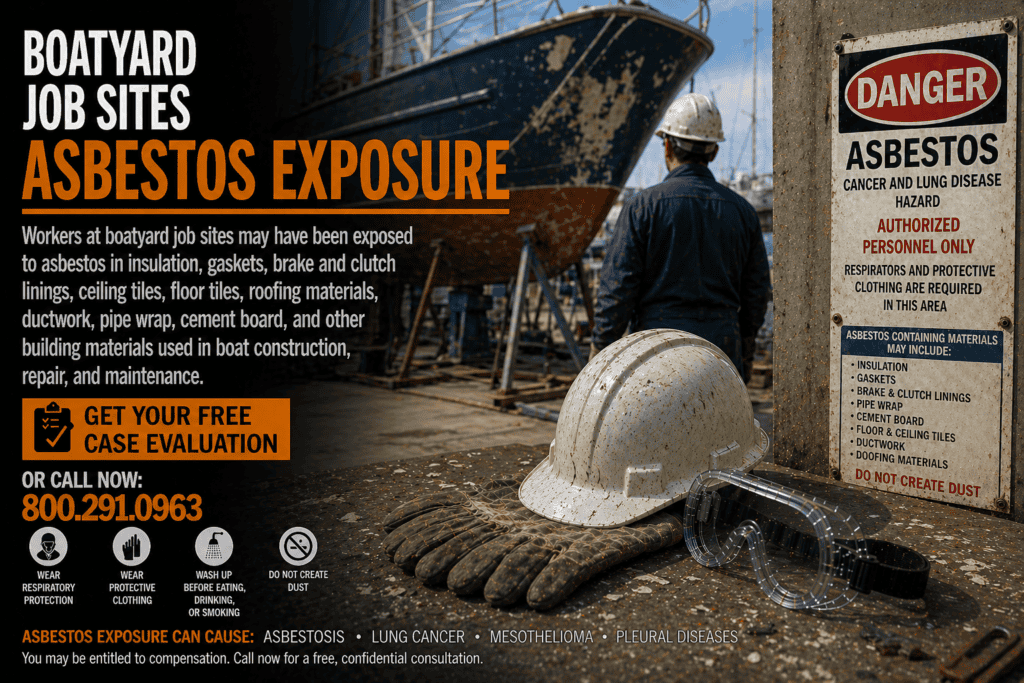
⚓ Boatyards Asbestos Exposure
Boatyards and marine service facilities across the U.S. routinely handled vessels built before asbestos restrictions took effect. From the 1940s through the 1980s, recreational boats, yachts, and small commercial vessels were built using asbestos-containing materials in insulation, engine components, and fittings. During repairs or upgrades at boatyards, these materials were frequently disturbed.
Workers sanding hulls, servicing engines, or replacing piping insulation unknowingly released asbestos dust into the air—especially in tight engine compartments and dry docks with poor ventilation. Today, boatyard workers face asbestos-related illnesses such as:
• Mesothelioma
• Asbestos-related lung cancer
• Asbestosis
🛶 Boatyard Job Sites – What You’ll Learn From This Page:
🚤 Boatyards servicing yachts, sailboats, and small craft used asbestos in insulation, fireproofing, and pipe systems.
🛠️ Repairs to engines, hulls, or fittings disturbed old asbestos insulation or duct seals.
👨🔧 Boatbuilders, mechanics, and painters inhaled dust from sanding or replacing asbestos-containing parts.
🌬️ Outdoor and indoor work areas allowed fibers to spread during cutting or grinding tasks.
💰 Boatyard workers who developed asbestos-related diseases may qualify for legal claims or compensation.
Estimated Number of People Exposed to Asbestos in U.S. Boatyards
| Exposure Category | Estimated Number of People Exposed |
|---|---|
| Occupational Exposure (builders, painters, repair crew) | Around 400,000 workers exposed |
| Secondary Exposure (assistants, family contact) | Estimated 150,000 exposed |
| Environmental Exposure (shops, docks, ventilation areas) | Around 250,000 people exposed |
👉 Total Estimated Exposure:
Over 800,000 people were exposed in boatyard job sites.
📊 Facts About Boatyard Workers and Asbestos
• Thousands of small vessels and recreational boats built before 1980 included asbestos-based parts and insulation.
• Asbestos Exposure: Frequent during repairs, winterization, sanding, and engine servicing.
• Asbestos-Related Disease Risk: High in confined boat compartments and during dry dock operations.
• Many workers were exposed secondhand through airborne dust or contaminated clothing.
• Similar Occupations: Shipwrights, marine electricians, fiberglass techs, dockhands, engine mechanics
🏗️ History of Asbestos in Recreational Boats and Boatyards
Asbestos was prized for its heat resistance, lightweight properties, and fireproofing. It was used in marine insulation, fireproof panels, engine wraps, bulkhead boards, and adhesives. Boatyards conducting repairs, upgrades, or seasonal overhauls disturbed these aging materials.
Common maintenance tasks—like removing exhaust insulation or grinding fiberglass hulls—often exposed workers to dangerous fibers. Many had no warning or protection.
⚠️ Mesothelioma Risk for Boatyard Workers
Boatyard staff worked closely with old, degrading asbestos parts in small, enclosed spaces:
• Engine compartment repairs
• Exhaust system replacements
• Bulkhead or deck remodeling
• Insulation removal or replacement
Symptoms may not appear for decades—leaving retired boatyard workers at risk long after their last job.
🧪 Asbestos Products Used in Boatyards
🚤 Engine Exhaust Insulation
Wrapped around manifolds and piping; released fibers during part removal or upgrades.
🔩 Gaskets and Valve Packing
Used in marine engines; scraped or replaced during overhauls.
🧱 Fireproof Bulkhead Panels
Installed in cabins and engine rooms; disturbed during remodeling.
💥 Adhesives and Sealants
Used in deck fittings and interior components; disturbed when removed or sanded.
🧯 Thermal Wraps and Tapes
Wrapped fuel lines and hot water pipes; shed asbestos with age and vibration.
🪛 Boiler and Water Heater Linings
Contained asbestos insulation; exposure occurred during servicing or replacement.
🔧 Marine HVAC Systems
Used asbestos-insulated ducts; exposed workers during cleaning or maintenance.
🛠 Electrical Board Backings
Older control panels used asbestos insulation boards.
🎨 Paints and Coatings (limited)
Some older anti-fouling paints included asbestos for durability.
🧰 Storage Compartment Panels
Included asbestos for flame resistance in closets and cabin walls.
👷 How Boatyard Workers Were Exposed
Exposure happened through common tasks performed year-round or seasonally:
🔧 Marine Mechanics
Serviced engines and replaced gaskets wrapped in asbestos.
⚡ Marine Electricians
Worked on asbestos-backed panels or conduit in vessel interiors.
🛶 Shipwrights and Carpenters
Refitted walls, decks, and compartments built with asbestos-laced boards.
🧰 Fiberglass Technicians
Sanded hulls and decks that included asbestos-reinforced layers.
🚿 Plumbers and HVAC Workers
Maintained hot water systems and insulated ducts.
🧹 Cleaners and Prep Crews
Swept or pressure-washed boats after insulation removal, stirring up fibers.
🛠 Maintenance Laborers
Assisted in demolition and fitting jobs; exposure occurred through dust in dry docks.
📦 Parts Handlers and Installers
Handled older parts or adhesives with asbestos content.
👨✈️ Foremen and Site Supervisors
Inspected boats during high-exposure tasks and walked through job zones.
⛵ Types of Boatyards With Asbestos Exposure
🛥 Recreational Boatyards
Repaired private yachts and cabin cruisers; older boats contained asbestos in engine rooms and walls.
🧰 Commercial Service Yards
Serviced fishing boats and small commercial craft with asbestos brakes, gaskets, and boiler systems.
⚓ Dry Dock Facilities
Conducted full hull and engine repairs; grinding and insulation removal exposed workers.
🪵 Wooden Boat Builders
Used asbestos panels for fire resistance in cabin designs.
🌊 Marina Maintenance Yards
Performed seasonal prep and repairs on boats with asbestos-lined exhaust or heating.
🏕 Camp and Scout Boatyards
Worked on older canoes and rowboats with asbestos adhesives and sealing products.
🛳 Tour Boat and Charter Repair Facilities
Exposure occurred during engine room work and safety system upgrades.
🔧 Custom Retrofit Shops
Removed outdated materials, including asbestos boards and insulation during rebuilds.
❓ Common Questions About Boatyard Asbestos Claims
Can I file a claim if I worked on recreational boats?
Yes — private vessel repair still involved asbestos products.
What if I was a seasonal or contract worker?
You may still qualify for a claim if exposed to asbestos.
Do I need to identify the boat or manufacturer?
No — attorneys use repair records, product lists, and job descriptions.
Is there compensation for family members of deceased workers?
Yes — wrongful death claims can be filed by surviving relatives.
Are asbestos trust funds still active?
Yes — many trusts remain open and award compensation for marine exposures.
⚖️ How a Mesothelioma Attorney Can Help Boatyard Workers
A qualified asbestos attorney can:
• Review your job duties and identify likely asbestos exposures
• Access marine and repair product records for evidence
• File lawsuits or trust fund claims on your behalf
• Navigate state deadlines for filing
• Assist surviving families with wrongful death filings
• Charge no legal fees unless compensation is awarded
📞 Free Legal Help for Boatyard Workers & Families
If you or a loved one worked in a boatyard or marine repair facility and now face mesothelioma, lung cancer, or asbestosis—you may be entitled to financial compensation.
Whether you worked seasonally, full-time, or as a contractor, legal help is available.
Call Now: 800.291.0963
• Free case review
• No fees unless you win
• Lawsuit and asbestos trust support
• Help for retirees, marine workers, and families
Or request help online 24/7