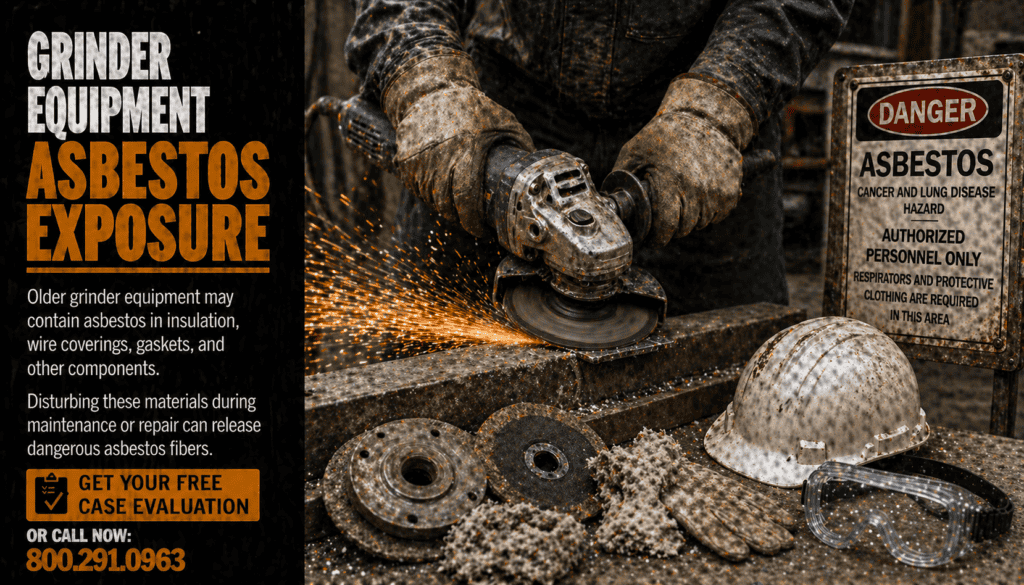
Grinder Equipment Asbestos Exposure
Grinders and abrasive-wheel equipment have been used to shape, smooth, cut and finish many materials. A grinder did not need to contain asbestos itself to create a potential exposure pathway: grinding or beveling an asbestos-containing brake, clutch, insulation product or other material could release fibers into the work area.
Using a grinder does not prove asbestos exposure. The material being worked, task, dates, frequency, duration, ventilation, dust controls and proximity are important when reconstructing possible exposure.
Grinder Equipment Asbestos Exposure Overview
OSHA identifies abrasive wheels among power-operated tools capable of producing or releasing asbestos fibers when used on asbestos-containing material. OSHA construction rules also define grinding or abrading asbestos-containing material as an aggressive method because it can break or disintegrate the material.
The key issue is therefore not simply whether a worker used a grinder. Evidence should identify what was ground and whether that material actually contained asbestos.
Types of Grinder Equipment
Exposure investigations may involve bench grinders, portable angle grinders, surface grinders, cutting-off machines and other abrasive-wheel equipment used in repair, fabrication, automotive, construction and shipyard work.
Different grinders and abrasive wheels perform different tasks. The grinder model can help reconstruct the work, but it does not establish that asbestos-containing material was present.
Asbestos-Containing Materials Affected by Grinding
Depending on the workplace and era, abrasive work may warrant investigation when it involved:
- historical brake linings or brake shoes;
- certain clutch facings;
- asbestos-containing insulation or thermal materials;
- gaskets or sealing materials;
- asbestos-containing building or vessel materials; and
- other historical friction or heat-resistant products.
EPA states that some, but not all, brakes and clutches may contain asbestos and that asbestos content cannot reliably be determined by appearance alone.
Grinding, Beveling and Abrasive Work
Grinding can create fine airborne dust. If the material being ground contains asbestos, abrasive action can release asbestos fibers along with that dust.
EPA guidance for brake and clutch work specifically addresses drilling, grooving, cutting, beveling and lathe-turning friction linings and recommends controls that reduce dust when asbestos may be present. OSHA likewise requires local exhaust ventilation for tools such as abrasive wheels when they would produce or release asbestos fibers.
Need help reviewing historical grinder work? Call 800.291.0963. Live chat available 24/7, 365 days a year. Submit Your Case.
Worksites Where Grinders Were Used
Grinders have been used in automotive repair shops, fabrication facilities, shipyards, construction sites, industrial plants and equipment-maintenance areas.
OSHA’s shipyard asbestos standard specifically treats sanding, abrading and grinding vessel materials as aggressive disturbance methods when asbestos-containing material is involved. Worksite context matters because asbestos may have come from the material being ground or from nearby insulation, machinery, piping or other products.
Workers Potentially Involved
Potentially relevant workers may include automotive mechanics, brake and clutch technicians, machinists, fabricators, welders, shipyard workers, construction workers and maintenance personnel.
A trade or job title does not establish exposure. The investigation should identify the grinder, material, product or component, work procedure, dates, frequency, duration and dust-control practices.
Possible secondhand asbestos exposure also requires evidence of an actual pathway, such as asbestos-containing dust carried from work on clothing, shoes, tools or belongings.
Evidence That May Help Identify Exposure
- grinder type, manufacturer and model;
- the product or component that was ground;
- brake, clutch, gasket or insulation manufacturer and part number;
- parts catalogs, service manuals and technical instructions;
- packaging, labels and historical product specifications;
- repair orders and maintenance records;
- purchase invoices and replacement-part records;
- employer, union or military records;
- work-area photographs;
- coworker or supervisor statements;
- asbestos surveys or abatement records; and
- laboratory analysis of surviving material where appropriate.
Identifying a grinder manufacturer alone does not establish asbestos content, exposure or legal responsibility. The material being ground is often the more important piece of evidence.
Health, Legal and Compensation Considerations
Asbestos exposure is associated with mesothelioma, asbestos-related lung cancer, asbestosis and other asbestos-related disease. A history of grinding work does not by itself diagnose disease or establish individual medical causation.
Depending on the evidence and circumstances, legal options may be available after documented exposure involving a specific asbestos-containing product or component. Deadlines and eligibility are case-specific, and compensation is not guaranteed.
Related Equipment and Exposure Resources
These resources cover closely related abrasive work, automotive friction components, fabrication equipment and exposure evidence.
Automotive, Brake and Tool Equipment
- Automotive, Brake & Transportation Equipment Asbestos Exposure
- Brake Equipment Asbestos Exposure
- Automotive Equipment Asbestos Exposure
- Shipbuilding Tool Equipment Asbestos Exposure
- Equipment Asbestos Exposure
Fabrication and Metalworking Equipment
- Welding Equipment Asbestos Exposure
- Fabricating Equipment Asbestos Exposure
- Asbestos Exposure in High-Risk Jobs
- Asbestos Exposure in Job Sites
Products, Manufacturers and Worker Resources
Grinder Equipment Asbestos Exposure FAQs
Did grinders themselves contain asbestos?
Some historical equipment components may warrant investigation, but an important pathway was a grinder disturbing a separate asbestos-containing product. The specific grinder and material should be identified.
Can grinding asbestos-containing material release fibers?
Yes. OSHA recognizes grinding and abrading as disturbance methods capable of breaking down asbestos-containing material and releasing fibers.
Could grinding old brake linings create asbestos exposure?
Potentially. Some historical brake linings contained asbestos, and EPA guidance specifically addresses dust-generating friction-material work.
Could grinding clutch facings create asbestos exposure?
Potentially, if the clutch facing actually contained asbestos. The component and its asbestos content should be identified.
Does grinding metal itself create asbestos exposure?
No. Grinding ordinary metal does not establish asbestos exposure. An asbestos-containing material or another documented asbestos source must be involved.
Can you identify asbestos-containing friction material by appearance?
No. EPA states that asbestos-containing and non-asbestos brake or clutch components cannot reliably be distinguished simply by looking at them.
What evidence can help document grinder-related exposure?
Product identification, part numbers, service records, work orders, photographs, employer records, coworker statements and surviving material may help.
Does grinder-related asbestos exposure automatically qualify someone for compensation?
No. Eligibility depends on exposure evidence, medical information, jurisdiction and other case-specific circumstances. Compensation is not guaranteed.
Get Help Reviewing Grinder Equipment Asbestos Exposure
If you or a family member has been diagnosed with mesothelioma, asbestos-related lung cancer or another asbestos-related disease and you are trying to reconstruct historical grinder work, we can help organize information that may be relevant.
Call 800.291.0963 to discuss the grinder, material, products, components, worksite, job duties and years of possible exposure you remember. Live chat is available 24/7, 365 days a year. Submit Your Case using the form below.
Prior exposure does not automatically establish a legal claim. Eligibility depends on the evidence, diagnosis, jurisdiction and other circumstances, and compensation is not guaranteed.
⚕️ Legal & Medical Information Disclaimer
This page provides general educational information and is not medical or legal advice. The information does not establish asbestos exposure, diagnosis, causation, liability, claim eligibility or compensation. Medical concerns should be discussed with a qualified healthcare professional, and legal questions should be reviewed with a qualified attorney.