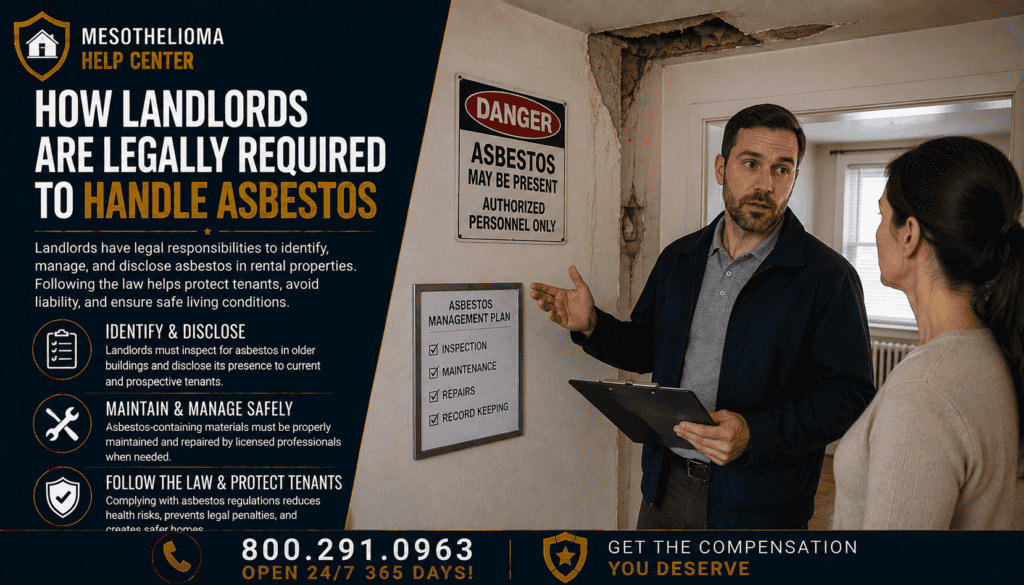
How Landlords Are Legally Required to Handle Asbestos
Asbestos is still present in millions of rental properties across the United States, especially buildings constructed before 1980. Because asbestos exposure can cause deadly illnesses—such as mesothelioma, lung cancer, and asbestosis—local, state, and federal laws clearly define what landlords must do to keep tenants safe.
From proper disclosure and inspections to ongoing maintenance and safe abatement procedures, landlords have strict legal responsibilities. Failing to follow these laws can result in lawsuits, government penalties, and costly remediation orders.
If you’re a landlord or tenant who needs help understanding asbestos safety rules, call 800.291.0963 today.
🏛️ Step 1: Landlords’ Legal Duty to Provide Safe Housing
Federal and state housing laws require landlords to maintain rental properties in habitable and safe condition.
📌 This includes preventing exposure to hazardous materials like asbestos.
Under the “Implied Warranty of Habitability,” landlords must:
-
Keep rental units free from known dangers
-
Maintain all structural and environmental systems
-
Repair hazardous conditions promptly
-
Follow local health and building codes
If asbestos is damaged, deteriorating, or likely to be disturbed, landlords must take action.
📜 Step 2: Disclosure Requirements for Rentals
Most states require landlords to disclose whether asbestos is known or suspected in a rental property—especially before lease signing.
✔ Landlords MUST Disclose:
-
Known asbestos-containing materials
-
Past asbestos inspection reports
-
Areas where asbestos was removed or encapsulated
-
Any deterioration or known risk factors
-
Upcoming repairs involving asbestos
✔ Landlords Are NOT Required To:
-
Conduct asbestos testing in every unit
-
Remove intact, non-friable asbestos
But if landlords know asbestos exists, they must communicate this clearly to tenants to avoid liability.
🔍 Step 3: Landlords’ Responsibility to Inspect and Monitor
Even if asbestos is not actively dangerous, landlords must monitor conditions over time.
✔ Regular Monitoring Should Include:
-
Checking for damaged floor tiles
-
Inspecting pipe insulation
-
Checking boiler or furnace rooms
-
Monitoring ceilings and drywall
-
Evaluating HVAC duct tape and mastic
-
Monitoring moisture damage, which can accelerate breakdown
📌 Important
Most states do not require landlords to perform routine asbestos testing unless damage is suspected—however, doing so is considered best practice for liability protection.
⚠️ Step 4: When Landlords MUST Take Action
Landlords are legally obligated to take immediate steps when asbestos becomes friable—meaning it can release harmful fibers into the air.
Landlords must act when:
-
Asbestos-containing materials are cracked, broken, or crumbling
-
Renovation or repair work will disturb asbestos
-
Tenants report unsafe conditions
-
Water leaks or flooding damage ACMs
-
HVAC repairs affect older ducts with asbestos tape
In these cases, landlords must repair, encapsulate, or remove the asbestos using certified professionals.
🧰 Step 5: Required Safety Practices During Repairs
Landlords cannot perform asbestos repairs themselves—only licensed abatement professionals are allowed to handle asbestos.
✔ Legal Abatement Requirements Include:
-
Sealing off work areas
-
Using negative-air machines
-
Wearing appropriate PPE
-
Wetting materials before removal
-
Using HEPA vacuums
-
Following EPA and OSHA rules
-
Providing proper waste disposal documentation
🚫 What Landlords Cannot Do
-
Attempt DIY removal
-
Send untrained maintenance workers
-
Ignore damaged asbestos
-
Instruct tenants to clean up dust themselves
Violations can result in lawsuits, tenant relocation orders, and large fines.
📡 Step 6: OSHA Rules for Multi-Unit Properties
If the landlord employs maintenance staff, OSHA regulations may apply.
Landlords Must:
-
Train employees on asbestos recognition
-
Provide PPE if asbestos work is possible
-
Prevent maintenance crews from disturbing asbestos
-
Post warning signs in boiler rooms or mechanical rooms
-
Keep asbestos documentation accessible to staff
OSHA rules apply even when state housing laws do not.
🏗️ Step 7: Renovation & Remodeling Requirements (NESHAP)
For major renovation or demolition of multi-unit housing, federal NESHAP rules require:
-
Presale asbestos inspection
-
Written notification to EPA or local authorities
-
Proper abatement by licensed contractors
-
Air clearance testing
-
Certified disposal using hazardous-waste carriers
If landlords ignore NESHAP, penalties can include:
-
Project shutdown
-
Civil fines
-
Criminal prosecution
These rules protect tenants and construction workers from exposure.
📄 Step 8: What Tenants Must Be Told During Asbestos Work
Tenants have the right to know when asbestos removal or repair is planned.
Landlords must notify tenants about:
-
Dates and duration of work
-
Areas where asbestos will be handled
-
Safety precautions being taken
-
Any temporary relocation requirements
-
Post-abatement air-testing results
📌 In many cases, tenants cannot remain in the unit during major abatement.
🚪 Step 9: Tenant Rights When Landlords Fail to Act
If a landlord ignores damaged asbestos or fails to make repairs, tenants may have legal remedies.
Tenant Rights May Include:
-
Filing a complaint with the local health department
-
Withholding rent (in some states)
-
Repair-and-deduct options
-
Breaking the lease without penalty
-
Suing for negligence or health risks
-
Seeking relocation assistance
Tenants should keep written documentation of all communication with the landlord.
🧾 Step 10: Documentation Landlords Must Keep
Landlords must maintain accurate asbestos records for liability protection.
✔ Required or Recommended Documentation:
-
Asbestos inspection reports
-
Lab test results
-
Maintenance logs
-
Repair history
-
Abatement records
-
Waste-disposal manifests
-
Tenant communication notices
-
Air-quality clearance documentation
This documentation may be legally required during property sales or regulatory audits.
💰 Step 11: Who Pays for Asbestos Removal?
In almost all cases, the landlord must pay, not the tenant.
✔ Landlords Pay When:
-
Asbestos is damaged
-
Renovation requires removal
-
Boilers or pipes need repair
-
Deteriorating materials pose a health hazard
Tenants cannot be charged for asbestos abatement or asked to sign waivers.
🛑 Step 12: Common Mistakes Landlords Make (and How to Avoid Them)
Landlords often face legal problems because of poor maintenance practices.
❌ Common Mistakes
-
Painting over damaged pipe insulation
-
Sending maintenance staff into contaminated areas
-
Ignoring tenant reports
-
Allowing contractors to disturb materials without testing
-
Failing to disclose known asbestos
✔ How to Avoid These Issues
-
Test suspicious materials
-
Hire only licensed asbestos contractors
-
Provide preventive maintenance
-
Keep organized records
-
Communicate openly with tenants
🏥 Where to Get Help
If you’re a landlord, property manager, or tenant dealing with asbestos concerns, we can help you:
-
Understand legal responsibilities
-
Schedule certified inspections
-
Review landlord-tenant asbestos disputes
-
Obtain abatement cost estimates
-
Ensure compliance with EPA and OSHA rules
-
Navigate tenant notifications and documentation
📞 Call 800.291.0963 for asbestos compliance guidance.
📝 Summary
Landlords have clear legal responsibilities to identify, manage, and remediate asbestos safely.
Key Takeaways
-
Landlords must disclose known asbestos hazards
-
They are responsible for maintaining safe, habitable conditions
-
Only licensed professionals can remove asbestos
-
Tenants must be notified before abatement
-
Landlords pay for repairs—not tenants
-
Failure to comply can lead to lawsuits and fines
If you need help understanding landlord obligations or tenant rights, call 800.291.0963 today.