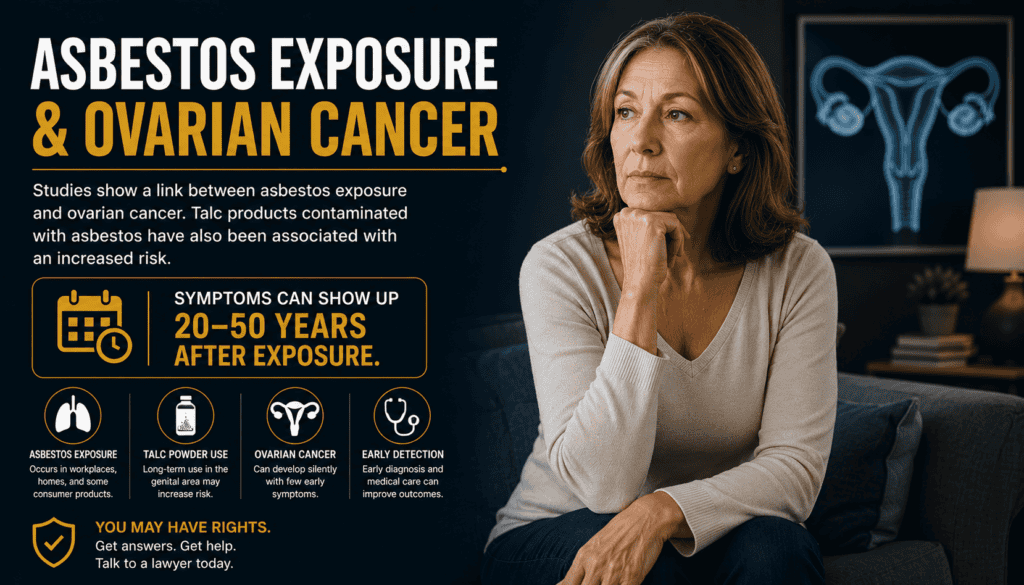
Asbestos Exposure and Ovarian Cancer: Evidence, Symptoms, and Next Steps
Asbestos is an established cause of several diseases, and the International Agency for Research on Cancer (IARC) identifies ovarian cancer among cancers causally associated with asbestos exposure. That finding concerns a population-level association; it does not establish that asbestos caused any particular person’s ovarian cancer. This guide explains the evidence, what symptoms deserve evaluation, and how to prepare for a conversation with a qualified clinician.
What the Evidence Shows
IARC’s evaluation concluded that asbestos exposure causes ovarian cancer in humans. The evidence includes occupational studies and considerations about how asbestos exposure was measured. The association is not a diagnostic test for an individual.
Asbestos also causes mesothelioma and is linked to lung cancer. Ovarian cancer is a different disease and requires its own diagnostic workup. Some older studies had difficulty distinguishing tumors of the ovary from peritoneal mesothelioma; specialist pathology review can matter when a diagnosis is uncertain.
| Topic | What to know |
|---|---|
| Established hazard | IARC classifies all forms of asbestos as carcinogenic to humans and identifies ovarian cancer as a causal cancer site. |
| Individual attribution | An exposure history cannot by itself prove the cause of an individual tumor. |
| Disease distinction | Ovarian carcinoma and peritoneal mesothelioma are distinct diagnoses. |
How Asbestos Exposure Can Occur
Historically, workers encountered asbestos in insulation, construction materials, shipyards, industrial plants, vehicle components, and certain manufacturing processes. Exposure could also occur when fibers were carried home on contaminated work clothing or during disturbance of asbestos-containing materials.
Documenting a plausible exposure history can help a clinician understand occupational and environmental risks. Do not disturb suspected asbestos materials to collect samples yourself; use appropriately qualified professionals.
| Topic | What to know |
|---|---|
| Occupational | Record employers, job tasks, worksites, years, and materials handled. |
| Household | Note whether someone in the household worked around asbestos and brought dusty clothing home. |
| Buildings | Record known renovations or damage, without disturbing suspected materials. |
Risk and Important Limitations
An association in groups of exposed people does not mean everyone exposed will develop ovarian cancer. Ovarian cancer also occurs in people with no known asbestos exposure. Age, inherited genetic variants, family history, and other factors can affect risk.
There is no validated blood test or imaging program specifically recommended to screen symptom-free people for ovarian cancer solely because of asbestos exposure. Discuss personal risk with a clinician, particularly if there is a strong family history of ovarian, breast, or related cancers.
| Topic | What to know |
|---|---|
| Exposure | Risk depends on circumstances; reconstructing past dose precisely may be impossible. |
| Family history | Ask whether genetic counseling is appropriate for relevant family history. |
| Screening | Routine CA-125 or ultrasound screening is not proven to reduce ovarian-cancer deaths in average-risk, symptom-free people. |
Symptoms and When to Seek Care
Ovarian cancer can cause persistent abdominal bloating, pelvic or abdominal pain, feeling full quickly, or urinary urgency or frequency. These symptoms are common and often have noncancerous causes, but new, persistent, or worsening symptoms warrant medical evaluation.
Seek urgent care for severe sudden abdominal pain, fainting, uncontrolled vomiting, or other rapidly worsening symptoms. Tell your care team about both your symptoms and any relevant asbestos exposure without assuming one explains the other.
| Topic | What to know |
|---|---|
| Bloating or pelvic pain | Arrange evaluation when new, persistent, or progressively worsening. |
| Early fullness | Mention appetite changes and unintended weight loss. |
| Severe sudden symptoms | Seek prompt emergency assessment. |
Diagnosis and Exposure History
A clinician may use a history and examination, pelvic imaging, blood tests when appropriate, and specialist referral. A definite cancer diagnosis generally requires pathology. No single symptom or CA-125 result can confirm ovarian cancer.
If ovarian carcinoma and peritoneal mesothelioma are being considered, an expert pathologist may use tissue appearance and immunohistochemical markers to distinguish them. Ask for a gynecologic oncologist’s review when ovarian cancer is suspected.
| Topic | What to know |
|---|---|
| History | Bring dates, symptoms, prior imaging, family history, and possible asbestos exposure. |
| Imaging | Ultrasound or CT may be used according to clinical findings. |
| Pathology | Tissue evaluation establishes the cancer type and guides treatment. |
Need help now? Call 800.291.0963 / Chat 24/7, 365 days a year / Submit Your Case.
Treatment and Supportive Care
Treatment for confirmed ovarian cancer depends on the exact tumor type, stage, molecular features, health, and patient preferences. Common approaches include surgery and systemic anticancer medicines; targeted therapies may be appropriate for certain patients. The gynecologic oncology team should explain the expected benefits, risks, and alternatives.
Asbestos exposure does not determine an ovarian-cancer treatment regimen. Palliative care can help manage symptoms and stress alongside cancer-directed care at any stage.
| Topic | What to know |
|---|---|
| Surgery | May be part of treatment depending on diagnosis and extent of disease. |
| Medicines | Chemotherapy and selected targeted therapies depend on clinical factors. |
| Supportive care | Ask about pain, nutrition, fatigue, emotional support, and practical needs. |
Practical Steps for Patients and Families
Create one folder for medical reports, pathology, imaging, medication lists, and appointment notes. Write an exposure timeline based on what is known rather than guessing at product names or dates. Ask whether a second pathology opinion would be useful if the cancer’s origin is uncertain.
Patients exploring compensation should consult a qualified attorney about evidence and filing deadlines; no diagnosis or exposure history guarantees eligibility. Do not delay medical care while investigating possible exposure.
| Topic | What to know |
|---|---|
| This week | List symptoms, arrange evaluation, and gather existing medical records. |
| Exposure record | Write down jobs, dates, materials, and household exposure where known. |
| Support | Choose a family contact and ask the clinic about social work or patient navigation. |
Questions to Ask Your Care Team
Use these questions to keep the discussion focused on the actual diagnosis and personal care plan. Ask for explanations in plain language and request copies of the pathology report and treatment summary.
| Topic | What to know |
|---|---|
| Diagnosis | What is the exact cancer type, and has pathology confirmed its origin? |
| Risk | Does my family history suggest genetic counseling or testing? |
| Treatment | What are the goals, alternatives, and expected side effects? |
| Exposure | Is my past asbestos exposure relevant to my medical evaluation? |
Frequently Asked Questions
Does asbestos cause ovarian cancer?
IARC concluded that asbestos exposure causes ovarian cancer at the population level. Whether it caused an individual case requires careful evaluation and generally cannot be determined from exposure history alone.
Is ovarian cancer the same as peritoneal mesothelioma?
No. They are different cancers. A specialist pathology review may be important when the origin of an abdominal tumor is uncertain.
Can secondhand asbestos exposure matter?
Household exposure from contaminated work clothing has occurred. Document what is known and discuss it with your clinician.
What symptoms should I report?
Persistent new bloating, pelvic or abdominal pain, early fullness, and urinary changes should be assessed.
Is there a screening test after asbestos exposure?
There is no established ovarian-cancer screening program recommended solely because of asbestos exposure. Ask about individualized assessment if you have other risk factors.
Does CA-125 diagnose ovarian cancer?
No. CA-125 may be used in an appropriate clinical workup but can be elevated for other reasons and may be normal in some cancers.
Who treats ovarian cancer?
A gynecologic oncologist specializes in these cancers and can discuss diagnostic and treatment options.
Can asbestos exposure guarantee compensation?
No. Legal eligibility depends on jurisdiction, evidence, deadlines, and individual circumstances; seek qualified legal advice.
Primary Medical and Scientific Sources
- IARC Monographs Volume 100C: Asbestos — evaluation of cancer sites, including ovary.
- National Cancer Institute: Ovarian Cancer — diagnosis, treatment, and research information.
- National Cancer Institute: Asbestos Exposure and Cancer Risk — asbestos health risks.
- U.S. Preventive Services Task Force: Ovarian Cancer Screening — recommendations and limitations for asymptomatic people.
Source URLs and clinical guidance should be checked again at publication.
Get Help Understanding Your Options
Call 800.291.0963. Live chat available 24/7, 365 days a year. Submit Your Case using the form below. Contacting us does not establish eligibility for compensation or create a medical diagnosis.
⚕️ Legal & Medical Information Disclaimer
This page provides general information, not individual medical or legal advice. Consult qualified healthcare professionals for diagnosis and treatment and an attorney for legal questions.