💧 What Is Peritoneal Effusion in Mesothelioma?
Understanding Abdominal Fluid Buildup in Peritoneal Mesothelioma
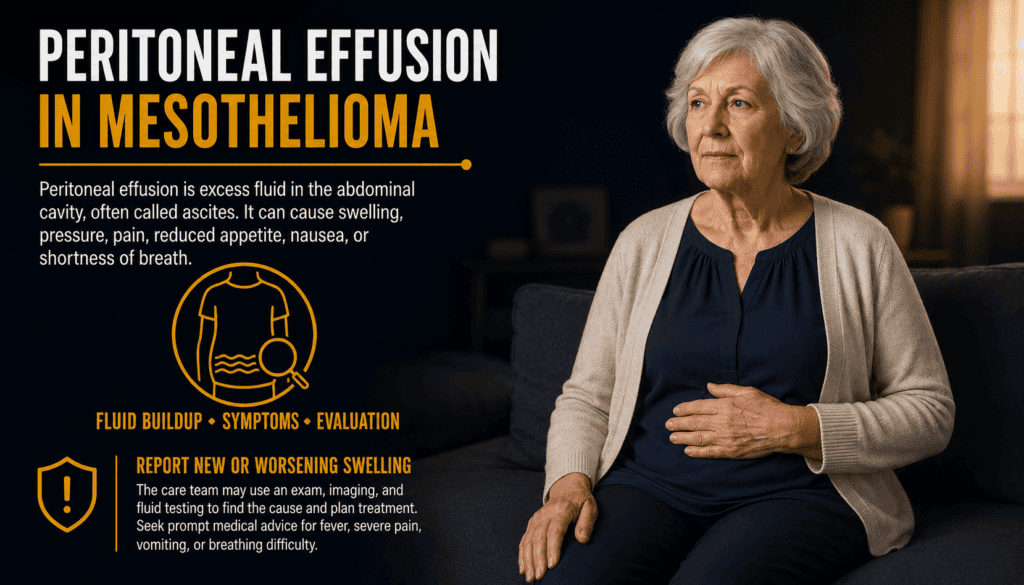
Peritoneal effusion, also known as ascites, is the abnormal buildup of fluid in the abdominal cavity. It commonly occurs in peritoneal mesothelioma, a cancer affecting the lining of the abdomen (peritoneum). This fluid buildup causes painful bloating, swelling, and digestive discomfort.
Effusion develops as cancer cells irritate and inflame the peritoneal lining, leading to fluid leakage from blood vessels into the abdominal space.
Source: American Cancer Society
📋 What Causes Peritoneal Effusion?
Fluid accumulation results from multiple cancer-related factors:
-
Tumor irritation of the peritoneal membrane
-
Obstruction of lymphatic drainage
-
Leaky capillaries due to inflammation
-
Reduced protein levels lowering oncotic pressure
-
Advanced tumor spread
As the fluid accumulates, it places pressure on internal organs, leading to distressing symptoms and complications.
🩺 Symptoms of Peritoneal Effusion
Signs of ascites in mesothelioma include:
-
Abdominal swelling or distention
-
Pain or cramping in the belly
-
Nausea and loss of appetite
-
Indigestion or constipation
-
Shortness of breath (due to pressure on diaphragm)
-
Fatigue and restricted mobility
These symptoms worsen as fluid volume increases and are often one of the first visible signs of peritoneal mesothelioma.
🧪 How Is It Diagnosed?
Doctors confirm peritoneal effusion using:
-
Physical examination (detecting fluid wave or bloating)
-
Imaging tests – Ultrasound, CT scan, or MRI
-
Paracentesis – Needle aspiration of fluid for lab analysis
-
Cytology testing – Examining fluid for cancer cells
-
Tumor markers – CA-125 and mesothelin levels
Fluid analysis can help determine the presence of mesothelioma, infection, or other malignancies.
💉 Treatment Options for Peritoneal Effusion
Relief and management typically involve:
-
Paracentesis
A needle-based drainage procedure to remove excess fluid. Provides fast relief but may need to be repeated frequently. -
Chemotherapy (HIPEC)
Heated Intraperitoneal Chemotherapy treats cancer directly in the abdomen, reducing recurrence of fluid buildup. -
Diuretics
Medications to reduce fluid production — often limited in mesothelioma cases. -
Catheter placement
For ongoing home drainage in patients with chronic ascites. -
Nutrition and fluid management
Low-sodium diets and protein support help manage symptoms.
⚠️ Risks and Complications
Without treatment, peritoneal effusion can cause:
-
Severe abdominal pain and pressure
-
Infections like spontaneous bacterial peritonitis
-
Breathing difficulties
-
Malnutrition and weight loss
-
Reduced treatment tolerance
Frequent monitoring is essential to prevent emergency complications.
📊 Prognosis and Quality of Life
Peritoneal effusion does not directly shorten survival but indicates disease progression and worsens quality of life. Effective management of fluid helps:
-
Reduce suffering and hospitalizations
-
Allow continuation of cancer treatments
-
Improve appetite and daily function
-
Support emotional well-being
Some patients maintain comfort for years with proper drainage and symptom control.
💵 Costs and Insurance Coverage
Most treatments for peritoneal effusion are covered by insurance, including:
-
Imaging and lab analysis
-
Paracentesis procedures
-
Catheter supplies
-
Hospital stays if fluid causes complications
Out-of-pocket costs vary, and patients exposed to asbestos may qualify for legal help to recover expenses.
👨⚖️ How a Mesothelioma Lawyer Can Help
A specialized attorney can:
-
Identify the asbestos exposure that caused your illness
-
File claims to help cover paracentesis and other procedures
-
Access asbestos trust funds or lawsuit compensation
-
Support families in wrongful death claims
-
Work with no fees unless compensation is won
📞 Free Legal Help for Peritoneal Mesothelioma Patients
If you or a loved one suffers from peritoneal effusion caused by mesothelioma, you may be entitled to compensation for treatment and care.
Call Now: 800.291.0963
• No upfront costs
• No fee unless your case succeeds
• Includes exposure investigation and medical review
• Support for patients, veterans, and families
Or request help online 24/7