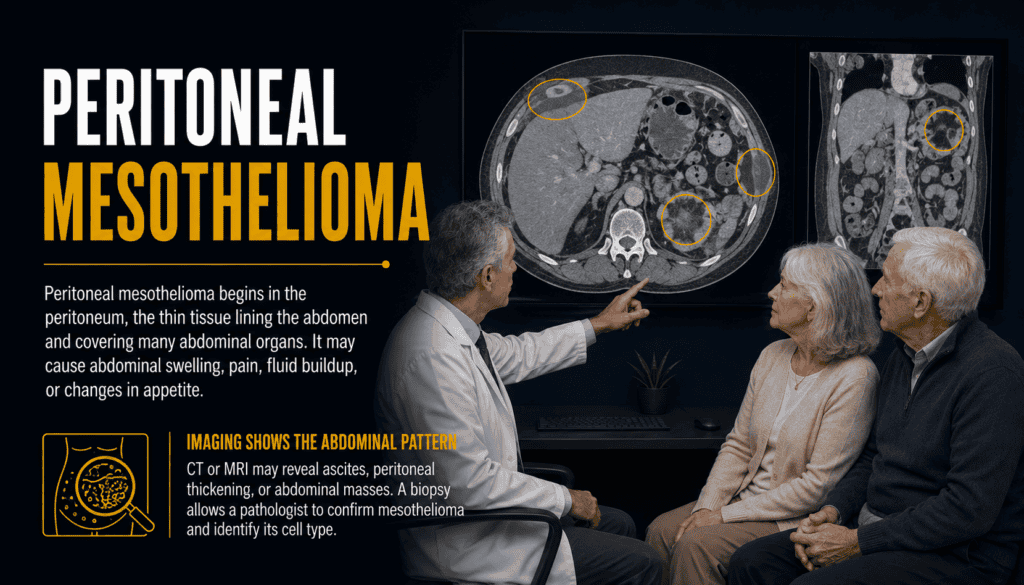
🩺 What Is Peritoneal Mesothelioma?
Understanding Peritoneal Mesothelioma: From Exposure to Legal Help
Peritoneal mesothelioma is a rare cancer that forms in the lining of the abdominal cavity (peritoneum). It is caused by swallowing or ingesting asbestos fibers, which settle in the abdomen and cause chronic inflammation and DNA damage. Tumors may take decades to appear. It is the second most common form of mesothelioma, accounting for 10–15% of all cases.
Source: American Cancer Society
🛠️ How Do People Get Peritoneal Mesothelioma? (Causes & Progression)
The primary cause of peritoneal mesothelioma is swallowing airborne asbestos fibers — usually at job sites or through contaminated materials.
Here’s how exposure turns into disease:
Asbestos materials are disturbed
Cutting, sanding, or repairing insulation, tiles, or gaskets releases airborne asbestos fibers into the environment.
Fibers are swallowed or inhaled
Dust settles on food, drinks, or surfaces and can be unknowingly ingested or inhaled by workers and nearby residents.
Fibers reach the peritoneum
The body cannot expel the sharp, microscopic fibers. They migrate to the abdominal lining via the digestive or lymphatic system.
Dormant for decades
Asbestos fibers silently irritate the peritoneum for 20–50 years, leading to inflammation, scarring, and eventual genetic mutations.
Symptoms eventually develop
Abdominal swelling, pain, and digestive issues arise as tumors form and interfere with internal organs.
Mesothelioma is diagnosed
Doctors identify peritoneal mesothelioma through scans, fluid testing, and biopsies after symptoms become noticeable.
🏗️ Common Sources of Exposure:
-
Industrial job sites (insulation, packing, cement)
-
Ship engine rooms and boiler areas
-
Construction demolition and remodeling
-
Asbestos-contaminated talc products
-
Asbestos-handling by family (secondary exposure)
Even minor or short-term exposure may lead to disease decades later.
Source: OSHA – Occupational Safety and Health Administration
⚠️ Early Signs and Symptoms
Symptoms typically develop slowly and mimic common abdominal issues:
-
Abdominal swelling or fluid buildup
-
Pain or cramping in the stomach
-
Loss of appetite and weight loss
-
Nausea or bowel changes
-
Fatigue or low energy
-
Fever or night sweats
These signs often appear decades after exposure, making early diagnosis difficult.
🧪 How Peritoneal Mesothelioma Diagnosed
Diagnosis involves several procedures and specialists:
-
Imaging: CT scans or MRIs show tumors and fluid
-
Fluid Testing: Paracentesis removes peritoneal fluid
-
Biopsy: Laparoscopy confirms cancer cell type
-
Blood Tests: May help identify mesothelioma biomarkers
Source: NIH Study
📊 Stages of Peritoneal Mesothelioma
Though not staged like pleural cases, doctors assess disease extent:
-
Early Stage: Cancer is confined to the abdominal lining and may respond well to surgery and heated chemo (HIPEC).
-
Intermediate Stage: Tumors have spread within the abdominal cavity, requiring multimodal therapy.
-
Advanced Stage: Cancer has invaded nearby organs or lymph nodes, reducing surgical options and shifting focus to palliative care.
Staging helps determine eligibility for curative or life-extending treatments.
💉 Treatment Options for Peritoneal Mesothelioma
Doctors use aggressive, targeted therapy when possible:
Surgery + HIPEC:
Cytoreductive surgery removes visible tumors, followed by Heated Intraperitoneal Chemotherapy (HIPEC) to kill microscopic cancer cells.
Chemotherapy:
Standard systemic chemo includes Pemetrexed and Cisplatin to slow tumor growth and reduce symptoms.
Immunotherapy:
Checkpoint inhibitors like Opdivo and Yervoy are being tested in clinical trials for abdominal mesothelioma.
Radiation:
Rarely used, but may target localized pain or recurrence after other therapies.
Clinical Trials:
Ongoing studies test advanced drugs, biological therapies, and improved HIPEC techniques.
📈 Life Expectancy & Survival Rates for Peritoneal Mesothelioma
-
Average survival: 12–27 months
-
With surgery & HIPEC: Up to 5+ years
-
Without surgery: 6–12 months
-
Epithelioid subtype offers better outcomes
Source: American Cancer Society
💰 Cost of Treatment for Peritoneal Mesothelioma
Treatment costs vary widely and may exceed $500,000:
-
Surgery & HIPEC: $50K–$150K
-
Chemotherapy: $30K–$70K
-
Immunotherapy: $150K+/year
-
Travel, lodging, follow-up scans
Legal compensation can help when insurance falls short.
⚖️ Legal Help and Compensation
Most victims qualify for significant financial help:
-
Asbestos Trust Funds – $30+ billion available
-
Lawsuits or Settlements – Payouts of $1M–$2.5M+
-
VA Claims – Help for veterans exposed on duty
-
Wrongful Death Claims – Aid for surviving families
MesotheliomaHelp.org – Legal Guide
📚 Lawsuit Examples for Peritoneal Mesothelioma
Talc Powder User — $29.4 Million Verdict (2019)
Details: Woman developed peritoneal mesothelioma after long-term use of asbestos-contaminated talc products.
Outcome: Jury ruled in favor of plaintiff against product manufacturers.
Source: Reuters Legal News
Industrial Laborer — $14.6 Million Settlement (2021)
Details: Exposed to asbestos in packing and cement products at multiple job sites.
Outcome: Settlement awarded from multiple liable companies.
Source: Mealey’s Litigation Report
Shipyard Mechanic — $11.2 Million Verdict (2020)
Details: Worked in confined ship engine rooms with asbestos exposure.
Outcome: Jury held ship equipment manufacturers liable.
Source: Bloomberg Law
Custodian — $8.7 Million Verdict (2022)
Details: Diagnosed after decades working around asbestos-insulated heating systems in schools.
Outcome: Court found maintenance product supplier liable.
Source: Lexis Legal News
Veteran Pipefitter — $10 Million Settlement (2018)
Details: Peritoneal mesothelioma linked to Navy base exposures.
Outcome: Resolved through VA and private legal claims.
Source: National Law Review
🔬 Research and Ongoing Studies
-
NIH Trials: Improved HIPEC delivery methods
-
Checkpoint Therapy: Immune-based treatments in Phase II
-
Talc Exposure Studies: Genetic markers of susceptibility
-
Liquid Biopsy Trials: Detecting earlier and more accurately
Find active trials: ClinicalTrials.gov
📍 Final Prognosis
There is no known cure, but early diagnosis combined with HIPEC can offer years of added life and improved quality of life.
Multidisciplinary care, strong legal support, and emerging treatments provide new hope to many patients.
👨⚖️ How a Mesothelioma Lawyer Can Help
A dedicated asbestos attorney can support you by:
-
Investigating your job sites, exposure years, and asbestos materials
-
Filing lawsuits, VA claims, or asbestos trust fund applications
-
Helping families of deceased victims secure compensation
-
Charging no fees unless you win your case
-
Meeting all legal deadlines by state
📞 Free Legal Help for Peritoneal Mesothelioma Victims
If you or a loved one were exposed to asbestos and now face peritoneal mesothelioma, you may qualify for major financial compensation.
Call Now: 800.291.0963
• No upfront costs
• No fees unless we win
• Job site investigation included
• Help for workers, families, and veterans
Or request help online 24/7