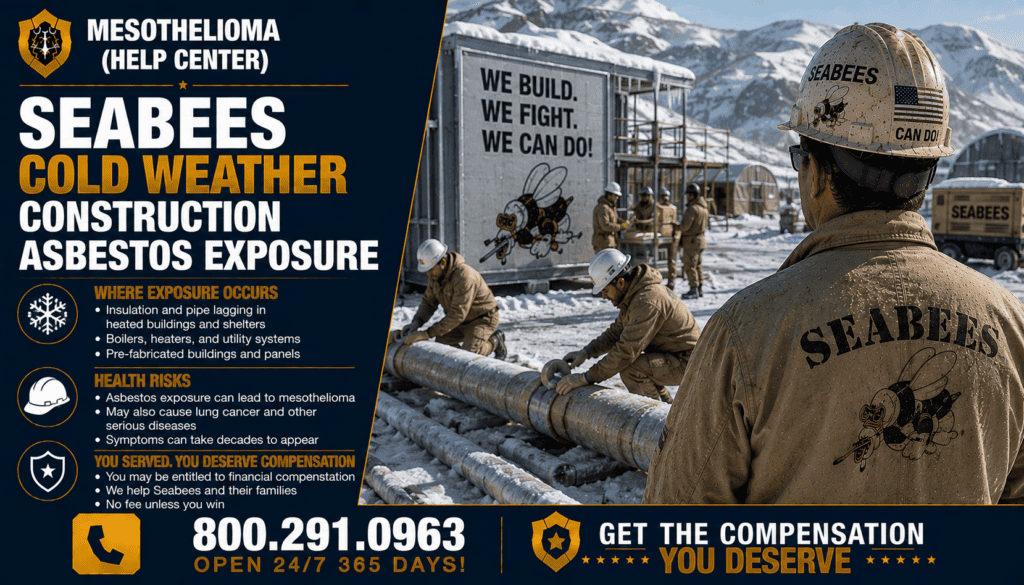
❄️ Seabees Cold Weather Construction Asbestos Exposure
U.S. Navy Seabees performed construction, repair and maintenance in cold-weather environments where reliable heating, insulated utilities, power generation and weather-resistant buildings were especially important. Depending on the era, location, facility and equipment involved, some historical cold-weather projects may have incorporated asbestos-containing pipe insulation, boiler insulation, gaskets, packing, cement products, flooring, roofing and other heat-resistant building or mechanical materials.
Possible asbestos exposure depended on the specific project, building, heating system, equipment, material, task and service period—not cold-weather service alone. Exposure was most relevant when asbestos-containing insulation, gaskets, packing or building materials were cut, scraped, removed, repaired, replaced, damaged or otherwise disturbed.
Not every Seabee cold-weather project contained asbestos. A useful investigation should identify the veteran’s battalion or unit, duty location, project, rating or trade, heating and utility systems, equipment serviced, renovation work and approximate dates.
This page is part of the broader U.S. Navy Seabees Asbestos Exposure guide and relates closely to Seabees Overseas Construction Asbestos Exposure and U.S. Seabees Construction Sites Asbestos Exposure.
🏗️ How Seabee Cold-Weather Construction Created Exposure Opportunities
Cold-weather construction could place added emphasis on heating, insulated piping, enclosed work areas, power systems and frequent equipment maintenance.
- Building or repairing heated barracks and support buildings.
- Installing boilers, furnaces and heating systems.
- Installing or repairing insulated water and steam piping.
- Maintaining generators and temporary power systems.
- Repairing pumps, valves and mechanical equipment.
- Maintaining vehicles and heavy equipment in cold conditions.
- Renovating older cold-weather facilities.
- Cleaning debris after insulation and mechanical repairs.
These activities identify areas to investigate. They do not establish that asbestos was present on every cold-weather Seabee project.
Related pages include Seabees Boiler Equipment Asbestos Exposure, Seabees Generator Equipment Asbestos Exposure and Seabees HVAC Equipment Asbestos Exposure.
🛠️ How Asbestos Exposure May Have Occurred
Cold-weather exposure is most relevant when older heating, insulation and equipment components were disturbed during installation, maintenance or renovation.
- Cutting or removing older pipe insulation.
- Removing boiler or heating-equipment insulation.
- Scraping gaskets from boilers, pumps, valves or generators.
- Removing packing from pumps and valves.
- Repairing heating and ventilation systems.
- Servicing vehicle brakes, clutches and engine gaskets.
- Renovating or demolishing older heated structures.
- Sweeping or hauling insulation and repair debris.
🔥 Enclosed Heated Work Areas Could Affect Dust Conditions
Cold-weather work often took place inside enclosed mechanical rooms, shops or temporary structures. Limited ventilation can be relevant when reconstructing how dust moved through a work area, but enclosure alone does not prove asbestos exposure.
🧱 Cold-Weather Materials and Systems to Investigate
| System or Material | Possible Seabee Task | Evidence to Look For |
|---|---|---|
| Boiler and furnace insulation | Installation, inspection, repair or removal | Equipment manuals, maintenance records, asbestos surveys |
| Pipe insulation | Cutting, installation, repair or removal | Mechanical plans, specifications, surveys |
| Pumps, valves and piping | Gasket, packing or seal replacement | Manuals, work orders, part records |
| Generators and electrical systems | Installation, repair or overhaul | Equipment manuals, wiring diagrams, parts catalogs |
| Flooring, roofing and cement products | Construction, repair, removal or demolition | Plans, specifications, product records |
| Vehicles and heavy equipment | Brake, clutch, gasket or engine repair | Maintenance forms, parts catalogs, manufacturer data |
These are investigation starting points. Historical asbestos use varied by product, manufacturer, building, equipment and service period, so cold-weather use should be documented rather than assumed.
Related pages include Seabees Pump Equipment Asbestos Exposure, Seabees Electrical Equipment Asbestos Exposure and Seabees Vehicle Equipment Asbestos Exposure.
📍 Cold-Weather Work Areas and Projects to Investigate
A cold-weather exposure history should identify the exact facility, mechanical space, project and equipment rather than relying only on climate or location.
🔥 Boiler and Heating Rooms
Boilers, furnaces, steam piping, pumps, valves, gaskets, packing and thermal insulation may warrant system-specific research.
🛏️ Barracks and Heated Housing
Flooring, ceilings, roofing, piping and heating systems may be relevant when construction or renovation disturbed older materials. See Seabees Barracks Construction Asbestos Exposure and Seabees Base Housing Asbestos Exposure.
⚡ Generator and Power Areas
Cold-weather installations often depended on reliable generators and power-distribution equipment. See Seabees Power Facilities Asbestos Exposure.
🚜 Equipment Shops and Field-Repair Areas
Heavy machinery and vehicles may require frequent maintenance in severe conditions, making brakes, clutches, gaskets and engine components useful investigation targets.
💧 Water, Steam and Utility Systems
Insulated piping, pumps and valves can be especially important where systems required freeze protection or heated service.
🌎 Remote and Overseas Cold-Weather Sites
Seabees served in remote and overseas environments as well as permanent installations. See Seabees Overseas Construction Asbestos Exposure.
✅ Verified Asbestos Facts and Evidence Limits
- Asbestos was historically used in many thermal-insulation, building, friction and industrial products.
- Older heating, boiler, piping, pump and generator systems can warrant product-specific asbestos research.
- Removing or disturbing asbestos-containing insulation, gaskets, packing or building materials can release fibers.
- Cold-weather exposure should be evaluated by project, system, material, equipment, task and service period.
- Asbestos-related diseases can have long latency periods.
These facts support investigation of particular Seabee cold-weather assignments; they do not prove that a specific veteran encountered asbestos.
💬 Need Help Reconstructing a Seabee Cold-Weather Assignment?
The strongest history identifies the battalion, location, project, heating systems, equipment, rating or trade, maintenance work and approximate dates.
Call 800.291.0963, use live chat 24/7, 365 days a year, or Submit Your Case for a free, confidential review.
🫁 Health and Secondhand Exposure Risks
Asbestos exposure is associated with mesothelioma, lung cancer, asbestosis and other asbestos-related disease. A diagnosis may occur decades after the cold-weather construction or maintenance work being investigated.
👨👩👧 Possible Family and Take-Home Exposure
Fibers could potentially leave a dusty mechanical or construction area on clothing, footwear, tools or personal items. Family exposure should be evaluated from the actual work and household circumstances rather than assumed from Seabee service alone.
📂 How to Document Seabee Cold-Weather Construction Service
- Identify the battalion, unit or detachment.
- Record the duty location and exact service dates.
- Identify the veteran’s rating, trade and daily duties.
- List heated buildings, utility systems and construction projects.
- Identify boilers, furnaces, generators, pumps and valves.
- Describe insulation, gasket, packing and equipment-maintenance work.
- Locate plans, specifications, manuals, work orders and maintenance logs.
- Look for asbestos surveys, project records, equipment files and photographs.
- Identify coworkers, supervisors and nearby trades who remember the work.
- Preserve military, medical and civilian occupational records.
See the Seabees Asbestos Exposure Timeline for organizing assignments chronologically.
⚖️ VA Benefits and Legal Claim Options
🎖️ VA Benefits
A veteran may qualify for VA disability compensation when evidence establishes a service connection between military asbestos exposure and a diagnosed condition.
See Seabees VA Benefits for Mesothelioma.
⚖️ Asbestos Lawsuits
A civil asbestos investigation may focus on manufacturers or suppliers associated with asbestos-containing insulation, gaskets, packing, building materials or equipment components identified in the veteran’s cold-weather assignment.
See U.S. Seabees Mesothelioma Lawsuit.
🏦 Asbestos Trust Fund Claims
Some companies that historically manufactured or supplied asbestos products later established bankruptcy trusts. Eligibility depends on the evidence and each trust’s requirements.
❓ Seabees Cold Weather Construction Asbestos Exposure Questions
Did every Seabee cold-weather project involve asbestos?
No. Asbestos use varied by project, building, system, product, manufacturer and era. Cold-weather service alone does not prove exposure.
Which systems are most important to investigate?
Older boilers, furnaces, insulated piping, pumps, valves, generators and heating systems are useful starting points when tied to specific records.
Could pipe insulation create an exposure pathway?
Potentially. Cutting or removing asbestos-containing thermal insulation could release fibers if asbestos was present.
Could boiler or furnace maintenance involve asbestos?
Potentially. Historical thermal insulation, gaskets and other heat-resistant components may warrant equipment-specific research.
Could equipment maintenance matter in cold-weather settings?
Potentially. Historical brakes, clutches, gaskets and other machine components may have contained asbestos depending on manufacturer, model and replacement part.
Could enclosed heated spaces increase exposure?
Enclosed spaces may affect how dust accumulates or disperses, but asbestos exposure still requires evidence that asbestos-containing material was actually disturbed.
What records can help identify cold-weather exposure?
Personnel records, unit histories, project files, building plans, equipment manuals, work orders, maintenance logs, asbestos surveys, photographs and witness statements may help.
Can asbestos disease appear decades after cold-weather construction?
Yes. Asbestos-related diseases can have long latency periods.
🚀 Turn a Seabee Cold-Weather History Into Clear Next Steps
📞 Review the Project, Heating Systems, Equipment and Materials
If you or a loved one served with the U.S. Navy Seabees on cold-weather construction or maintenance projects and later developed mesothelioma or asbestos-related lung cancer, a focused review can help identify possible exposure sources.
- Service history — battalion, location, project and dates.
- Heating and utilities — boilers, furnaces, insulated piping, pumps and valves.
- Equipment — generators, vehicles and heavy construction machinery.
- Evidence — plans, specifications, manuals, work orders, surveys, equipment records, photographs and coworkers.
Call 800.291.0963 now, use live chat 24/7/365, or Submit Your Case for a free, confidential case review.
⚕️ Legal & Medical Information Disclaimer
This page provides general educational information and is not legal or medical advice. Seabee cold-weather construction service does not by itself prove asbestos exposure.