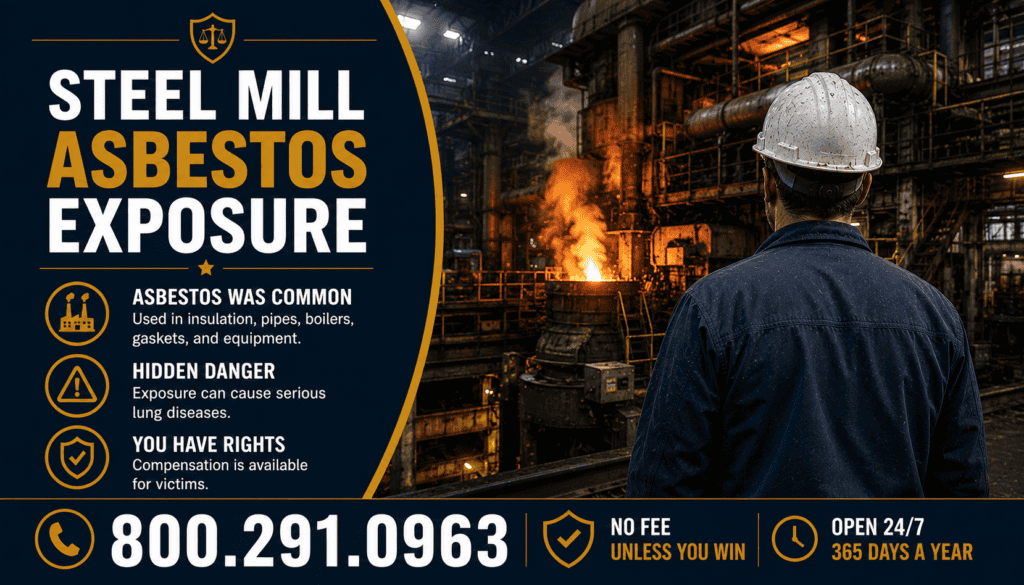
🏭 Steel Mill Asbestos Exposure
Steel mill asbestos exposure was widespread for much of the 20th century due to the extreme heat, heavy machinery, and continuous industrial operations required to produce steel. Steel mills relied heavily on asbestos for insulation, fireproofing, and heat resistance in furnaces, blast ovens, ladles, boilers, piping systems, and machinery. When these materials were installed, repaired, or removed, asbestos fibers were released into the air and inhaled by workers daily.
Steel mill employees often worked long shifts in enclosed, high-temperature environments, where asbestos dust accumulated and lingered, creating prolonged and repeated exposure over entire careers.
⚠️ How Asbestos Exposure Occurred in Steel Mills
Asbestos exposure occurred during routine steel production, maintenance, shutdowns, and equipment overhauls—often without respiratory protection or hazard warnings.
Common exposure activities included:
-
Repairing blast furnaces and coke ovens
-
Replacing refractory brick and insulation
-
Removing and reinstalling asbestos boiler lagging
-
Cutting and scraping asbestos pipe insulation
-
Servicing ladles, converters, and casting equipment
-
Grinding machinery components with asbestos gaskets
-
Working near deteriorating fireproofing materials
-
Performing emergency repairs during production
These activities released large quantities of airborne asbestos fibers into work areas.
🧱 Asbestos Materials Used in Steel Mill Operations
Steel mills depended on asbestos because it could withstand extreme temperatures and mechanical stress.
Common asbestos-containing materials included:
-
Furnace and oven refractory insulation
-
Boiler insulation and cement
-
Pipe lagging and asbestos mud
-
Gaskets and packing in pumps and valves
-
Fireproofing sprays on structural steel
-
Insulating boards and panels
-
Asbestos cloth and blankets
-
Electrical insulation near high-heat zones
As equipment aged, these materials became friable and continuously released fibers.
👷 Steel Mill Job Roles at Highest Risk
Asbestos exposure in steel mills affected many job classifications across departments.
High-risk roles included:
-
Furnace operators and helpers
-
Maintenance mechanics and millwrights
-
Pipefitters and boilermakers
-
Machinists and equipment operators
-
Electricians working near furnaces
-
Laborers involved in cleanup and demolition
-
Supervisors overseeing production floors
Many workers were exposed both directly and through secondary airborne contamination.
🫁 Health Risks Linked to Steel Mill Asbestos Exposure
Prolonged asbestos exposure in steel mills is strongly associated with severe occupational diseases.
Health risks include:
-
Pleural mesothelioma
-
Peritoneal mesothelioma
-
Lung cancer
-
Asbestosis
-
Pleural plaques and thickening
-
Chronic respiratory impairment
Symptoms often do not appear for 20 to 50 years, delaying diagnosis and treatment.
⚖️ Steel Mill Mesothelioma Lawsuit Options
Steel mill workers diagnosed with asbestos-related diseases may pursue compensation through multiple legal pathways.
Legal options include:
-
Product liability lawsuits against asbestos manufacturers
-
Premises liability claims related to mill conditions
-
Asbestos trust fund claims
-
Wrongful death lawsuits for surviving families
-
Multi-defendant claims involving several manufacturers
Most lawsuits focus on manufacturers, not employers.
🏦 Asbestos Trust Fund Claims for Steel Mill Workers
Many asbestos manufacturers that supplied steel mills established trust funds after bankruptcy.
Trust fund claims may involve products such as:
-
Furnace insulation and refractory materials
-
Boiler insulation products
-
Pipe insulation manufacturers
-
Gasket and packing suppliers
-
Fireproofing and insulating board producers
Trust claims often provide faster compensation than lawsuits and can be filed alongside them.
⏳ Statute of Limitations for Steel Mill Asbestos Claims
Filing deadlines vary by state and generally begin at diagnosis, not exposure. Workers may qualify to file in multiple states depending on mill location and manufacturer headquarters.
Missing deadlines can permanently bar compensation, making early legal evaluation critical.
👨⚖️ How an Asbestos Lawyer Helps Steel Mill Workers
Steel mill asbestos cases require detailed occupational and product exposure reconstruction. An experienced asbestos lawyer can:
-
Identify asbestos products used in steel mills
-
Obtain employment and maintenance records
-
File lawsuits and asbestos trust fund claims
-
Coordinate expert medical and industrial testimony
-
Maximize total compensation recovery
Most asbestos lawyers work on contingency, meaning no upfront legal fees.
❓ Steel Mill Asbestos Exposure FAQs
Were steel mills heavy asbestos environments?
Yes. Extreme heat required widespread asbestos use.
Can claims still be filed decades later?
Yes. Long latency periods allow delayed legal action.
Are multiple manufacturers usually involved?
Yes. Steel mills used many asbestos products.
Do family members qualify for compensation?
Yes, through wrongful death or secondary exposure claims.
Are steel mill asbestos cases well documented?
Yes. Industrial records and testimony are extensive.
📞 Free Case Evaluation – Steel Mill Asbestos Exposure
If you worked in a steel mill and were diagnosed with mesothelioma or another asbestos-related disease, legal compensation may still be available.
✔️ Free, confidential case evaluation
✔️ No upfront legal fees
✔️ Nationwide asbestos legal representation
📲 Call 800-291-0963 today to discuss your legal options.