Guide to Asbestos Trust Fund Claims - (800) 291-0963

Base Housing Renovation Asbestos Exposure – Coast Guard

Base Housing Renovation Asbestos Exposure – Coast Guard - Mesothelioma

Base Housing Renovation Asbestos Exposure – Coast Guard

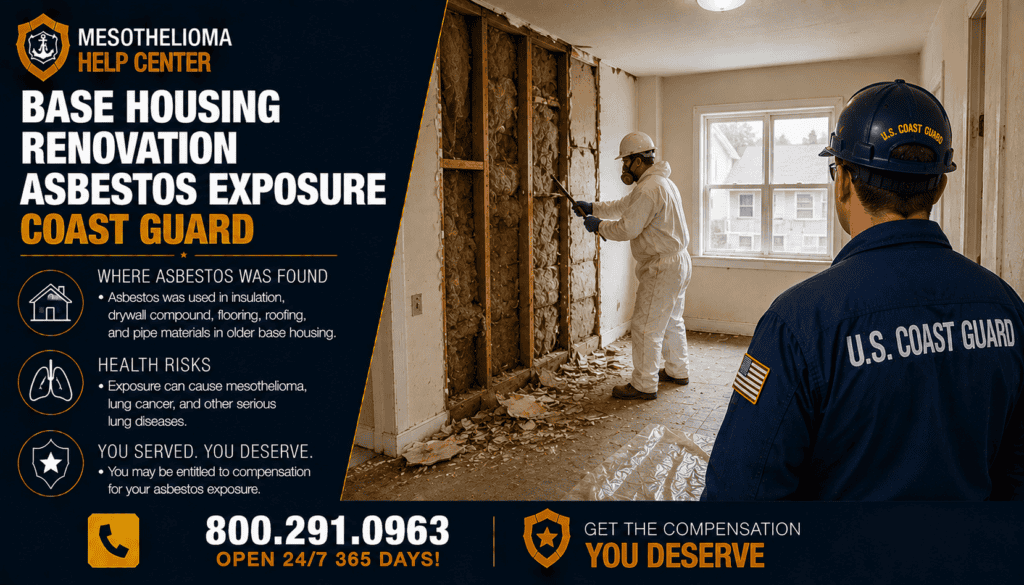
Renovation of older Coast Guard base housing can be an important setting to investigate for historical asbestos exposure. Family housing, enlisted quarters, duplexes, apartments, and other residential buildings may have contained asbestos-bearing flooring, pipe insulation, roofing, fireproofing, wall or ceiling materials, HVAC components, or other construction products, depending on the building, manufacturer, installation date, and era.

Living in or renovating older Coast Guard housing does not automatically prove asbestos exposure. A credible exposure history identifies the specific building, material, renovation task, work area, and conditions under which asbestos-containing products may have been disturbed.

Veterans researching residential facility exposure can also review Coast Guard Barracks Asbestos ExposureCoast Guard Facilities Asbestos Exposure, and the broader U.S. Coast Guard Asbestos Exposure resources.

🏠 Why Coast Guard Base Housing Renovation May Present Asbestos Risk

Residential buildings constructed or renovated during periods when asbestos-containing products were commonly used may warrant closer review, especially when remodeling disturbed older materials.

Housing Condition Why It May Matter
Older construction Some flooring, roofing, insulation, fireproofing, or cement products may have contained asbestos.
Interior remodeling Removing floors, ceilings, walls, or utility materials can disturb legacy products.
Mechanical-system upgrades Boiler, pipe, HVAC, or duct work may disturb insulation or gaskets.
Occupied renovation Residents may be near dust-generating work if areas are not fully isolated.

The actual asbestos content of any material should be verified rather than assumed.

🧱 Housing Materials to Investigate

Several categories of historical residential materials may warrant review in a Coast Guard base-housing exposure investigation.

Material / System Potential Historical Asbestos Use Evidence to Review
Flooring Certain floor tiles and mastics Building specifications, renovation files
Ceiling and wall materials Certain textured coatings, panels, joint materials, or fire-resistant products Facility plans, asbestos surveys, contractor records
Roofing and siding Certain roofing felts, shingles, cement products, or panels Procurement and contractor files
Pipe insulation Thermal insulation and lagging Mechanical plans, repair records, asbestos surveys
HVAC and mechanical systems Certain insulation, gaskets, duct or equipment materials Maintenance logs, equipment manuals

Not every product in these categories contained asbestos. Manufacturer, product, installation date, building, and era should be verified.

🔨 Renovation Tasks That May Disturb Asbestos

Potential exposure concerns are strongest when confirmed asbestos-containing materials are cut, scraped, drilled, sanded, removed, or demolished.

Tasks worth investigating include:

  • Removing old floor tile or mastic
  • Opening walls or ceilings
  • Replacing roofing or siding
  • Removing pipe insulation
  • Replacing HVAC or boiler components
  • Renovating kitchens or bathrooms
  • Demolishing interior partitions
  • Cleaning dust and debris after renovation

A veteran, family member, maintenance worker, or contractor may have direct exposure from performing the work or bystander exposure from being nearby while asbestos-containing materials were disturbed.

🌫️ Resident, Family, and Bystander Exposure

Base-housing renovation can create a different exposure pattern from shipboard or industrial work because residents may be living in or near the building while renovation is underway.

Important factors include:

  • Whether the housing unit remained occupied during work
  • Distance from the renovation area
  • Duration and frequency of time nearby
  • Whether dust barriers or containment were used
  • Ventilation conditions
  • Cleanup practices
  • Whether confirmed asbestos-containing materials were disturbed

Residence in older Coast Guard housing does not itself prove exposure. The exposure history should be tied to specific materials and disturbance events.

🔥 Boilers, Piping, HVAC, and Utility Systems

Base housing can include central boilers, hot-water systems, steam lines, pipe chases, furnaces, and HVAC equipment. Depending on the system and era, some historical insulation, gaskets, packing, duct materials, or heat-resistant products may have contained asbestos.

Maintenance or modernization can involve removing pipe insulation, opening utility chases, replacing mechanical equipment, or disturbing materials around boilers and ducts.

For related maintenance context, see Coast Guard Maintenance Facilities Asbestos Exposure and Coast Guard Shore Stations Asbestos Exposure.

📁 Records That Can Document Housing Exposure

Evidence What It May Help Establish
Housing and personnel records Base, building, unit, occupancy dates, and assignment
Building plans and specifications Construction materials, utilities, and mechanical layouts
Renovation records Rooms remodeled, materials removed, and project dates
Asbestos surveys or abatement records Confirmed asbestos-containing materials and locations
Contractor records Companies, work scopes, and project participants
Maintenance work orders Pipe, HVAC, flooring, roofing, and mechanical repairs
Resident or coworker statements Dust conditions, work areas, and firsthand descriptions of renovation
Medical records Diagnosis, pathology, imaging, and treatment history

Because housing exposure may have occurred decades ago, several sources of evidence may need to be combined to reconstruct the renovation conditions.

🩺 Mesothelioma, Lung Cancer, and Other Health Risks

Asbestos exposure is associated with mesothelioma, lung cancer, asbestosis, and certain other asbestos-related conditions. These diseases can develop after long latency periods, so exposure during Coast Guard base-housing renovation may remain medically relevant decades later.

Symptoms such as persistent cough, shortness of breath, chest pain, unexplained weight loss, or difficulty breathing require medical evaluation but do not establish asbestos causation by themselves.

Veterans and family members concerned about historical renovation exposure should provide healthcare professionals with a detailed residential, military, and occupational history.

⚖️ VA Benefits, Lawsuits, and Trust Fund Claims

A Coast Guard veteran diagnosed with an asbestos-related disease may be able to investigate more than one compensation path depending on the evidence.

Potential Option What May Need to Be Established
VA disability benefits Current disease, military asbestos exposure, and service connection
Private asbestos lawsuit Diagnosis, product exposure, responsible defendants, jurisdiction, and filing deadline
Asbestos trust fund claim Trust-specific medical and exposure requirements
Wrongful death claim Eligible claimant, diagnosis, exposure evidence, responsible parties, and filing deadline

VA claims and private asbestos claims are separate systems. A veteran may be able to investigate both.

See Coast Guard Veterans Asbestos Trust Fund Claims and VA Benefits vs. Coast Guard Mesothelioma Lawsuits for additional information.

🔎 What a Housing-Renovation Exposure Review Should Examine

A useful exposure review should identify the exact Coast Guard housing location, building, renovation project, materials, and residents or workers involved.

  • Specific Coast Guard base or housing area
  • Building or housing-unit identification
  • Dates of occupancy or assignment
  • Rooms or areas renovated
  • Flooring, wall, ceiling, roofing, pipe-insulation, or HVAC materials disturbed
  • Contractor and abatement records
  • Dust-control and containment practices
  • Product and manufacturer evidence
  • Possible asbestos trust connections
  • VA service-connection evidence

Lived or worked in Coast Guard base housing during renovation and later developed mesothelioma or lung cancer? Call 800.291.0963 or Submit Your Case. Live help is available 24/7, 365 days a year.

❓ Frequently Asked Questions

Could Coast Guard base housing contain asbestos?

Potentially. Some older flooring, roofing, insulation, fireproofing, pipe covering, and mechanical-system materials contained asbestos, but each building and product should be verified.

Did every Coast Guard housing unit contain asbestos?

No. Asbestos content varied by building, product, manufacturer, installation date, and era.

Could renovation create asbestos exposure?

Potentially. Exposure can occur when confirmed asbestos-containing materials are removed, drilled, sanded, cut, or demolished.

Could family members be exposed during housing renovation?

Potentially. Residents nearby may have a relevant exposure pathway if asbestos-containing materials were disturbed and dust reached occupied areas.

What records can help prove housing exposure?

Housing records, building plans, renovation files, asbestos surveys, contractor records, maintenance work orders, resident statements, and medical records may help.

Can Coast Guard veterans file asbestos trust claims for housing exposure?

Potentially. Eligibility depends on whether exposure can be connected to companies or products covered by specific asbestos bankruptcy trusts.

Can VA benefits and private asbestos claims both be investigated?

Potentially. They are separate systems with different evidence and eligibility requirements.

Does living in renovated base housing automatically prove a mesothelioma claim?

No. A claim requires medical evidence and a supported exposure history connecting the person to asbestos-containing materials or responsible companies.

📞 Coast Guard Veteran or Family Member Concerned About Base-Housing Renovation Exposure?

A strong housing-renovation investigation starts with the exact Coast Guard base, building, renovation project, materials disturbed, contractor work, and occupancy conditions. Those details can help determine whether VA benefits, asbestos trust claims, a private lawsuit, or multiple options should be investigated.

Call 800.291.0963 to discuss the Coast Guard housing history and possible asbestos exposure. Live help is available 24/7, 365 days a year.

Submit Your Case for a case-specific review of potential legal options. Compensation and VA eligibility depend on diagnosis, exposure evidence, responsible companies, jurisdiction, and applicable requirements.

For base-specific legal information, see Coast Guard Base Asbestos Exposure Mesothelioma Lawsuit. For broader legal resources, see Coast Guard Asbestos Exposure Legal Options.

⚕️ Legal & Medical Information Disclaimer

This page provides general educational information only. It does not establish diagnosis, causation, legal liability, VA eligibility, or compensation. Consult qualified medical and legal professionals about your situation.


Find Out If You Qualify Today!

25 Years Working With Diagnosed Mesothelioma Victims!

Our Mesothelioma lawyers work on a contingency fee basis.

This means NO MONEY OUT OF POCKET EXPENSES by the asbestos victims or their families. You will find the contingency fees to be among the lowest in the country.

Talk to a real live person!
Contact a mesothelioma lawyer today for a free, no-obligation case evaluation. 

Call (800) 291-0963 to find out if you have a valid claim.

Free Mesothelioma Case Evaluation

Get Answers From Expert Mesothelioma Attorneys