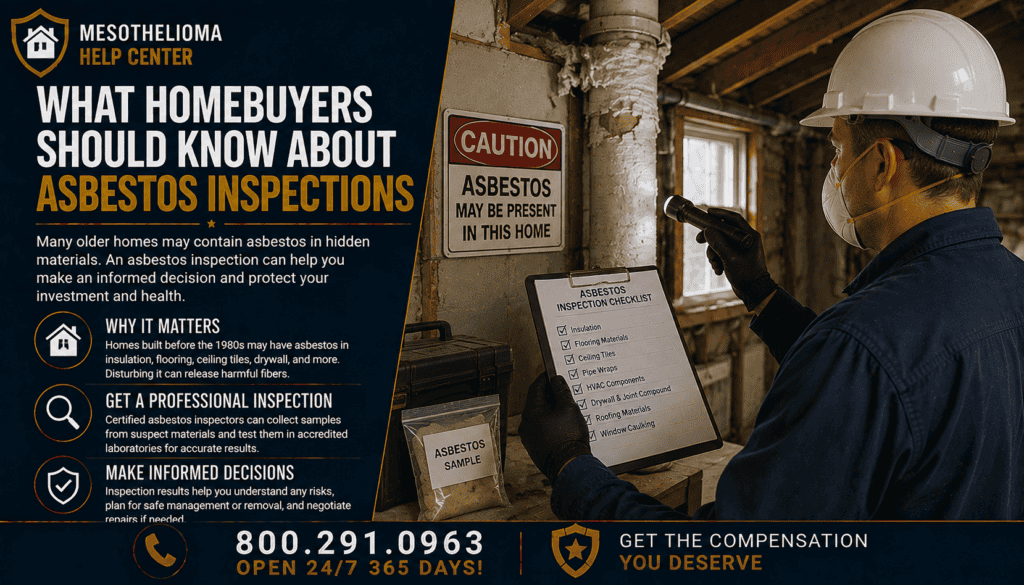
What Homebuyers Should Know About Asbestos Inspections
Buying a home built before 1980 means asbestos is a real possibility. From popcorn ceilings and vinyl flooring to ductwork insulation and boiler rooms, older homes can contain multiple hidden asbestos hazards. If disturbed during repairs or renovations, these materials can release microscopic fibers that cause mesothelioma, lung cancer, and asbestosis.
Before closing on a home, buyers should understand how asbestos inspections work, what inspectors look for, and how results impact disclosures, negotiations, and long-term safety.
If you need help scheduling a certified asbestos inspection or reviewing test results, call 800.291.0963.
🏠 Step 1: Why Asbestos Inspections Are Critical for Homebuyers
Many first-time homebuyers underestimate how common asbestos is in older homes.
📌 Why Inspections Matter
-
Homes built between 1940–1980 almost always contain asbestos
-
Renovations or repairs can disturb hidden ACMs
-
Buyers may face unexpected abatement costs after purchase
-
Lenders and insurance companies may require disclosures
-
Undetected asbestos impacts long-term maintenance planning
Asbestos inspections protect buyers from major surprises and ensure informed decision-making before escrow closes.
📜 Step 2: Are Asbestos Inspections Legally Required?
Federal law does not require buyers to test for asbestos, but states require sellers to disclose known hazards.
Testing is strongly recommended when:
-
The home predates 1980
-
Renovation is planned
-
Damaged building materials are visible
-
A home inspection raises concerns
-
Prior abatement documentation is missing
✔ Important Distinction
A standard home inspection does NOT include asbestos testing.
Buyers must hire a licensed asbestos inspector separately.
🔍 Step 3: What an Asbestos Inspection Includes
A licensed asbestos inspector performs a detailed review of the property, inside and out.
✔ A Complete Asbestos Inspection Includes:
-
Whole-home walkthrough and visual evaluation
-
Identification of suspected ACMs
-
Safe collection of samples
-
Lab analysis to confirm presence and type
-
Condition assessment (friable, damaged, encapsulated)
-
Photos of sample locations
-
Written report with recommendations
📌 Inspectors Look for Asbestos in:
-
Pipe insulation
-
Floor tiles & mastic
-
Popcorn ceilings
-
Duct tape around old HVAC joints
-
Boiler and furnace insulation
-
Cement siding
-
Textured walls
-
Attic insulation (vermiculite)
-
Old roofing shingles
-
Acoustic ceiling panels
The inspection tells buyers where asbestos exists, what type, and how dangerous it is.
🔬 Step 4: How Testing Works — and Why DIY Kits Are Unsafe
Inspectors use EPA-approved testing methods. DIY kits provide inconsistent results and can cause exposure during sample collection.
✔ Proper Professional Testing Includes:
-
Wetting materials before sampling
-
Using PPE and respirators
-
Following chain-of-custody documentation
-
Using NVLAP-accredited laboratories
-
PLM or TEM microscopy for accuracy
Why DIY Kits Fail
-
Can release fibers during sampling
-
Improper collection leads to false negatives
-
Labs may not be accredited
-
Not legally recognized for real-estate disputes
Buyers should only rely on licensed asbestos inspectors.
📄 Step 5: What the Final Inspection Report Should Include
A high-quality inspection report is detailed and easy to understand.
✔ Required Elements of a Proper Report
-
All sample locations
-
Photos of each sampled material
-
Lab results and asbestos percentages
-
Type of asbestos (e.g., chrysotile or amosite)
-
Material condition rating
-
Recommendations (encapsulation vs. removal)
-
Abatement cost estimates (if requested)
-
Documentation suitable for lenders/insurance
📌 Buyers Should Avoid Reports That Are:
-
Vague
-
Missing lab results
-
Missing photos
-
Missing recommendations
A clear report makes negotiations and future planning easier.
💰 Step 6: How Asbestos Inspection Results Affect Negotiations
Once asbestos is found, buyers can use the information to renegotiate contract terms.
✔ Buyer Options Include:
-
Request seller-funded abatement
-
Request seller credits or price reduction
-
Ask seller to encapsulate instead of remove
-
Proceed with purchase understanding future costs
-
Walk away (depending on contract contingencies)
Why This Helps Buyers
A single area of asbestos removal can cost $1,000 to $15,000+, depending on scope.
Inspection reports help buyers avoid absorbing these costs unexpectedly.
⚠️ Step 7: Warning Signs Buyers Should Look For Before Inspection
Some conditions suggest asbestos is likely present or deteriorating.
✔ Red Flags Inside the Home
-
Crumbling pipe insulation
-
Water damage on ceilings or walls
-
Popcorn ceilings flaking or cracking
-
Loose or broken vinyl floor tiles
-
Old HVAC duct insulation falling apart
-
Damaged boiler heat shielding
-
Dust or debris around older attic insulation
✔ Red Flags Outside
-
Cement siding from the 1950s–1970s
-
Cracked roofing shingles
-
Old chimney flue insulation
If any of these appear during a showing or home inspection, a professional asbestos evaluation is strongly recommended.
🏗️ Step 8: Asbestos & Renovation Planning for Homebuyers
Many buyers plan to renovate immediately — but older homes require special precautions.
✔ Renovations That Commonly Disturb Asbestos
-
Removing popcorn ceilings
-
Pulling up old flooring
-
Replacing HVAC systems
-
Tearing down walls
-
Replacing old plumbing
-
Remodeling basements or attics
-
Roof replacement
Before hiring any contractor, buyers must know whether asbestos exists, where it is, and whether removal is required.
🧰 Step 9: Types of Inspections Homebuyers Can Request
Not all asbestos inspections are the same.
✔ Full Asbestos Survey
The most comprehensive. Recommended for older homes.
✔ Limited Area Inspection
For a specific concern (e.g., ceiling, flooring, attic).
✔ Pre-Renovation Survey
Required before contractors disturb building materials.
✔ Air Quality Testing
Recommended if damaged materials are suspected.
Buyers should choose the inspection that fits their plans and concerns.
🛑 Step 10: Common Mistakes Homebuyers Should Avoid
Avoid actions that put your purchase — and your health — at risk.
❌ Do NOT:
-
Assume asbestos is “safe if intact” without professional evaluation
-
Trust a general home inspector to identify asbestos
-
Skip inspection to save money
-
Accept verbal statements of “no asbestos found”
-
Hire unlicensed contractors for removal
-
Attempt DIY testing
✔ Always:
-
Read the inspection report thoroughly
-
Keep all documentation
-
Ask questions about high-risk areas
-
Share results with your contractor or renovation team
📑 Step 11: Who Pays for Asbestos Inspection?
This varies by negotiation and location.
Typical Arrangements:
-
Buyer pays for initial asbestos testing
-
Seller pays if problem areas are discovered
-
Seller offers credits or price reduction
-
Both parties negotiate depending on scope
Why Buyers Often Pay
An asbestos inspection is an investment in safety — similar to a radon or mold inspection.
🏥 Where to Get Help
If you’re buying an older home and concerned about asbestos, we can help you:
-
Schedule certified asbestos inspections
-
Review and interpret inspection reports
-
Estimate abatement costs
-
Negotiate repairs or credits with sellers
-
Understand state and federal disclosure laws
-
Identify licensed abatement contractors
-
Protect your family before renovations begin
📞 Call 800.291.0963 to speak with an asbestos-inspection specialist.
📝 Summary
Asbestos inspections are one of the most important parts of purchasing an older home.
Key Takeaways
-
Homes built before 1980 often contain asbestos
-
A regular home inspector cannot test for asbestos
-
Buyers should hire a licensed asbestos inspector
-
Lab results and clear reports are essential
-
Findings can significantly impact negotiation power
-
Inspections protect buyers from unsafe and costly surprises
Before closing on an older home, ensure your inspection covers asbestos fully.
📞 Call 800.291.0963 for help scheduling or reviewing your inspection.