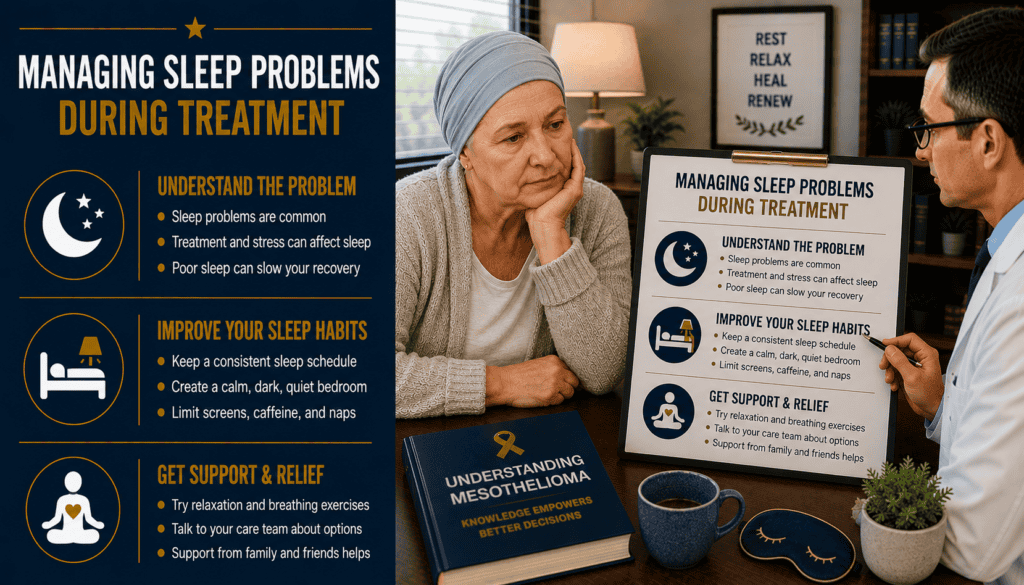
Managing Sleep Problems During Mesothelioma Treatment
A patient and caregiver guide to insomnia, nighttime symptoms, treatment side effects, and safer sleep planning.
Difficulty falling asleep, waking repeatedly, or sleeping through the day can complicate mesothelioma treatment. A change in sleep may come from pain, breathing discomfort, worry, treatment schedules, medicines, or a separate sleep condition. You do not need to identify the cause alone: tell your oncology team what is happening, especially if the problem is new or worsening. The goal is to improve rest while identifying symptoms that need medical attention.
Why Mesothelioma Treatment Can Change Sleep
Sleep difficulties are common during cancer care, but they are not all the same. Insomnia means trouble falling or staying asleep despite an opportunity to sleep; an irregular sleep–wake pattern may involve long daytime naps and wakefulness overnight. Some people sleep for hours but still feel exhausted. Cancer-related fatigue can persist despite rest, so treating insomnia and treating fatigue may require different approaches.
| Pattern | What to describe to your team | Why it matters |
|---|---|---|
| Difficulty falling asleep | Time you go to bed and time sleep begins | May involve worry, medicines, or sleep schedule |
| Repeated awakenings | Pain, cough, breathing, bathroom visits, or nausea | May point to treatable nighttime symptoms |
| Daytime sleepiness | Naps, medication timing, and alertness | May affect falls, driving, and daily activities |
| Unrefreshing sleep | Hours slept, snoring, gasping, morning headaches | May warrant assessment for a sleep disorder |
The National Cancer Institute recommends discussing sleep changes with the cancer care team rather than assuming they are an unavoidable part of treatment.
Identify the Causes Before Changing Your Routine
A brief sleep diary can help your team match symptoms to treatment days and medication schedules. Record bedtime, approximate time to fall asleep, awakenings, naps, pain, shortness of breath, caffeine, and any new medicines. Include changes after chemotherapy, radiation, surgery, or immunotherapy, but do not assume a treatment is the only explanation.
| Possible contributor | Clues to record | Question for your clinician |
|---|---|---|
| Pain or cough | Awakening at the same time or position | Can the symptom-control plan be adjusted? |
| Steroids or other medicines | Insomnia after a dose or treatment day | Would a clinician-approved timing change help? |
| Nausea or reflux | Symptoms after evening meals or medicines | What symptom treatment is appropriate? |
| Anxiety or distress | Racing thoughts or fear at bedtime | Can I access counseling or CBT-I? |
| Sleep apnea or another disorder | Loud snoring, witnessed pauses, gasping | Should I be evaluated by a sleep specialist? |
Bring the complete list of prescriptions, over-the-counter products, cannabis products, and supplements to your appointment. Never stop or change a cancer medicine on your own.
Breathing Problems and Pain Need Their Own Plan
Pleural mesothelioma can cause breathlessness or discomfort that makes lying down difficult. A pleural effusion—fluid around the lung—may contribute, but infection, blood clots, heart problems, anemia, and other conditions can also cause breathing changes. If you need to sleep upright or wake gasping, tell your care team promptly rather than relying on sleep tips alone.
| Nighttime issue | Useful action | Important caution |
|---|---|---|
| Shortness of breath when lying down | Report the pattern and any new need for extra pillows | New or worsening breathing problems require assessment |
| Chest or incision pain | Ask for a clinician-directed nighttime pain plan | Do not independently increase opioid or sedative doses |
| Persistent cough | Record timing, triggers, fever, and mucus | New fever or worsening cough needs clinical advice |
| Fluid around the lung | Ask whether reassessment or symptom treatment is needed | Drainage treats symptoms; it is not a cure for cancer |
Learn more about managing breathing problems and pleural effusion and pleurocentesis. Seek emergency help for severe or sudden breathlessness, chest pain, fainting, or blue lips.
Practical Sleep Habits During Treatment
Simple habits can support sleep, but adjust them to your stamina and your clinician’s advice. Keep a reasonably consistent wake-up time; get daylight and gentle activity when medically appropriate; create a quiet, dark, comfortable bedroom; and set aside a calming wind-down period. Limit late caffeine and avoid alcohol as a sleep aid. If long daytime naps make nighttime sleep harder, ask whether shorter, earlier rests fit your fatigue plan.
| Time | Try this | Adaptation for treatment |
|---|---|---|
| Morning | Wake at a consistent time and get daylight | Sit near a bright window if outdoor activity is difficult |
| Daytime | Move gently if cleared and plan essential tasks | Rest when needed; avoid pushing through severe fatigue |
| Evening | Reduce stimulating activities and caffeine | Ask a caregiver to help with symptom medicines as prescribed |
| Bedtime | Keep the room comfortable and use a calming routine | Use clinician-approved positioning and breathing support |
| After awakening | Note symptoms and use a quiet relaxation technique | Call for help if breathing or pain is newly worse |
For fatigue-specific strategies, see managing fatigue during chemotherapy and radiation. Sleep habits help some people, but persistent insomnia deserves treatment rather than repeated self-experimentation.
When Behavioral and Medical Support May Help
Tell your team if sleep problems persist, affect daytime function, or create distress. They may review pain control, nausea, breathing, medication timing, mood, and other conditions. Cognitive behavioral therapy for insomnia (CBT-I) is a structured approach that addresses habits and thoughts that perpetuate insomnia; ask about access to a trained clinician. Relaxation exercises may also help, but they do not replace treatment for breathlessness or other physical symptoms.
| Support option | What it addresses | What to ask |
|---|---|---|
| Symptom review | Pain, cough, nausea, urinary symptoms | Which nighttime symptoms can we treat? |
| CBT-I or sleep specialist | Persistent insomnia and sleep patterns | Is a referral appropriate during treatment? |
| Counseling or psychosocial care | Worry, fear, and distress | Who can help with nighttime anxiety? |
| Sleep study when indicated | Possible apnea or another sleep disorder | Do my symptoms justify testing? |
The NCI sleep-disorders guide describes assessment and individualized supportive care. Your oncology team can coordinate referrals around treatment appointments.
Sleep Medicines, Melatonin, and Supplement Safety
Do not start a sleep medicine, antihistamine, melatonin, herbal product, cannabis product, or alcohol-based remedy without checking with your oncology team or pharmacist. Products may interact with cancer medicines, opioids, anxiety medicines, or other treatments. Sedating combinations can increase confusion, falls, and breathing risks, especially in people who are frail or already short of breath. Even products labeled “natural” can cause side effects.
| Product or situation | Safety discussion |
|---|---|
| Prescription sleep medicine | Ask about benefits, short-term use, next-day impairment, and interactions |
| Over-the-counter antihistamine sleep aids | Ask about confusion, dry mouth, urinary effects, and fall risk |
| Melatonin or herbal products | Review ingredient, dose, quality, and possible interactions |
| Opioid pain medicine plus sedatives | Never combine or increase doses without clinician guidance |
| Alcohol or cannabis used for sleep | Discuss effects on alertness, breathing, and treatment medicines |
If a prescribed steroid seems to keep you awake, ask whether the dosing schedule can be reviewed. Do not move doses or discontinue steroids independently.
A Shared Plan for Caregivers and Treatment Days
A caregiver can help notice patterns the patient may not remember, particularly after exhausting treatment days. Agree on what support is welcome and preserve the patient’s preferences. Share a symptom log, keep the oncology after-hours number available, and prepare questions before visits. Caregivers should also plan their own rest and seek additional help when overnight care becomes unsustainable.
| Before bedtime | During the night | Next morning |
|---|---|---|
| Confirm prescribed symptom plan and emergency contacts | Note pain, cough, breathing, or unusual confusion | Record approximate sleep and daytime alertness |
| Prepare water and safe access to the bathroom | Use only clinician-approved medicines and equipment | Share new or worsening symptoms with the team |
| Reduce trip hazards and arrange needed assistance | Seek urgent help for emergency warning signs | Ask whether the care plan needs adjustment |
For appointments, see preparing for doctor appointments together. For coordinated symptom support, ask about palliative care alongside cancer treatment; it is not limited to hospice.
When to Call Your Care Team or Seek Emergency Help
Contact your oncology team when insomnia lasts several nights, you sleep very little, daytime sleepiness makes normal activities unsafe, or a new symptom repeatedly wakes you. Ask for the correct after-hours number and the fever threshold specific to your treatment. Fever during chemotherapy may require immediate instructions even if it occurs at night.
| Situation | Action |
|---|---|
| Persistent insomnia, new snoring or gasping, or daytime sleepiness | Call the care team and ask whether assessment is needed |
| New or worsening pain, cough, nausea, or inability to lie flat | Contact the care team promptly for symptom assessment |
| Fever during chemotherapy or possible infection | Follow the oncology team’s urgent fever instructions immediately |
| Sudden severe breathlessness, chest pain, fainting, blue lips, or inability to awaken normally | Call emergency services immediately |
Do not drive when dangerously sleepy or after taking sedating medicines. The American Cancer Society recommends telling the cancer team about significant sleep disruption and suspected sleep apnea.
Frequently Asked Questions
Is insomnia common during mesothelioma treatment?
Sleep problems occur in many people receiving cancer care. Causes vary, so report persistent insomnia to your oncology team rather than assuming it is inevitable.
Can pleural effusion make sleeping harder?
Yes. Fluid around a lung can contribute to breathlessness and discomfort, but other causes are possible. New or worsening symptoms require medical assessment.
Should I take an over-the-counter sleeping pill?
Check with your oncology team or pharmacist first. Some products cause sedation, confusion, falls, or interactions with cancer and pain medicines.
Can chemotherapy or steroids affect sleep?
Cancer treatments and supportive medicines can alter sleep. Keep a record of timing and ask the prescribing team about safe adjustments; do not change doses yourself.
Is fatigue the same as insomnia?
No. Insomnia involves difficulty sleeping, while cancer-related fatigue may persist even after rest. Both can occur together and deserve assessment.
What is CBT-I?
Cognitive behavioral therapy for insomnia is a structured treatment that addresses sleep patterns and unhelpful sleep-related thoughts and behaviors. Ask your team about a suitable referral.
Can I use melatonin, cannabis, or herbal sleep products?
Discuss every product with your oncology team before use. Safety, interactions, and product quality can vary, and these products are not substitutes for evaluating breathing or pain problems.
When is poor sleep an emergency?
Insomnia itself is usually not an emergency, but sudden severe breathing difficulty, chest pain, fainting, blue lips, or inability to awaken normally requires emergency services. Follow urgent fever instructions during chemotherapy.
Medical Sources and Further Reading
- National Cancer Institute: Sleep Problems in People with Cancer
- National Cancer Institute: Sleep Disorders (Patient Version)
- National Cancer Institute: Cancer Fatigue
- American Cancer Society: Sleep Problems
These sources provide general cancer-care guidance; individual treatment decisions should be made with the treating team.
Get Help Understanding Your Options
Call 800.291.0963. Live chat is available 24/7, 365 days a year. Submit Your Case to discuss potential asbestos-related legal options. No compensation or outcome is guaranteed.
⚕️ Legal & Medical Information Disclaimer
This article is general information, not individualized medical or legal advice. Seek emergency care for severe symptoms; consult your treating clinicians about sleep problems and a qualified attorney about legal questions.