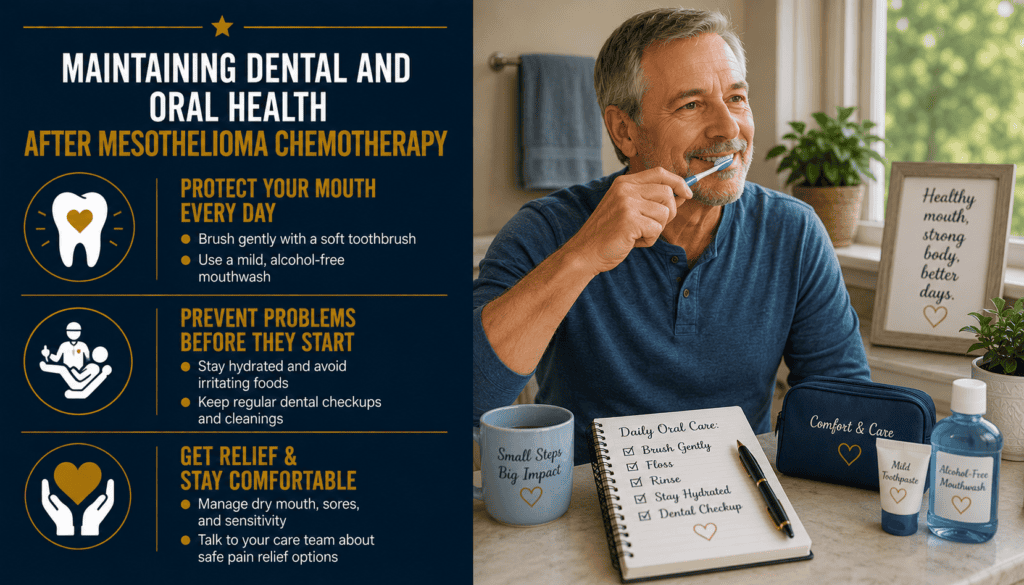
Maintaining Dental and Oral Health After Chemotherapy for Mesothelioma
A practical, safety-first guide to protecting your mouth, teeth, and gums during recovery from mesothelioma chemotherapy.
After chemotherapy, oral symptoms may linger or appear between treatment cycles. This guide helps patients and caregivers recognize problems, prepare for dental care, and work with the oncology team. Your cancer team’s instructions take priority over general advice.
Why Oral Health Matters After Chemotherapy
Chemotherapy can affect rapidly dividing cells in the mouth, reduce saliva, alter taste, and temporarily lower infection-fighting blood cells. Some people experience mouth sores, gum irritation, tooth sensitivity, or difficulty eating; others have few oral problems. Oral recovery varies by regimen, dose, other medicines, and health conditions. A dental problem that seems minor may become more serious during periods of low blood counts. Tell your oncology team about any existing dental problems and new symptoms. Oral care supports comfort and nutrition, but it does not treat mesothelioma.
| Concern | Why it matters | Next step |
|---|---|---|
| Mouth sores | Pain can limit eating and drinking | Tell the oncology team early |
| Dry mouth | Raises discomfort and cavity risk | Ask about saliva support |
| Gum bleeding | May reflect irritation or low platelets | Contact the treatment team |
| Dental infection | Can worsen when immunity is low | Seek prompt clinical assessment |
A Gentle Daily Mouth-Care Routine
Use a soft-bristled toothbrush and fluoride toothpaste, brushing gently twice daily if your team has not advised otherwise. Clean between teeth only as your dentist or oncology team recommends, particularly if platelets are low or gums bleed. Avoid aggressive brushing, toothpicks, and alcohol-containing mouthwash if they irritate your mouth. Keep lips moist with a suitable balm. Clean dentures daily and remove them if they rub or cause sores; ask the dental team to adjust poorly fitting appliances. If brushing is painful or bleeding occurs, ask for an individualized plan rather than stopping oral care without guidance.
| When | Care task | Adaptation |
|---|---|---|
| Morning | Brush gently with fluoride toothpaste | Use extra-soft brush if advised |
| After meals | Rinse as instructed | Avoid irritating rinses |
| Evening | Brush and clean dentures | Ask about flossing safety |
| Throughout day | Sip fluids if permitted | Use prescribed saliva products if needed |
Managing Mouth Sores and Tender Gums
Oral mucositis may cause redness, painful sores, or difficulty swallowing. Contact the oncology team when symptoms first appear: they may recommend a bland rinse, pain relief, assessment for infection, or other treatment tailored to the cause. A commonly discussed salt-and-baking-soda rinse is not right for everyone; ask your team for the exact recipe and frequency rather than improvising. Avoid tobacco, alcohol, and acidic, spicy, sharp, or very hot foods when they sting. Choose softer, cooler foods when tolerated. Do not apply peroxide, concentrated salt, or over-the-counter numbing medicines to sores without approval. Severe pain, inability to swallow, or inability to drink requires urgent advice.
| Symptom | Possible adjustment | When to call |
|---|---|---|
| Mild tenderness | Soft foods and gentle hygiene | If persistent or worsening |
| Open sores | Clinician-approved rinse and pain plan | Promptly |
| White patches | Assessment for possible thrush | Promptly |
| Unable to drink | Urgent assessment | Immediately |
Dry Mouth, Taste Changes, and Nutrition
Dry mouth can make chewing, speaking, and swallowing uncomfortable. Ask about saliva substitutes, sugar-free gum or lozenges if safe, and frequent small sips when fluid intake is not restricted. Some patients need special guidance because of aspiration risk or other conditions. Taste changes may make familiar foods unpleasant; a dietitian can help identify nourishing alternatives. Prioritize adequate calories and protein rather than following restrictive diets or using supplements marketed as cancer cures. Report persistent dry mouth, cracked mouth corners, oral pain, or unexplained weight loss. The related article on managing weight changes during chemotherapy discusses nutrition-related monitoring.
| Issue | Practical approach | Professional help |
|---|---|---|
| Dry mouth | Frequent permitted sips; saliva products | Dentist or oncology team |
| Metallic taste | Try tolerated foods and utensils | Dietitian |
| Pain with chewing | Soft, moist foods | Clinical pain assessment |
| Weight loss | Track intake and weight | Oncology dietitian |
Scheduling Dental Visits and Procedures Safely
Tell your dentist that you are receiving or recently completed chemotherapy, including the drug names and treatment dates. Before extractions, deep cleaning, implants, or other invasive work, ask the oncology team whether the timing and blood counts make the procedure safe. Do not delay assessment of a suspected dental infection while waiting for a routine appointment; your dentist and oncologist can coordinate urgent care. Routine checkups and professional fluoride recommendations can help prevent problems, but treatment schedules should be individualized. Some cancer medicines carry additional jaw-related risks; provide your dentist with a complete medication list, including bone-targeted therapies if applicable.
| Procedure | Coordination question | Reason |
|---|---|---|
| Routine exam | Is this a suitable time? | Identify problems early |
| Dental cleaning | Are blood counts adequate? | Reduce bleeding/infection risk |
| Extraction | Have oncology and dentistry agreed on timing? | Plan healing and infection prevention |
| New dental medicine | Any interaction with cancer treatment? | Medication safety |
Warning Signs That Need Prompt Attention
Call the oncology team promptly for new or worsening mouth sores, toothache, gum swelling, pus, bleeding, white patches, or pain that interferes with eating. Fever during chemotherapy can be a medical emergency, especially when white blood cells are low: follow your team’s fever instructions immediately, even if you think the problem is dental. Seek emergency care for trouble breathing, rapidly spreading facial or neck swelling, uncontrolled bleeding, or inability to swallow saliva. Do not self-start leftover antibiotics or conceal fever with fever-reducing medicines before following your oncology team’s instructions.
| Finding | Action | Urgency |
|---|---|---|
| Fever at or above team threshold | Call oncology emergency line | Immediately |
| Facial swelling or breathing trouble | Emergency services | Emergency |
| Tooth pain or pus | Contact oncology and dentist | Promptly |
| Bleeding that will not stop | Urgent medical assessment | Immediately |
Caregiver Checklist and Symptom Tracker
A caregiver can make oral care easier without taking control away from the patient. Keep a soft brush, approved rinse, lip balm, water when permitted, and the oncology contact number together. Ask what help the patient wants with shopping, preparing soft meals, dental transportation, and recording symptoms. Track changes in pain, sores, swallowing, bleeding, temperature, and intake, and share concerning patterns with the care team. Do not share mouth-care products or dentures between people. If the patient cannot perform oral care independently, request instruction from a nurse or dental professional.
| Track | What to record | Share when |
|---|---|---|
| Mouth pain | Location and severity | New or worsening |
| Eating/drinking | Amount and barriers | Intake decreases |
| Temperature | Reading and time | At team threshold |
| Bleeding/swelling | Site and duration | Immediately if severe |
Questions for Your Care Team and Related Resources
Ask: Should I see a dentist before the next chemotherapy cycle? What toothbrush and rinse do you recommend? Is flossing safe with my current blood counts? Which fever threshold should trigger an urgent call? Who should coordinate treatment for a tooth infection? Can I use saliva substitutes or fluoride products? Is a dietitian referral appropriate? For broader context, read chemotherapy for mesothelioma, what to expect during chemotherapy, and palliative care for symptom relief. These pages complement, rather than replace, individualized medical advice.
| Team member | Ask about | Bring along |
|---|---|---|
| Oncologist | Blood counts and safe procedure timing | Treatment schedule |
| Dentist | Cavities, gums, fluoride, denture fit | Full medicine list |
| Nurse | Rinses and symptom reporting | Symptom log |
| Dietitian | Eating with pain or taste changes | Food and weight log |
Frequently Asked Questions
Can I brush my teeth after chemotherapy?
Usually yes, with a soft toothbrush and gentle technique, unless your care team gives different instructions based on bleeding or other concerns.
Should I floss if my platelets are low?
Ask your oncology and dental teams. They may recommend changes if you have low platelets, bleeding, or fragile gums.
Is mouthwash safe during chemotherapy?
Choose only a rinse approved by your team. Alcohol-containing or harsh products may irritate a sore mouth.
When can I have a tooth extracted?
Your dentist and oncologist should coordinate timing, blood counts, and infection prevention before invasive procedures.
Are mouth sores always caused by chemotherapy?
No. Irritation, infections, dentures, and other conditions can cause sores. A clinician should assess persistent or worsening symptoms.
What if I have a fever and a toothache?
Follow your oncology team’s emergency fever instructions immediately. Fever during chemotherapy can signal a serious infection.
Can dry mouth cause cavities?
Reduced saliva can increase cavity risk. Ask about fluoride, saliva products, and regular dental care.
Can oral care prevent all chemotherapy side effects?
No. Gentle hygiene may support comfort and reduce some complications, but it cannot prevent every treatment-related oral problem.
Medical Sources and Further Reading
For current patient guidance, consult the National Cancer Institute: Mouth and Throat Problems, National Cancer Institute: Infection and Neutropenia, and American Cancer Society: Mouth Sores. Source links and current recommendations should be checked by the publishing editor before publication.
Get Help With Mesothelioma Questions
Call 800.291.0963. Live chat is available 24/7, 365 days a year. Submit Your Case. Contacting us does not guarantee compensation or medical outcomes.
⚕️ Legal & Medical Information Disclaimer
This information is educational and is not individualized medical or legal advice. Consult your oncology and dental teams for oral symptoms and treatment decisions; consult a qualified attorney for legal questions.