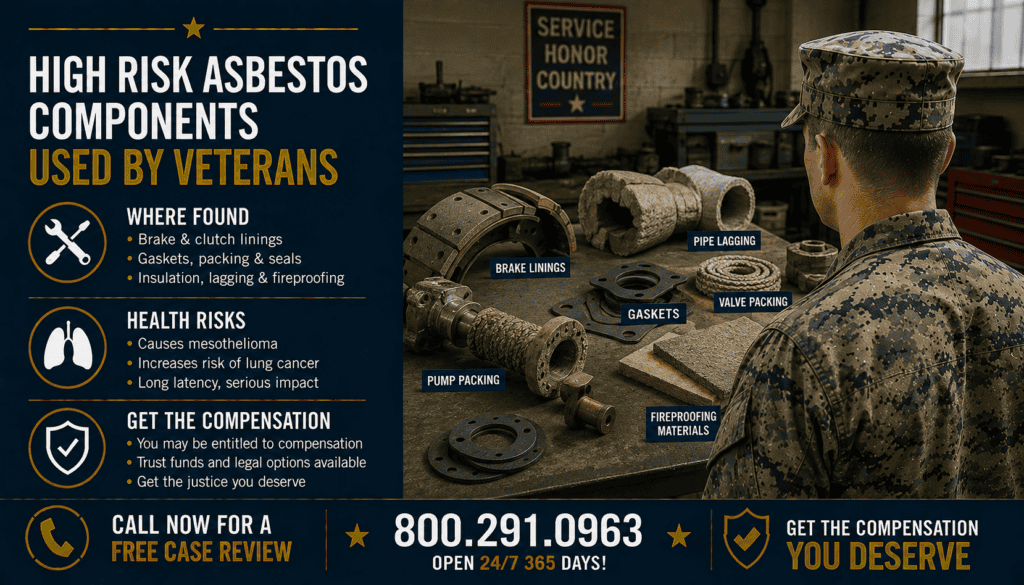
High-Risk Asbestos Components Used by Veterans
High-risk asbestos components used by veterans included products selected historically for heat resistance, insulation, fire protection, friction, and sealing applications. VA identifies military asbestos-containing materials that included brakes, gaskets, valves, cements, adhesives, heat-resistant fabrics, and floor and pipe coverings called lagging, while its compensation guidance also identifies servicing clutch facings and brake linings as a potential exposure activity.
Veterans can strengthen a component-specific exposure history with personnel records, duty assignments, technical manuals, illustrated parts catalogs, military specifications, maintenance and overhaul files, procurement records, manufacturer information, part numbers, and specific witness statements. A component category alone does not prove asbestos exposure, so product-, manufacturer-, equipment-, task-, location-, proximity-, and date-specific evidence is important.
High-Risk Asbestos Components Used by Veterans
Veterans may have worked with asbestos-containing components because the military historically used asbestos for heat resistance, insulation, fire protection, friction applications, and sealing. VA identifies military asbestos-containing materials that included brakes, gaskets, valves, cements, adhesives, and floor and pipe coverings called lagging.
A component name alone does not prove asbestos exposure. Product composition varied by manufacturer, model, specification, replacement part, installation, and time period. A stronger exposure history identifies the veteran’s service dates, occupation, duty station, ship or facility, equipment, component, maintenance task, product or part number, and records documenting asbestos content.
High-Risk Asbestos Components to Investigate
VA identifies several categories of products historically associated with military asbestos use. Research should focus on the exact component and period rather than assuming every product in a category contained asbestos.
- Brake and friction components
- Gaskets and sealing materials
- Valves and associated packing or gaskets
- Pipe coverings and lagging
- Heat-resistant fabrics and thermal materials
- Cements and adhesives
- Flooring and other construction products
Brakes, Clutches and Friction Products
VA specifically identifies servicing friction products such as clutch facings and brake linings as a potential source of military asbestos exposure. Friction components were used in vehicles and other equipment where heat resistance and durability were important.
Exposure research should identify the vehicle or equipment, manufacturer, model, component, replacement part, maintenance procedure, service period, and whether records establish asbestos content. Removing, cleaning, sanding, grinding, or otherwise disturbing a documented asbestos-containing friction component could release fibers.
Gaskets, Packing and Valves
VA’s Veterans Health Library identifies gaskets and valves among materials historically used by the military. Gaskets and packing can be associated with piping, pumps, valves, boilers, engines, machinery, and other systems that required heat-resistant sealing.
Technical manuals, illustrated parts catalogs, specifications, procurement records, manufacturer documents, and part numbers can help determine whether a specific gasket, packing material, or valve-associated component contained asbestos.
Pipe Coverings, Lagging and Insulation
VA identifies floor and pipe coverings called lagging among military asbestos-containing materials and describes historical Navy use of asbestos-containing materials in engine rooms, boiler rooms, and other below-deck spaces for fire safety. Pipefitters, boiler personnel, insulation workers, and nearby trades may warrant detailed exposure research.
Insulation should be matched to the exact system, vessel or facility, manufacturer, specification, installation date, and maintenance activity. Damaged or disturbed asbestos-containing insulation can release airborne fibers.
Cements, Adhesives and Construction Products
VA identifies cements and adhesives among materials historically used by the military and separately lists flooring, roofing, cement sheet, and pipe products among occupations or installation activities associated with possible exposure.
Veterans involved in construction, renovation, demolition, maintenance, carpentry, or facility repair should identify the specific building, project, material, product, manufacturer, work task, and date whenever possible.
When Components Create Exposure Concerns
VA explains that asbestos-containing material is most hazardous when it becomes friable or is disturbed or damaged so that fibers become airborne. Intact material does not automatically establish a meaningful exposure event.
For each component, document whether it was removed, cut, scraped, sanded, ground, drilled, cleaned, replaced, demolished, or otherwise disturbed. Also record the material condition, dust or debris, ventilation, cleanup practices, frequency, duration, and the veteran’s proximity to the work.
Documenting Specific Military Components
- DD214 and Official Military Personnel File records
- MOS, rating, AFSC, occupation, unit, and duty-station records
- Technical manuals and illustrated parts catalogs
- Maintenance, overhaul, inspection, and work-order records
- Military specifications and engineering drawings
- Procurement and supply records
- Manufacturer literature and product records
- Part numbers and replacement-component documentation
- Specific firsthand coworker or witness statements
The strongest component research connects the veteran’s actual work to a specific product or material during the correct service period rather than relying only on a general occupation or installation history.
VA Benefits and Exposure Evidence
VA states that veterans exposed to asbestos during military service who developed a disease related to that exposure may qualify for service-connected disability compensation. Evidence must support both military asbestos exposure and a relationship between the exposure and the claimed disease or disability.
VA notes that evidence of exposure may include the veteran’s military occupational specialty and where the veteran was stationed. Component-specific technical and product records can provide additional detail when reconstructing how an exposure may have occurred.
Frequently Asked Questions
Which asbestos components does VA identify in military use?
VA identifies brakes, gaskets, valves, cements, adhesives, heat-resistant fabrics, and floor and pipe coverings called lagging among materials historically associated with military asbestos use.
Did every military brake or gasket contain asbestos?
No. Product composition varied by manufacturer, model, specification, replacement part, and time period. Product-specific documentation is important.
Why were asbestos-containing components used?
VA describes asbestos as having heat-resistant and strength properties, which led to its use in friction products, heat-resistant materials, insulation, fire protection, and other applications.
When is asbestos-containing material most hazardous?
VA states that exposure concerns increase when asbestos-containing material is friable, disturbed, or damaged and fibers become airborne.
What records can identify a military asbestos component?
Technical manuals, parts catalogs, specifications, procurement files, manufacturer records, part numbers, maintenance documents, service records, and specific witness statements can help connect a veteran to a documented product.
Confirmed Sources
Review the Components Used During Your Military Service
Write down the service branch, unit, duty station, ship or facility, service dates, occupation, equipment, component names, manufacturers, part numbers, maintenance tasks, work areas, contractors, and coworkers you remember. Preserve available personnel, technical, maintenance, procurement, manufacturer, product, and medical records and clearly distinguish documented facts from recollection.
Call 800.291.0963 for a no-obligation case evaluation and to speak with a real person 24/7, 365 days a year. Mesothelioma Help Center is not a law firm or medical provider and does not determine VA eligibility.
Disclaimer: General information only—not legal or medical advice. This website is not a law firm. Exposure, VA eligibility, liability and deadlines vary by case and jurisdiction. Do not disturb suspected asbestos. Past results do not guarantee future outcomes.