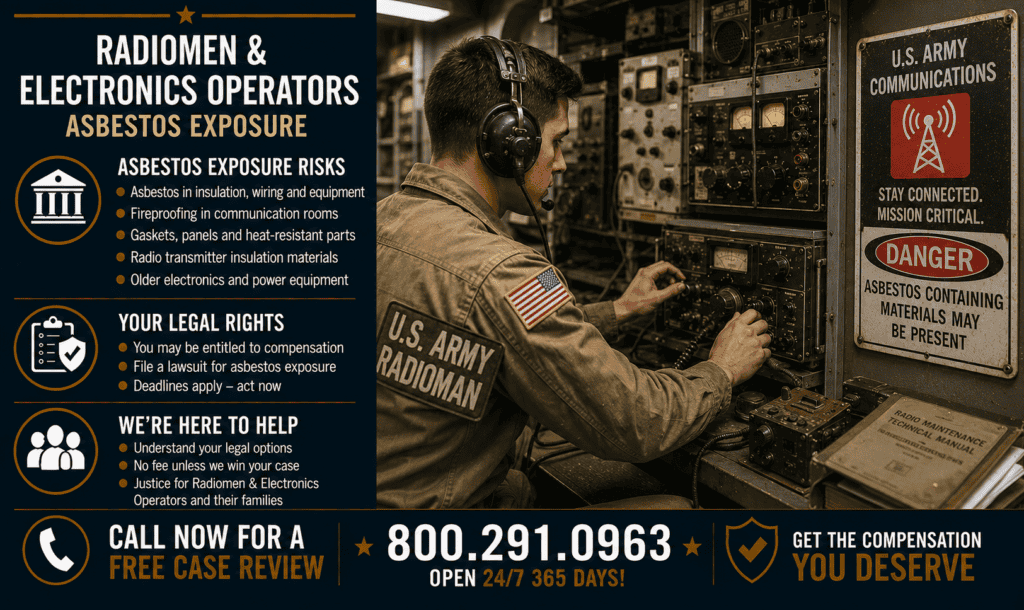
📡 Radiomen & Electronics Operators
Cabinet & Amplifier Linings — Hidden Asbestos Exposure in Military Communications
Military communication was the backbone of every mission — from shipboard operations to air traffic coordination.
Radiomen, signalmen, and electronics operators worked daily inside confined radio rooms surrounded by transmitters, amplifiers, and electrical panels designed to withstand extreme heat.
Unknown to these service members, much of that communication equipment was lined with asbestos insulation to prevent overheating.
Decades later, veterans who served around radios and electronic systems are developing mesothelioma, asbestosis, and lung cancer linked directly to that hidden insulation.
📞 If you served as a Radioman, Electronics Technician, or Communications Operator before 1990, call 800.291.0963 for free asbestos-exposure and VA claim assistance.
🧭 Step 1 – Why Asbestos Was Used in Communication Equipment
Electronics and communication systems generate high heat when in constant use.
Asbestos was the ideal solution to insulate, protect, and stabilize that equipment — especially in confined shipboard or base environments.
Why asbestos was used:
-
🔥 Provided thermal insulation around high-voltage circuits.
-
⚙️ Prevented fire and heat damage inside metal cabinets.
-
💨 Reduced electrical interference through heat-resistant linings.
-
🧱 Prolonged the lifespan of amplifiers, transmitters, and radar units.
Goal: Understand that asbestos was intentionally used in nearly all high-performance communication and navigation equipment before the 1980s.
⚙️ Step 2 – Common Asbestos Materials in Radio and Electronic Systems
From small shipboard transmitters to massive radar arrays, asbestos was integrated into every layer of communication hardware.
Common asbestos components included:
-
🧾 Amplifier and transformer linings made from asbestos board.
-
💨 Radio cabinet insulation to prevent overheating.
-
⚙️ Circuit board spacers and resistors containing asbestos composites.
-
🧱 Asbestos cloth and pads beneath control panels.
-
🧰 Cable insulation and wiring sleeves made from asbestos fiber.
-
🪖 Soundproofing and vibration mats inside electronic compartments.
Goal: Recognize that asbestos surrounded radiomen even if they never directly handled it — fibers were released as heat, vibration, and repairs disturbed old materials.
🪖 Step 3 – High-Risk Military Occupations
Asbestos exposure among communication specialists was common across all branches of the military.
High-risk roles included:
-
⚓ Navy Radiomen (RM) and Electronics Technicians (ET): Operated transmitters, receivers, and amplifiers in asbestos-lined radio rooms.
-
💨 Air Force Radar and Communication Operators: Worked near asbestos-insulated towers, cables, and amplifiers.
-
🪖 Army Signal Corps Technicians: Repaired asbestos-insulated field radios and switchboards.
-
🧱 Marine and Coast Guard Radio Operators: Used asbestos-lined communication cabinets aboard ships.
-
🏭 Base Maintenance Personnel: Serviced asbestos-filled electronic consoles and control panels.
Goal: Identify your rating or MOS to connect your daily duties with asbestos exposure sources.
🧰 Step 4 – How Asbestos Exposure Occurred
Radiomen and electronics operators faced ongoing, low-level exposure during routine operations, maintenance, and system repairs.
Common exposure scenarios:
-
🔧 Replacing tubes or circuits inside asbestos-lined amplifiers.
-
⚙️ Drilling or removing asbestos-backed panels during equipment upgrades.
-
💨 Working in poorly ventilated radio rooms filled with dust from old insulation.
-
🧱 Cleaning control panels with compressed air or dry cloths.
-
🧾 Serving aboard ships where asbestos insulation surrounded bulkheads, cables, and flooring.
Goal: Realize that exposure occurred even without direct maintenance work — simply operating in asbestos-lined compartments caused contamination.
⚓ Step 5 – Where Exposure Happened
Asbestos-based communication systems were installed across ships, aircraft, and bases worldwide.
Typical exposure environments:
-
🚢 Ship radio rooms and combat information centers.
-
💨 Air Force control towers and radar stations.
-
🧱 Submarine communication and sonar compartments.
-
⚙️ Army communication trucks and field posts.
-
🏭 Training bases and electronics repair schools.
Goal: Identify all service locations and equipment types to document asbestos contact for VA or legal claims.
💬 Step 6 – Health Dangers of Asbestos Exposure
Asbestos fibers are microscopic and easily inhaled when disturbed by vibration or heat.
Over time, these fibers cause inflammation and scarring in the lungs and surrounding tissues.
Diseases linked to asbestos exposure:
-
🫁 Mesothelioma: Rare cancer of the lung or abdominal lining caused only by asbestos.
-
💨 Asbestosis: Permanent lung scarring that limits breathing.
-
🩺 Lung Cancer: Significantly higher risk among asbestos-exposed veterans.
-
🧠 Pleural Plaques: Thickened lung membranes showing prior asbestos injury.
Goal: Encourage early screening for veterans with respiratory issues and communication-related service records.
🧾 Step 7 – VA Recognition of Radiomen and Electronics Technicians
The Department of Veterans Affairs (VA) identifies radiomen, electronics technicians, and signal operators as medium-to-high asbestos exposure occupations due to equipment design and confined workspace environments.
VA documentation sources:
-
⚖️ M21-1 Adjudication Manual, Part IV, Subpart ii, Chapter 2, Section C.
-
🧾 Job titles “Radioman,” “Electronics Technician,” and “Signalman” marked as exposure-related.
-
💬 Medical examiner guidance linking asbestos insulation in electronics to mesothelioma.
-
🏛️ Recognition of 10–45-year latency between exposure and disease onset.
Goal: Use VA documentation to support disability or dependency claims.
💼 Step 8 – Evidence Needed for a VA Asbestos Claim
A strong claim requires proof of diagnosis and verified service-related exposure.
Essential documentation:
-
🪖 DD-214 and service records listing communication or electronics duties.
-
⚙️ Ship, base, or unit logs confirming your assignment near communication rooms.
-
🩺 Medical diagnosis from a certified mesothelioma or pulmonary specialist.
-
💬 Witness statements confirming exposure conditions.
-
🧾 Medical nexus letter linking illness to service duties.
Goal: Provide detailed evidence showing how your communication role led to asbestos exposure.
⚖️ Step 9 – Civil Legal Options for Radiomen and Electronics Operators
Veterans cannot sue the government but can pursue compensation from private manufacturers that supplied asbestos-containing equipment to the military.
Common product manufacturers:
-
🧱 Westinghouse and RCA (asbestos-insulated amplifiers and transformers).
-
⚙️ General Electric (GE) (radio and radar components with asbestos linings).
-
💨 Raytheon and Collins Radio (asbestos-packed resistor boards).
-
🧰 Johns-Manville and Owens-Corning (insulation boards and cable wraps).
-
🪖 Fibreboard and Garlock (asbestos gaskets and packing materials).
Goal: File civil claims or trust-fund cases to recover compensation while retaining all VA benefits.
🤝 Step 10 – How Attorneys and VSOs Help Communication Specialists
Coordinating VA benefits and civil asbestos claims requires expertise in both electronics history and asbestos exposure documentation.
A qualified advocate can:
-
🧾 Retrieve maintenance and equipment manuals listing asbestos components.
-
⚙️ Identify asbestos-based brands used in your ship, aircraft, or unit.
-
💬 Gather expert medical testimony to link your illness to service.
-
🏛️ File VA, trust-fund, and lawsuit claims efficiently and safely.
Goal: Work with experienced professionals who understand how communication systems exposed veterans to asbestos hazards.
🌈 Summary
Radiomen and electronics operators kept critical communication lines open, ensuring safety and coordination across land, sea, and air.
Yet the very cabinets and amplifiers they worked beside contained asbestos insulation that silently endangered their health.
Today, both the VA and civil courts recognize these risks and offer pathways to financial recovery for affected veterans and their families.
📞 Call 800.291.0963 today for free help verifying asbestos exposure, gathering service records, and filing VA or private asbestos claims.