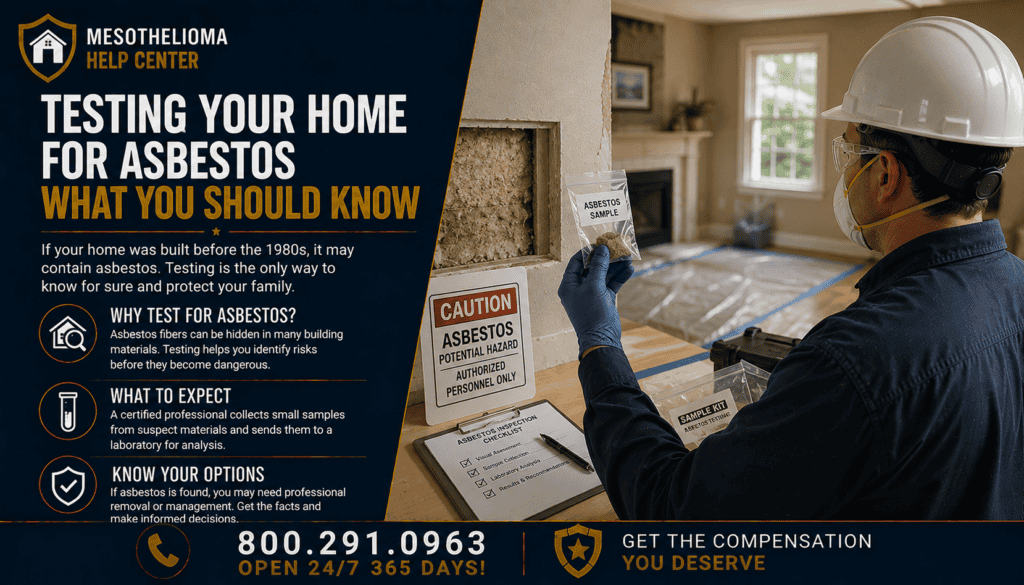
Testing Your Home for Asbestos: What You Should Know
Homes built before the 1980s often contain asbestos in insulation, flooring, ceilings, roofing, and hundreds of other materials. When these materials remain intact, they may pose little risk. But when they deteriorate or are disturbed during renovation, microscopic fibers can become airborne — creating serious health hazards for families.
Understanding how to test your home safely, what materials may contain asbestos, and when to hire a certified inspector can protect you from accidental exposure.
If you suspect asbestos in your home or need help identifying certified testing services, call 800.291.0963 today.
🏠 Step 1: Why Asbestos Is Common in Older Homes
From the 1920s through the late 1970s, asbestos was used in thousands of building materials because it was heat-resistant, durable, and inexpensive.
📌 Common Household Materials Containing Asbestos
-
Pipe insulation and boiler wrap
-
Popcorn ceilings & acoustic tiles
-
Vinyl flooring and tile adhesives
-
Roofing shingles & siding
-
Furnace ducts and duct tape
-
Attic or wall insulation (including vermiculite)
-
Drywall compounds & joint mud
-
Cement boards & plaster
If your home was built before 1980, there is a significant chance asbestos-containing materials (ACMs) are present.
🧩 Step 2: When You Should Test Your Home
Not every home needs asbestos testing — but certain situations make it essential.
✔ Test Your Home If:
-
You plan to renovate, remodel, or demolish
-
You see damaged or crumbling building materials
-
Your home contains old tile, insulation, or popcorn ceilings
-
You purchased an older home and want peace of mind
-
You suspect previous secondhand exposure from a worker’s clothing
-
Vermiculite insulation is present
-
A home inspector has raised concerns
⚠️ Warning Signs of Deterioration
-
Crumbling drywall
-
Peeling insulation
-
Cracked vinyl tiles
-
Flaking popcorn ceilings
-
Damaged pipe wrap or furnace tape
Testing is the only way to know whether a material contains asbestos.
🔬 Step 3: Why You Should Never Test Asbestos Yourself
While DIY test kits exist, professionals strongly recommend against self-collection because disturbing asbestos materials can release dangerous fibers.
⚠️ Risks of DIY Testing
-
Cutting or scraping samples releases fibers
-
Improper containment contaminates your home
-
Incorrect handling exposes the entire household
-
Improperly sealed samples can endanger lab workers
-
Negative DIY tests are often inaccurate
Certified professionals have the safety gear, training, and containment tools needed to perform safe, reliable testing.
🛰️ Step 4: How Certified Asbestos Testing Works
A licensed asbestos inspector follows strict guidelines to ensure safe, accurate results.
📌 Steps in a Professional Asbestos Inspection
-
Initial consultation to identify areas of concern
-
Visual assessment of suspect materials
-
Sample collection using containment and protective equipment
-
Air monitoring if materials appear friable (easily crumbled)
-
HEPA vacuuming to clean the test area
-
Laboratory analysis using polarized light microscopy (PLM) or TEM (transmission electron microscopy)
-
Detailed report showing asbestos type and concentration
✔ Why Professionals Provide Better Safety
-
Prevent fiber release
-
Follow EPA and OSHA standards
-
Use negative-air containment tools
-
Provide documentation needed for contractors, buyers, or insurance
A certified inspector ensures testing is accurate and contamination-free.
🏡 Step 5: Areas of the Home That Should Be Tested
Some household materials pose a higher risk of containing asbestos.
📋 High-Risk Home Areas
-
Attics (vermiculite insulation)
-
Basements (boiler, pipe wrap, furnace ducts)
-
Kitchens (vinyl tile, adhesives)
-
Bathrooms (flooring, wallboard)
-
Laundry rooms (old drywall joint compounds)
-
Garages (cement board, insulation)
-
Living rooms & bedrooms (ceiling texture, acoustic tiles)
📌 Materials Most Often Testing Positive
-
Textured ceilings
-
9×9 vinyl tiles
-
Popcorn ceiling spray
-
HVAC insulation
-
Transite siding
-
Roofing felt
If damaged or disturbed, these materials can release hazardous fibers.
🌬️ Step 6: Air Testing for Hidden Fibers
Sometimes asbestos fibers are present even when materials look intact. Air testing helps identify contamination.
📌 Types of Air Sampling
-
PCM Air Testing (fiber count per liter)
-
TEM Air Testing (fiber type and size)
-
Clearance testing after abatement or renovations
When Air Testing Is Recommended
-
After a renovation project
-
After removing old flooring or drywall
-
When visible dust is present
-
If household members have unexplained respiratory symptoms
-
When previous exposure is suspected
Air testing reveals whether fibers have become airborne.
🧼 Step 7: Preventing Exposure Before and After Testing
Keeping asbestos materials undisturbed is the safest approach.
✔ If You Suspect Asbestos, Do NOT:
-
Drill, saw, or sand
-
Remove old flooring
-
Scrape popcorn ceilings
-
Sweep or vacuum debris without a HEPA vacuum
-
Attempt DIY removal
-
Move or drag furniture across suspect materials
-
Let children play near deteriorating areas
🏠 Safe Precautions to Take Instead
-
Close off the room
-
Turn off HVAC systems
-
Avoid sweeping or vacuuming dust
-
Keep children and pets away
-
Contact a certified asbestos inspector
Prevention minimizes the risk of fiber release before testing occurs.
🧪 Step 8: What Your Lab Results Mean
A certified laboratory report shows:
-
Whether asbestos is present
-
What type of asbestos (chrysotile, amosite, crocidolite, etc.)
-
The percentage of asbestos in the sample
-
Whether materials are friable (easily crumbled)
📌 Understanding Friability
-
Friable materials release fibers easily (e.g., pipe insulation, old ceiling texture)
-
Non-friable materials only release fibers when cut or damaged (e.g., vinyl tiles, roofing)
Friable asbestos requires immediate attention from professionals.
🛠️ Step 9: What Happens If Asbestos Is Found
Finding asbestos in your home does not always mean removal is required.
✔ Options After a Positive Test
1. Leave It Undisturbed
If the material is in good condition, sealing or monitoring may be enough.
2. Encapsulation
A special sealant is applied to lock fibers into place.
3. Enclosure
Covering materials with new panels, flooring, or drywall keeps fibers contained.
4. Professional Removal (Abatement)
Licensed contractors remove the material using containment, negative-air systems, HEPA equipment, and disposal procedures.
📌 NEVER Attempt Removal Yourself
Improper removal is extremely dangerous and can contaminate the entire home.
📘 Step 10: Legal and Safety Regulations You Should Know
Asbestos inspection and removal must follow federal and state guidelines.
📝 Key Regulations
-
EPA NESHAP standards for safety
-
OSHA guidelines for worker protection
-
AHERA requirements for testing procedures
-
State certification for inspectors and abatement companies
Certified professionals ensure compliance and safety.
🏥 Where to Get Help
If you believe your home contains asbestos or need certified testing, we can help you:
-
Identify suspect materials
-
Find licensed asbestos inspectors
-
Understand testing options
-
Arrange safe air-quality monitoring
-
Review lab results
-
Determine next steps (encapsulation, enclosure, or removal)
-
Locate certified abatement professionals
-
Protect your family from exposure
📞 Call 800.291.0963 today for help testing your home and preventing asbestos exposure.
📝 Summary
Testing your home for asbestos involves:
-
Recognizing high-risk materials
-
Hiring certified inspectors
-
Avoiding dangerous DIY methods
-
Understanding lab results
-
Choosing safe remediation options
-
Taking precautions to prevent fiber spread
Professional testing protects your family, your property, and your long-term health.
Take the next step toward a safer home.
📞 Call 800.291.0963 today to schedule certified asbestos testing.