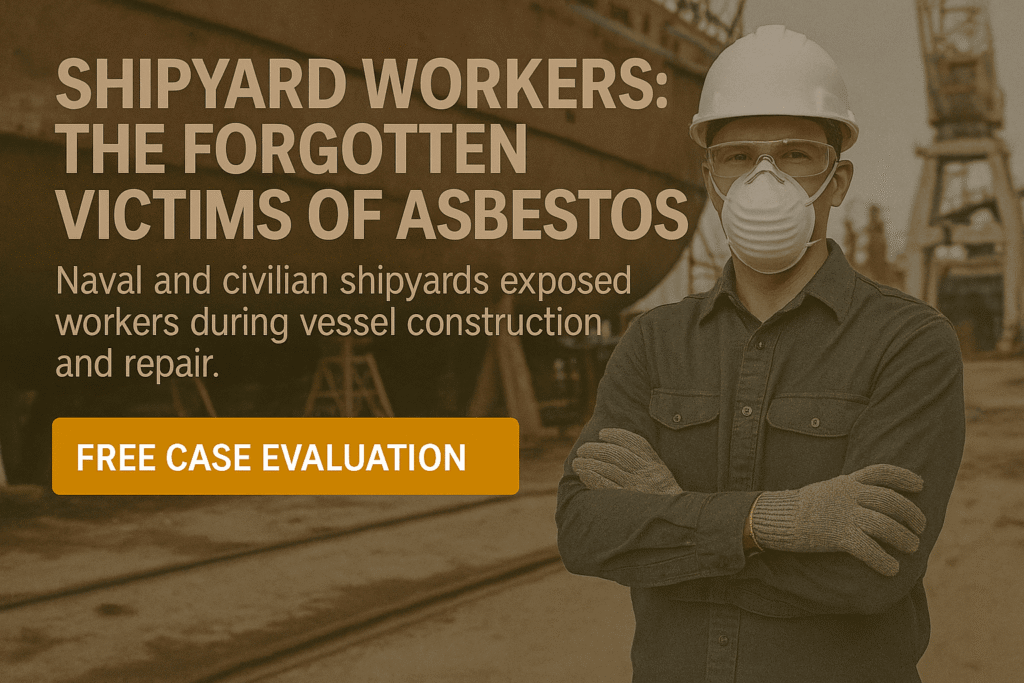
Shipyard Workers: The Forgotten Victims of Asbestos
For decades, naval and civilian shipyards were among the most dangerous workplaces in America when it came to asbestos exposure. From hull construction to boiler rooms, engine repairs, insulation work, and ship refits, shipyard employees handled massive amounts of asbestos-laced materials with little to no protection. Workers who built, maintained, or decommissioned vessels—military or commercial—were often surrounded by airborne asbestos fibers every single day.
These forgotten laborers now face some of the highest rates of mesothelioma, lung cancer, and asbestosis in the world.
If you or a loved one worked in a shipyard, call 800.291.0963 for help documenting exposure, locating medical specialists, and exploring compensation options.
⚓ Step 1: Why Shipyards Used So Much Asbestos
Ships require materials that can withstand extreme heat, pressure, fire, and corrosion. For decades, asbestos was considered the perfect solution.
📌 Why Asbestos Was Used in Ships
-
High resistance to fire
-
Excellent insulation for engines and boilers
-
Low cost for large-scale ship construction
-
Availability in large quantities
-
Ability to reduce noise and heat transfer
-
Durability in harsh marine environments
As a result, nearly every part of a ship—from bow to stern—contained asbestos in some form.
🚢 Step 2: Where Asbestos Was Found in Naval & Civilian Ships
Whether workers built ships, repaired them, or performed routine maintenance, they encountered asbestos across dozens of hazardous locations.
✔ Major Asbestos Locations Onboard:
-
Engine rooms
-
Boiler rooms
-
Turbine compartments
-
Pipe systems & steam lines
-
Pumps, valves & gaskets
-
Electrical wiring insulation
-
Fireproof bulkheads
-
Deck insulation
-
Propulsion and exhaust systems
-
Turbine insulation blankets
-
Heating & cooling systems
-
Ship hull insulation
-
Floor tiles and adhesives
-
Brake linings on ship machinery
Confined ship spaces increased the danger—once fibers were released, they remained airborne for hours.
🛠️ Step 3: Shipyard Jobs With the Highest Exposure
Some shipyard roles faced constant asbestos exposure without knowing it.
✔ High-Risk Job Titles Include:
-
Pipefitters
-
Insulators (“laggers”)
-
Welders
-
Boiler technicians
-
Machinists
-
Electricians
-
Shipfitters
-
Painters & sandblasters
-
Engine mechanics
-
Carpenters
-
Laborers & helpers
-
Riggers
-
HVAC workers
-
Turbine and pump repair crews
These workers often tore out, replaced, or installed asbestos insulation daily.
⚙️ Step 4: Construction, Repair & Overhaul—When Exposure Was Worst
Shipyard activity came in three major forms, each with its own extreme risks.
🏗️ A. New Ship Construction
During construction, workers installed:
-
Pipe insulation
-
Fireproof bulkheads
-
Engine-room insulation
-
Boiler and turbine materials
-
Cement and asbestos board
Insulators dumped asbestos powders into mixers, sprayed insulation onto ship walls, and packed pipes with raw fiber.
🔧 B. Ship Repair
Repair work created massive airborne fiber releases.
High-Risk Repair Tasks
-
Removing worn insulation
-
Grinding gaskets
-
Scraping valves
-
Cutting or welding steam lines
-
Replacing boiler components
-
Fixing overheating machinery
Repair periods were often more dangerous than new construction because workers disturbed old, brittle asbestos.
🧱 C. Ship Overhauls & Refits
Overhauls involved tearing apart entire sections of older vessels.
Extreme Exposure Occurred During:
-
Decommissioning aging ships
-
Full-engine-room refits
-
Sandblasting hull interiors
-
Scraping old materials from confined spaces
-
Replacing damaged pipe insulation
Workers were rarely informed of the dangers.
🔥 Step 5: Engine Rooms & Boiler Rooms — The Epicenter of Asbestos Exposure
No other area onboard contained more asbestos than the engine and boiler rooms.
✔ Asbestos Sources in Engine Rooms
-
Turbine insulation
-
Pipe lagging
-
Pump gaskets
-
Heat shields
-
Exhaust insulation
-
Electrical panels
-
Fireproofing materials
✔ Asbestos Sources in Boiler Rooms
-
Boiler block insulation
-
Firebrick
-
Refractory cement
-
Door gaskets
-
Rope seals
-
Steam lines
These rooms often reached extreme temperatures, cracking insulation and releasing fibers constantly.
⚠️ Step 6: How Shipyard Exposure Happened
Workers inhaled asbestos through multiple job tasks—often unknowingly.
✔ Most Common Exposure Routes
-
Cutting or removing old insulation
-
Grinding gaskets and valves
-
Welding or torch-cutting pipes
-
Installing boiler materials
-
Standing near other workers disturbing asbestos
-
Working in unventilated holds
-
Sandblasting old paint
-
Sweeping insulation debris
Secondary Exposure Was Also Widespread
Fibers clung to:
-
Clothing
-
Hair
-
Gloves
-
Tools
-
Lunchrooms
-
Work trucks
Many families were exposed through contaminated work clothing brought home.
🧪 Step 7: OSHA & Navy Regulations Came Too Late
By the time modern safety rules arrived in the late 1970s and early 1980s, millions of shipyard workers had already been exposed.
✔ Regulations Came After Decades of Harm
-
OSHA asbestos rules (1971 onward)
-
Navy revisions to ship-insulation standards (late 1970s)
-
EPA asbestos bans (partial, 1973–1989)
For most shipyard workers, these protections were decades too late—damage had already been done.
📁 Step 8: How Shipyard Workers Can Document Exposure
Accurate records help build medical and compensation claims.
✔ Workers Should Document:
-
Shipyard name and location
-
Years and job titles
-
Types of vessels worked on
-
Specific ship areas (engine room, boilers, etc.)
-
Maintenance or overhaul cycles
-
PPE provided (or not provided)
-
Names of coworkers who can verify exposure
✔ Request Copies Of:
-
Job orders
-
Work logs
-
Navy or shipyard manuals
-
Asbestos abatement reports
-
Safety training records
-
Ship specifications and diagrams
Exposure often occurred decades before symptoms appear—documentation is essential.
🩺 Step 9: Medical Monitoring for Shipyard Workers
Shipyard workers should undergo long-term health surveillance due to the extreme exposures typical in this industry.
✔ Recommended Medical Testing
-
Chest X-ray (baseline and follow-ups)
-
CT scan (if symptoms or abnormalities appear)
-
Pulmonary function testing
-
Biomarker bloodwork for mesothelioma
-
Evaluation by an occupational-lung specialist
Many shipyard workers qualify for compensation if diagnosed with an asbestos disease.
🏥 Where Shipyard Workers Can Get Help
If you worked in a naval or civilian shipyard, we can help you:
-
Document exposure from ship areas & job tasks
-
Identify asbestos products used in your shipyard
-
Connect with mesothelioma specialists
-
File claims through asbestos trust funds
-
Understand Navy and civilian compensation
-
Review medical screening options
-
Access legal support if necessary
📞 Call 800.291.0963 now to speak with an asbestos exposure advocate.
📝 Summary
Shipyard workers—both military and civilian—were exposed to enormous amounts of asbestos during ship construction, repair, and overhaul. These forgotten victims now face serious health risks decades later.
Key Takeaways
-
Ships were built with asbestos in nearly every system
-
Engine rooms, boiler rooms & steam lines were the highest-risk areas
-
Insulators, pipefitters, welders & mechanics faced the greatest exposure
-
Jobs involving demolition or repair caused massive fiber releases
-
Documentation is crucial for medical and legal claims
-
Early medical monitoring improves outcomes
If you or a loved one worked in a shipyard, call 800.291.0963 for guidance today.