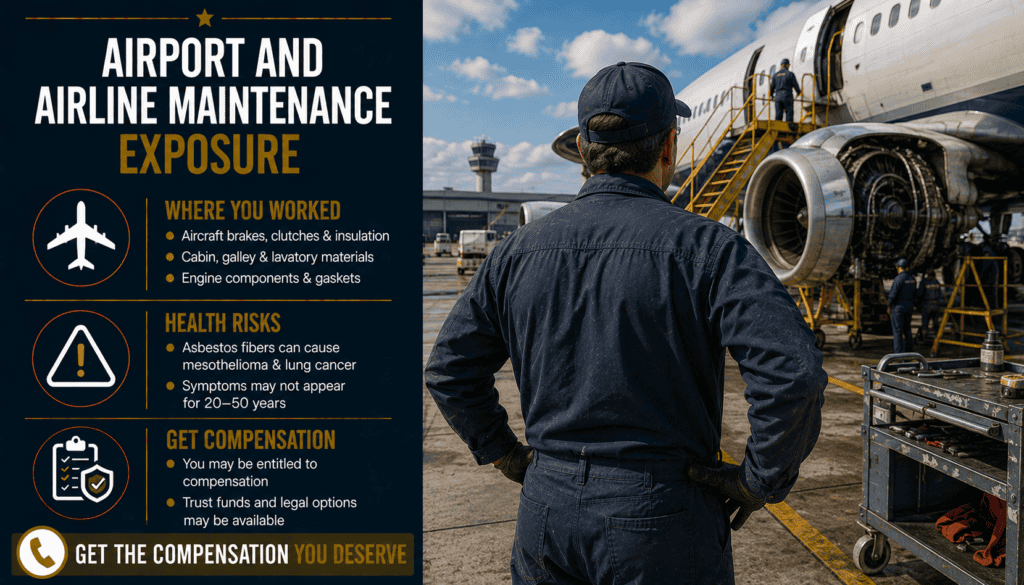
Airport and Airline Maintenance Exposure
Airports and airline maintenance facilities have long been overlooked sources of asbestos exposure. From the 1950s through the early 1990s, aircraft manufacturers relied heavily on asbestos insulation, brake linings, engine components, adhesives, sealants, gaskets, and fireproofing materials. Ground crews, aviation mechanics, baggage handlers, fuel technicians, and runway maintenance staff often worked inches away from deteriorating asbestos components—without warning or protection.
Today, former airport and aviation workers are being diagnosed with mesothelioma and asbestos-related lung disease decades after their initial exposure.
If you or a loved one worked in aviation maintenance or airport ground operations, call 800.291.0963 to start documenting your exposure and accessing medical screening options.
✈️ Step 1: Why Aircraft Used So Much Asbestos
Aircraft require materials that can withstand:
-
Extreme heat
-
Constant pressure changes
-
Fire risk
-
Engine vibration
-
Electrical load
-
Harsh chemical environments
Asbestos offered all these qualities at a low cost.
Common Aircraft Components Containing Asbestos
-
Engine heat shields
-
Brake pads and brake shoes
-
Fireproofing panels
-
Cabin insulation
-
Cargo-bay insulation blankets
-
Wiring insulation
-
Fuel-line gaskets
-
Exhaust system insulation
-
Engine starter-generator components
Older aircraft—still flown for decades—contained large amounts of asbestos.
🛠️ Step 2: Aviation Mechanics Faced Extremely High Exposure
Aircraft mechanics performed hands-on work that released asbestos fibers directly into breathing zones.
High-Risk Mechanic Tasks
-
Replacing engine gaskets
-
Servicing or grinding asbestos brake pads
-
Removing old insulation blankets
-
Working inside engine nacelles
-
Cleaning brake dust from wheel assemblies
-
Cutting or scraping thermal insulation
-
Repairing turbine components
-
Dismantling older aircraft parts
These tasks often occurred in enclosed hangars with limited ventilation—making exposures far more intense.
🛬 Step 3: Ground Crews & Airport Service Teams
Even workers not involved in aircraft repair encountered asbestos.
Ground Crew Exposure Points
-
Handling hot brakes during quick turnarounds
-
Working near wheel wells during towing
-
Cleaning runways contaminated with brake dust
-
Handling cargo in aircraft with deteriorating insulation
-
Connecting external power units with asbestos-lined cables
Brake dust accumulated quickly on aircraft wheels and spilled onto ramps where ground crews worked.
🔥 Step 4: Aircraft Brake Systems — A Major Hazard
Aircraft brakes operate under extreme friction and heat. For decades, manufacturers used asbestos because it resisted thermal breakdown better than other materials.
Where Asbestos Was Used:
-
Brake pads
-
Brake linings
-
Rotor and stator components
-
Brake housing seals
-
Dust covers
Exposure Occurred When:
-
Mechanics blew brake housings clean with compressed air
-
Ground crews changed wheels and tires
-
Brake debris scattered across ramps
-
Quick-turn maintenance stirred visible dust
Some military and commercial aircraft used asbestos brakes into the 1990s.
🧊 Step 5: Cabin & Cargo Insulation
Older airframes used insulation blankets made from asbestos or materials coated with asbestos-containing adhesives.
Asbestos Found In:
-
Cabin insulation above ceiling panels
-
Cargo-bay lining
-
Bulkhead panels
-
Sound-deadening materials
-
Overhead storage areas
-
Ventilation duct insulation
When mechanics removed panels, adjustments or repairs disturbed layers of brittle insulation.
⚙️ Step 6: Engine and Turbine Repairs
Aircraft engines generate enormous heat, requiring insulated components.
Engine Parts Often Containing Asbestos
-
Heat shields
-
Exhaust manifold insulation
-
Turbine blade insulation
-
Fuel-line gaskets
-
Valve packing
-
Engine wrap materials
Exposure Tasks:
-
Opening engine housings
-
Cutting away burnt insulation
-
Cleaning turbine components
-
Removing failed gasket material
Mechanics frequently inhaled fibers as dust floated in confined engine bays.
🛠️ Step 7: Airport Building Maintenance Risks
Airport terminals, hangars, and control towers built between 1950–1980 contain asbestos.
Common Building Materials:
-
Floor tiles and mastic
-
Acoustic ceiling panels
-
Pipe insulation
-
Boiler insulation
-
HVAC duct wrap
-
Fire doors
-
Cement wallboard
-
Spray-on fireproofing
Workers at Risk:
-
Maintenance engineers
-
HVAC technicians
-
Painters
-
Custodians
-
Electricians
Renovations, leaks, or repairs disturbed asbestos hidden in walls and mechanical rooms.
🚧 Step 8: Runway & Tarmac Exposure
Brake dust from aircraft landed on runways and taxiways, exposing outdoor crews.
Workers Exposed Include:
-
Runway-sweeping crews
-
Towing operators
-
Fuel truck drivers
-
Line service technicians
-
Pushback tug crews
-
Baggage handlers
Airplane braking during landing leaves residue that contains asbestos from worn brake components.
🧳 Step 9: Baggage Handlers & Cargo Crews
Cargo-bay insulation deteriorates as aircraft age. Workers entered confined cargo spaces where insulation dust accumulated.
Exposure Occurred When:
-
Loading or unloading cargo
-
Handling animal crates or oversized baggage
-
Cleaning cargo spills
-
Entering belly cargo areas with damaged insulation blankets
The tight quarters increased airborne fiber concentration.
🏢 Step 10: Airline & Airport Contractors Also Affected
Many exposures occurred among contractors rather than airline employees.
Contractors exposed include:
-
Aircraft overhaul teams
-
Terminal renovation crews
-
Fire-suppression installers
-
Electrical contractors
-
Sheet-metal workers
-
HVAC technicians
-
De-icing system maintenance crews
Because contractors were temporary, records of exposure are often undocumented—making claims harder without guidance.
📁 Step 11: Documenting Airport or Airline Exposure
To strengthen legal and trust-fund claims, collect detailed work history.
Key Documentation Includes:
-
Airport names and locations
-
Aircraft models serviced
-
Years worked and job titles
-
Hangars, terminals, or maintenance areas where you worked
-
Wheel/brake maintenance logs
-
Engine overhaul records
-
Contractor company names
-
FAA or OSHA violation reports
-
Photos of older aircraft, brake parts, or insulation
-
Witness statements from coworkers
Attorneys can match your history to known asbestos-containing components used in specific aircraft models.
🩺 Step 12: Medical Monitoring for Aviation Workers
Because latency periods can exceed 40 years, former airport workers should receive routine screening.
Recommended Screening Tests:
-
High-resolution CT scan
-
Chest X-ray
-
Pulmonary function testing
-
Blood biomarkers like mesothelin and fibulin-3
-
Annual respiratory evaluation
Anyone who worked around brake systems, engines, insulation, or aircraft cabins should undergo long-term monitoring.
🏥 Where to Get Help
If you or a loved one worked in airport operations, aircraft maintenance, or airline support services, our team can help you:
-
Document your aviation-related asbestos exposure
-
Identify asbestos components used in the aircraft you worked on
-
Connect with mesothelioma specialists
-
File trust-fund or legal claims for compensation
-
Access medical screening and support resources
📞 Call 800.291.0963 today for a free exposure review with an aviation-industry specialist.
📝 Summary
Airport and airline maintenance workers faced extensive asbestos exposure through brake systems, insulation, gaskets, wiring, and building materials. From mechanics servicing engines to baggage handlers working inside cargo bays, asbestos dust was widespread throughout the aviation industry. Many exposures occurred without warning, protective gear, or proper ventilation.
Key Takeaways
-
Aircraft brakes and engines contained large amounts of asbestos
-
Ground crews encountered asbestos brake dust daily
-
Insulation blankets inside aircraft cabins and cargo holds degraded over time
-
Mechanics faced intense exposure during engine and brake repairs
-
Airport buildings also contained asbestos in walls, ceilings, and pipes
-
Medical monitoring and legal documentation are essential
To begin documenting your airport or airline exposure, call 800.291.0963 now.