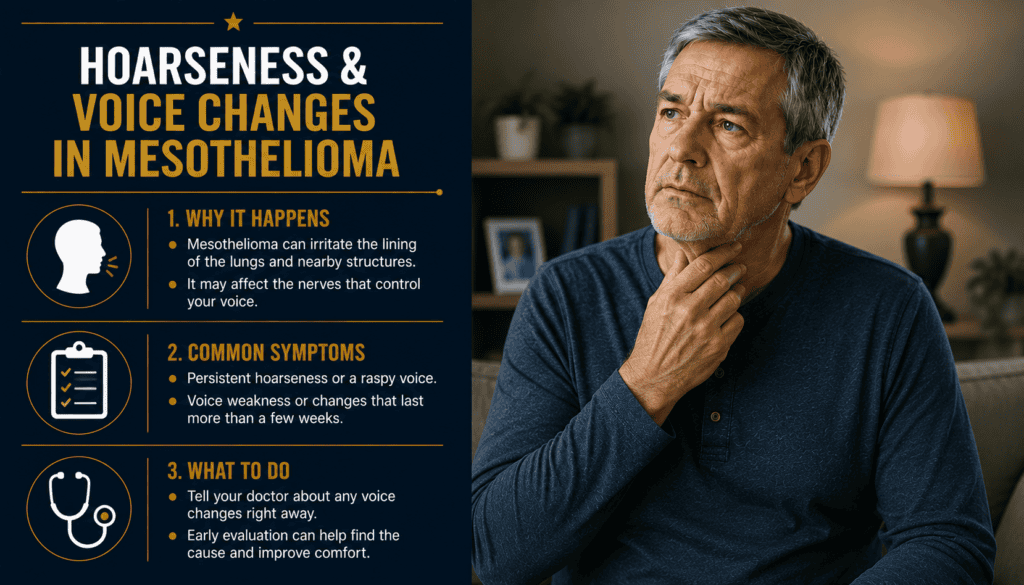
Hoarseness & Voice Changes in Mesothelioma
🗣️ Why It Happens, What It Means & How to Treat It
Hoarseness is a lesser-known but important symptom of mesothelioma. Many patients develop a raspy voice, weak vocal strength, difficulty speaking loudly, or even temporary voice loss. These changes may develop gradually or appear suddenly and often signal tumor pressure, nerve involvement, chronic coughing, or treatment side effects.
While most common in pleural mesothelioma, hoarseness can also appear in peritoneal and pericardial cases when tumors press on nerves or airway structures connected to the throat.
This guide explains why voice changes occur, the warning signs, how doctors diagnose the cause, treatments that improve vocal strength, and how hoarseness strengthens legal claims.
📘 What Is Hoarseness in Mesothelioma?
Hoarseness refers to any change in the voice caused by:
-
Vocal cord irritation
-
Nerve compression
-
Inflammation
-
Structural changes
-
Reduced breath support
Common descriptions include:
-
Raspy or rough voice
-
Weak or soft speaking volume
-
Strained or breathy tone
-
Voice fading mid-sentence
-
Difficulty projecting
-
Limited vocal endurance
Some patients can speak only a few words before becoming breathless.
🫁 Why Mesothelioma Causes Hoarseness
Mesothelioma can affect the vocal cords and surrounding structures in several ways. These are the most common causes.
1️⃣ Pressure on the Recurrent Laryngeal Nerve
🧠 This nerve controls vocal cord muscles.
Tumors near the lungs or mediastinum often press on it.
Results include:
-
Weak voice
-
Difficulty projecting
-
Vocal cord paralysis
-
Breathlessness when speaking
This is one of the most frequent causes of persistent hoarseness.
2️⃣ Tumor Irritation of the Throat or Airways
Tumors near the upper respiratory tract cause:
-
Persistent throat clearing
-
Irritation
-
Vocal fatigue
3️⃣ Pleural Effusion (Fluid Around the Lungs)
💧 Fluid buildup compresses the lungs, reducing airflow needed for speech.
Patients may experience:
-
Running out of air mid-sentence
-
Whisper-like speech
-
Frequent pauses
4️⃣ Chronic Cough
🗣️ Repeated coughing inflames the vocal cords, causing:
-
Swelling
-
Weakness
-
Temporary hoarseness
5️⃣ Treatment Side Effects
💊 Chemotherapy, immunotherapy, and radiation can cause:
-
Dry mouth
-
Esophageal inflammation
-
Mouth sores
-
Fatigue-related weak speech
6️⃣ Acid Reflux (Common During Treatment)
🔥 Stomach acid irritates vocal cords, worsening hoarseness.
7️⃣ Advanced Disease Progression
As breathing capacity decreases, airflow needed for speech becomes limited.
🔍 Symptoms That Often Accompany Hoarseness
Hoarseness rarely occurs alone. Patients may also have:
🫁 Breathing-Related Symptoms
-
Shortness of breath during speech
-
Weak airflow
-
Needing long pauses
😣 Throat Symptoms
-
Dryness
-
Irritation
-
Soreness
-
Frequent throat clearing
🧠 Emotional Symptoms
-
Frustration
-
Communication difficulty
-
Social withdrawal
🤒 Additional Signs
-
Fatigue
-
Voice fading later in the day
-
Gurgling or rattling sounds (fluid buildup)
🩺 How Doctors Diagnose the Cause of Hoarseness
Doctors must determine whether hoarseness is caused by nerve pressure, airway involvement, treatment side effects, or advanced disease.
1️⃣ Physical Examination
🩺 Evaluates:
-
Throat irritation
-
Breathing strength
-
Vocal effort
-
Cough pattern
2️⃣ Imaging (CT or MRI)
📸 Identifies:
-
Tumor pressure on nerves
-
Airway compression
-
Pleural effusion
-
Tumor spread
3️⃣ Laryngoscopy
🗣️ A small camera checks:
-
Vocal cord motion
-
Paralysis
-
Swelling
-
Structural abnormalities
4️⃣ Pulmonary Function Testing
🫁 Measures breath support needed for speech.
5️⃣ Medication Review
💊 Determines whether medications are contributing to dryness or irritation.
💉 Medical Treatments That Improve Hoarseness
Treatment depends on the underlying cause.
1️⃣ Treat Recurrent Laryngeal Nerve Compression
Options include:
-
Steroids
-
Radiation therapy
-
Immunotherapy
-
Targeted palliative procedures
2️⃣ Manage Pleural Effusion
💧 Thoracentesis or a PleurX® drain reduces chest pressure and improves vocal airflow.
3️⃣ Treat Chronic Cough
Cough control greatly reduces hoarseness.
-
Cough suppressants
-
Nebulizers
-
Steroids
-
Humidifiers
-
Throat sprays
4️⃣ Improve Hydration & Mucus Control
💧 Includes warm liquids, saline rinses, and humidifiers.
5️⃣ Treat Acid Reflux
Acid blockers reduce throat irritation within weeks.
6️⃣ Speech Therapy
Speech-language pathologists teach techniques to:
-
Reduce strain
-
Improve airflow
-
Strengthen voice
7️⃣ Adjust Medications
Doctors may change medications that dry or inflame the throat.
8️⃣ Palliative Care for Severe Cases
Palliative teams manage breathlessness, cough, and anxiety — improving voice clarity.
🏠 Home Strategies for Reducing Hoarseness
✔️ Speak slowly and avoid straining
✔️ Avoid whispering (it worsens hoarseness)
✔️ Use a humidifier
✔️ Stay hydrated with warm liquids
✔️ Avoid smoke and strong scents
✔️ Rest the voice when needed
✔️ Elevate the upper body when resting
🚨 When Hoarseness Is an Emergency
Seek urgent care if voice changes occur with:
-
Sudden shortness of breath
-
Chest pain
-
Difficulty swallowing
-
Harsh wheezing
-
Coughing up blood
-
Rapid breathing
These may indicate:
-
Airway compression
-
Lung collapse
-
Severe tumor progression
-
Dangerous infection
⚖️ Legal Importance of Hoarseness in Mesothelioma Claims
Hoarseness is more than a communication issue — it is proof of disease progression and increases compensation value.
💰 Increases Pain & Suffering Damages
Hoarseness affects:
-
Communication
-
Work ability
-
Social interaction
-
Emotional well-being
📑 Strengthens Medical Evidence
Voice changes support documentation of:
-
Nerve involvement
-
Tumor pressure
-
Respiratory decline
-
Advanced pleural disease
🏭 Supports Occupational Exposure Claims
Hoarseness often appears in patients exposed to asbestos in:
-
Shipyards
-
Navy vessels
-
Construction
-
Insulation work
-
Power plants
-
Industrial facilities
🚨 Urgent: Get Legal Help for Mesothelioma or Asbestos Lung Cancer
Hoarseness and voice changes may signal advanced disease — and you may qualify for substantial financial compensation. This can help cover:
-
Medical bills
-
Pain & suffering
-
Lost income
-
Home care
-
Travel for treatment
-
Hospice or palliative support
⚖️ What Our Legal Team Can Do Right Now
-
🏭 Identify where asbestos exposure occurred
-
🧾 File asbestos trust fund claims
-
💼 Pursue lawsuits against negligent companies
-
🚀 Fast-track your claim due to worsening symptoms
-
💰 Recover maximum compensation available
⏳ Time is limited — legal deadlines apply.
📞 Call Now for Immediate Legal Help: 800.291.0963
Free, confidential, 24/7 case review.