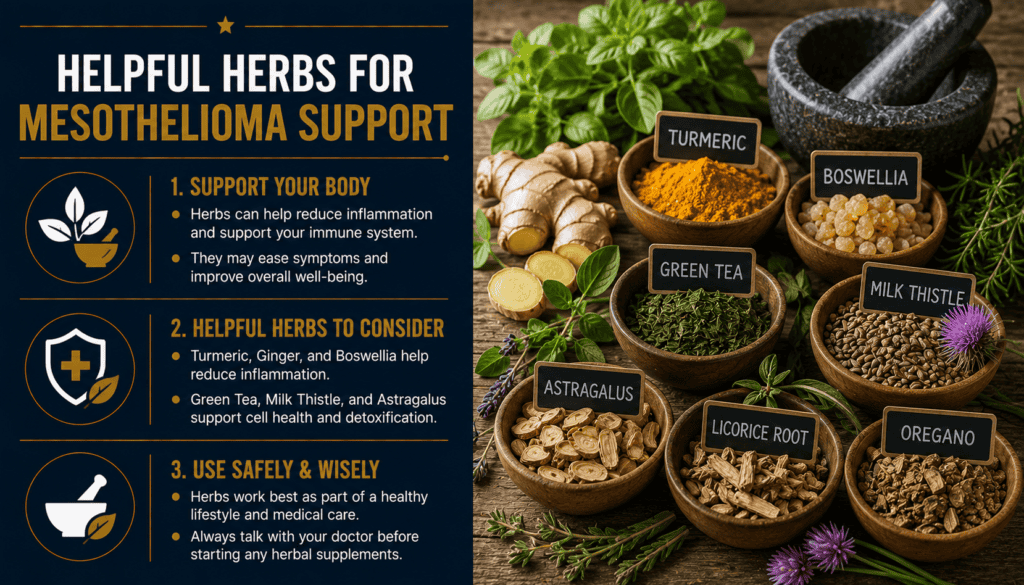
Helpful Herbs for Mesothelioma Support
Culinary Uses, Supplement Risks & Safe Questions to Ask
Herbs may make food more enjoyable, but concentrated herbal products can create risks during cancer treatment. This guide separates everyday cooking from supplements, explains what to discuss with your care team, and offers practical nutrition and safety checklists.
What herbs can—and cannot—do
Herbs can add aroma and flavor to meals when appetite changes during mesothelioma care. However, no herb has been proven to cure mesothelioma, shrink tumors, or replace surgery, chemotherapy, immunotherapy, radiation, or symptom-directed care. The word “natural” does not establish safety. The best choice depends on the person’s treatment, medications, immune status, swallowing ability, and preferences.
| Use | Reasonable expectation | Important boundary |
|---|---|---|
| Small amounts in food | Flavor and enjoyment | Not an anticancer treatment |
| Concentrated extract or capsule | Potentially substantial biologic effects | Do not start without oncology/pharmacist review |
| Herbal tea | Fluid and comfort for some people | Ingredients, preparation and medication interactions matter |
Ask a registered dietitian experienced in oncology for individualized nutrition support, particularly with weight loss or reduced intake.
Culinary herbs and gentle food ideas
Ordinary cooking quantities of herbs may make meals more appealing without requiring a supplement. Choose foods the patient can comfortably tolerate; avoid assuming that a particular herb will treat nausea, inflammation, or cancer.
| Herb | Food use | Practical consideration |
|---|---|---|
| Basil | Stir into cooked pasta or soup | Wash fresh leaves thoroughly |
| Parsley | Add to fully cooked dishes | Use food amounts rather than concentrated preparations |
| Thyme | Season chicken, beans or vegetables | Adjust texture for swallowing difficulties |
| Rosemary | Flavor roasted foods | Use lightly if aromas trigger nausea |
| Ginger | Small amounts in food or beverages | Discuss supplements or high-dose preparations with care team |
For a low-effort meal, try a thoroughly cooked soup with a small amount of thyme, soft vegetables, and a protein source that fits the patient’s dietary needs. If smells worsen nausea, serve foods cooler and use less seasoning.
Herbal supplements: important cautions
Capsules, tinctures, essential oils and concentrated powders differ greatly from seasoning food. Products can contain variable ingredients or contaminants, and manufacturers’ marketing claims do not demonstrate cancer-treatment benefit. Do not swallow essential oils or apply them to treatment-related skin changes without clinician guidance.
| Product form | Concern | Safer next step |
|---|---|---|
| Capsules/extracts | Concentrated exposure and possible interactions | Bring exact label to oncology pharmacist |
| Multi-herb blends | Several ingredients make assessment harder | Review each ingredient and dose |
| Alcohol-based tinctures | Alcohol and concentrated compounds may be unsuitable | Ask about alternatives |
| Essential oils | Ingestion can be toxic; skin irritation possible | Do not ingest; seek clinician guidance |
| “Cancer cure” products | Unproven claims and potential treatment delays | Do not substitute for prescribed care |
Do not stop prescribed medication to try an herb. Contact the treating team before any new supplement, even if sold over the counter.
Interactions and treatment safety
Herbs and supplements may change how drugs are absorbed, metabolized, or tolerated. Some can increase bleeding risk or affect sedation; others may complicate liver or kidney monitoring. Specific interactions depend on the exact product, dose and treatment regimen, so a general internet list cannot clear a supplement as safe.
| Situation | Why review matters | Who to ask |
|---|---|---|
| Chemotherapy or immunotherapy | Possible drug interactions or overlapping side effects | Oncologist and oncology pharmacist |
| Upcoming surgery or procedure | Some supplements may affect bleeding or anesthesia | Surgical/anesthesia team |
| Blood thinners or antiplatelet drugs | Potential additive bleeding concerns | Prescriber/pharmacist |
| Liver or kidney problems | Altered handling of substances | Treating clinician |
| Multiple medications | Harder to identify adverse effects | Pharmacist with full medication list |
Give the team photographs of both sides of the supplement label and list the dose, frequency, start date and reason for use. Follow their instructions about when to stop a product before a procedure.
Matching food choices to symptoms
Nutrition goals often matter more than any single ingredient. If a patient has poor appetite, weight loss, mouth sores, reflux, nausea, or trouble swallowing, ask the care team for a symptom-specific plan. Avoid strong flavors when they make symptoms worse.
| Concern | Food-focused adjustment | When to contact care team |
|---|---|---|
| Poor appetite | Small, frequent, protein-containing meals | Ongoing reduced intake or weight loss |
| Nausea | Mild-smelling foods; discuss prescribed anti-nausea drugs | Unable to keep fluids down |
| Mouth soreness | Soft, non-irritating foods; avoid harsh seasonings | Pain limits drinking or eating |
| Swallowing difficulty | Request swallowing assessment; follow texture guidance | Coughing or choking with food or liquids |
| Taste changes | Try modest seasoning adjustments | Intake continues to decline |
Sudden or severe shortness of breath, chest pain, confusion, or signs of dehydration require prompt medical evaluation; do not attempt to manage these with herbs.
Food safety during treatment
Some cancer treatments reduce infection defenses. Follow the oncology team’s specific food-safety instructions. Wash fresh herbs and produce under running water, keep raw ingredients separate from ready-to-eat foods, refrigerate perishables promptly, and avoid unpasteurized herbal drinks or products of uncertain origin when advised.
| Food safety step | Why it matters |
|---|---|
| Wash fresh herbs | Reduces surface contamination |
| Use clean utensils and cutting boards | Limits cross-contamination |
| Store prepared foods safely | Limits bacterial growth |
| Check tea ingredients and preparation | Avoids unknown blends or unsuitable products |
| Ask about immune-related precautions | Advice varies by treatment and blood counts |
“Immune boosting” is a marketing phrase, not a substitute for individualized infection-prevention advice.
A practical discussion and tracking plan
Use this short checklist at an oncology appointment. A clinician can assess whether an herb is simply a culinary ingredient or a supplement with meaningful risk. Keep a written record rather than relying on memory.
| Record | What to write |
|---|---|
| Product | Brand, full ingredient list and photograph |
| Amount | Dose, units and how often |
| Purpose | Flavor, appetite, sleep or other goal |
| Treatment context | Current medicines and planned procedures |
| Response | Symptoms, side effects and dates |
| Clinical decision | Approved, avoid, pause or follow up |
Questions to ask: Could this product interact with my treatment or blood thinner? Should it be stopped before surgery? Is there a food-based alternative? Would an oncology dietitian help with my current symptoms?
Trusted resources and related reading
For medical guidance, prioritize the treating oncology team and evidence-based cancer organizations. These resources discuss complementary approaches, supplements, and nutrition without treating herbs as a cancer cure.
- National Cancer Institute: Complementary and Alternative Medicine
- NCCIH: Cancer and Complementary Health Approaches
- NCI: Nutrition in Cancer Care
- FDA: Safe Food Handling
Related site reading: Healthy Foods for Mesothelioma, Mesothelioma Support, and Mesothelioma Treatments. External resources are supplied for further review; individual link status and current guidance should be checked before publishing.
| Resource | Use it for |
|---|---|
| Oncology team | Treatment-specific decisions |
| Oncology pharmacist | Drug–herb interaction review |
| Registered oncology dietitian | Weight, intake and symptom-specific meal plans |
| NCI and NCCIH | Evidence and limitations of complementary approaches |
Frequently asked questions
Can herbs cure mesothelioma?
No herb has been proven to cure mesothelioma. Herbal products must not replace oncology treatment.
Are cooking herbs safer than herbal supplements?
Small food amounts generally differ from concentrated extracts, but individual allergies, food safety and treatment restrictions still matter.
Can I take turmeric or ginger capsules during treatment?
Do not start concentrated capsules without asking your oncology team or pharmacist to review the exact product and medications.
Do herbal teas interfere with cancer medicines?
Some may. Ingredient blends and amounts vary; bring the package to your care team before regular use.
What if an herb makes nausea worse?
Stop using it in food and tell your care team if nausea persists; prescribed anti-nausea treatment may help.
Should I stop supplements before surgery?
Ask the surgeon and anesthesia team for product-specific instructions well ahead of the procedure.
Can herbs improve immunity during chemotherapy?
There is no established herbal substitute for medical infection-prevention advice. Follow your oncology team’s guidance.
Who can help me plan meals when appetite is poor?
Ask for a registered dietitian with oncology experience, especially if intake is falling or weight loss occurs.
Speak With Our Support Team
Call 800.291.0963. Live chat is available 24/7, 365 days a year. Submit Your Case using the form below.
⚕️ Legal & Medical Information Disclaimer
This article is general information, not medical, nutritional or legal advice. Herbal products can interact with treatment. Consult your oncology team before using supplements and a qualified attorney for legal questions.