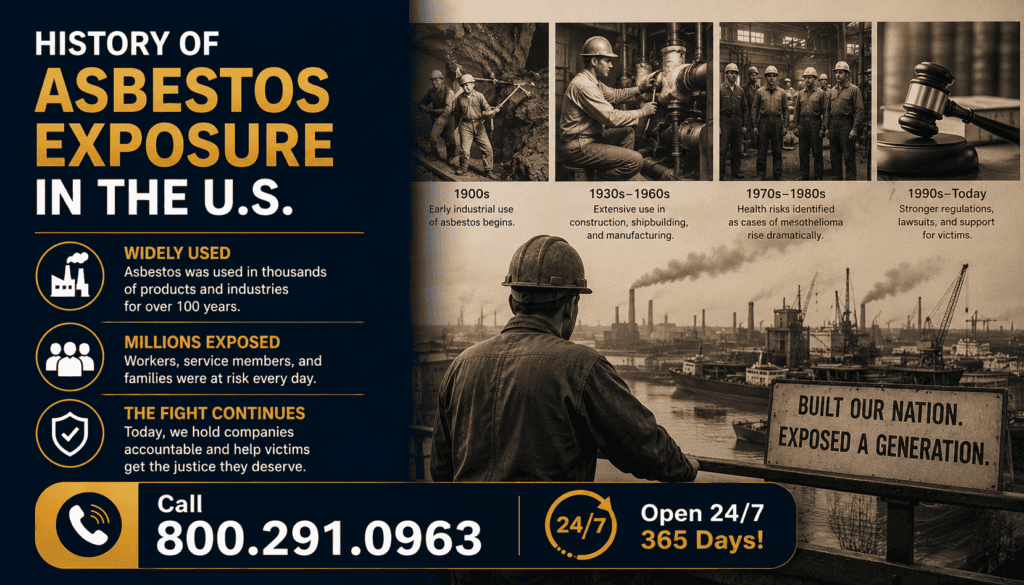
The History of Asbestos Exposure in the U.S.
Asbestos, once hailed as a “miracle mineral” for its heat resistance and durability, became one of the most dangerous materials used in American industry. From the early 1900s through the late 20th century, asbestos was heavily used in construction, manufacturing, and military applications—putting millions at risk of deadly diseases like mesothelioma, lung cancer, and asbestosis. Although the dangers of asbestos were known by the 1930s, widespread use continued for decades, with partial bans beginning in the 1970s and a full ban on chrysotile asbestos not enacted until 2024.
Today, asbestos-related illnesses are still being diagnosed, often decades after the original exposure. This page outlines the history of asbestos exposure in the U.S., focusing on key industries and work environments where exposure was most severe.
Timeline of Asbestos Use in the U.S.
-
Late 1800s–Early 1900s: Asbestos begins widespread industrial use in insulation and construction.
-
1930s–1940s: Medical studies link asbestos to lung damage, but industry use expands, especially during WWII.
-
1940s–1970s: Asbestos peaks in use across the military, construction, and manufacturing.
-
1970s–1980s: OSHA and EPA begin regulating asbestos; bans on some products begin.
-
1990s–2024: Use declines but continues in some products. Chrysotile asbestos is finally banned in 2024.
-
Today: Asbestos is still found in older homes, buildings, and equipment, posing ongoing risks.
Top 12 Industries with Heavy Asbestos Exposure
1. Shipbuilding and Shipyards
U.S. shipyards—especially during World War II—used asbestos extensively in the construction and maintenance of naval and commercial vessels.
-
Used in insulation, engine rooms, boilers, and fireproofing
-
Workers inhaled fibers during repairs, retrofitting, and scraping old parts
-
Navy veterans remain among the most at-risk populations
2. Construction Industry
Asbestos was a common ingredient in many building materials used from the 1930s through the 1980s.
-
Found in drywall, cement, roofing shingles, joint compound, tiles
-
Exposure occurred during installation, sanding, demolition, and remodeling
-
Workers often brought fibers home on clothing, exposing their families
3. Power Plants
Power plants used asbestos to insulate high-heat equipment and piping systems.
-
Exposure occurred in boiler rooms, turbines, and pipe insulation
-
Maintenance crews faced high risks during repair and replacement
-
Asbestos dust often filled enclosed plant environments
4. U.S. Military
All branches of the military relied on asbestos for decades, with the Navy seeing the highest usage.
-
Used in ships, aircraft, barracks, and vehicles
-
Veterans in maintenance, engineering, and aviation roles were heavily exposed
-
VA benefits are available for veterans with asbestos-related diseases
5. Steel and Iron Mills
Extreme heat in steel production required fireproofing and insulation, much of it made from asbestos.
-
Furnace insulation, protective clothing, and casting molds contained asbestos
-
Workers were exposed daily through airborne dust
-
Found in brake linings on steel transport vehicles
6. Automotive Industry
Asbestos was widely used in vehicle brake pads, clutches, and gaskets due to its heat resistance.
-
Mechanics exposed while replacing and cleaning parts
-
Dust released during brake work was inhaled directly
-
Many repair shops had poor ventilation
7. Chemical Plants and Refineries
Asbestos was used to insulate chemical equipment and piping in hazardous environments.
-
Exposure occurred during valve repair, pipe replacement, and maintenance
-
Workers in confined spaces were at higher risk
-
Asbestos blankets and panels lined reactors and tanks
8. Textile Manufacturing
Asbestos threads were woven into textiles for fireproof fabrics used in gloves, aprons, and insulation.
-
Workers handled raw asbestos and fiber blends daily
-
Spinning, weaving, and cutting released large amounts of fibers
-
Exposure occurred in both production and packaging
9. Railroad Industry
Asbestos was used in train brakes, insulation, and steam engine components.
-
Train mechanics, conductors, and maintenance workers inhaled airborne fibers
-
Asbestos was common in lagging (pipe insulation) and engine rooms
-
Risk extended to rail yard workers and inspectors
10. Oil Refineries
High-temperature processing equipment in oil refining relied on asbestos for insulation and fire protection.
-
Used in pump insulation, heaters, distillation columns
-
Insulators and maintenance crews were heavily exposed
-
Asbestos gaskets were common in high-pressure systems
11. Mining and Milling
While asbestos mines were limited in the U.S., workers in other types of mines—like talc or vermiculite—often encountered asbestos contamination.
-
Miners and mill workers breathed in contaminated dust
-
Montana’s Libby mine is one of the most infamous examples
-
Families of miners were also exposed through clothing
12. Schools and Public Buildings
Asbestos was used to build and insulate schools, government buildings, and public institutions for decades.
-
Pipe insulation, ceiling tiles, and wall panels all contained asbestos
-
Teachers, custodians, and students were unknowingly exposed
-
Many older schools still require abatement or monitoring
The Legacy of Asbestos Exposure
Despite increased regulation, the legacy of asbestos exposure continues. Many workers and veterans were never warned about the dangers. Today, asbestos is still present in millions of older buildings, homes, schools, and industrial sites across the U.S.
Were You Exposed? Get Help Today
If you or a loved one has been diagnosed with mesothelioma, lung cancer, or another asbestos-related illness, you may be eligible for legal compensation. Trust funds, lawsuits, and VA benefits are available for qualifying victims.
📞 Call 800.291.0963 for a Free Consultation
Speak with an experienced asbestos attorney to learn your rights. No obligation, just answers.