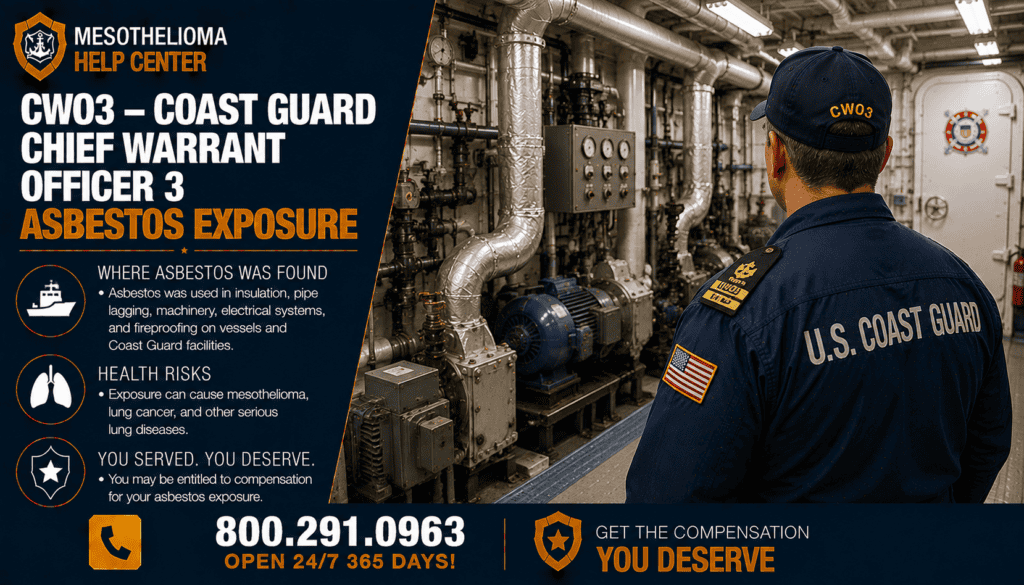
CWO3 – Coast Guard Chief Warrant Officer 3 Asbestos Exposure
⚠️ Asbestos Risks for Coast Guard Chief Warrant Officer 3 (CWO3) Veterans
Coast Guard Chief Warrant Officer 3 (CWO3) personnel serve as senior technical authorities responsible for complex engineering systems, electrical networks, propulsion equipment, communications systems, auxiliary machinery, structural integrity components, and shipboard safety infrastructure. By the time a Coast Guard Warrant Officer reaches CWO3, they have typically accumulated well over a decade of experience in hands-on engineering, electronics, or ordnance specialties—placing them among the most asbestos-exposed technical leaders in the branch.
Because Coast Guard cutters, boats, bases, and shore facilities built from the 1940s through the late 1980s relied heavily on asbestos for heat resistance, soundproofing, fireproofing, and structural protection, CWO3s worked daily inside compartments laden with deteriorating ACM (asbestos-containing materials). Their senior-level duties placed them in the highest-risk environments, including machinery rooms, boiler plants, auxiliary spaces, ventilation systems, electrical chambers, and shipyard modernization projects.
This page outlines CWO3 duties, exposure risks, compensation options, and evidence needed for a successful claim.
🛠 Typical Duties of a Coast Guard Chief Warrant Officer 3 (CWO3)
🧰 Department-Level Technical Leadership
CWO3s serve as the Coast Guard’s mid-level technical commanders, responsible for:
-
managing entire engineering divisions
-
overseeing electrical distribution systems
-
supervising propulsion system maintenance
-
directing electronics and navigation operations
-
coordinating damage-control and safety protocols
-
reviewing major system overhauls
-
ensuring fleet readiness and compliance
This leadership role requires constant inspection, involvement, and oversight of work in legacy shipboard spaces where asbestos was heavily used.
⚓ Oversight of Engineering, Electrical & Structural Departments
CWO3s often serve as section heads or senior supervisors for:
-
machinery technicians
-
electricians
-
electronics technicians
-
damage control personnel
-
hull maintenance specialists
Because these teams work daily with asbestos insulation, gaskets, lagging, and fireproofing materials, the CWO3 is continuously exposed while directing and evaluating their work.
🔧 Direct Involvement in High-Risk Shipboard Maintenance
Although CWO3s do less hands-on labor than junior warrant officers, they still:
-
inspect propulsion equipment
-
monitor boiler operations
-
evaluate steam system performance
-
review electrical panel work
-
troubleshoot electronics systems
-
oversee compartment readiness
These tasks require physical presence in old compartments lined with friable ACM.
🛠 Integration of Repairs, Overhauls & Drydock Projects
CWO3s direct large-scale engineering and modernization projects, such as:
-
asbestos insulation removal
-
machinery refurbishment
-
turbine and generator upgrades
-
electrical system replacement
-
hull cutting and welding
-
compartment demolition
Shipyard overhaul periods are among the highest asbestos-exposure phases of Coast Guard service.
📋 Technical Authority for Cutter Safety & Certification
CWO3s perform high-level inspections involving:
-
fireproofing systems
-
emergency equipment
-
heat-resistant materials
-
ventilation systems
-
compartment structural integrity
-
communications and navigation room assessments
Many of these spaces contain aging, crumbling asbestos insulation.
🏛 Responsibility Across Older Coast Guard Facilities
CWO3s often supervise operations across bases and stations containing:
-
asbestos floor tiles
-
ACM ceiling panels
-
boiler rooms
-
mechanical rooms
-
ductwork and ventilation systems
-
electrical closets with asbestos boards
Routine inspections elevated long-term exposure risk.
🧱 Asbestos Exposure Risks for CWO3 Personnel
1. Heat-Resistant Insulation (Major Exposure Source)
CWO3s routinely worked around asbestos insulation used for:
-
steam lines
-
hot-water pipes
-
exhaust systems
-
turbine casings
-
boiler housings
-
pump systems
Decades of heat cycles caused insulation to crack and release fibers into engine rooms and auxiliary spaces.
2. Fireproofing Materials
Legacy cutters relied on asbestos fireproofing for:
-
emergency fire curtains
-
thermal insulation blankets
-
bulkhead coverings
-
protective heat shields
-
firefighting suits and gloves
CWO3s regularly inspected, maintained, or supervised work near these materials.
3. Legacy Ship Structures
Older Coast Guard vessels—especially cutters built pre-1985—contained asbestos in:
-
deck tiles
-
wallboards
-
overhead panels
-
compartment lining
-
soundproofing materials
-
insulation backing
-
machinery space bulkheads
Movement, vibration, and temperature shifts triggered constant fiber release.
4. Machinery Spaces with Heavy ACM Contamination
CWO3s interacted daily with:
-
main propulsion machinery
-
evaporators
-
pumps and compressors
-
generators
-
boilers
-
turbines
These spaces historically recorded some of the highest ACM concentrations aboard Coast Guard ships.
5. Ventilation & Exhaust System Exposure
Asbestos fibers traveled through:
-
ventilation ducts
-
engine air intakes
-
fan rooms
-
HVAC systems
CWO3s frequently inspected or oversaw repairs in these systems.
6. Electrical & Electronic ACM Components
CWO3s worked with or supervised:
-
switchboards
-
electrical panels
-
wiring insulation
-
radio and radar equipment
-
control boards
-
arc-resistant asbestos barrier material
Many of these components used asbestos for fire resistance.
7. Shipyard & Depot-Level Work
Exposure was extreme during:
-
insulation stripping
-
valve and flange replacements
-
boiler rebuilds
-
steam line overhauls
-
old equipment removal
-
hull renovations
Every CWO3 experienced multiple overhaul cycles during their career.
📊 Why CWO3 Veterans Have Strong Asbestos Claims
Advanced Technical Leadership in High-Risk Environments
Their authority required constant presence in machinery and engineering spaces.
Direct & Supervisory Exposure
Even when not performing repairs themselves, CWO3s inhaled fibers released by junior personnel.
Long Service Duration
Most CWO3s served 15–25+ years, multiplying cumulative exposure.
Alignment of Duties With Known ACM Locations
CWO3 responsibilities match documented asbestos locations across Coast Guard vessels and bases.
Regular Shipyard Participation
Modernization periods drastically increased fiber exposure.
📂 Evidence Commonly Used in CWO3 Asbestos Claims
📁 Service & Rating Records
Confirm engineering, electronics, and supervisory roles closely tied to ACM materials.
🛳 Cutter System Manuals & Blueprints
Show exact ACM locations in:
-
boilers
-
turbines
-
steam systems
-
insulation layers
🛠 Work Logs & Maintenance Records
Demonstrate involvement in high-risk tasks.
⚓ Shipyard Overhaul Histories
Show exposure during major renovations.
📜 Witness Testimony
From MKs, EMs, DCs, ETs, and fellow Warrant Officers.
💼 Example Compensation Awards for CWO3 Veterans
Case Example 1 — CWO3 Engineer
Boiler and steam system exposure
$4.4M compensation
Case Example 2 — CWO3 Electrician
Electrical panel ACM and fireproofing
$3.8M compensation
Case Example 3 — CWO3 Technical Supervisor
Legacy ship structures and insulation
$3.6M compensation
💙 Benefits & Compensation Options for CWO3 Veterans
💵 Asbestos Trust Funds
Part of more than $30 billion available nationwide.
⚖ Legal Claims Against Manufacturers
Never filed against the Coast Guard.
❤️ VA Benefits & Survivor Compensation
Eligible for:
-
VA disability
-
Dependency and Indemnity Compensation (DIC) for families
📞 Get Help Identifying Your Coast Guard CWO3 Asbestos Exposure
CWO3 personnel were among the most technically exposed veterans due to decades spent inspecting, supervising, and repairing systems containing asbestos. Their claims are strong and supported by extensive Coast Guard engineering documentation.
📞 Call 800.291.0963 for a free case review today.