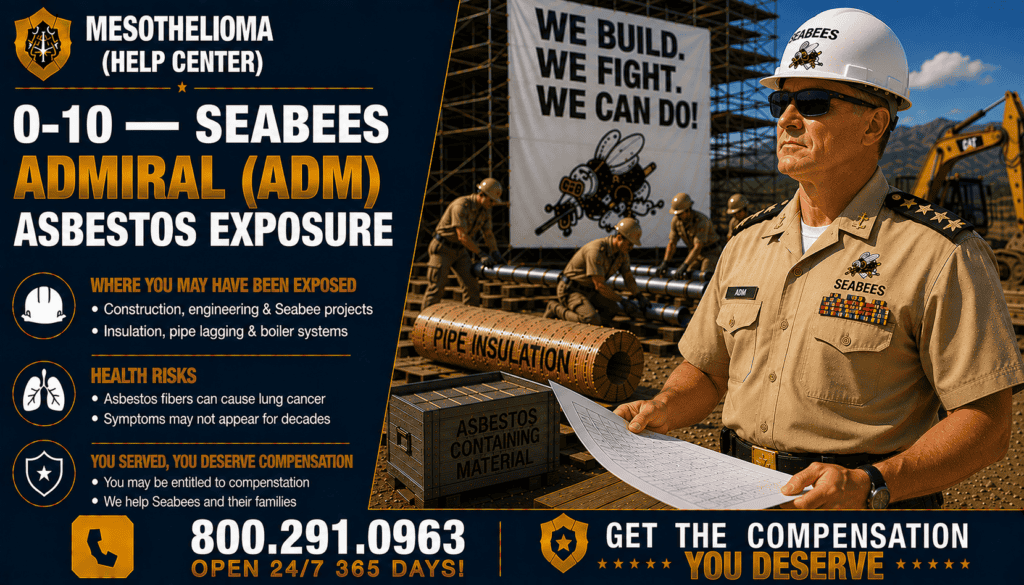
⚓ O-10 Admiral Seabee Asbestos Exposure
An O-10 Admiral associated with U.S. Navy Seabee construction and engineering operations would typically serve at the highest levels of command and strategic oversight. Unlike junior enlisted personnel, an Admiral would generally be less likely to perform hands-on construction work, but could still enter active construction sites, engineering facilities, maintenance areas, power plants, ports, airfields and older military buildings during inspections, command visits and operational reviews.
Rank alone does not establish asbestos exposure. A useful investigation should identify the specific command, duty station, inspection activity, facility, construction project, equipment area and service period.
For an O-10, the most plausible exposure pathways would usually involve repeated presence in older facilities or active work zones where asbestos-containing insulation, flooring, roofing, cement products, gaskets, packing or other materials were being disturbed by construction and maintenance personnel.
This page is part of the broader U.S. Navy Seabees Asbestos Exposure guide and the U.S. Seabees Ranks Asbestos Exposure hub.
🎖️ O-10 Admiral Roles and Seabee Assignments
An O-10 Admiral could be responsible for high-level command, strategic planning, engineering oversight and inspection of major naval construction and infrastructure operations.
- Inspecting major Seabee construction projects.
- Reviewing base and infrastructure readiness.
- Visiting ports, airfields and logistics facilities.
- Reviewing engineering and public-works operations.
- Touring power, utility and maintenance facilities.
- Evaluating overseas construction and deployment projects.
- Meeting with senior officers and enlisted construction leaders.
- Reviewing modernization, renovation or damage-repair programs.
These examples identify areas to investigate. They do not mean every O-10 had the same assignments or encountered asbestos.
For trade-specific pathways, see the Seabees Jobs & Occupations Asbestos Exposure hub.
🧱 Materials and Equipment to Investigate
| Material or Equipment | Possible O-10 Contact Context | Evidence to Look For |
|---|---|---|
| Pipe and boiler insulation | Inspection of mechanical or utility spaces | Facility plans, inspection records, photographs |
| Flooring, roofing and cement products | Visits to renovation or construction projects | Project specifications, asbestos surveys, reports |
| Pumps and valves | Utility-system or engineering inspections | Equipment records, maintenance files, project documents |
| Vehicles and heavy equipment | Visits to equipment yards and maintenance operations | Equipment records, photographs, inspection reports |
| Generators and electrical equipment | Power-system and readiness inspections | Electrical drawings, facility reports, equipment records |
| HVAC and mechanical systems | Facility modernization or maintenance inspections | Mechanical plans, renovation records, surveys |
For equipment-specific research, see Seabees Equipment & Machinery Asbestos Exposure.
🛠️ Inspection and Command Exposure Pathways
For an O-10 Admiral, possible exposure would more often involve presence in active or older work environments rather than routine direct handling of asbestos-containing products.
- Inspecting older buildings during renovation.
- Touring boiler and mechanical rooms.
- Entering utility spaces with damaged insulation.
- Visiting equipment-maintenance shops during active repairs.
- Inspecting power facilities and generator areas.
- Walking through active construction or demolition zones.
- Reviewing damaged facilities after emergency repairs.
- Visiting overseas sites where multiple trades were working.
An O-10 exposure history should distinguish documented site presence from assumptions based solely on command responsibility.
📍 Seabee Worksites and Facilities to Investigate
An Admiral could visit many different types of Seabee projects and military facilities over the course of a senior command assignment.
🏢 Military Bases
Older buildings, shops, utilities and infrastructure may be relevant. See Seabees Military Bases Asbestos Exposure.
✈️ Airfields
Hangars, support buildings, maintenance areas and utilities may warrant investigation. See Seabees Airfield Construction Asbestos Exposure.
⚓ Ports and Harbor Facilities
Docks, warehouses, utility buildings and support structures may be relevant. See Seabees Port & Harbor Construction Asbestos Exposure.
🏥 Hospitals and Medical Facilities
Renovation projects could involve flooring, ceilings, insulation, boilers, HVAC and electrical systems. See Seabees Hospital Construction Asbestos Exposure.
⚡ Power and Utility Facilities
Boilers, generators, pumps, piping and electrical systems may warrant equipment-specific research. See Seabees Power Facilities Asbestos Exposure.
🌎 Overseas and Wartime Construction Sites
Senior command inspections could involve large overseas or wartime construction programs where multiple trades and older facilities were present.
✅ Exposure Risk and Evidence Limits
- Asbestos was historically used in many construction and industrial products.
- Rank alone does not prove asbestos exposure.
- Senior command authority does not establish physical presence at a particular worksite.
- Exposure depends on actual location, material disturbance and time spent in the area.
- Inspection, command-visit and nearby exposure pathways should be documented separately.
- Travel records, inspection reports, project files and witness evidence can strengthen an exposure history.
For broader historical context, see Seabees Asbestos Exposure Timeline.
💬 Need Help Reconstructing an O-10 Seabee Assignment?
The strongest history connects the Admiral’s command assignments with specific installations, inspections, projects, facilities, travel records and service dates.
Call 800.291.0963, use live chat 24/7, 365 days a year, or Submit Your Case for a free, confidential review.
🫁 Health Risks and Asbestos Latency
Asbestos exposure is associated with mesothelioma, lung cancer, asbestosis and other asbestos-related conditions. These diseases can develop many years after exposure, so senior-officer assignments may remain relevant decades after military service.
For more information, see Seabees Asbestos Exposure Health Risks.
📂 Records That Can Document O-10 Seabee Service
- Military personnel and command-assignment records.
- Official biographies and promotion records.
- Travel and inspection schedules.
- Command reports and readiness reviews.
- Construction and engineering project files.
- Facility inspection reports and photographs.
- Base and deployment records.
- Meeting, briefing and visit documentation.
- Witness statements from officers and senior enlisted personnel.
- Medical and civilian occupational records.
A chronological record can help distinguish documented site visits from general command authority and identify the strongest potential exposure periods.
⚖️ VA Benefits and Legal Claim Options
🎖️ VA Benefits
A veteran may qualify for VA disability compensation when evidence supports a service connection between military asbestos exposure and a diagnosed condition.
See Seabees VA Benefits for Mesothelioma.
⚖️ Mesothelioma Lawsuits
A civil asbestos investigation may identify manufacturers, suppliers or other legally responsible companies associated with products encountered during military service.
See U.S. Seabees Mesothelioma Lawsuit.
🏦 Asbestos Trust Fund Claims
Trust claims may be available when evidence connects exposure to qualifying products associated with companies that established asbestos bankruptcy trusts.
❓ O-10 Admiral Seabee Asbestos Exposure Questions
Did every Seabee Admiral experience asbestos exposure?
No. Exposure depended on the Admiral’s actual assignments, inspections, facilities visited and worksite conditions.
Could an O-10 Admiral be exposed without performing hands-on work?
Potentially. Senior officers could enter active construction, renovation, utility or maintenance areas where asbestos-containing materials were being disturbed.
What O-10 activities are most useful to investigate?
Base inspections, construction-site visits, engineering reviews, utility tours, equipment-area visits and overseas project inspections are useful starting points when supported by records.
Could visits to boiler or power facilities matter?
Potentially. Older insulation, gaskets, packing and mechanical components may warrant investigation if asbestos-containing materials were present and disturbed.
Could overseas command inspections matter?
Potentially. Exposure depends on the actual site, work underway and materials present during the visit.
What records can help prove an O-10 assignment or site visit?
Command records, travel schedules, inspection reports, project files, photographs, official correspondence and witness statements may help.
Can asbestos disease appear decades after O-10 service?
Yes. Asbestos-related diseases can have long latency periods.
🚀 Turn an O-10 Seabee Service History Into Clear Next Steps
📞 Review the Command, Inspections, Facilities and Evidence
If you or a loved one served as an O-10 Admiral connected with U.S. Navy Seabee construction or engineering operations and later developed mesothelioma or asbestos-related lung cancer, a focused review can help identify possible military exposure sources.
- Command history — assignments, installations and service dates.
- Inspection history — bases, projects, utilities, equipment areas and overseas sites.
- Exposure context — renovation, mechanical work, demolition and maintenance activity.
- Evidence — travel records, project files, inspection reports, photographs and witnesses.
Call 800.291.0963 now, use live chat 24/7/365, or Submit Your Case for a free, confidential case review.
⚕️ Legal & Medical Information Disclaimer
This page provides general educational information and is not legal or medical advice. O-10 Admiral service or command responsibility does not by itself prove asbestos exposure.