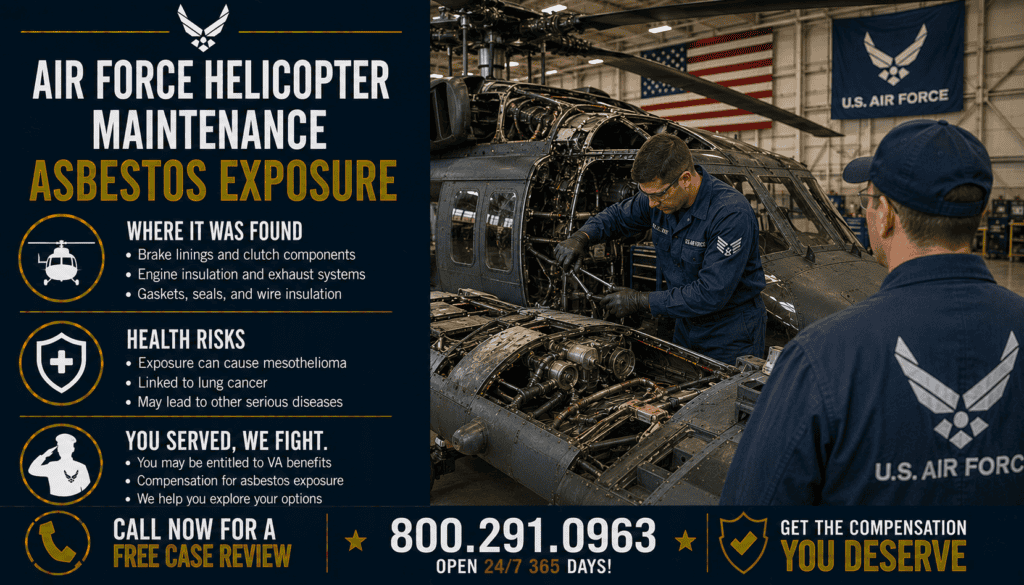
🚁 Air Force Helicopter Maintenance Asbestos Exposure
U.S. Air Force helicopter maintenance involved frequent work around engines, brakes, transmissions, electrical systems, gaskets, seals, insulation, and other heat- or friction-resistant components. During earlier decades of military aviation, some of these materials could contain asbestos. Veterans who repaired or serviced helicopters may therefore need to investigate whether asbestos-containing parts were present in the aircraft, replacement components, maintenance shops, or support equipment they worked around.
Exposure was not automatic simply because a veteran worked on helicopters. The strongest evaluation connects the veteran’s dates of service, Air Force Specialty Code (AFSC), unit, base, aircraft assignment, maintenance duties, and available technical or procurement records to the specific materials disturbed. This page is part of the Air Force Aircraft Asbestos Exposure hub and the broader U.S. Air Force Asbestos Exposure silo.
🚁 Air Force Helicopter Asbestos Exposure Overview
Air Force helicopters were used for rescue, transport, training, reconnaissance, security, combat support, and other missions. These aircraft operated under intense heat, friction, vibration, and mechanical stress. Historically, asbestos was used in some military and civilian aviation products because it resisted heat and friction and could provide insulation and fire resistance.
For a particular helicopter, however, asbestos content could vary by aircraft model, component manufacturer, part number, production year, overhaul history, and later replacement parts. Some legacy parts may have remained in service after asbestos use began declining, while other aircraft or components may not have contained asbestos at all.
The parent Air Force Aircraft Asbestos Exposure page provides broader context about asbestos in older military aviation systems.
⚙️ Possible Asbestos-Containing Helicopter Components
Historical aviation and military records show that asbestos was used in certain friction products, gaskets, heat-resistant fabrics, insulation, and similar applications. The Department of Veterans Affairs identifies friction products such as brake linings and clutch facings among products historically associated with asbestos exposure.
| Helicopter area or component | Possible historical asbestos use | Evidence to investigate |
|---|---|---|
| Wheel and brake assemblies | Brake linings, pads or other friction materials | Technical orders, brake part numbers, overhaul records |
| Engines and exhaust areas | Heat-resistant gaskets, insulation or thermal barriers | Engine manuals, parts catalogs, maintenance records |
| Transmission and drivetrain systems | Some friction materials, seals or gaskets | Component specifications and replacement histories |
| Electrical systems | Heat-resistant insulation or fire barriers in some legacy applications | Wiring diagrams, technical data and modification records |
| Hydraulic and fuel systems | Some gaskets, packing or seals | Parts lists, procurement records and work orders |
The age of an aircraft by itself does not prove that a particular component contained asbestos. Product identification and maintenance records are far more useful when reconstructing an exposure history.
🔧 Maintenance Tasks That May Have Released Asbestos Fibers
Asbestos becomes most dangerous when asbestos-containing material is damaged, worn, cut, scraped, sanded, removed, drilled, or otherwise disturbed so that fibers become airborne. Helicopter maintenance could involve several tasks worth investigating.
- Removing or replacing worn brake linings or pads
- Cleaning brake assemblies and wheel components
- Scraping old gasket material from engine or transmission surfaces
- Removing heat shields, insulation or fire-resistant barriers
- Opening electrical compartments or replacing older insulated components
- Overhauling engines, gearboxes, transmissions or hydraulic systems
- Cleaning dust and debris from maintenance bays and aircraft compartments
Compressed air, dry sweeping, sanding, wire brushing, or grinding could have increased airborne dust if asbestos-containing material was present. Maintenance crews may not have known the material contained asbestos at the time.
👨🔧 Air Force Personnel Potentially at Risk
The most important question is what a person actually did around the helicopter. Potentially relevant Air Force roles may include aircraft mechanics, crew chiefs, aerospace propulsion specialists, avionics technicians, electrical specialists, hydraulic technicians, structural repair personnel, flight-line maintenance crews, depot workers, and quality-control personnel.
Ground-support work may also matter. Maintenance personnel sometimes repaired equipment used to start, tow, service, power, or support aircraft. Older ground-support equipment could itself contain friction materials, gaskets, seals, or insulation that should be investigated separately.
Rank alone does not establish asbestos exposure. AFSC, unit assignment, daily work, the aircraft maintained, and the exact components handled provide stronger evidence.
🏢 Flight Lines, Hangars and Maintenance Facilities
Helicopter maintenance took place in several environments, including flight lines, hangars, maintenance bays, depots, technical schools, and temporary field locations. Exposure risk could come from the aircraft itself or from asbestos-containing materials in older facilities.
Hangars and maintenance buildings sometimes contained asbestos in insulation, pipe coverings, floor materials, roofing, fireproofing, wall systems, or mechanical equipment. Air Force veterans who worked around helicopters may therefore have had more than one possible exposure source.
The site’s Air Force Power Plants & Boiler Rooms Asbestos Exposure page explains another major base-related exposure setting. Veterans who lived in older military housing can also review the Air Force Housing Asbestos Exposure page.
📂 Evidence That Can Help Document Helicopter Exposure
An exposure investigation can combine military, technical, medical, and employment records. Useful information may include:
- DD-214 and complete service personnel records
- AFSC history and performance reports
- Squadron, wing, base and duty assignments
- Helicopter types and tail numbers when known
- Technical orders and maintenance manuals
- Parts catalogs and procurement records
- Depot or overhaul documentation
- Photographs and maintenance logs
- Coworker or supervisor statements
- Manufacturer and supplier records
VA currently states that an asbestos-related disability claim generally requires medical records showing a health condition, service records showing the veteran’s job or specialty, and medical evidence connecting the asbestos exposure to the condition. The VA also identifies brake linings and clutch facings as examples of friction products historically associated with asbestos exposure.
Veterans should also document civilian employment because a person may have encountered asbestos during both military and civilian work. Multiple exposure sources can be important in both legal and medical evaluations.
🫁 Asbestos-Related Health Risks
The National Cancer Institute identifies asbestos as a known human carcinogen. Exposure can cause mesothelioma and cancers of the lung, larynx, and ovary, and can also cause asbestosis and other nonmalignant pleural and lung conditions.
Asbestos-related diseases can have long latency periods, which means symptoms or diagnoses may appear decades after the original exposure. The Department of Veterans Affairs notes that symptoms of asbestos-related disease may not appear for 20 to 50 years after exposure.
A diagnosis does not by itself establish that Air Force helicopter work caused the disease. Medical professionals and claim reviewers generally consider the person’s full occupational, military, environmental, and smoking history along with the available exposure evidence.
Veterans concerned about asbestos exposure should discuss their service and work history with a qualified health-care professional. The National Cancer Institute asbestos fact sheet and the VA asbestos exposure resource provide additional health information.
⚖️ VA and Legal Claim Options
Veterans diagnosed with an asbestos-related disease may have several possible claim paths depending on the evidence. These can include VA disability compensation, asbestos bankruptcy trust claims, civil claims against responsible product manufacturers or suppliers, and survivor-related claims in some circumstances.
VA states that a veteran may be eligible for disability compensation when a health condition was caused by asbestos exposure during military service. VA evaluates these claims case by case and requires evidence of both exposure and a related disease or disability.
Veterans may also investigate claims involving companies that manufactured or supplied asbestos-containing products. These are generally claims against product manufacturers or other responsible companies rather than lawsuits against the U.S. Air Force simply because the exposure occurred during military service.
Available options depend on diagnosis, service history, exposure evidence, responsible products and companies, jurisdiction, trust requirements, and filing deadlines. No claim outcome or compensation amount is guaranteed.
❓ Frequently Asked Questions
Did every Air Force helicopter contain asbestos?
No. Asbestos content varied by aircraft model, component, manufacturer, part number, production era, maintenance history, and replacement parts. Specific technical records should be used whenever possible.
Which helicopter maintenance jobs may have created the most exposure?
Tasks involving brakes, gaskets, heat-resistant insulation, electrical barriers, engine systems, transmissions, and other friction or high-temperature components may be worth investigating when asbestos-containing materials were present.
Could brake work expose helicopter mechanics to asbestos?
Yes, if the brake lining or friction material contained asbestos and the work disturbed it. VA specifically identifies brake linings as a type of friction product historically associated with asbestos exposure.
Do I need to remember the brand name of the asbestos product?
No. Technical orders, procurement records, parts catalogs, maintenance records, coworker testimony, and manufacturer documents may help identify the materials involved.
Can a crew chief have an asbestos claim?
Possibly. Eligibility depends on the crew chief’s actual duties, dates of service, aircraft assignments, diagnosis, exposure evidence, and the requirements of the specific VA, trust, or civil claim.
What if I was also exposed in Air Force buildings or housing?
That exposure should also be documented. Some veterans may have had several possible military exposure sources in addition to aircraft maintenance.
Can VA benefits and asbestos trust or legal claims both be investigated?
Potentially. These systems have different requirements, so the available options should be evaluated based on the individual veteran’s facts.
🎖️ Help for Air Force Helicopter Veterans and Families
Build the exposure history around your actual maintenance duties
A useful helicopter exposure review can examine:
- Your Air Force service dates, AFSC, squadron, bases and helicopter assignments
- The maintenance tasks, parts, systems and support equipment you worked around
- Your diagnosis, civilian work history and records that may identify responsible asbestos products
Call 800.291.0963 to discuss a possible Air Force helicopter asbestos exposure history. Live chat is available 24/7, 365 days a year. You can also Submit Your Case.
No result, eligibility determination, compensation amount, or claim outcome is guaranteed.
⚕️ Legal & Medical Information Disclaimer
This page provides general educational information and is not medical or legal advice. It does not establish asbestos exposure, diagnosis, causation, legal liability, VA eligibility, or compensation. Consult qualified medical and legal professionals about your circumstances.