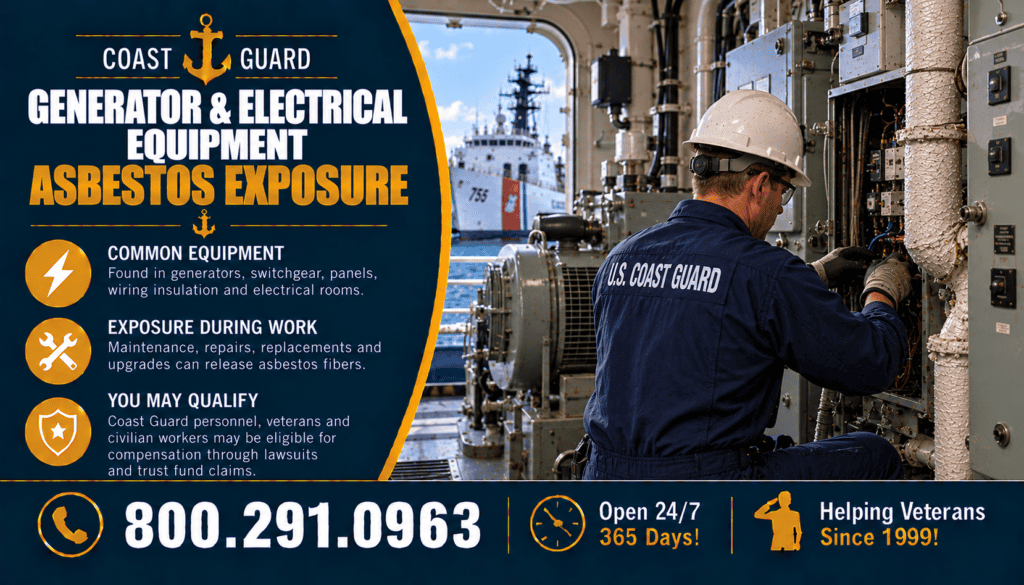
Coast Guard Generator & Electrical Equipment Asbestos Exposure
Generators and electrical equipment on older Coast Guard vessels and at shore facilities can be important systems to investigate for historical asbestos exposure. Depending on the manufacturer, model, component, and era, some electrical and power-generation equipment may have used asbestos-containing insulation, arc-resistant materials, gaskets, heat shields, cable-related products, or other heat- and fire-resistant components.
Working around generators or electrical equipment does not automatically prove asbestos exposure. A credible exposure history identifies the specific vessel or facility, equipment model, component, maintenance or upgrade task, and conditions under which asbestos-containing materials may have been disturbed.
Veterans researching broader equipment exposure can also review Coast Guard Equipment Asbestos Exposure, Coast Guard Engine & Machinery Asbestos Exposure, and Coast Guard Communications & Radar Facilities Asbestos Exposure.
⚡ Why Coast Guard Generators and Electrical Equipment May Present Asbestos Risk
Electrical systems can generate heat and may require fire-resistant or electrically insulating materials. Historically, some products used in electrical rooms, switchgear, generators, panels, cable systems, and associated mechanical equipment contained asbestos.
| Equipment Condition | Why It May Matter |
|---|---|
| Heat-producing equipment | Some insulating and heat-resistant materials may warrant investigation. |
| Electrical upgrades | Modernization can disturb panels, insulation, cable pathways, or adjacent building materials. |
| Generator maintenance | Repairs may disturb gaskets, insulation, heat shields, or adjacent piping materials. |
| Confined electrical spaces | Limited ventilation can increase the relevance of nearby airborne dust. |
The actual asbestos content of any material or component should be verified rather than assumed.
🔌 Electrical Equipment and Components to Investigate
Several categories of Coast Guard electrical and power-generation equipment may warrant closer review.
| Equipment / System | Potential Historical Asbestos Component | Evidence to Review |
|---|---|---|
| Generators | Certain insulating, gasket, heat-shield, or sealing materials | Manufacturer manuals, parts lists, maintenance records |
| Switchgear | Certain arc-resistant, insulating, or panel materials | Electrical manuals, specifications, upgrade files |
| Electrical panels | Certain insulating backboards, barriers, or fire-resistant materials | Facility plans, equipment records, replacement history |
| Cable systems | Certain fire-resistant cable wraps, penetrations, or adjacent insulating materials | Cable schedules, upgrade files, material specifications |
| Motor controls and electrical auxiliaries | Certain insulating, gasket, or heat-resistant components | Technical manuals, work orders, procurement records |
Not every generator, switchgear unit, electrical panel, cable product, or control component contained asbestos. Product, manufacturer, model, part, and era should be verified whenever possible.
🧰 Insulation, Arc-Resistant, Gasket, and Heat-Resistant Materials
Several material categories may be relevant in a historical Coast Guard electrical-equipment exposure investigation.
- Electrical insulating boards or barriers
- Arc-resistant panels
- Generator gaskets
- Heat shields
- Thermal insulation around adjacent equipment
- Fire-resistant cable wraps or penetration materials
- Insulating blankets or pads
- Gaskets and seals in supporting mechanical systems
Asbestos content varied by product, manufacturer, model, component, and era. The presence of asbestos should not be inferred solely from an electrical or generator application.
🔧 Maintenance and Upgrade Tasks That May Disturb Asbestos
Potential exposure concerns can increase when confirmed asbestos-containing materials are cut, removed, drilled, scraped, replaced, or otherwise disturbed during electrical maintenance or modernization.
Tasks worth investigating include:
- Opening or rebuilding generators
- Replacing generator gaskets or heat shields
- Removing old switchgear or electrical panels
- Installing or replacing cable systems
- Drilling through fire-resistant walls or cable penetrations
- Removing insulating panels or barriers
- Cleaning debris after electrical upgrades
- Working nearby while contractors performed modernization
A veteran may have direct exposure from performing the work or bystander exposure from working nearby while asbestos-containing materials were disturbed.
🏭 Generator Rooms, Switchgear Spaces, and Bystander Exposure
Generators and major electrical equipment are often located in enclosed shipboard or facility spaces near mechanical, piping, HVAC, and utility systems. This can create overlapping exposure pathways.
Important factors include:
- Distance from the maintenance or removal activity
- Frequency and duration of time nearby
- Ventilation conditions
- Whether drilling, cutting, scraping, or demolition occurred
- Condition of the material
- Cleanup methods
- Use of containment or respiratory protection
Being assigned to an electrical space does not itself prove asbestos exposure. The history should connect the veteran to a specific asbestos-containing material and disturbance event.
For related power-system context, see Coast Guard Power Plants & Boiler Facilities Asbestos Exposure, Auxiliary Machinery Asbestos Exposure on Coast Guard Vessels, and Coast Guard Pump & Valve Equipment Asbestos Exposure.
📁 Records That Can Document Electrical-Equipment Exposure
| Evidence | What It May Help Establish |
|---|---|
| Personnel and assignment records | Vessels, facilities, ratings, departments, and service dates |
| Electrical diagrams and equipment lists | Generator, switchgear, panel, and cable-system locations |
| Technical manuals | Equipment models, insulation, gaskets, barriers, and maintenance procedures |
| Maintenance and upgrade work orders | Specific repairs, removals, and modernization projects |
| Procurement and parts records | Manufacturers and materials used with the equipment |
| Asbestos surveys or abatement records | Confirmed asbestos-containing materials in electrical or adjacent spaces |
| Shipmate or coworker statements | Work locations, dust conditions, and firsthand repair descriptions |
| Medical records | Diagnosis, pathology, imaging, and treatment history |
Because electrical-equipment exposure may have occurred decades ago, several sources of evidence may need to be combined to reconstruct the veteran’s work environment.
🩺 Mesothelioma, Lung Cancer, and Other Health Risks
Asbestos exposure is associated with mesothelioma, lung cancer, asbestosis, and certain other asbestos-related conditions. These diseases can develop after long latency periods, so exposure during Coast Guard generator or electrical work may remain medically relevant decades later.
Symptoms such as persistent cough, shortness of breath, chest pain, unexplained weight loss, or difficulty breathing require medical evaluation but do not establish asbestos causation by themselves.
Veterans concerned about historical electrical-equipment exposure should provide healthcare professionals with a detailed military and civilian occupational history.
⚖️ VA Benefits, Lawsuits, and Trust Fund Claims
A Coast Guard veteran diagnosed with an asbestos-related disease may be able to investigate more than one compensation path depending on the evidence.
| Potential Option | What May Need to Be Established |
|---|---|
| VA disability benefits | Current disease, military asbestos exposure, and service connection |
| Private asbestos lawsuit | Diagnosis, product exposure, responsible defendants, jurisdiction, and filing deadline |
| Asbestos trust fund claim | Trust-specific medical and exposure requirements |
| Wrongful death claim | Eligible claimant, diagnosis, exposure evidence, responsible parties, and filing deadline |
VA claims and private asbestos claims are separate systems. A veteran may be able to investigate both.
See Coast Guard Veterans Asbestos Trust Fund Claims and VA Benefits vs. Coast Guard Mesothelioma Lawsuits for additional information.
🔎 What an Electrical-Equipment Exposure Review Should Examine
A useful exposure review should identify the exact vessel or facility, electrical equipment, maintenance tasks, upgrade projects, and materials the veteran encountered.
- Specific Coast Guard cutter, ship, base, or facility
- Dates of assignment
- Rating, department, and work center
- Generators, switchgear, panels, cable systems, or control equipment serviced
- Maintenance and modernization periods
- Insulating boards, barriers, gaskets, heat shields, or cable materials disturbed
- Equipment manufacturers and model numbers
- Facility or ship upgrade records
- Possible asbestos trust connections
- VA service-connection evidence
Worked on Coast Guard generators or electrical equipment and later developed mesothelioma or lung cancer? Call 800.291.0963 or Submit Your Case. Live help is available 24/7, 365 days a year.
❓ Frequently Asked Questions
Could Coast Guard generators contain asbestos components?
Potentially. Some historical gaskets, insulation, heat shields, and other heat-resistant components used with generators contained asbestos, but the specific equipment and part must be verified.
Did every Coast Guard generator or electrical panel contain asbestos?
No. Asbestos content varied by manufacturer, model, product, component, and era.
Could switchgear or electrical panels contain asbestos materials?
Potentially. Some historical arc-resistant or insulating materials contained asbestos, but product-specific evidence is needed.
Could cable work create asbestos exposure?
Potentially. Exposure may occur when cable upgrades disturb confirmed asbestos-containing fireproofing, wall materials, penetrations, or insulation.
Could generator maintenance create asbestos exposure?
Potentially. Removing or replacing confirmed asbestos-containing gaskets, insulation, or heat-resistant components can create a pathway.
What records can help prove electrical-equipment exposure?
Electrical diagrams, technical manuals, maintenance work orders, parts records, upgrade files, asbestos surveys, witness statements, and medical records may help.
Can Coast Guard veterans file asbestos trust claims for electrical-equipment exposure?
Potentially. Eligibility depends on whether exposure can be connected to companies or products covered by specific asbestos bankruptcy trusts.
Does electrical-equipment service automatically prove a mesothelioma claim?
No. A claim requires medical evidence and a supported exposure history connecting the veteran to asbestos-containing materials or responsible companies.
📞 Coast Guard Veteran Exposed Around Generators or Electrical Equipment?
A strong electrical-equipment exposure investigation starts with the veteran’s actual vessel or facility, generators, panels, switchgear, cable systems, maintenance tasks, modernization work, components, and work areas. Those details can help determine whether VA benefits, asbestos trust claims, a private lawsuit, or multiple options should be investigated.
Call 800.291.0963 to discuss the veteran’s Coast Guard generator or electrical-equipment service and possible asbestos exposure. Live help is available 24/7, 365 days a year.
Submit Your Case for a case-specific review of potential legal options. Compensation and VA eligibility depend on diagnosis, exposure evidence, responsible companies, jurisdiction, and applicable requirements.
For broader equipment exposure, see Coast Guard Engine & Machinery Asbestos Exposure. For broader legal information, see Coast Guard Asbestos Exposure Legal Options.
⚕️ Legal & Medical Information Disclaimer
This page provides general educational information only. It does not establish diagnosis, causation, legal liability, VA eligibility, or compensation. Consult qualified medical and legal professionals about your situation.